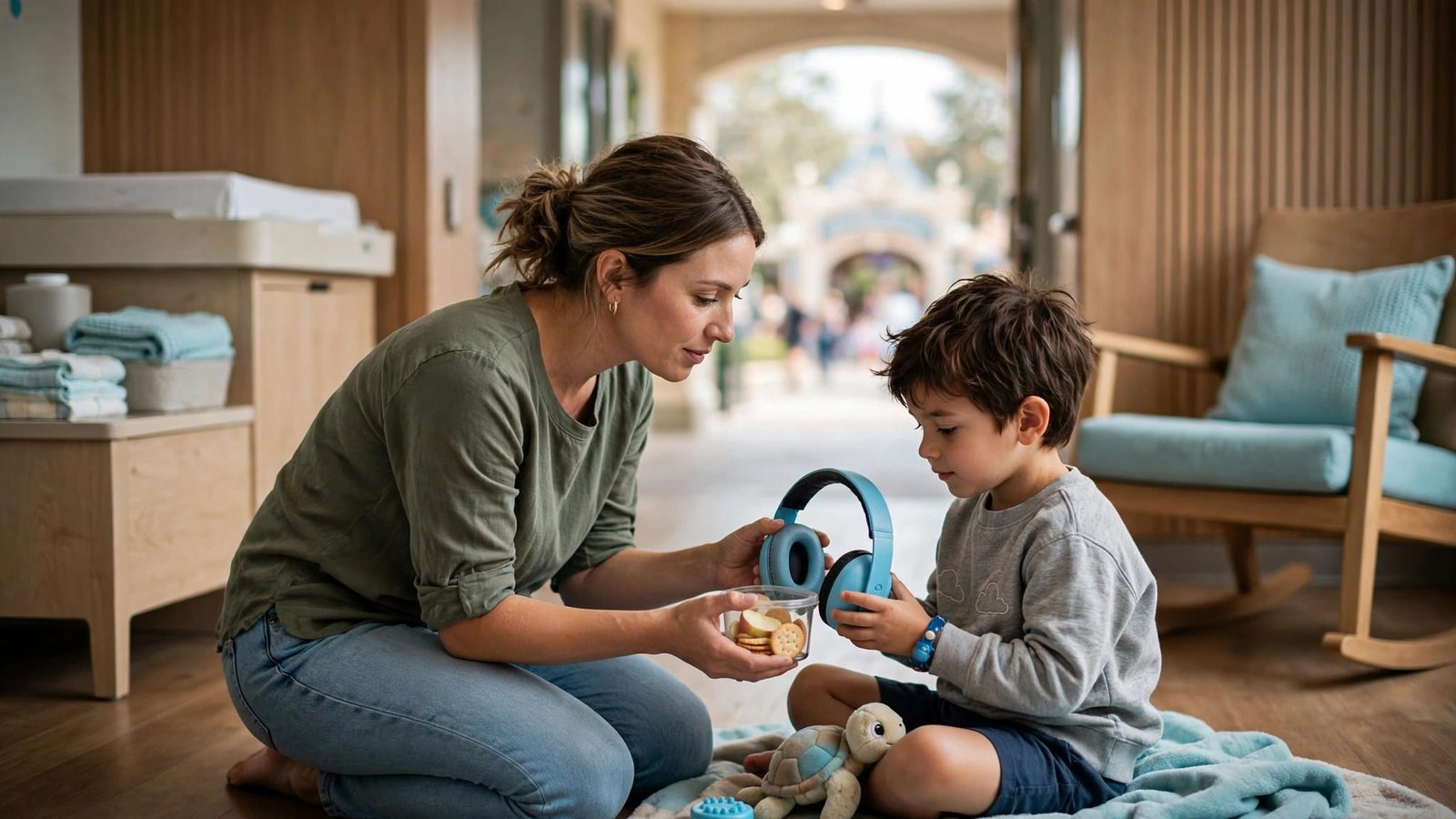
A Walt Disney World day can change fast when your child needs a diaper change, quiet feeding time, dry clothes, or a break from the noise. Baby Care Centers give families a comfortable place to step away, regroup, and handle basic care needs without leaving the park.
Although these practical family-care locations are designed mainly for infants and toddlers, they may still help some autistic children when a reset is needed. For autism families, that pause can matter just as much as the next attraction. A familiar snack, a slower moment, and a clean place to change can help everyone feel more comfortable. Knowing where to go before the day gets hard takes away one big unknown.
Key Takeaways
- Walt Disney World has one Baby Care Center in each of its four theme parks, offering a practical place for diapering, feeding, clothing changes, and short breaks.
- Baby Care Centers are family-care spaces, not dedicated sensory rooms, so they may help with an immediate need but aren’t guaranteed to be quiet or empty.
- Strollers must remain outside, so keep diapers, wipes, snacks, spare clothes, feeding supplies, and comfort items in one easy-to-carry care pouch.
- Check current operating details before your visit, and remember that First Aid, DAS, and stroller-as-wheelchair procedures are separate from Baby Care Center access.
- A flexible schedule with planned breaks, familiar supplies, and an option to return to the resort can make the park day more comfortable for the whole family.
Why Baby Care Centers Can Help Autism Families
At Walt Disney World, Baby Care Centers serve families visiting the parks. They can also help autistic young children who still need support with diapering, feeding, clothing changes, or a brief calming pause. These indoor spaces offer a break from busy walkways and outdoor heat.
They aren’t guaranteed quiet rooms, and other families may be present. Still, they often provide a more private changing room than a crowded restroom or busy bench.
A reset space, not a sensory room
The space isn’t a dedicated sensory room or a place for attraction accommodations. It’s a family care area with practical supplies and seating.
That difference matters. If your child is becoming overwhelmed, use the center for the immediate care need, such as a clothing change, bottle, snack, or nursing break. Then decide whether your family can return to the park or needs a longer sensory reset at the resort.
The best Disney break is the one you take before everyone reaches their limit.
Plan for your child’s actual needs
Some autistic children need diapers longer than other children their age. Others may need privacy for feeding, medication, pumping, toileting support, or a change after an accident. There’s no reason to feel embarrassed about using family services that make your day easier.
Bring the care items your child knows best. Disney can sell backup supplies, but familiar wipes, snacks, cups, pull-ups, and comfort items can prevent a small problem from becoming a hard transition.
Walt Disney World Baby Care Centers: Park Locations
Across the four theme parks, Disney’s Baby Care Centers provide one location in each park. They’re listed as open during regular park hours. Operating information can change, so confirm that day’s schedule before leaving your resort.
Review the official Disney Baby Care Center information before your trip, then confirm current operating details for your visit.
| Theme Park | Helpful Landmark |
|---|---|
| Magic Kingdom Park | Between Casey’s Corner and The Crystal Palace, near first aid |
| EPCOT | At The Odyssey, between Test Track and World Showcase |
| Disney’s Animal Kingdom | On Discovery Island, next to Creature Comforts |
| Disney’s Hollywood Studios | Near Guest Relations at the front of the park |
These landmarks are easier to remember than searching when your child is already upset. Note nearby stroller parking, then save each location in the My Disney Experience app before your park day.
Magic Kingdom and EPCOT locations
At Magic Kingdom, the center is near the hub area, between Casey’s Corner and The Crystal Palace. From the Magic Kingdom entrance, head toward the Magic Kingdom hub before continuing to Adventureland.
At EPCOT, find the center near The Odyssey. From the EPCOT entrance, consider stopping before heading toward World Showcase. EPCOT is much larger than it looks. If you’re exploring EPCOT’s World Showcase, handle diapering and feeding needs before reaching France, Norway, or Mexico.
Animal Kingdom and Hollywood Studios locations
At Animal Kingdom, the center is on Discovery Island beside Creature Comforts. The Animal Kingdom location is near the park’s center, making it useful before heading toward Pandora or Africa.
At Hollywood Studios, the center is near Guest Relations at the park entrance. Families arriving at Hollywood Studios can make it an easy first stop after security and transportation. Consider stopping at Hollywood Studios for a fresh diaper, snack, or quiet moment before exploring the park.
What Is Inside the Baby Care Centers?
Disney World Baby Care Centers are complimentary for park guests. Each center includes a changing room with tables and a nursing room with chairs. It also has restrooms, a feeding area with high chairs, seating, and a television.
Each center also has a kitchenette with a microwave and sink for practical bottle or food preparation. It can help with a warmed bottle, familiar meal, or quick cleanup, but it may not accommodate every child’s meal.
Feeding, changing, and nursing support
A dedicated seating area lets you sit down instead of balancing food on a stroller tray in the Florida heat. This can help a child who needs a stable, familiar place to eat.
Nursing and pumping parents have more privacy than they would find in a standard restroom. If your child needs time to drink from a bottle, eat a safe food, or settle with a comfort item, slow the moment down.
Backup items you can buy
Disney may sell common baby and family items inside the centers, but selection depends on current stock. Available supplies may include formula, baby food, diapers, wipes, sunscreen, clothing, juice, and over-the-counter medication.
These supplies can help in a pinch, but they should remain your backup plan. Pack your child’s familiar brands and medically appropriate supplies for the full park day. A preferred size, flavor, or product may not be available.
Strollers Stay Outside, So Pack With Care
Strollers cannot go inside the Baby Care Centers because space is limited. Leave yours in stroller parking outside, then carry your child and a small care pouch inside.
For many autism families, a stroller is more than transportation. It can be a familiar seat, a place to rest, and a buffer from crowded walkways. Keep it organized so you can grab what you need before heading through the door.
Use one grab-and-go care pouch
Put diapers, wipes, pull-ups, a changing pad, a spare outfit, snacks, and feeding items in one zip pouch. Keep it in the same stroller pocket or backpack section every day.
A simple system helps when you are tired, hot, or supporting a dysregulated child. You should not have to empty the entire park bag to find what you need.
If your child’s stroller is needed as a mobility device in attraction queues, ask Guest Relations about the current stroller-as-wheelchair process. It is separate from center access and may be important for your park plan.
Bring familiar comfort items
A clean shirt can help after a spill, but it may not be the item that gets your child through a hard moment. Pack one small comfort item they already use at home, such as headphones, a fidget, a soft toy, or a preferred drink cup.
You can find practical travel basics, including stroller items, organizers, and cleaning supplies for vacation sickness, at the Trip Rescue Shop.
If Your Child Is Lost, Sick, or Separated
Lost Children: Talk about a simple family plan before you enter the park. Teach children who can understand to seek help from a uniformed Disney employee if they cannot find you. Show them what the name tag looks like.
If your child is separated or found alone, alert the nearest Cast Member immediately instead of searching alone. A Cast Member can direct or escort a found child according to current park procedures. Follow instructions, and verify Disney’s current reunification procedures before your visit.
Make reunification easier
Take a current photo of your child each morning. Keep it on your phone, along with what they are wearing that day. A small card in their pocket or attached to a stroller can list your name and phone number.
For children who use AAC, pictures, gestures, or limited speech, you can also carry a short information card. It can say how your child communicates, what helps them calm, and any immediate safety needs.
First Aid is a separate location
First Aid is separate from the Baby Care Centers, even though it may be nearby. Medical concerns, serious reactions, or requests for professional medical help belong with first aid, not in a Baby Care Center.
Disney’s accessibility services page also lists support information for guests with disabilities. For urgent emergencies, call 911 or ask nearby park staff for immediate help.
Pair Baby Care Centers With a Flexible Autism Plan
A flexible Walt Disney World day works best when you plan around your child’s needs. Build in a few breaks before hunger, heat, and crowds build up.
Plan one or two must-do experiences for the morning. Keep nearby attractions together. Leave room for snacks, bathroom visits, and a return to the resort if your child is done.
DAS changes where your child waits
Disney’s Disability Access Service, or DAS, is separate from the park’s care facilities. It may help eligible guests with a developmental disability, including autism, who find standard queues hard to tolerate. Disney determines eligibility, and autism alone doesn’t guarantee approval.
With DAS, an eligible guest can request or manage a return time in the My Disney Experience app, then wait elsewhere. Disney’s current Disability Access Service guidance explains eligibility and registration procedures.
DAS doesn’t eliminate waits, crowds, noise, or schedule changes. It gives your family a different place to wait. Baby Care Centers can handle a practical care need while your family manages its day.
Do not fill the day with timed plans
Lightning Lane Multi Pass is a separate paid option. It can help if your family has a few rides they truly want to experience. It can also add pressure when every hour has a return window.
A packed schedule isn’t always a better schedule. For many autism families, a calm afternoon, a favorite attraction, and an early dinner are more successful than racing across the park.
For added planning support, the Amazon edition of the autism travel guide offers practical ideas for park days, breaks, and accessibility needs. You can also find the Disney World With Autism Guide on Etsy.
What About Disney Springs, Water Parks, and Resorts?
Dedicated Baby Care Centers are located in the four theme parks. Disney Springs, water parks, and resort hotels at Walt Disney World don’t have dedicated centers. Ordinary restrooms may have changing stations, but they might not offer the same privacy, seating, microwave, or supplies.
Before a Disney Springs evening, change your child at the resort or inside a park if possible. Bring a full care pouch with diapers, wipes, snacks, and an extra outfit, and check stroller parking before settling in.
At your resort, ask the Front Desk about nearby changing options, quiet seating, or health support. These are general planning questions, and amenities aren’t guaranteed. If your room happens to include a kitchenette, refrigerator, or extra space, it may make feeding and bedtime routines easier.
Frequently Asked Questions
Are Disney Baby Care Centers sensory rooms?
No. They are family-care spaces with changing areas, feeding and nursing areas, seating, and practical supplies, but they are not dedicated sensory rooms and may include other families.
Can autistic children use the Baby Care Centers?
Yes, families can use them when a child needs diapering, feeding, a clothing change, or a brief calming pause. Although the centers are designed mainly for infants and toddlers, they may still support older autistic children with these care needs.
Where are the Baby Care Centers located?
There is one center in each theme park: near Casey’s Corner at Magic Kingdom, at The Odyssey in EPCOT, beside Creature Comforts at Animal Kingdom, and near Guest Relations at Hollywood Studios. Confirm current operating details before your visit because schedules and access information can change.
Can strollers go inside a Baby Care Center?
No, strollers must remain in the stroller parking area outside because space is limited. Bring a small grab-and-go care pouch with the items your child needs most.
What should we do if our child needs medical help?
First Aid is separate from the Baby Care Center and should handle medical concerns, serious reactions, or requests for professional help. For an urgent emergency, call 911 or ask a nearby Cast Member for immediate assistance.
A Calmer Disney Day Starts With a Backup Plan
Baby Care Centers give autism families a reliable place to handle moments that can’t wait. Know the nearest center, keep your stroller bag organized, and carry the familiar items your child needs.
Your vacation doesn’t have to follow a perfect schedule. A comfortable child and supported caregiver matter more than checking off every ride.