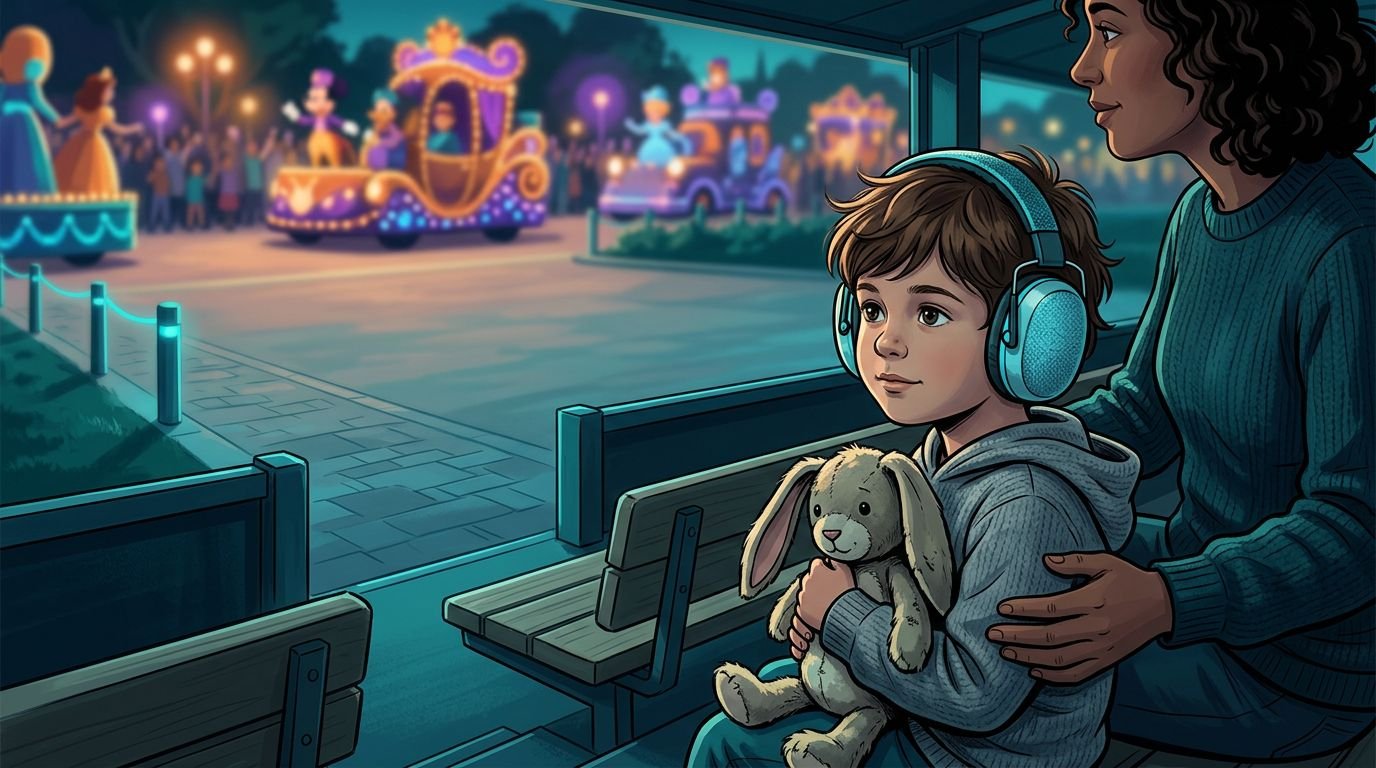
Parades can look magical on a planning calendar and feel like too much in real life. Music builds, lights flash, people press toward the curb, and a tired child may have nowhere to move.
For sensory-sensitive families, Disney parade viewing should fit your child, not a must-do list. A good plan leaves room to watch from a calmer spot, step away before the crowd surges, or skip the parade without feeling like the vacation was wasted.
Key Takeaways
- Plan your exit before choosing where to watch.
- Follow your child’s cues instead of a fixed schedule.
- Leaving early or skipping the event can protect the rest of your evening.
Your first viewing tip is simple: start with the exit plan, then choose where and when to watch.
Key Takeaways
- Plan the exit before choosing a Disney parade viewing spot.
- Choose a location based on your child’s sensory needs, crowd tolerance, and bedtime—not just the best photo opportunity.
- Bring familiar supports such as headphones, snacks, fidgets, and a comfort item, and let your child leave early.
- Frontierland or another later parade-route location may offer more space and less waiting than Main Street or Central Plaza.
- Skipping the parade can be the best choice if your child is already tired or overwhelmed.
Your Child’s Sensory Needs Come First
Before choosing among viewing spots, think about what makes a parade hard for your child. It may be loud music, bright lights, long waits, crowding, fatigue, or the sudden rush when the final float passes.
A child who loves Disney characters may still struggle with sitting on a curb for an hour. Another may enjoy five minutes but need to leave before the finale. Both are completely okay.
Disney’s neurodivergent guest services information is a helpful starting point before your trip. Review the current guidance, then make a plan around your family’s real needs.
Keep your plan simple:
- Pick one viewing area with an easy exit nearby.
- Decide how long you will wait before you arrive.
- Let your child know that leaving early is always an option.
- Bring familiar supports, including headphones, a fidget, snacks, and a soft layer.
A parade is entertainment, not a test of endurance. You do not need a prime spot for it to count as a Disney memory.
Low-Stimulation Magic Kingdom Viewing Spots
At Magic Kingdom, these viewing spots work best when you understand Disney Starlight: Dream the Night Away’s route. Disney Starlight uses a reverse route, starting on Main Street U.S.A. and moving toward Liberty Square and Frontierland. Main Street crowds build early, while later parade route locations can offer more room, less waiting, and easier post-parade crowd flow. If the schedule features Festival of Fantasy instead, verify that event’s route and intensity before using the same plan.
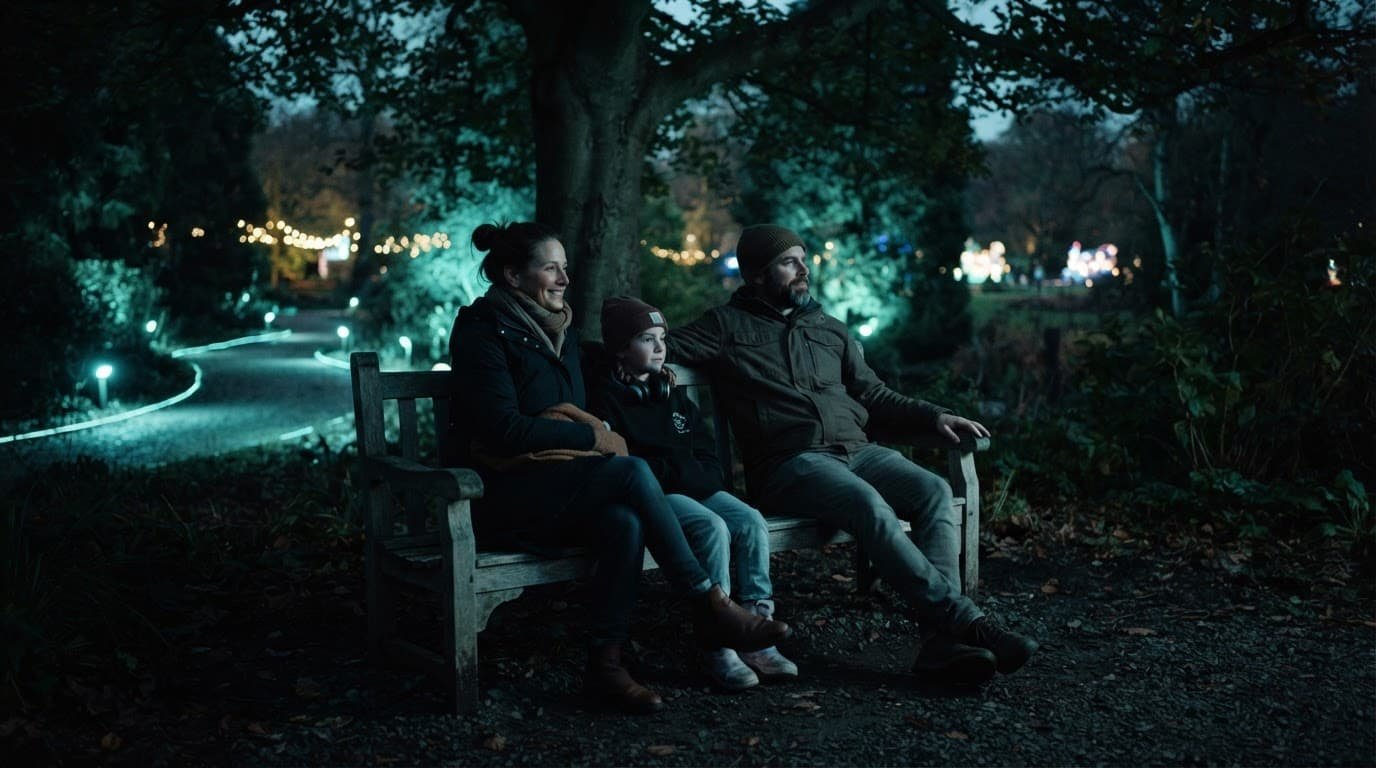
Main Street is beautiful, but it is often the busiest choice. The Hub and Central Plaza are also popular because guests want castle photos. Those areas can feel intense when guests wait for the best view. If photography is your main goal, the area near Central Plaza can give you illuminated floats and Cinderella Castle behind them. It is also one of the more crowded and intense places to wait.
These locations offer different trade-offs:
| Viewing area | What it may feel like | Best fit for |
|---|---|---|
| Town Square near the Fire Station and train station | Busy before the parade, but close to the park exit | Families who want to leave quickly afterward |
| Liberty Square | Strong views without the full Main Street crowd | Families who need a middle-ground option |
| Frontierland near Pecos Bill | Often less crowded and easier to approach later | Families who want more space and less waiting |
| Central Plaza or the Hub | Great castle photos, tighter crowds, longer waits | Children who are comfortable with louder, busier areas |
Town Square is near the entrance, which may help families leave quickly. Check whether paths around the train station are open before relying on that exit.
For guests who use mobility devices, designated parade viewing locations are often available near the Fire Station on Main Street, Liberty Square Market, and Frontierland near Pecos Bill or Country Bear Jamboree. Check the current park map, then ask a cast member whether Central Plaza or another area currently offers the access and exit setup your family needs. Disney also shares parade and fireworks disability viewing guidance for guests who need extra support.
A designated viewing area may help with access, but it may not be the quietest location. Ask whether Central Plaza is close to an exit if your child may need to leave fast.
For many sensory-sensitive families, Frontierland is the better Disney parade viewing choice at Magic Kingdom. Choosing it over Central Plaza can let your family spend more of the evening on rides, arrive later, and avoid being trapped in the Main Street crowd after the parade ends.
First Performance, Second Performance, or No Parade?
When Disney Starlight has two performances at Magic Kingdom, the first often draws larger crowds along the parade route. The second performance may have a lighter wait, giving families more breathing room.
The trade-off is bedtime. A later night parade may be calmer along the curb, but it can be harder for a child who is already tired, hungry, or done with the park. There is no universal right answer. If your child does well at night and can rest before the show, the later option may be worth it.
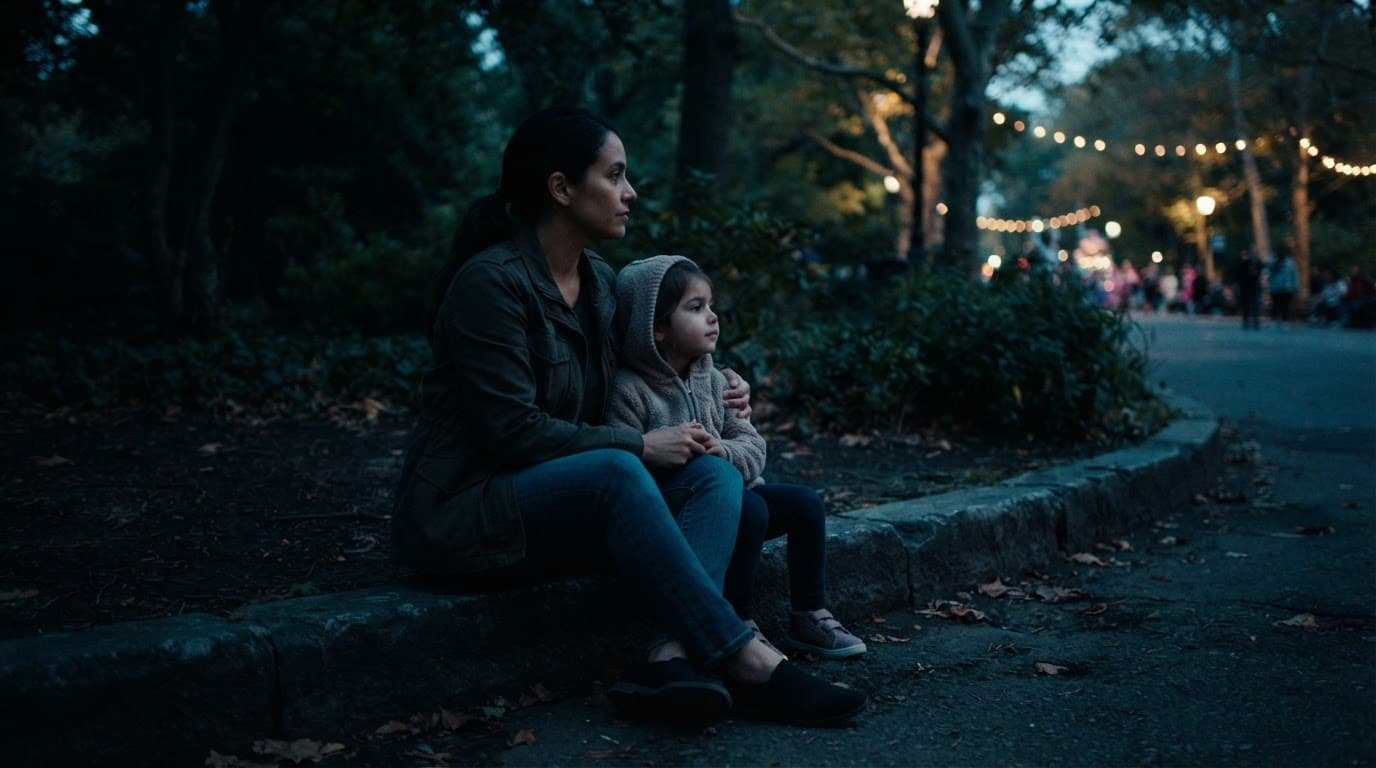
If you choose Main Street, plan early, since Central Plaza may fill within an hour for the first performance. Liberty Square and Frontierland can offer flexibility, with space sometimes available 30 to 45 minutes before the parade. During the later performance, Central Plaza may offer more breathing room.
Disney Starlight follows a reverse route, so your choice of viewing area can affect the timing. You can sometimes see both Happily Ever After fireworks and the parade on the same night. The crowd flow between the parade and fireworks can make the interval through Central Plaza a long stretch of noise, lights, waiting, and heavy movement.
For many families, choosing one nighttime spectacular is the calmer choice. The second performance may suit a child who handles late nights and values a quieter curb. Pick fireworks if your child loves Cinderella Castle and sky effects. Pick the parade if characters, music, and moving floats are the bigger draw.
Always check the My Disney Experience app on your visit day. Showtimes, routes, and entertainment schedules can change.
Build a Parade Plan That Feels Manageable
The waiting period is often harder than the parade itself. A child may be doing fine when you arrive, then become overwhelmed as more people gather around you.
Bring the same supports that work at home, school, or on a long car ride. Headphones can help, but don’t wait for the first loud float to offer them. Give your child time to get comfortable with them before the parade starts.
A small park bag can make a big difference:
- Keep headphones, a favorite fidget, a comfort item, and snacks easy to reach.
- Pack a portable charger and charging cord in one pouch with your devices.
- Use a simple visual plan, such as “wait, watch, snack, leave.”
- Bring a lightweight hoodie or soft blanket if sitting on the curb is uncomfortable.
Using mobile order can reduce pressure during a parade wait. You can review menus and place an order without standing in another line. Choose a mobile order pickup window that fits your plans, then eat at a quieter table when possible.
DAS does not automatically reserve a parade spot at Magic Kingdom. It is intended to help eligible guests who cannot tolerate a traditional attraction queue. Lightning Lane Multi Pass is also separate from DAS and can add more timed plans to an already full day. Don’t buy every add-on because it sounds helpful. A slower schedule and a good break often matter more.
For more trip-wide support, the Disney World with Autism Guide on Etsy and the Amazon edition of the guide include practical ideas for park days, breaks, and accessibility planning.
Disneyland Parade Choices for Toddlers and Sensitive Kids
Disneyland Resort has a smaller footprint than Walt Disney World, but parade crowds can still feel big. Check the park app for showtimes and the current parade route before your park day.
Avoid treating a front row spot as the only successful option. Choose a place near an open walkway, restroom, train station, shop, or clear route toward the park exit. A spot slightly behind the curb may give your child more personal space.
Toddlers often do best with a short parade plan: arrive near showtime, watch a few favorite characters, and leave while the experience is still positive. Waiting through the full route is not required.
If your child has a stroller, keep it ready for the walk out. Crowd flow can move quickly after a parade, especially near popular lands and the park exit. A stroller, headphones, familiar snack, and simple next step can make that transition easier.
When Skipping the Parade Is the Better Choice
Sometimes the best choice is not watching the parade at all. If your child is already overloaded, use that time for dinner, a quiet indoor attraction, a resort break, or a favorite ride.
At Magic Kingdom, wait times for popular attractions may shift while guests gather along the street. Check the app if Seven Dwarfs Mine Train, TRON Lightcycle / Run, or another family favorite matters to your group. Don’t assume every line will be short, but this can be a good time to check.
Leaving the park before the parade can also be smart. Your family can avoid the biggest nighttime crowd, return to the resort earlier, and reset for the next day.
Frequently Asked Questions
What is the best Disney parade viewing area for sensory-sensitive children?
Frontierland at Magic Kingdom may offer more space, less waiting, and easier crowd flow than Main Street or Central Plaza. Choose a location with a nearby exit and check the current route before your visit.
Is it better to watch the first or second parade performance?
The second performance may have lighter crowds, but it can be harder for children who are tired or ready for bed. Choose the later show only if your child usually handles late nights well.
What should we bring for a sensory-friendly parade experience?
Pack headphones, a familiar fidget or comfort item, snacks, a portable charger, and a soft layer for sitting. Keep these supports easy to reach so you can respond before your child becomes overwhelmed.
Do we need to stay for the entire parade?
No. Watching a few favorite characters and leaving while the experience is still positive can be a successful plan, especially for toddlers and sensitive children.
What if our child cannot handle the parade that day?
Skipping the parade is completely reasonable. Use the time for a quiet meal, an indoor attraction, a resort break, or an earlier exit so your family can enjoy the rest of the evening.
A Calmer Disney Evening
The best plan is the one that protects your child’s comfort. A Frontierland spot, five minutes near an exit, or no parade at all can be the right choice.
A Disney trip does not need every show, every ride, or every photo to be meaningful. A calmer family has more room to enjoy the moments that matter.