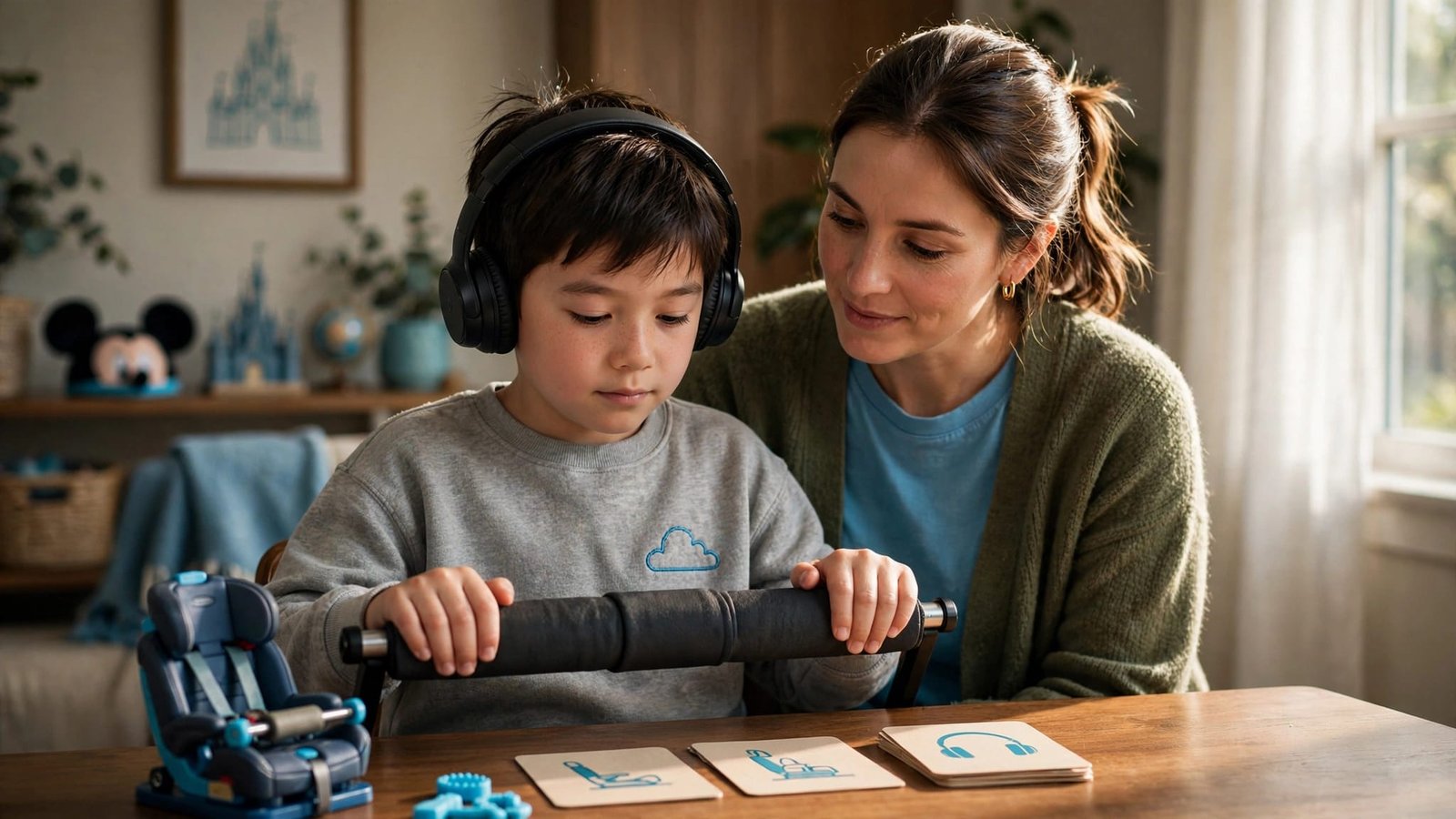
A ride restraint can feel like a small part of a Disney day, until your child is sitting in an unfamiliar seat with noise, movement, and a Cast Member waiting nearby. Preparing before your trip can make that moment feel more familiar and predictable, though it can’t guarantee your child will want or be able to ride.
Disney ride restraints aren’t the same on every attraction, and your child never has to ride something that doesn’t feel right. A calm plan, simple practice, and clear words can help your family make comfortable choices at Disney World.
Why Restraint Preparation Matters for Autistic Children
A child may be excited about a ride and still feel unsure about the seat, belt, bar, or loading area. The restraint can bring pressure, limited movement, unexpected touch, or worry about being unable to get out right away.
Preparation gives your child a chance to ask questions at home, where there is no crowd and no time pressure.
Separate the restraint from the ride itself
Ride-through videos are helpful, but they don’t always show the full boarding experience. Your child may see the fun parts of Space Mountain or Big Thunder Mountain, but not how they approach the seat or encounter lap bars or lap belts. Videos may also skip the dark queue, moving walkway, loud loading area, or restraint check.
Talk about the whole process in simple pieces. You might say, “We wait by the ride. We walk to our seat. We sit down. We close the bar. Then we ride.”
Keep it honest. Explain that some rides feel tight, some are loud, and some may not be a good choice that day. Skipping a ride is always okay.
Practice the feeling at home
You don’t need special equipment to prepare. Use a dining chair, couch, stroller, or car seat to talk through sitting still and having a lap area feel secure.
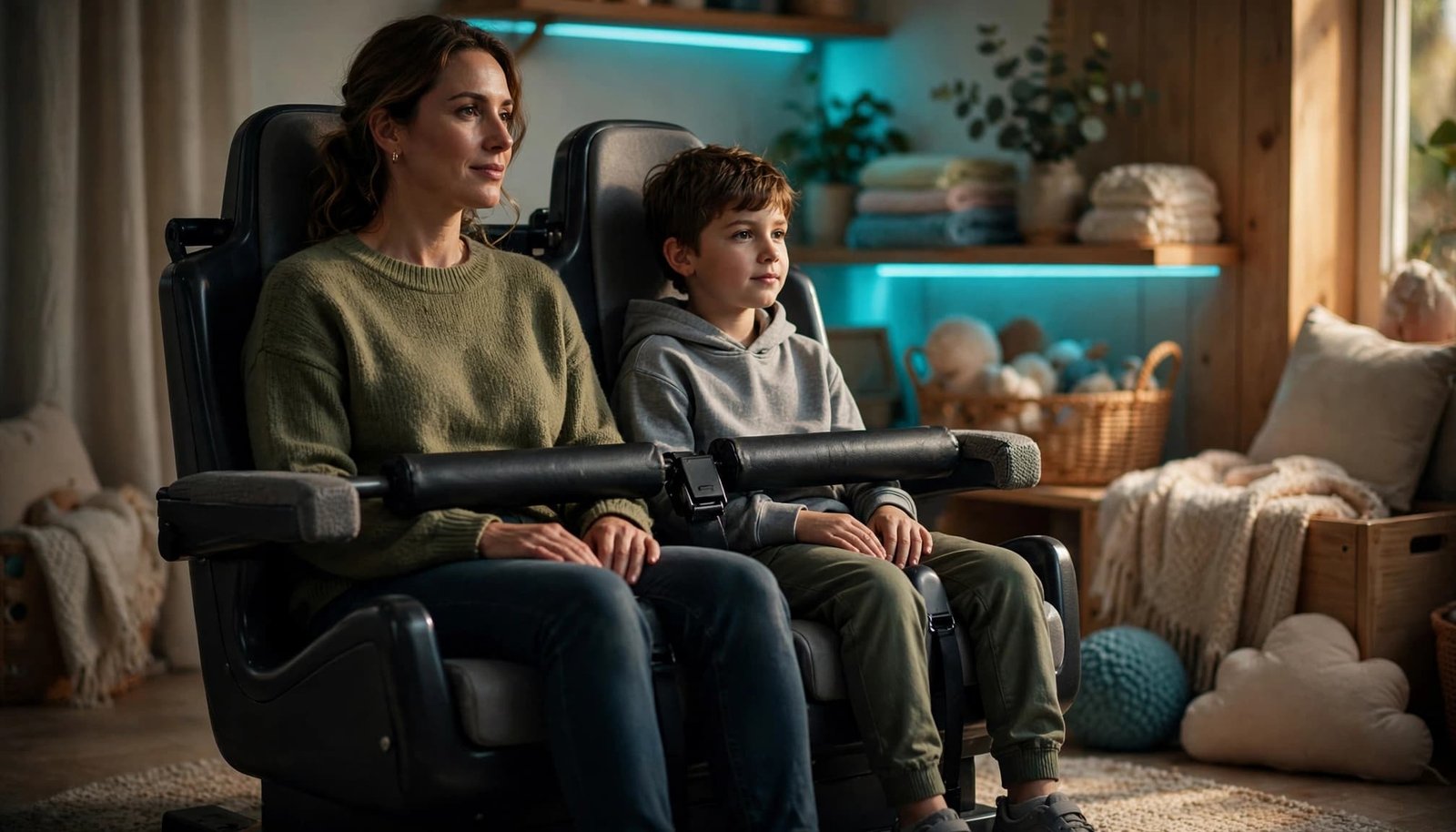
Place a pillow or rolled blanket gently across your child’s lap if they are comfortable with it. Let them be in control. Ask, “Does this feel okay?” and “Would you like more space?”
Don’t force practice. The goal is familiarity, not teaching your child to tolerate discomfort.
Disney Ride Restraints: What May Feel Different
Disney World uses different restraint systems based on the attraction and ride vehicle. Families may hear terms like lap bars and lap belts. Each system can feel different to an autistic child.
Disney doesn’t publish one complete restraint chart for every attraction. Check the ride page and posted signage before boarding. Restraint types, body positioning, height rules, and boarding procedures can change.
Lap bars and lap belts
Many family attractions use a lap bar, lap belt, or another restraint around the lap or waist. Lap bars may leave the upper body free, while lap belts can feel different across the waist. Some children may dislike pressure or clicking sounds.
Big Thunder Mountain has a 38-inch height requirement. Space Mountain has a 44-inch height requirement. The restraint is part of the attraction’s safety measure. It doesn’t promise that a child can ride or will enjoy it.
A child who uses a comfort item, fidget, or AAC device may need help deciding where it will safely go before boarding. If official attraction information mentions a yellow strap, treat it as specific to that ride, not as a universal sign of eligibility.
More secure seating on intense attractions
Some attractions use shoulder harnesses or immobilizing restraints that provide more upper body support. They may feel restrictive, especially during sudden stops or drops. No restraint style is universally better for autistic riders.
Tron Lightcycle Run, officially styled TRON Lightcycle / Run, requires riders to be at least 48 inches tall. Avatar Flight of Passage requires riders to be at least 44 inches tall. Twilight Zone Tower of Terror also requires families to review the seating and motion individually.
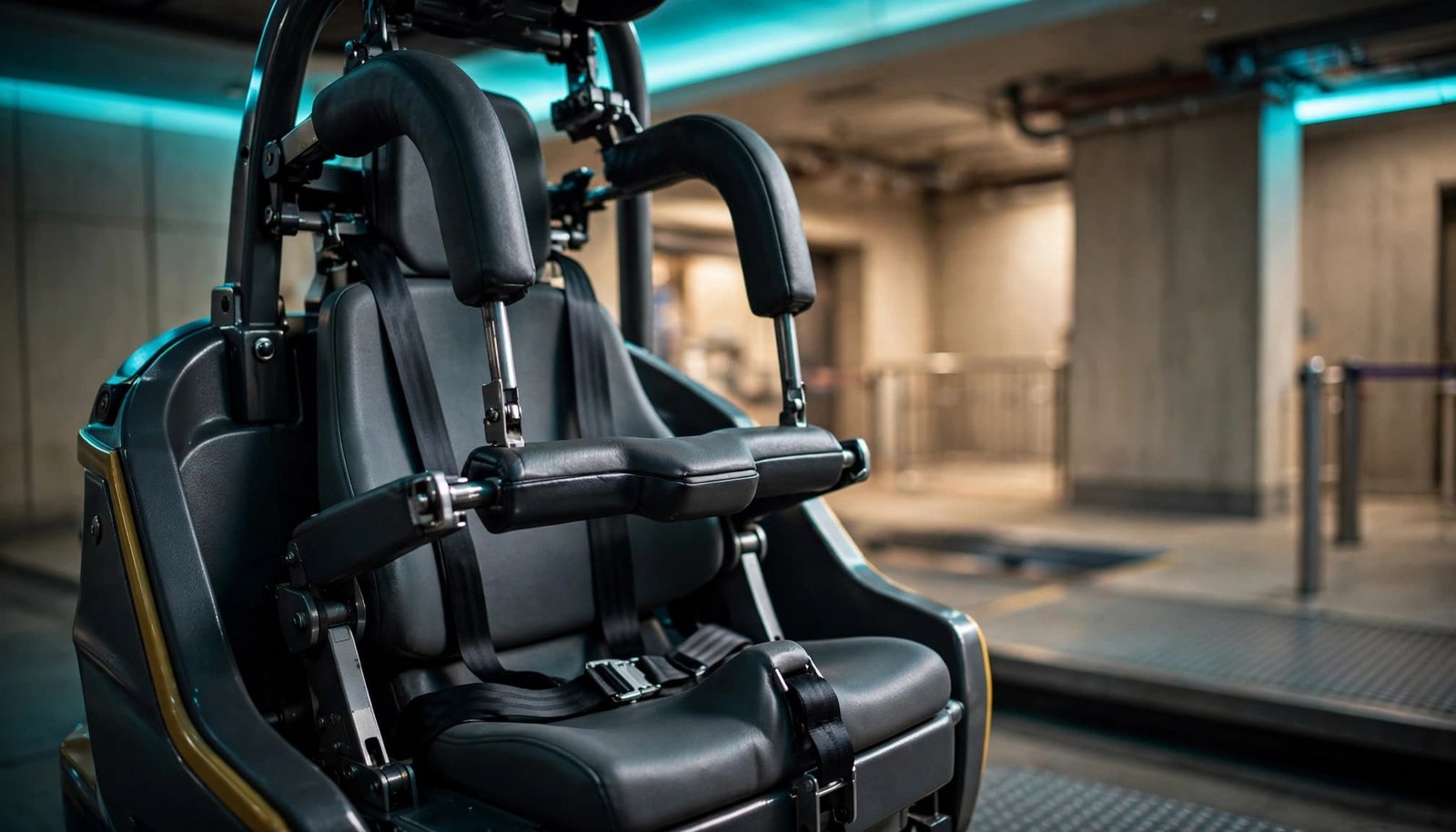
These experiences may be exciting for one child and uncomfortable for another. Before deciding, review the official Avatar Flight of Passage attraction details and talk through the body position, motion, sounds, and screen effects.
Meeting the posted height minimum means a child may be tall enough to board. It doesn’t show whether the attraction will feel comfortable for that child.
Practice the Boarding Routine Before You Leave
The ride itself may only last a few minutes. The harder part may be the quick transition from waiting in line to sitting down, listening to instructions, and securing the restraint.
A short rehearsal can make the sequence easier to understand.
Use a simple seating routine
Practice a few steps in the same order each time. Keep your words short and familiar.
- “Walk to the seat.”
- “Sit all the way back.”
- “Put feet where they belong.”
- “Close the lap bars or buckle the lap belts.”
- “Wait for the okay.”
- “Ride, then get out.”
If your child uses pictures, make a small visual card with these steps. You can also use a first-then card: “First sit in the seat, then choose a snack.”
Try the routine when your child is calm. Rehearse before a busy boarding period, rather than introducing it during busy dispatch times.
Make room for communication
Your child needs an easy way to say “stop,” “help,” “too tight,” or “I don’t want to ride.” Use the words, signs, picture symbols, or AAC supports they already know.
Practice the phrases before the trip. A child who communicates with few words may benefit from a simple card that says “break” or “all done.” Bring a low-tech backup if your child usually uses a communication device.
Tell your child that adults will listen if they say stop, help, or all done before the ride starts. That clear promise can reduce worry.
What to Expect at the Ride Entrance
At Disney World, Cast Members may give directions quickly during loading. Your child doesn’t need to understand every word at once. You can repeat the important part in the language your child knows best.
Stay calm and use one instruction at a time. A busy station may move quickly because of dispatch times, but your family doesn’t have to board before you’re ready.
Ask questions before you board
If you’re unsure about a restraint, ask before getting into the vehicle. Cast Members can answer questions about attraction-specific seating, including whether the vehicle uses lap bars or lap belts, whether your child will need to transfer, or whether there’s time to step away if the ride doesn’t feel right.
Disney directs Guests to review attraction restrictions and advisories, including height requirements, health and safety information, and accessibility guidelines. Verify the current attraction page and posted signage before boarding.
Procedures can vary by attraction and may change. Follow the instructions given at the ride that day, and ask questions or step away if your child isn’t ready.
Plan for sensory pressure in the loading area
Loading areas can be loud, crowded, and fast-moving. There may be music, announcements, ride sounds, flashing lights, and people standing close together. Your child may be fine with the restraint but need a moment before entering the station.
Use headphones until they need to come off for safety. Keep a familiar fidget, sunglasses, or comfort item available while waiting. A favorite hoodie and familiar snack can also make a long park day feel less unfamiliar.
For park bags, Trip Rescue Shop has travel basics including strollers, comfort supplies, and cleaning items for those unexpected sick-on-vacation moments.
Check Each Attraction Instead of Guessing
A label like “thrill ride” doesn’t tell you everything. Roller coasters and other attractions can differ widely in speed, darkness, seating, sound, and motion.
Rock n Roller Coaster and Twilight Zone Tower of Terror can feel very different from other rides. Some attractions may involve shoulder harnesses, immobilizing restraints, or more upper body support. Sudden stops or drops may matter as much as the restraint itself.
Review the current information for the exact attraction your child wants to try. Height information and posted requirements don’t guarantee that your child will feel comfortable or be eligible to ride.
Build a short ride preview
Watch a short ride video together. Then describe the parts your child may not see clearly on screen: walking through the queue, waiting in the loading area, sitting down, closing the restraint, and exiting afterward.
Use a simple daily plan such as “breakfast, bus, one ride, snack, break.” Avoid promising an exact ride order. Weather, downtime, energy levels, and crowds can change the day.
The official Walt Disney World attractions page is a helpful starting point for checking current attraction details, height information, and posted requirements.
Start with your child’s real comfort level
Some families choose calmer experiences first. The PeopleMover, Living with the Land, Kilimanjaro Safaris, and Na’vi River Journey may feel easier for some children. That does not mean they are right for every child.
Darkness can feel comforting to one child and upsetting to another. A child may love a fast ride but dislike a tight restraint. Let your child’s past experiences guide the plan, not what other families are doing.
Our Disney World autism planning resources can help you build flexible park days around sensory needs, communication, rest, and real family routines.
DAS Can Help With Waiting, Not Ride Readiness
Disney’s Disability Access Service, known as DAS, may help eligible Guests who cannot tolerate a conventional queue because of a developmental disability, including autism. It’s not automatic based on a diagnosis, and it doesn’t provide immediate ride access.
DAS can reduce time in a physical queue, but it doesn’t change attraction-specific height rules, restraint requirements, transfer needs, or other safety procedures.
Review the current DAS process early
At Disney World, families may speak with Cast Members through the current official process, including live video chat as early as 60 days before a park visit. The Guest requesting DAS must be 18 or older, and the Guest who may use DAS must be present for the call.
Review Disney’s current DAS information before your travel dates. Verify the current eligibility process, advance-registration window, age rules, return-time process, and available assistance, since Disney policies can change.
If approved, DAS return times can be selected through the My Disney Experience app during the park day. Families without a mobile device can ask Guest Relations or a Guest Experience Team location for help.
Keep the day flexible anyway
DAS may make waiting easier, but your child may still need breaks before boarding. Plan for water, bathroom needs, familiar food, shade, and a calm place to reset.
A hotel break can be more helpful than pushing through one more attraction. A slow day with one favorite ride and a comfortable exit is still a successful Disney day.
Key Takeaways for Your Pre-Trip Plan
- Practice sitting, waiting, and using simple lap pressure at home only if your child is comfortable.
- Use clear words, visual supports, or AAC tools so your child can say “help,” “stop,” or “all done.”
- Check the current height requirement, advisories, and boarding details for each attraction.
- Don’t assume one Disney restraint will feel like another one.
- Pack familiar sensory supports, snacks, medication, chargers, and comfort items your child already uses.
- Build your day around one or two priorities, with real breaks and backup choices.
Families who want more support can use the Disney World with Autism Guide PDF on Etsy or the Disney With Autism Kids eBook on Amazon. These guides are family planning resources, not official Disney guidance or a promise of DAS approval.
FAQ About Disney Ride Restraints and Autism
Can my child try a ride restraint before the ride begins?
Ask the attraction team whether your child can see the seating or restraint process before boarding. They can explain what to expect. If your child becomes distressed, discuss stepping away with the team, since leaving may not always be possible.
Do Cast Members push restraints down for every rider?
Restraint procedures vary by attraction. A ride may use lap bars, lap belts, or shoulder harnesses. Don’t expect the same process on every ride, and don’t compare park procedures with another theme park. Check the official attraction page and current signage for updated loading and accessibility details.
Does DAS let us skip a restraint check?
No. DAS does not change ride safety requirements. Your child still needs to meet the posted height requirement and use the required restraint correctly. Follow current instructions from Cast Members.
What if my child changes their mind at the loading area?
That is okay. Tell your child ahead of time that leaving is an option to discuss with the attraction team. A backup plan can help, such as choosing a snack, finding a quiet spot, or visiting a familiar attraction nearby.
A Disney Day That Feels Safer and More Comfortable
Preparing for attraction restraints before arrival gives your child more predictability and gives you a calmer plan. Practice the basic steps, check each attraction, and keep communication simple.
K&S The Travel Crusaders brings firsthand family travel experience and Kellie’s B.A. in Child Development to Disney planning for families with autism and other special needs. Your Disney day doesn’t have to look like anyone else’s. Flexible plans, comfort, safety, and connection are enough.
Leave a Reply