
Your most helpful contribution to a Disney vacation may be knowing when your grandchild needs a break. Planning Disney with autism in mind gives grandparents a clear way to support the family without adding pressure.
An ebook can help you understand the park plans before tickets, transportation, and tired children need your attention. Shared expectations make it easier to respond calmly when the day changes.
Start with your grandchild’s needs, then decide together how you can help.
Key Takeaways for Grandparents
- Read the guide with the parents, then discuss which suggestions fit your grandchild’s communication, food preferences, and sensory needs.
- Choose one or two daily priorities, and agree on breaks, adult responsibilities, and an early-exit plan before traveling.
- Review current Disney accessibility procedures. An autism diagnosis doesn’t automatically qualify a child for Disability Access Service.
- Give siblings choices too, and treat hotel time as a valuable part of the vacation.
Use an Ebook to Plan Disney with Autism Together
This ebook is an accessibility planning guide and family resource, not official Disney guidance. It gives grandparents and parents a shared starting point for planning together.
Our Disney World With Autism Guide PDF on Etsy covers practical preparation for park days, sensory needs, dining, breaks, and accessibility planning. You can also find our Disney autism travel guide on Amazon.
At K&S The Travel Crusaders, our approach draws on firsthand family experience and real-world travel planning. Kellie Neff also holds a B.A. in Child Development. We focus on plans that fit individual families, with room for comfort and changes.
Use the guide during a family conversation. Review the topics that matter most, such as transportation, selective eating, or what happens when a favorite attraction closes.
Write down the parents’ answers rather than assuming every suggestion applies. Your grandchild may enjoy loud music but struggle with crowded transportation. Another child may need more support with transitions than attractions.
Keep your family notes accessible during the trip. The ebook is an optional planning resource, not a promise that every day will go smoothly.
Prepare Grandparents Before the Trip

A family meeting for Disney planning helps everyone understand their role. Review Disney’s accessibility services together, then discuss your family’s everyday supports.
Learn How Your Grandchild Communicates
Ask how your grandchild communicates “help,” “hungry,” “finished,” and “too loud.” Speech may be only one part of that communication.
If your grandchild uses an AAC device, picture cards, gestures, or familiar phrases, practice responding before departure. Keep communication tools available throughout the day.
Learn the early signs that your grandchild needs support. These might include covering their ears, becoming unusually still, pacing, or trying to leave. Parents can explain what these changes mean for their child.
Ask which responses help. Fewer words, more space, or a familiar snack may be useful. During sensory overload, several adults asking questions can add another demand. Let the agreed caregiver lead.
Agree on Decisions and Boundaries
Choose who handles attraction plans, meals, transportation, and changes. Grandparents can take a helpful role without needing to manage everything.
Agree that the primary caregiver can call for a break or departure without a family debate. Discuss physical support and supervision expectations too.
Avoid promising fireworks, character hugs, or a full day in the park. Your grandchild may decline something you were excited to share.
Paying for tickets doesn’t create an obligation to stay when your grandchild needs to leave.
A shorter visit can protect the rest of the vacation, including sleep and tomorrow’s plans.
Understand DAS Before You Reach the Park
Disney’s Disability Access Service, or DAS, supports eligible guests who, because of a developmental disability such as autism, can’t wait in conventional attraction queues for an extended period.
Registration Happens Through Live Video Chat
Disney reviews eligibility individually. A diagnosis alone doesn’t guarantee approval for the Disability Access Service.
Registration is handled through live video chat. Check Disney’s official guidance for current registration details, including timing and available options, as procedures can change.
Grandparents can help by caring for another child while the parent completes the conversation. The caregiver who understands the child’s queue difficulties should explain them accurately.
Don’t rehearse exaggerated answers or assume an ebook can secure approval. A planning resource can help you understand the process, but Disney decides which services are appropriate.
Before departure, confirm the latest procedures and discuss what your family will do if DAS isn’t available.
A Return Time Still Requires a Flexible Plan
The DAS return-time process lets eligible guests wait outside a conventional attraction queue. It doesn’t guarantee immediate boarding or a shorter wait.
After entering a theme park, use the DAS feature in the My Disney Experience app to select an eligible attraction and request a return time. Follow the app’s prompts for when you can make another selection.
Plan how to spend the waiting period. A snack, shaded rest, or bathroom visit may fit better than another attraction.
Grandparents should still prepare for walking, crowds, heat, and changing plans. DAS doesn’t remove those parts of a park day.
Build a Sensory-Ready Park Day
Preparation works best when it accounts for sensory needs, includes familiar supports, and leaves a clear way to change course.
Carry Comfort Items Your Grandchild Already Uses
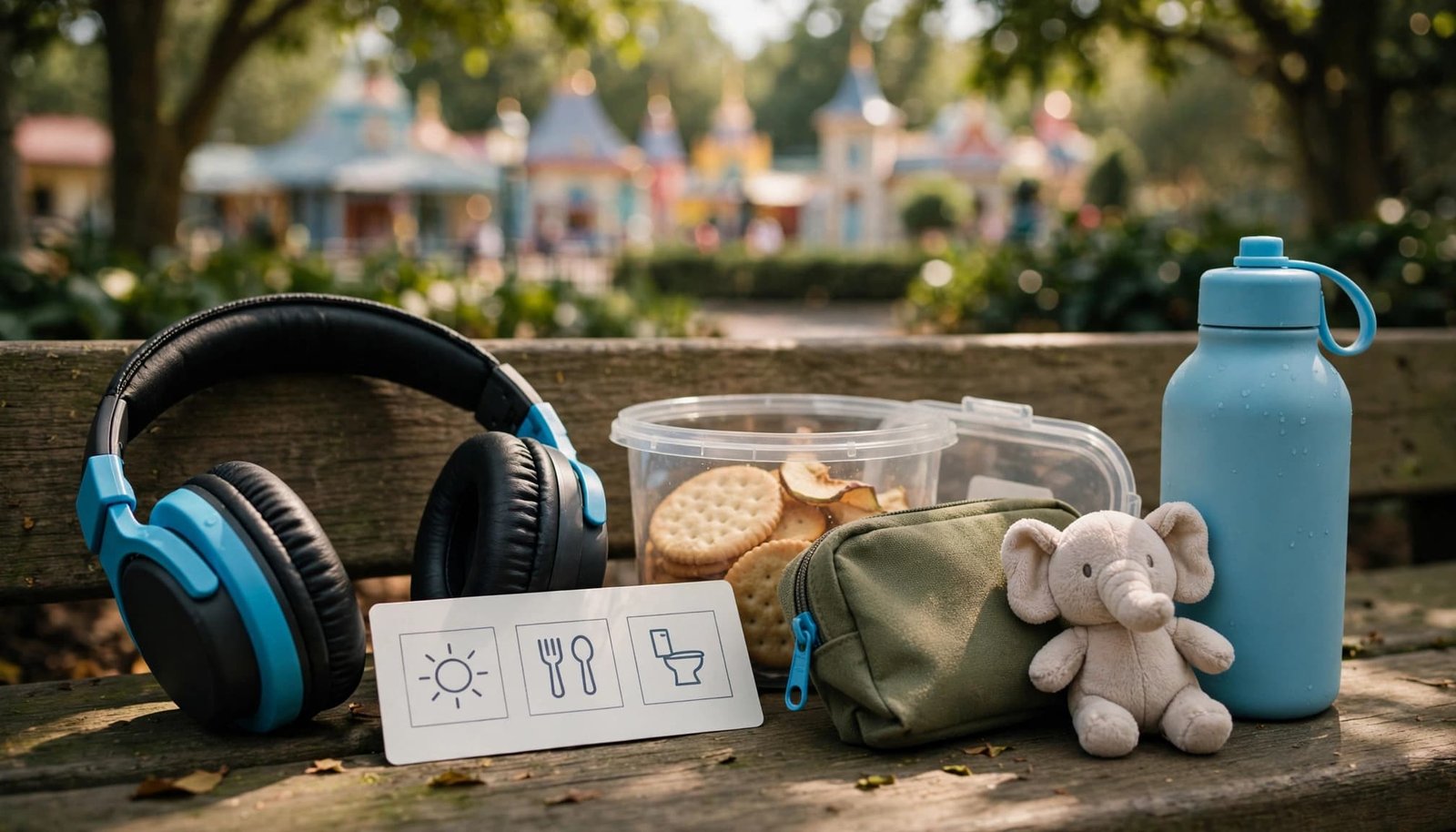
Ask the parents which items belong in the park bag. Familiar noise-canceling headphones, safe snacks, a comfort toy, medication, and communication-device chargers may be useful.
Grandparents can carry backup supplies, but keep frequently used items within reach. Practice with new equipment before traveling.
Our family travel supply shop offers optional supplies, including strollers, comfort essentials, and cleaning products for unexpected sick-on-vacation needs. Choose what fits your family rather than buying every possible item.
Supplies support the plan. They don’t replace rest or your grandchild’s usual care routine.
Plan a Short Rhythm, With Room to Change
Use a visual schedule with a few familiar steps. Include a break picture and a simple way to show that plans have changed.
This flexible rhythm keeps the next step easy to understand.
| Part of the day | Main plan | Backup choice |
|---|---|---|
| Arrival | Enter and get settled | Pause before choosing an attraction |
| First activity | Try one family priority | Choose another familiar option |
| Food and rest | Eat familiar food and take a break | Return to the hotel |
| Afternoon | Reassess energy together | End park time |
For flexible Disney park planning, review attraction details before committing. Darkness, scents, lighting effects, and movement can matter as much as ride height.
First Aid locations are examples of quieter break areas. Ask a Cast Member about the nearest suitable location in Magic Kingdom or EPCOT. Companion restrooms can be useful to locate, but don’t assume they’re quiet spaces or dedicated sensory rooms.
Help With Meals, Safety, and Sibling Time
Grandparents can reduce stress by taking responsibility for practical details the parents identify.
Protect Familiar Food and Rest
Selective eating can make meals difficult when restaurants are unfamiliar. Ask which foods your grandchild reliably eats, and avoid making vacation meals a test of flexibility.
Food allergies and selective eating need different planning. Review menus beforehand, and discuss allergy requirements with restaurant staff. Don’t assume a familiar-looking item has the same ingredients.
Plan breaks around your grandchild’s usual energy and eating patterns. Waiting until everyone is exhausted can make the trip back harder.
Choose a resort hotel at Walt Disney World Resort with realistic transportation for your park plans. Consider walking distance, transport waits, and how easy it is to return for a break.
Grandparents also need rest. An exhausted caregiver has less patience for a difficult transition.
Make Supervision and Sibling Plans Clear
Agree on adult handoffs before traveling. Say who is supervising, and wait for that person to acknowledge the responsibility.
If elopement is a concern, follow the parents’ safety plan. Keep contact information accessible, and alert park staff immediately if your grandchild becomes separated.
Give siblings their own choices. A grandparent may accompany one child on an attraction while another adult stays with the child who needs a break.
Disney’s Rider Switch program is available at most attractions. Bring the whole group to the entrance and ask a Cast Member about the procedure.
Explain schedule changes without blaming any child. Everyone deserves support and enjoyable moments.
Frequently Asked Questions
Can a Stroller Use a “stroller as a wheelchair” Tag?
A “Stroller as a Wheelchair” tag is one of several Disney World disability accommodations. Ask Theme Park Guest Relations about individual eligibility for a stroller as a wheelchair tag.
A tag may support queue access when a stroller serves qualifying needs, such as mobility or transporting medical equipment. An autism diagnosis doesn’t automatically qualify someone for a tag. Attraction safety and boarding rules still apply.
Which Resort Is the Quietest?
No resort can guarantee a quiet stay. Compare room location, resort layout, transportation, and sleeping arrangements.
Disney’s Art of Animation Resort family suites have two bathrooms and a kitchenette, which may help with routines. That doesn’t make the resort the quietest choice. Choose features that meet your family’s needs.
Should a Three-Year-Old Wait Until They’re Older?
Age alone doesn’t answer that question. Consider communication, sensory needs, sleep, safety, and how your grandchild recovers after busy outings.
Ask the parents what feels manageable now. A short park visit may suit one child, while another family may prefer to wait.
What Should Grandparents Do During Sensory Overload?
Follow the response plan agreed with the parents. Reduce conversation and extra demands, protect personal space, and help find a lower-stimulation place.
Avoid insisting on one more ride or asking for an explanation during distress. Give your grandchild time to recover.
Support the Plan, Enjoy the Memories
Preparing for Disney with autism starts with understanding your grandchild, then supporting the family’s decisions. An ebook can organize the details, while shared expectations help you respond when those details change.
Your most useful role may be carrying familiar snacks, spending time with a sibling, or helping everyone leave calmly.
Review the guide together before departure. Comfort and choice give your family more room to enjoy the moments that matter.
Leave a Reply