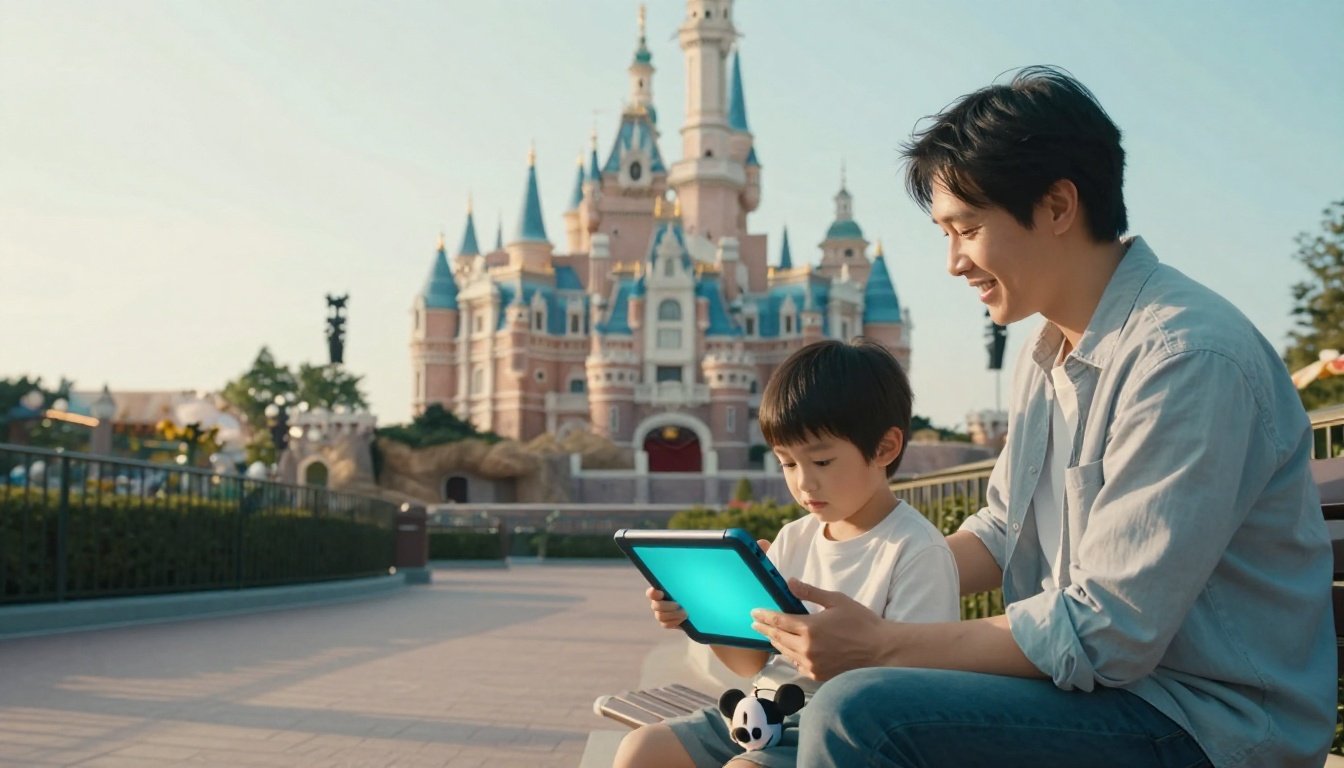
Non-speaking autistic children communicate in many ways. AAC, pictures, gestures, signs, eye gaze, facial expressions, and body language all count.
A strong Disney World autism communication plan does not ask your child to communicate like anyone else. It gives them familiar ways to say yes, no, help, break, hungry, and all done during a busy Walt Disney World day.
A little preparation can make park days feel more comfortable, flexible, and family-focused.
Key Takeaways
- Use the communication methods your child already knows, including AAC, pictures, gestures, signs, eye gaze, and body language. Avoid introducing a brand-new system during the Disney trip.
- Prepare charged devices, visual supports, familiar snacks, sensory tools, and a low-tech communication backup for heat, rain, battery loss, or unexpected changes.
- Include simple ways to request help, breaks, food, water, quiet, headphones, the bathroom, and leaving before distress becomes overwhelming.
- Use short, clear information with Cast Members and explain that your child may use AAC or need extra processing time. Review current Disney accessibility policies, including DAS procedures, before traveling.
- Build a flexible park day with choices, rest periods, sensory breaks, and permission to leave early. Communication access and comfort matter more than completing every ride.
Build a Disney World Autism Communication Plan Before You Travel
Start with the communication methods your child already knows. Disney World is not the place to introduce a brand-new app, picture system, or sign. Practice any new tool at home first.
Think through the moments that may be hardest. Waiting for transportation, walking through security, hearing a loud ride, choosing food, or leaving a favorite activity can bring big feelings. Write down the words, symbols, gestures, or signs that help your child share what they need.
Keep the messages short and familiar:
- “Break,” “help,” “bathroom,” “water,” and “hungry.”
- “Too loud,” “scared,” “wait,” and “all done.”
- “More,” “no,” “yes,” and “change.”
- “Hotel,” “stroller,” “noise canceling headphones,” and “quiet.”
Include your child in the planning when possible. Let them choose a comfort item, preferred snack, or a few rides they want to see. The goal is not a packed itinerary. The goal is a Disney day where your child has ways to be understood.
### Prepare the AAC Device, Apps, and Backup Options
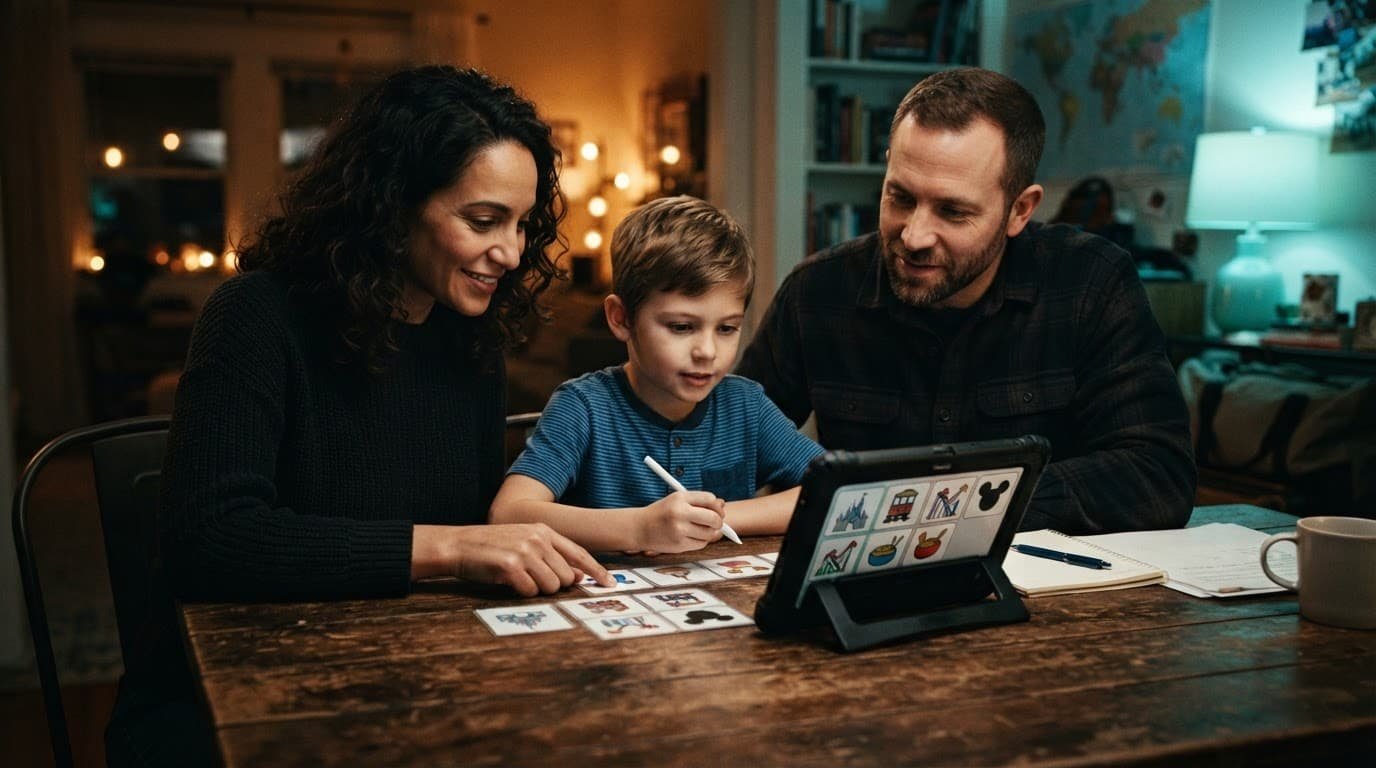
If your child uses a speech-generating device or tablet, set it up before you leave home. Fully charge it, install updates early, and make favorite communication pages easy to find. Download anything that needs Wi-Fi before the trip.
Florida heat and sudden rain can be hard on electronics. Bring a protective case, charging cable, portable battery, and weather-safe pouch. Put devices, headphones, cords, and chargers together in one small pouch.
Families often remember the tablet and forget the cable.
A low-tech backup matters, too. Printed picture cards, a small communication board, handwritten cards, gestures, and sign language can help if a device gets wet, is lost, overheats, or runs out of battery.
Create Visual Supports for Changes, Waiting, and Choices
A simple visual schedule can make a big day easier to understand. Use pictures or icons for hotel, bus, security, ride, snack, bathroom, break, and hotel again.
First-then boards also work well. “First security, then bus.” “First ride, then snack.” Keep the plan flexible by including a change card. It can show that a ride closed, rain started, or it is time to leave early.
During a stressful moment, broad questions can feel like too much. Offer two realistic choices instead. “Do you want headphones or a break?” “Do you want the stroller or to walk?”
Use Communication Supports for Sensory Needs, Safety, and Daily Routines
Behavior is communication. Children with sensory processing disorder, or children who are simply overwhelmed, may show distress in different ways. Your child may be communicating that they are hot, scared, in pain, tired, overwhelmed, or ready to leave. Watch for your child’s own signs, especially when speech is not their primary communication method.
Busy walkways, loud music, character crowds, strong smells, heat, and sudden changes can create sensory overload at theme parks. Identify quiet spaces and break areas before distress escalates. A shaded table, First Aid, or a return to the resort may be the right next step.
Disney’s accessibility planning guide is helpful for reviewing park access and support options before your visit.
A break is not lost park time. It is often what makes the next part of the day possible.
Make Breaks, Bathrooms, Food, and Comfort Items Easier to Request
Add easy-to-find AAC buttons or picture choices for bathroom, water, familiar foods, shade, quiet, headphones, stroller, rest, and leaving. Keep them available before your child reaches a breaking point.
Bring familiar snacks and specialized food items if they help your child eat comfortably. Disney allows guests to bring food and nonalcoholic drinks for personal use, with a few safety restrictions. A refillable water bottle, preferred snacks, sunscreen, poncho, and cooling item can reduce pressure during a long park day.
Photos of familiar meals can also help with mobile ordering. Your child may point to a photo of chicken tenders, fries, fruit, or another preferred item. This can be easier than choosing in a noisy quick-service restaurant.
Check in often. Offer water before thirst, shade before overheating, and a snack before hunger becomes a crisis.
Add a Simple Safety Card for Caregivers and Cast Members
A short communication card can be especially useful for a child with additional needs. It can explain that your child uses AAC, gestures, pictures, sign language, or a combination of supports. It can also explain that they may need extra processing time.
Include only practical information:
- Your child’s name or preferred identifier and a caregiver phone number.
- Their communication method and any wandering risk that applies.
- What helps during distress, such as a quiet space, headphones, or reduced talking.
A Sunflower Lanyard may be an optional identifier for some families. It does not replace close supervision or determine eligibility for Disney services.
The card gives caregivers and Cast Members a fast, respectful way to understand what may help. It does not replace supervision.
Use the Plan During Queues, Attractions, and Cast Member Conversations
Keep communication supports visible and easy to reach. A picture board buried under ponchos will not help when a queue feels too long.
Guest Relations and other guest services can help when the app feels confusing or an attraction plan changes. Disney’s guest disability services information is also useful for reviewing current support options before you arrive.
If your stroller is needed for safety, regulation, or mobility, ask about the appropriate stroller as wheelchair tag. It allows the stroller to be used where strollers are usually parked.

### Make Lines and Ride Transitions More Predictable
Use simple visual steps for security, entering a queue, waiting, boarding, riding, exiting, and choosing what comes next. A timer can help some children, but it can add stress for others. Use what already works at home.
Prepare for ride effects before getting in line. Show a photo or short ride video if that helps. Explain darkness, loud sounds, smells, water, drops, or sudden movement in clear language.
Disability Access Service, often called DAS, is a queue accommodation for guests whose developmental disability makes waiting in a conventional line difficult. Eligibility is based on functional needs, not diagnosis alone.
The registration interview happens through a video chat. Non-speaking status or AAC use alone does not automatically qualify someone for DAS. You don’t need to bring a doctor note for the process.
Before the video chat, describe how the guest manages functional waiting difficulties. Explain what happens during a conventional queue, rather than presenting a diagnosis alone.
If approved, each return time is managed through the My Disney Experience app. DAS is separate from paid Lightning Lane services. Current policies generally allow the registered guest and up to three additional guests to ride together. Virtual queue procedures can differ by attraction, so check the current app. Review the official DAS details before your trip because procedures can change.
Rider Switch can help accommodate adults or siblings who are not riding.
Give Cast Members Clear, Short Information
One adult can speak while another supports the child. Too many voices and directions can make a stressful moment harder.
Cast Members can explain procedures and point you toward help. You know your child’s communication style, sensory needs, and calming supports best.
Simple requests work well:
- “My child uses AAC and needs extra processing time.”
- “Can you show us where to wait?”
- “The ride changed, and we need help with the next step.”
Tell Cast Members when your child needs extra processing time. Keep the message short and give them time to respond.
Pack a Printable Disney Communication Checklist and Helpful Resources
Test every device, printed board, and charging cable before departure. If you’re visiting multiple theme parks, divide supplies between a travel bag and park bag.
For extra planning support, the Disney World With Autism Guide PDF can serve as a family guide with DAS, sensory, and park-day ideas. The related Disney autism travel ebook offers another helpful resource for planning at home.
Printable Park-Bag and Travel Checklist
- Pack the AAC device or tablet, communication board, printed cards, visual schedule, first-then board, and change card.
- Use a visual schedule for park-specific plans, such as stops at Magic Kingdom or Epcot.
- Bring a portable charger, charging cable, backup battery, protective case, and headphones in one pouch.
- Include familiar snacks, a refillable water bottle, comfort item, sensory tools, sunscreen, and weather gear.
- Carry medications, stroller supplies, tickets, identification, and emergency contact details.
- If it is already part of the child’s routine, consider a Sunflower Lanyard as an optional identifier. It doesn’t replace supervision.
- Keep a low-tech communication backup in a separate, easy-to-reach location when practical.
A charged phone matters, too. It may hold tickets, park maps, mobile orders, messages, and the current DAS return time through the My Disney Experience app.
Frequently Asked Questions
What communication methods can a non-speaking autistic child use at Disney World?
A child may communicate with AAC, picture cards, gestures, signs, eye gaze, facial expressions, or body language. The best plan uses familiar methods your child already understands and uses at home.
Should we introduce a new AAC app before our Disney trip?
It is best not to introduce a completely new communication system during the trip. If you want to use a new app or board, practice it at home first and bring a familiar low-tech backup.
What should we include in a Disney communication board?
Add practical messages such as help, break, bathroom, water, hungry, too loud, scared, more, no, yes, change, and all done. Include choices for headphones, stroller, quiet, snack, rest, and leaving when those supports are useful.
How can we help our child communicate during sensory overload?
Watch for your child’s individual signs of distress and offer simple choices, such as headphones or a break. Move to a shaded or quiet area, reduce talking, and give your child extra processing time.
Does using AAC automatically qualify a child for DAS?
No. AAC use or non-speaking status alone does not automatically qualify someone for Disney’s Disability Access Service. Eligibility focuses on functional difficulty with waiting in a conventional queue, and current procedures should be reviewed before the trip.
A Disney Day That Makes Room for Communication
A successful Disney World autism communication plan is not about doing every ride. It is about creating a flexible theme park vacation where your child has trusted ways to say yes, no, help, break, and all done.
Use the communication methods your child already knows. Keep technology charged, bring a backup, and build in rest days when your trip length allows. Shorter park visits or an early return to the resort can also support a better day.
Communication access and comfort matter more than a packed itinerary.