
At Walt Disney World, summer heat can turn a happy morning into too much, fast. Glare, crowds, noise, thirst, and changed plans can challenge special needs travelers. This is especially true for a family with an autistic child who has sensory sensitivities.
These Disney autism summer tips start with travel planning that protects your child’s comfort before the day reaches a breaking point. You don’t need to race from ride to ride to enjoy a meaningful Disney World vacation.
A successful day isn’t measured by the number of attractions you complete. Plan fewer priorities, use the cooler hours well, and make breaks part of the plan, not a last resort.
Key Takeaways
- Prepare at home with simple visual schedules, familiar sensory tools, and a park bag that includes cooling, communication, hydration, and comfort items.
- Use cooler morning hours for one or two priorities, then plan indoor meals, resort breaks, shade, water, and clothing changes before heat and sensory overload build.
- Learn how DAS, Rider Switch, and stroller-as-wheelchair accommodations may support your family, but confirm current Disney procedures before your trip.
- Identify quiet break areas and a family meeting point in advance, and remember that leaving early or choosing a smaller plan can still make the day successful.
Disney Autism Summer Tips Start Before You Leave
Make the trip feel familiar at home
A Disney trip has many new sounds, smells, people, and routines. Summer weather adds another layer. Give your child a preview before you arrive.
Watch ride-through videos together. Look at photos of your resort, transportation options, and the park entrance. Talk through security, bag checks, buses, monorails, and what a summer storm might look like.
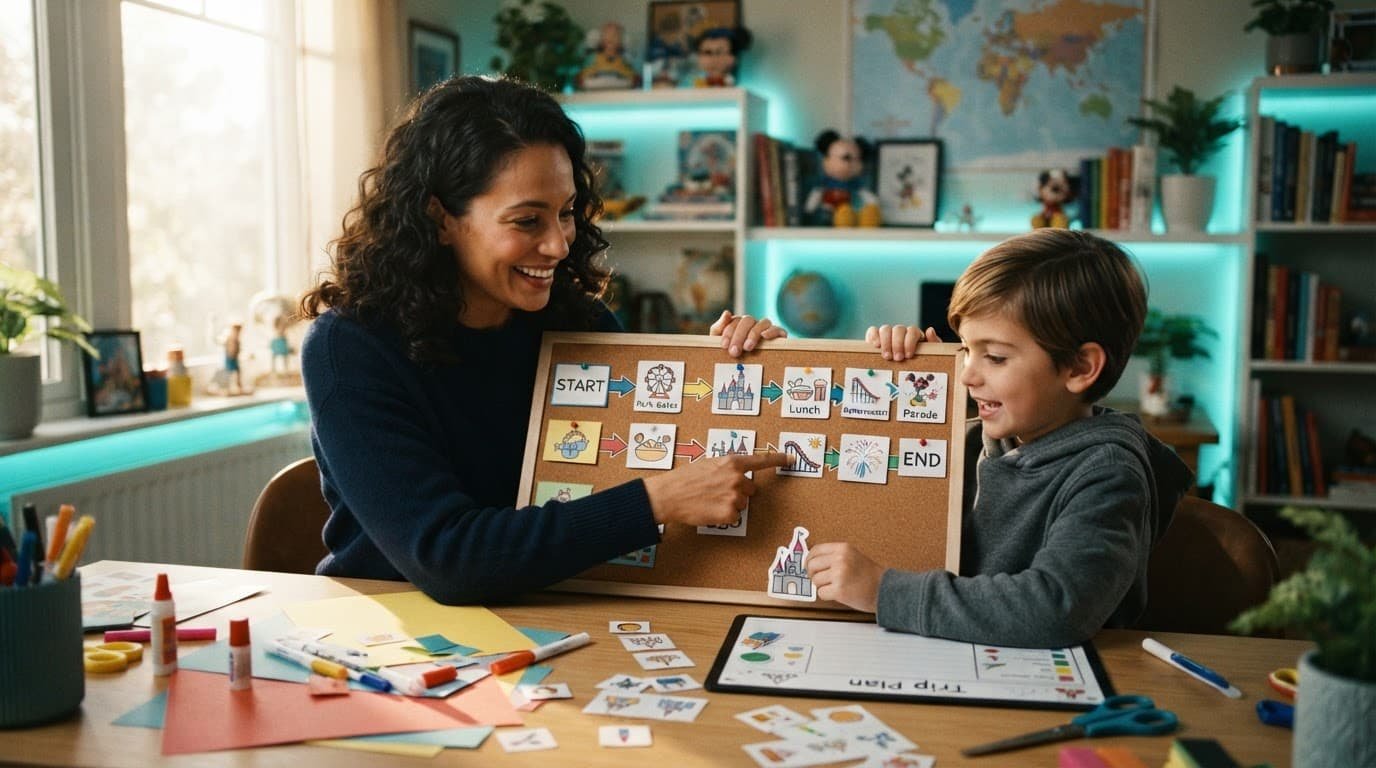
Children with autism and children with cognitive disabilities may process transitions differently. A visual schedule can help, but keep it simple. “Breakfast, bus, one ride, snack, break” is easier to process than an hour-by-hour plan. Include pictures of a hotel room, a favorite snack, headphones, the pool, and your chosen park.
An occupational therapist can help your family identify comfortable cooling, communication, and regulation tools before the trip. Practice using cooling towels, portable fans, sunglasses, or headphones before you leave. Disney isn’t the best place to find out a new sensory tool feels uncomfortable.
Pack for comfort, not just convenience
Your park bag should make it easy to meet needs quickly. Keep communication supports where you can reach them without digging under ponchos and snacks.
Choose tools based on your child’s sensory profile, not on what works for another child. A small tech pouch belongs in every park bag. Families often remember the tablet and forget the charging cable.
- Bring a portable charger, charging cord, headphones, and any needed device in one pouch.
- Pack familiar snacks, refillable water bottles, and any safe foods your child will reliably eat.
- Carry a low-tech backup, such as picture cards for “wait,” “break,” “bathroom,” “food,” and “all done.”
- Include a spare shirt, cooling towel, sunscreen, hat, medication, and a small comfort item, such as familiar sensory toys.
Keep one adult in charge of the bag and one adult in charge of the next step. Too many directions can make a tense moment harder.
Build the Day Around Cooling, Not Attractions
The best summer park day often starts early. Arrive close to opening if your family’s sleep schedule allows it. Use that cooler stretch for one or two priority attractions, but don’t let posted wait times or long lines override water, shade, indoor cooling, or a planned resort break.
Then slow down before the heat peaks. An indoor lunch, a resort break, pool time, a Disney water park day, or a quiet hotel room can reset the whole day. Leaving the park for a few hours isn’t wasted ticket money. It may be what makes the evening possible.
Heat, glare, sweat, and wet clothing can become harder to tolerate with sensory sensitivities. Plan cooling and clothing changes before discomfort becomes urgent.
Use a simple response plan when heat starts building.
| What you notice | What to do next |
|---|---|
| Flushed cheeks, sweat, irritability, or silence | Find shade, offer water, and reduce demands right away. |
| Headphones come off or small noises feel bigger | Move indoors, lower conversation, and offer a familiar device or fidget. |
| Your child says “all done” or tries to leave | Treat it as useful communication, not a problem to push through. |
Ask a quick-service location for ice water if you need it. A refillable bottle is helpful, but an icy cup can cool hands and face as well as help with hydration.
Choose lightweight clothing that your child already likes. Follow any individualized sensory or clothing recommendations from an occupational therapist rather than testing something new. A soft shirt, comfortable shoes, and a familiar hat are better than a brand-new outfit that feels scratchy by lunchtime. Bring a spare shirt because a dry shirt after rain, sweat, or a water ride can change the mood quickly.
The best break happens before your child has to ask for one. Heat and sensory overload together can take longer to recover from than a planned 30-minute reset.
Don’t build every day around fireworks. Some families enjoy the evening shows. Others do better with dinner at the resort, a shower, pajamas, and an early bedtime. Both are good Disney days.
Use DAS, Stroller Tags, and Rider Switch Wisely
Disney’s official Disability Access Service information explains the current process and eligibility details. DAS is intended for guests with a developmental disability, such as autism, who cannot wait in a conventional queue for an extended period.
During registration, explain how cognitive disabilities affect waiting in a conventional queue. A diagnosis alone does not guarantee approval, even for guests with cognitive disabilities. The challenge may be sensory overload from unpredictable noise levels, difficulty understanding an uncertain wait, elopement concerns, or trouble staying regulated in long lines.
Families can pre-register online for the video conversation up to 60 days before a visit. The requesting guest must attend the video chat, including an autistic child. A parent or guardian participates for a minor. Disney generally does not require a doctor’s note; eligibility is decided during registration, so check guest services for current rules.
Once DAS is active, use the My Disney Experience app to request an attraction return time. Your family waits somewhere else instead of standing in the standby line and tracking long wait times. You can generally hold one DAS return time at a time.
The registered guest must be present and ride with the group. DAS parties are typically limited to four people total, although Disney may consider immediate-family exceptions. Check the details before your trip because procedures can change.
Don’t add more clock-watching than your family can handle
Lightning Lane Multi Pass is separate from the Disability Access Service (DAS) and costs extra. It can help when your family has a few true must-do rides and can handle scheduled return windows.
For example, EPCOT may be a good day to consider it if Remy’s Ratatouille Adventure, Frozen Ever After, or Soarin’ Around the World are high priorities. Check the app before purchasing because prices, participating attractions, and return times change.
You don’t need every paid add-on for a successful vacation. A packed schedule of return times can create more pressure when your child needs a break or a ride closes.
Ask a Cast Member about the Rider Switch program if one child cannot or does not want to ride. One adult can stay with the child while another rides. With the Rider Switch program, the waiting adult can then take a turn without everyone repeating a full standby wait.
If your child needs to remain in a familiar stroller for safety, sensory needs, or mobility, ask Guest Relations about a stroller as a wheelchair tag. Confirm the stroller as a wheelchair tag with Disney before your trip, since procedures can change.
Find Quiet Break Areas Before You Need One
Every park has busy times, but you can still identify calmer places ahead of time. Use the My Disney Experience app, ask guest services, or visit a Guest Experience Team location when you arrive.
Before the day gets difficult, identify two possible quiet break areas in advance. First Aid stations, Baby Care Centers, companion restrooms, shaded seating, resort lobbies, and quieter corners near less-busy walkways can all help. First Aid is there for medical needs, so always ask before settling in for a longer break.
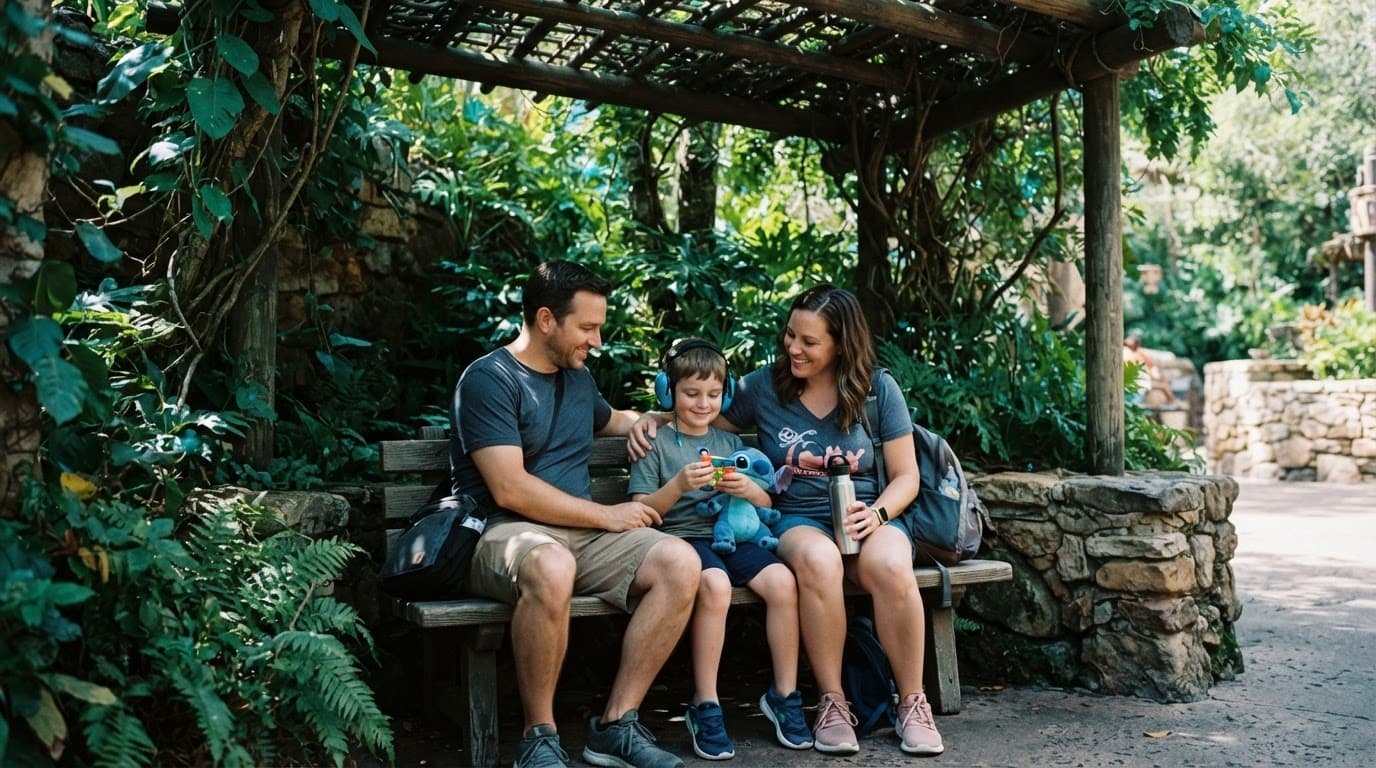
Companion restrooms may offer privacy, but they aren’t necessarily quiet spaces. An indoor attraction or air-conditioned show may offer a better reset when your child needs lower stimulation without leaving the park.
Choose a family meeting point before splitting up. When a child with cognitive disabilities is having trouble processing a change, use a short, consistent phrase or visual cue, such as, “We are going to our calm spot.” Your child doesn’t need a long explanation during a hard moment.
If leaving the park is the right choice, leave. A Disney day has not failed because it ended early.
Choose a Resort and Meals That Support Your Routine
Where you stay affects every summer afternoon. A Disney Resort hotel can make midday breaks easier because you can return to your room without a long drive or parking garage. An off-site hotel may be better if your family needs a quieter setting, a full kitchen, or more space.
Disney’s Port Orleans Resort, French Quarter can work well for families who prefer a smaller moderate-resort layout. Disney’s Art of Animation Resort may help larger families because its family suites include extra sleeping space, two bathrooms, and a kitchenette.
For meals, mobile ordering gives you more control. Review menus during a calmer moment, make dietary requests in advance where available, and order familiar food. Choose a pickup time when your child is ready. You can often take food to a quieter outdoor table or back to the resort.
Character dining can be wonderful, but a character buffet can also be loud and unpredictable. Garden Grill at EPCOT is a family-style character meal where you remain at your table. Compared with a character buffet, that setup may feel more predictable for some families, though it still has activity and noise.
For vacation planning, keep your notes in one place with a Disney World with Autism Guide PDF or the Disney autism travel guide on Amazon.
Let a Smaller Plan Be the Successful Plan
One park per day is often easier than Park Hopper tickets. Moving between theme parks can mean extra transportation, security lines, walking, and decisions. During the summer months, that extra movement can drain energy quickly, especially with long lines along the way.
At Magic Kingdom, stay in one area for a while instead of crossing the park for every attraction. At EPCOT, remember that Frozen Ever After, Soarin’, and Remy’s Ratatouille Adventure are spread far apart.
Choose one or two priorities each morning. Check crowd levels and wait times during planning, but treat both as rough guides, not guarantees. Group nearby attractions together. Leave room for snacks, bathrooms, shade, and a change of plans.
A smaller plan gives your family permission to slow down, and it can still make a successful family vacation. A rest day after two or three park days can be a smart choice, especially at Walt Disney World. Pool time, laundry, a quiet breakfast, a resort-only trip, or Disney Springs can be enough.
Frequently Asked Questions
What is the best way to manage Disney heat with an autistic child?
Start early, use shade and air-conditioned spaces, and offer water before your child asks for it. Pack familiar clothing, cooling tools, a spare shirt, and a planned resort or indoor break.
Should my family apply for Disney’s Disability Access Service?
DAS may help a guest with autism or another developmental disability who cannot wait in a conventional queue for an extended period. Eligibility is determined during registration, so explain your child’s specific challenges and check Disney’s current process before your visit.
Where can my child take a quiet break at Disney World?
Look for shaded seating, indoor attractions, resort lobbies, Guest Experience Team locations, and other calmer areas identified before the day becomes difficult. First Aid stations and Baby Care Centers may help with specific needs, but ask Cast Members before using them for an extended break.
Is it better to leave the park during the hottest part of the day?
For many families, a resort break, pool visit, quiet hotel room, or indoor meal can protect the rest of the day. Leaving the park is not a failed plan if it helps your child recover and enjoy the evening—or get the rest they need.
A Cooler Day Is a Calmer Day
Summer Disney trips can be enjoyable when the plan respects your child’s real needs. Early mornings, water, shade, familiar tools, and regular breaks can protect everyone’s energy.
DAS, Rider Switch, stroller accommodations, and paid add-ons can help, but they don’t replace a flexible pace. A calmer family matters more than a longer attraction list.
Your best Disney memories may come from a favorite ride, a quiet snack in the shade, or the moment your child feels safe enough to enjoy the day.