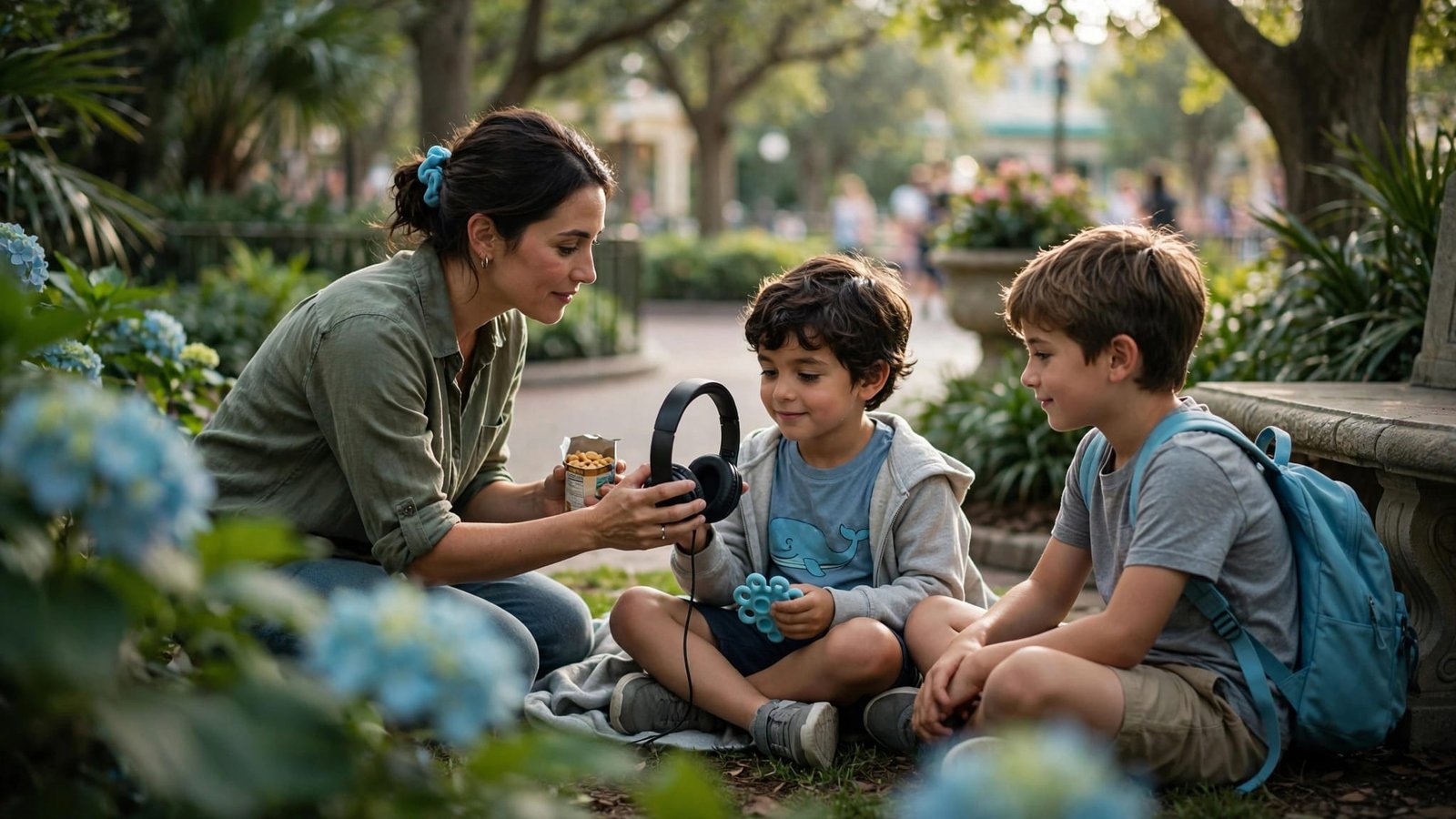
Your child can have a meaningful Disney vacation without staying until fireworks or riding every attraction. Disney World autism planning starts with comfort and choice, so the trip fits your family instead of asking your family to fit a crowded schedule.
Noise, heat, waiting, and unfamiliar routines can make even an exciting day feel overwhelming. A personalized plan gives you room for familiar food, sensory supports, and changes without making anyone feel they’ve missed the vacation.
Start with what helps your child feel safe, then build the details around those needs.
Key Takeaways
- Plan around your child’s communication, sensory needs, food preferences, energy, and comfort with transitions.
- Choose one or two priorities each day, with breaks and reasonable choices built into the plan.
- Review Disney’s current Disability Access Service information. An autism diagnosis doesn’t mean automatic approval.
- Include siblings, prepare an exit plan, and treat hotel time as a valuable part of your vacation.
Start Disney World Autism Planning With Your Child
Two autistic children may enjoy Disney in completely different ways. Your family’s everyday experience is the best starting point.
Use What Already Works at Home
Think about shopping trips, school outings, and other unfamiliar places. What helps your child feel comfortable? What makes recovery harder afterward?
Consider sleep, bathroom needs, mobility, familiar foods, communication tools, and tolerance for crowded spaces. Write down early signs that your child needs a pause. Those signs might include covering their ears, becoming unusually quiet, or asking the same question repeatedly.
Share this information with every adult traveling with you. Your child shouldn’t have to explain their needs again each morning.
Give Your Child Meaningful Choices
Ask about favorite characters, preferred activities, and experiences they’d rather skip. Offer manageable choices, such as a snack break now or a hotel break after one attraction.
For children who find demands stressful, leave extra space around transitions. Avoid turning each activity into another instruction.
A short family meeting for Disney planning helps everyone understand the priorities before reservations begin. Include siblings and respect each child’s preferences. Give teens privacy and a voice in how their support needs are discussed.
Prepare for the Parts Between the Rides
The hardest moment may happen at airport security, on a crowded bus, or while leaving the hotel. Preparing for those transitions deserves as much attention as choosing attractions.
Preview the Travel-Day Routine
Show your child photos of the hotel, transportation, park entrance, and security screening when helpful. Keep previews short enough to feel manageable.
Practice using headphones, carrying a comfort item, or following a simple picture schedule during local outings. Familiar tools are easier to use when the surroundings are new.
A visual plan might show breakfast, transportation, an attraction, lunch, and a break. Leave room for changes rather than promising a fixed ride order. Keep a copy available even if your phone battery runs low.
Look Beyond Height Requirements
A ride can meet your child’s height requirements and still feel uncomfortable. Darkness, sudden movement, water effects, enclosed spaces, and loud sounds all matter.
Ride-through videos may help some children prepare. Others prefer photos or a brief description without surprises being revealed.
Our Disney World autism guide offers additional ideas for sensory preparation and flexible park plans. Use the suggestions that match your child, rather than treating every recommendation as another task.
Understand DAS Without Depending on Approval
Disney’s Disability Access Service, usually called DAS, is a return-time accommodation for eligible guests. Disney describes it as support for guests who cannot wait in a conventional queue for an extended period because of a developmental disability such as autism.
An autism diagnosis alone doesn’t guarantee eligibility. Disney makes the eligibility decision through its current process.
Review the official Walt Disney World DAS information before traveling. Check the current eligibility criteria and registration instructions rather than relying on an older social media post.
If approved, guests receive a return time based on the attraction’s standby wait and can spend that waiting period outside the physical queue. DAS isn’t a front-of-the-line pass.
Waiting outside a queue still leaves transportation, heat, crowds, walking, and attraction closures to plan around.
Think about where your family could comfortably spend a waiting period. A familiar snack, shaded seating, or a quieter activity may help.
Build a workable vacation plan whether or not DAS is approved. Shorter park visits, carefully chosen attractions, and flexible breaks remain useful. Other access questions, including mobility needs or stroller use, should be discussed separately with Disney rather than assumed to be covered by DAS.
Choose a Hotel That Makes Rest Easier
A comfortable hotel supports the entire trip. The lowest nightly rate may mean extra travel time, while a higher-priced resort may still have features that don’t suit your family.
Check the Full Return Trip
Before booking, compare the actual route between your hotel and planned parks. Look at transportation changes, walking distances, and where your child can sit while waiting.
A nearby hotel can make breaks easier, but proximity doesn’t always mean a quick room return. Include the walk to transportation and the walk through the resort.
At K&S The Travel Crusaders, we help families compare lodging and transportation around their real routines, comfort needs, and budget. Tell us if your child needs a stroller after a tiring morning or finds crowded transportation difficult.
Ask About the Room Details
Think about bedtime, familiar food, and the space your family needs to recover. Ask about sleeping arrangements, food-storage options, and room locations before booking.
Room-location requests aren’t guarantees. Keep that distinction clear when choosing your resort.
A pool can be enjoyable for one child and too loud for another. Plan a room-based break as well, with familiar entertainment, a snack, and permission to rest without another scheduled activity.
Build Flexible Park Days for the Whole Family
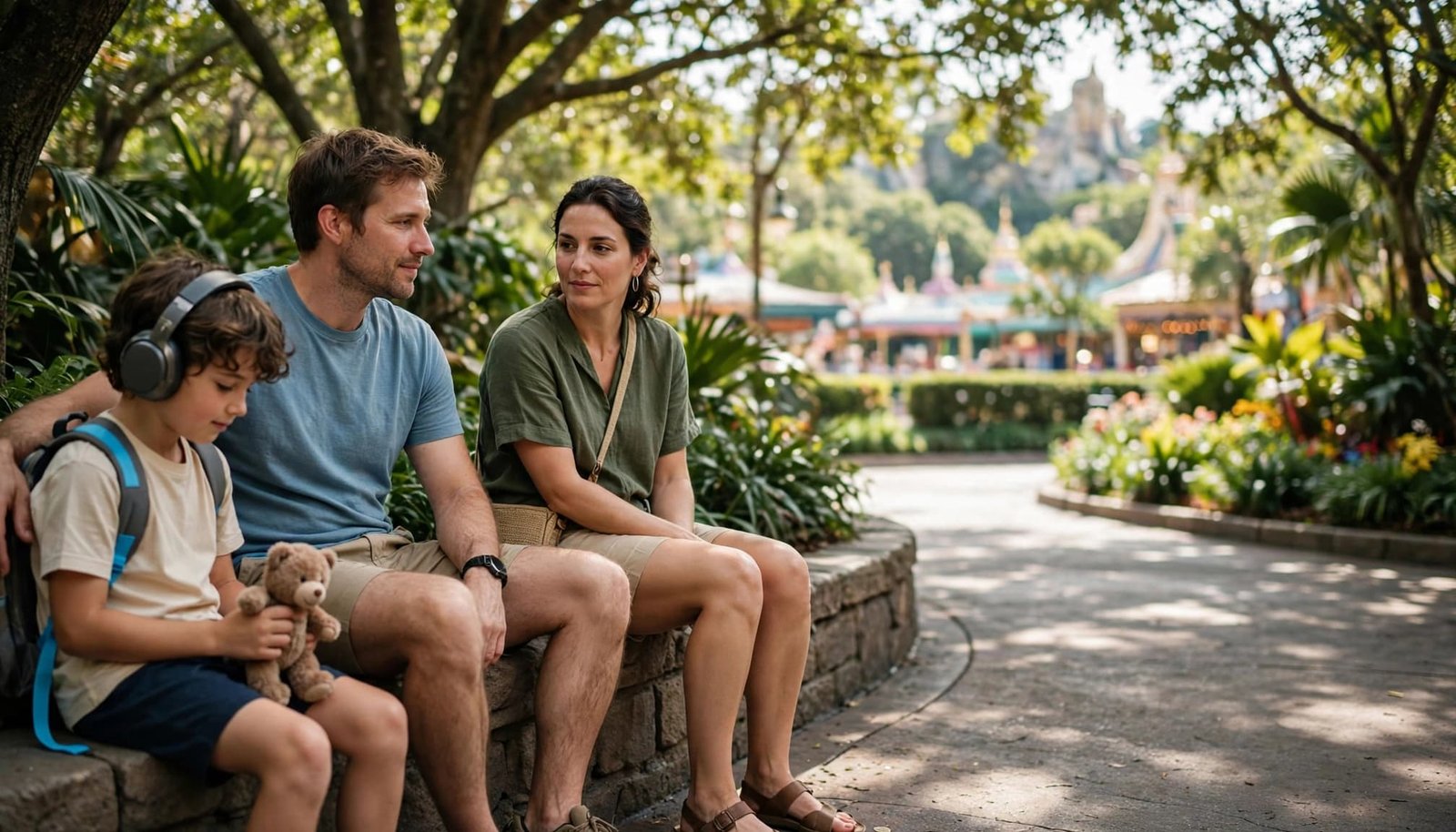
Choose one or two meaningful priorities, then keep nearby options available. Your plan should still work if a ride closes or someone needs to leave early.
Keep Walking and Transitions Manageable
Group attractions, meals, and breaks in the same area when possible. Crossing a park repeatedly can use energy your child needs for the experiences themselves.
At EPCOT, Frozen Ever After is in Norway, while Remy’s Ratatouille Adventure is in France. Plan the distance between those priorities instead of treating them as quick back-to-back stops.
Schedule a pause before your child’s usual limit. A short break is easier to offer when everyone still has some energy left. Check in with your child rather than waiting for a difficult moment.
Include Siblings and Agree on an Exit Plan
Give each child a vacation wish. Siblings deserve enjoyable experiences without becoming the default helper.
Before entering the park, adults should agree on who handles transportation, who supports each child, and what happens if the group separates.
Solo parents need a plan that works without another adult taking over. Keep routes simple and supplies easy to reach.
Explain changes without blaming one child. “We’re taking a break, then choosing what comes next” gives everyone a clear next step.
Pack Familiar Supports Where You Can Reach Them
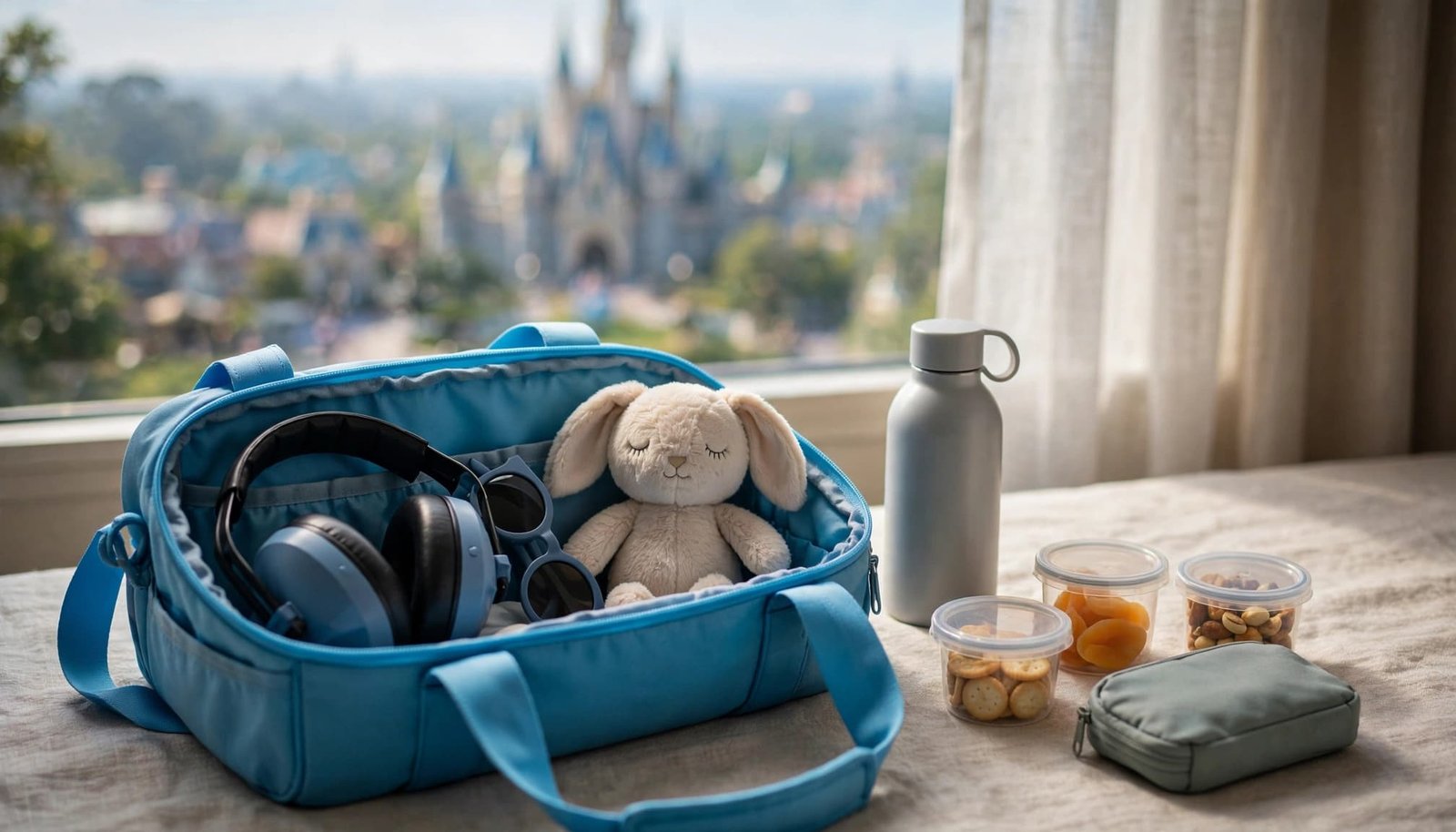
Your park bag should support your child’s routines without becoming difficult to carry. Pack items your child already uses comfortably.
- Keep headphones or ear defenders, a comfort item, and communication supports within easy reach.
- Bring familiar snacks, water, and any necessary medication with appropriate storage.
- Include a change of clothes, basic first-aid supplies, and charging support for essential devices.
- Carry your hotel information and important contacts somewhere accessible if your phone stops working.
Test unfamiliar items before departure. Vacation day isn’t the ideal time to discover that new headphones feel uncomfortable.
If your child has medical needs, ask their care team about medication storage, heat, and travel-related concerns. Family planning advice can’t replace individualized medical guidance.
Our Trip Rescue Shop travel supplies include strollers, comfort essentials, and cleaning supplies for unexpected sick-on-vacation moments. Check product suitability and current Disney rules before buying equipment for park use. Keep cleaning products separate from food and follow their instructions.
Get Planning Help That Understands Your Family
You don’t have to work through every resort, ticket, dining, and transportation decision alone.
K&S The Travel Crusaders is based in Concord, New Hampshire, and helps travelers nationwide create personalized vacations. Our autism and sensory-friendly planning draws on firsthand family experience, real-world travel planning experience, and Kellie Neff’s B.A. in Child Development.
We can help organize Disney World autism planning around your family’s comfort, priorities, and budget. We can’t promise DAS approval or a day without difficult moments.
For a resource you can review at your own pace, our Disney World with Autism ebook on Etsy includes family-focused preparation ideas. You can also find our Disney autism travel guide on Amazon.
These are optional planning resources, not official Disney policy. Use them alongside current Disney information and the supports your family already knows work.
Frequently Asked Questions
Does an Autism Diagnosis Automatically Qualify My Child for DAS?
No. Disney evaluates eligibility through its current process. Review the official requirements and describe your child’s actual difficulty with conventional attraction queues. A diagnosis alone doesn’t establish approval, and a travel planner can’t make that decision.
Should We Plan Full Park Days?
Choose a pace your child can comfortably manage. A shorter visit, hotel break, or rest day may suit your family better than an open-to-close schedule. Consider recovery time after the park, especially when planning several consecutive days.
Can Planning Prevent Sensory Overload?
Preparation can reduce some avoidable stress, but it can’t guarantee that overload won’t happen. Keep familiar supports available and respond to your child’s early signs. Leaving an activity remains a reasonable option, even after you’ve waited or made a reservation.
A Disney Vacation That Fits Your Family
A good Disney vacation leaves room for your child’s needs and your family’s favorite moments. Comfort, choice, and recovery time belong in the plan alongside tickets and attractions.
Start with familiar routines, choose a manageable pace, and keep a clear backup plan. If you’d like personalized support, K&S The Travel Crusaders can help you compare the details without adding pressure to do everything.
Your child doesn’t need to stay until fireworks for the day to hold a happy memory.
Leave a Reply