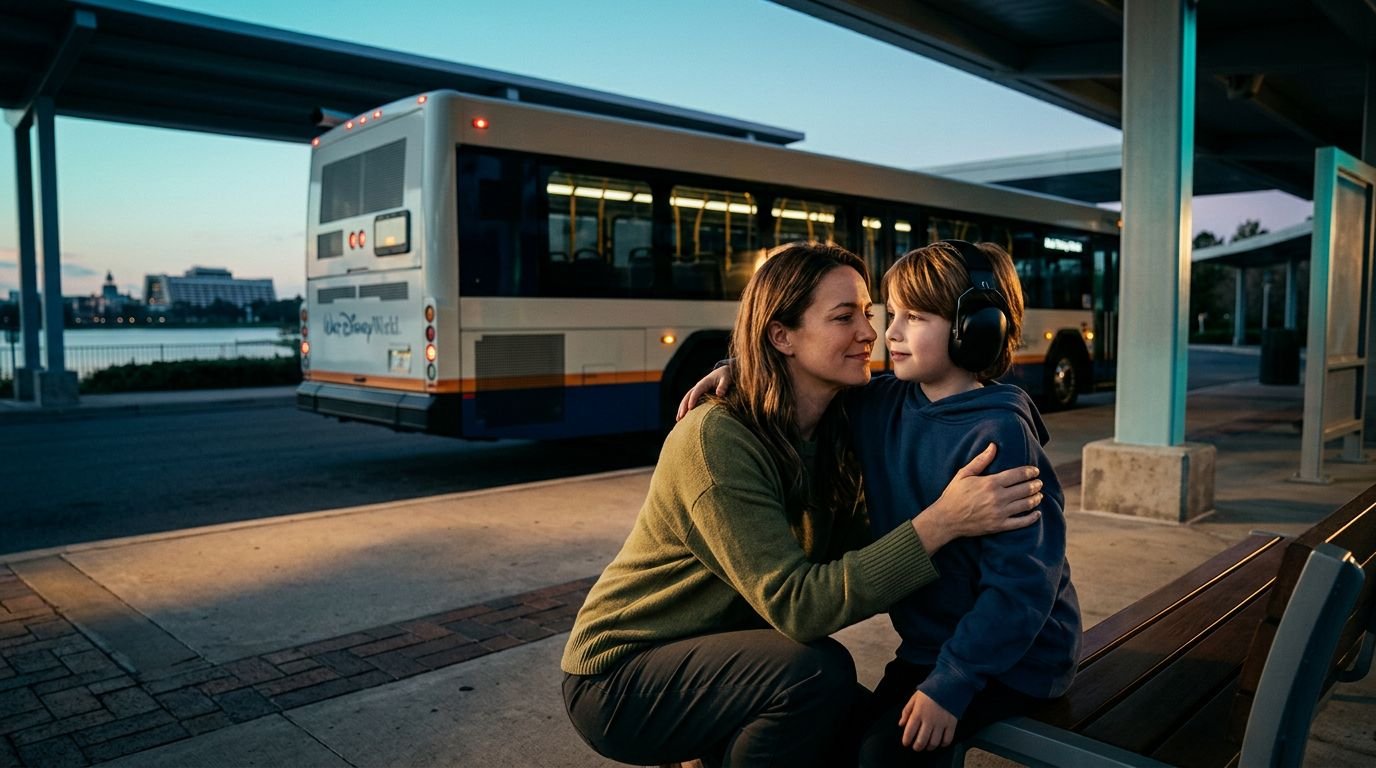
Navigating Disney World transportation autism challenges can shape your entire day before you even reach the park gates. A crowded bus, an unexpected wait, or a sudden change in routine can feel overwhelming for an autistic child who is already working hard to manage the sensory input of a busy morning.
The good news is that travel across the resort does not have to be a daily surprise. By choosing the right resort and building a simple routine, you can make travel around Walt Disney World feel more predictable and comfortable. These tips are especially helpful for families supporting members with invisible disabilities, ensuring that the logistics of your trip do not become a barrier to having a great time.
These Disney World transportation autism tips can help your family spend less energy getting around and more energy enjoying the moments that matter.
Key Takeaways
- Choose a resort based on the resort bus transportation or other transit methods your family will use most often, rather than focusing solely on the room price.
- Buses, boats, monorails, Skyliner gondolas, and walking paths all feel different from a sensory standpoint.
- Build extra time into every transfer, especially before rope drop, dining reservations, and fireworks.
- A wheelchair, ECV, or using a stroller as safe space can provide a child with a familiar, secure environment between attractions.
- Keep a private transportation backup available for days when Disney transportation feels like too much.
Start With a Resort That Makes Transportation Easier
Your resort choice affects almost every part of a Walt Disney World vacation. It affects how early you need to wake up, how long the trip back for a break takes, and how much waiting your child needs to manage.
Families who want the monorail may look at Disney’s Contemporary Resort, Disney’s Polynesian Village Resort, or Disney’s Grand Floridian Resort & Spa. These resorts offer access to Magic Kingdom through the monorail system or walking paths. That can reduce the stress of folding a stroller, waiting for a bus, or standing in a long morning line.
The Disney Skyliner connects Disney’s Art of Animation Resort, Disney’s Pop Century Resort, Disney’s Caribbean Beach Resort, Disney’s Riviera Resort, EPCOT, and Disney’s Hollywood Studios. For some autistic guests, the Skyliner feels easier than a crowded bus. The route is visible. The ride is usually calm. Your family has a smaller space instead of standing shoulder-to-shoulder with strangers. For destinations like Animal Kingdom where the Skyliner does not reach, resort bus transportation is readily available.
Still, the Skyliner is not right for every child. Heights, wind, enclosed gondolas, and occasional pauses can be uncomfortable. Watch ride videos together before your trip if your child likes knowing what to expect.
Disney’s Port Orleans Resort, French Quarter can be a good choice for families who prefer a smaller resort layout. The walk to the bus stop, food court, pool, and lobby is manageable for many guests. A smaller footprint can make the daily routine feel less overwhelming.
When booking, ask for a room near transportation if that would help your family. You can speak with Disney cast members at the front desk to discuss specific room location requests, which can help minimize walking distances after a long park day, especially when everyone is tired.
Disney provides helpful accessibility services for guests with disabilities before and during a visit. Reviewing those details early can help you make a resort plan that fits your child instead of forcing your child to fit the plan.
Compare Disney World Transportation Options Before You Go
Every transportation option has its own rhythm. Some families love the monorail. Others prefer a quiet boat ride or the control of their own car. There is no single best option for autism families.
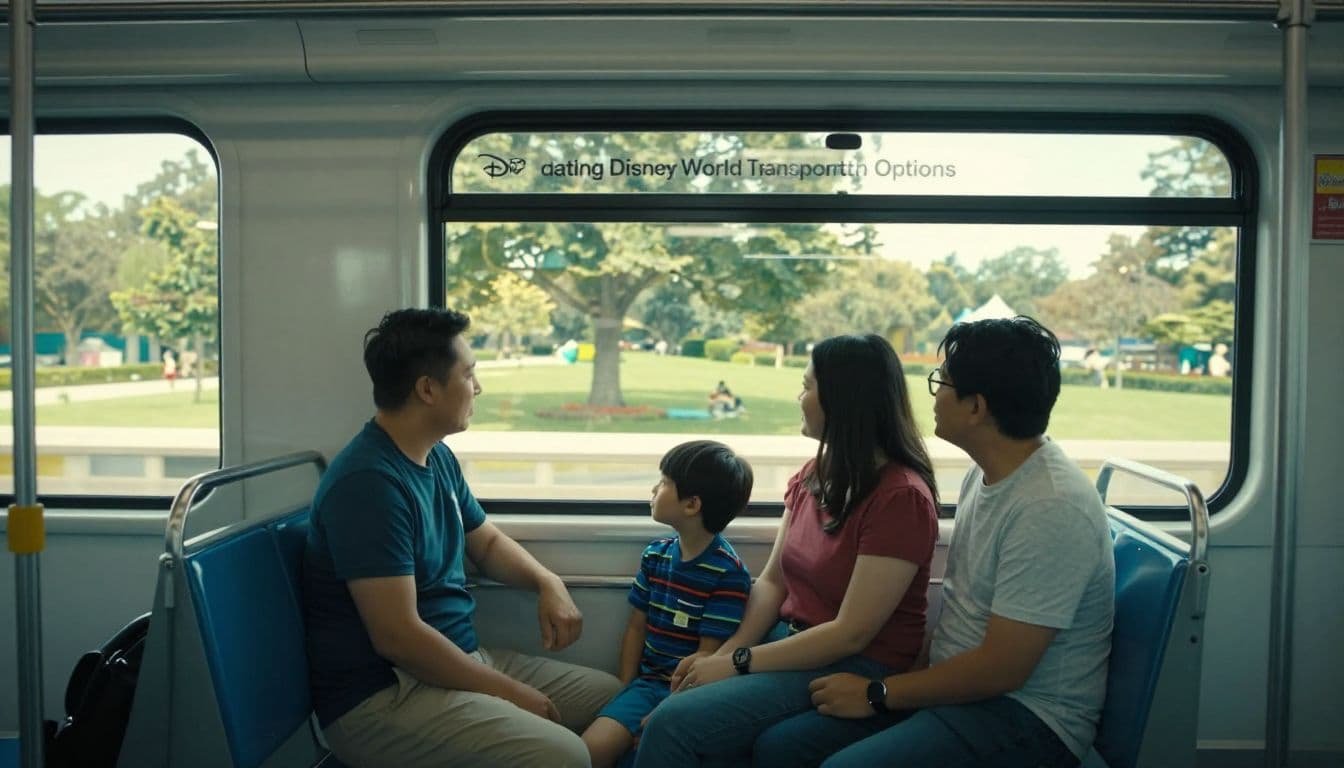
Here is a simple comparison to help you think through what may work best.
| Transportation Option | What May Feel Easier | What to Plan For |
|---|---|---|
| Disney bus | Direct service from many resorts | Crowds, standing room, noise, wait times, and the wheelchair line |
| Monorail | Open views and a familiar route | Busy stations, enclosed cars, and loud announcements |
| Skyliner | Small gondolas and predictable views | Height, movement, and possible pauses |
| Disney boat | Slower pace and fresh air | Limited routes and weather delays |
| Walking path | More control and less crowd pressure | Heat, distance, rain, and tired feet |
| Rideshare or rental car | Private space and flexible timing | Cost, car seats, parking, and pickup areas |
The Disney bus system is useful, but it can be the hardest option for a sensory-sensitive child. During peak times, such as the morning rush and park closing hours, buses can be loud and packed. You may find that you have to wait in lines for a bus, and then decide it is too full to board comfortably. This is especially true for routes heading to Animal Kingdom or Magic Kingdom, where crowds tend to gather quickly.
If buses are part of your plan, try leaving a little earlier than you think you need to. Arriving at the stop before the biggest rush gives your family more choices. Stand toward the edge of the waiting area if crowds feel difficult. Headphones, a comfort item, and a small snack can also make the wait easier.
You do not have to use the transportation option everyone else is using. The best choice is the one that helps your child stay regulated.
Boats can be a calmer option when available. The water route between Magic Kingdom and several nearby resorts often feels less rushed than a bus. The Friendship Boats around EPCOT and Disney’s Hollywood Studios can also be helpful, although boarding may take longer during busy periods.
Create a Predictable Transportation Routine
Many autistic children do better when they know what comes next. Disney World changes quickly, but establishing a consistent transportation routine can help prevent meltdowns during long travel days.
Start by talking through the day before bedtime. Tell your child which park you are visiting, how you are getting there, and what will happen after the park. A short explanation works better than a long speech.
You might say: “Tomorrow, we will eat breakfast, walk to the Skyliner, ride to EPCOT, and then take a pool break after lunch.”
Use photos, maps, or short videos if visual information helps your child. The Disney neurodivergent guest guide is also a useful planning resource for families who want to understand available supports before arriving.
A transportation bag does not need to be large. It should hold the items that make waiting and transitions easier, helping your child feel secure until they reach sensory friendly spots inside the parks:
- Noise-canceling headphones your child already knows how to use
- A favorite fidget, small stuffed animal, hoodie, or comfort item
- Familiar snacks and a refillable water bottle
- A portable charger for My Disney Experience, park maps, and family communication
- Any needed medication, carried according to your care team’s guidance
Keep the same items in the same place each day. That small routine helps when your child needs something quickly.
You can also give your child a job. They may hold the stroller strap, watch for the monorail, choose a seat, or check the park icon in the app. A little control can make an unfamiliar transfer feel more manageable.
Use a Stroller or Mobility Device as a Safe Space
For many neurodivergent children, a stroller as safe space serves as a vital tool for emotional regulation and sensory management. It is not just for toddlers; many older autistic children benefit from having a familiar, enclosed place to sit, regroup, and move through crowds. Using a stroller can significantly reduce physical fatigue and provide your child with a necessary sense of personal space in busy areas.
If your child still fits comfortably in a stroller, consider bringing one or renting one for your trip. You can visit Guest Relations to request a stroller as wheelchair tag for your device. Disney cast members provide these tags when appropriate, which allows the stroller to be used in the wheelchair line for many attractions. This accommodation is incredibly helpful for families whose children need to remain in their stroller while waiting in queues due to fatigue, safety concerns, or disability related needs.
Wheelchairs and ECVs are also available to rent at Disney theme parks, water parks, and Disney Springs. Disney transportation is designed to accommodate wheelchairs and many ECVs, although boarding can take extra time.
That extra time is perfectly okay. Do not feel pressured by people waiting behind you. Let the bus driver or the Disney cast members guide the boarding process, and give your child the time they need to adjust to the transition.
Ultimately, a child who needs a stroller at Disney is not too old for one. The goal is not to make the day look typical. The goal is to make it comfortable enough for your family to enjoy the magic together.
Have a Private Transportation Backup Plan
Sometimes the bus line is too long. Sometimes your child has reached their limit. Sometimes a surprise rainstorm changes everything.
Utilizing Minnie Vans, Uber and taxis, or a private car service can provide your family with a quieter reset. You do not need to use private transportation every day, but it can be the backup option that saves a difficult evening. When you rely on Uber and taxis to get around, it is helpful to plan ahead for car seat requirements. Building the expected cost of these services into your vacation budget ensures that using them feels like a proactive choice rather than an emergency expense.
A rideshare may be especially helpful for travel between resorts, early character breakfasts, or a quick return after a difficult park day. Driving your own vehicle offers more control, but it also involves parking, traffic, and the walk or tram ride from the lot. For some families, that is still easier than waiting in a crowded resort transportation area.
If your child struggles with transportation at the end of the night, consider leaving just before park closing. You may miss the final rush, but you will also avoid the loudest crowds and the longest waits. A calmer exit can protect the positive memories from the rest of the day.
Separate Transportation Needs From DAS
It is important to understand that the Disability Access Service, or DAS, is designed specifically for guests who cannot wait in a conventional queue due to a developmental disability like autism. While the DAS pass helps minimize your time spent standing in long lines for attractions by providing a specific return time, it does not provide priority boarding or special access for Disney World transportation options like buses, boats, monorails, or the Skyliner.
Families should review the official Disability Access Service details before their trip, as registration policies can evolve. Currently, Disney utilizes a video chat registration process that guests can complete before arriving at the parks. If you need assistance once you are already on-site, you can visit Guest Relations to speak with a cast member about your DAS pass needs. Please remember that the DAS pass is strictly for ride queues and does not alter the transportation experience.
Because you will be using your smartphone to manage your DAS return time, mobile food orders, and Lightning Lane purchases, be sure to bring a portable charger every day. A dead phone during a transit delay can turn a minor hurdle into a significant challenge.
For extra planning support, the Download our Disney World with Autism Guide (PDF) offers family-focused ideas for managing your DAS pass, sensory needs, and overall park days. You can also find the Download our Disney World with Autism Guide through Amazon. Managing your expectations regarding the DAS pass will help ensure a smoother experience while navigating between the parks and your resort.
Frequently Asked Questions
Does the Disability Access Service (DAS) grant priority boarding for Disney buses or the Skyliner?
No, the DAS pass is strictly for managing wait times for theme park attractions and does not provide priority access or special boarding for any Disney transportation methods. Families should plan to arrive at transportation stops early to allow for a more gradual, less crowded boarding experience.
Can I use a stroller as a wheelchair in the parks for my autistic child?
Yes, if your child needs to remain in their stroller for sensory regulation or comfort, you can request a “stroller as wheelchair” tag from Guest Relations. This allows your stroller to be treated as a wheelchair, enabling you to keep your child in it while waiting in many attraction queues.
Which Disney transportation option is best for sensory-sensitive children?
There is no single “best” option, as every child has different triggers. While the monorail or boats often provide a calmer, more open-air experience than buses, the best choice is the one that aligns with your specific family routine and your child’s individual sensory needs.
What should I include in a transportation bag for my child?
Focus on items that provide comfort and predictability, such as noise-canceling headphones, a favorite fidget toy, familiar snacks, and a portable charger for your devices. Keeping these items organized in a dedicated bag makes them easy to access whenever your child needs a sensory reset during a transfer.
A Calmer Disney Day Begins Before the First Ride
Disney World transportation can be busy, loud, and unpredictable. Your family’s plan does not need to be perfect. It only needs to include enough time, enough comfort, and enough flexibility for your child.
Choose the route that feels most manageable. Bring familiar supports. Keep a backup plan for the moments when public transportation no longer works. Once you arrive at the parks, finding quiet break areas can help your family reset and regulate after the commute. Additionally, planning your exit before park closing can prevent sensory overload on the way back to your resort.
A calmer pace is often more valuable than checking off one more attraction.
Ready to Plan Your Calm Disney Vacation?
Let us handle the logistics so you can focus on the magic. Contact us today for expert special needs travel planning.