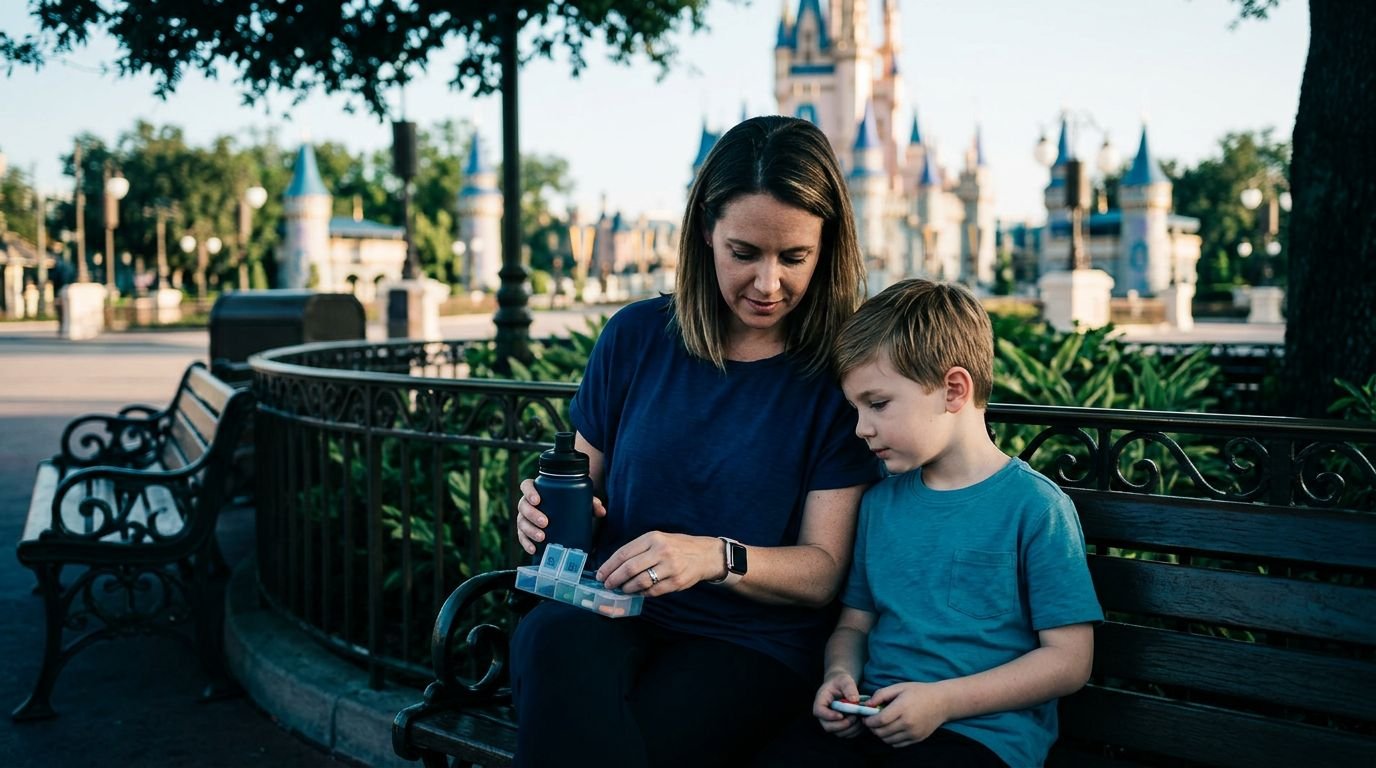
A Disney World day can be magical, but it can also be hot, loud, busy, and full of sudden changes. For an autistic traveler who also has epilepsy, pushing through is never the goal.
A thoughtful Disney World epilepsy plan puts safety and comfort ahead of a packed ride list. When medication, sleep, sensory needs, and rest breaks have a place in the plan, your family has more room to enjoy the moments that matter.
Start with medical planning, then shape your lodging, transportation, and park days around your traveler.
Start Disney World epilepsy planning with your medical team
Talk with your neurologist or epilepsy care team before booking. Ask whether your medication management routine needs changes for heat, disrupted sleep, air travel, or a more active schedule.
Bring the doctor’s office number, pharmacy number, insurance details, and a list of medications. Keep this information with adults who may be apart from the main group or traveling party.
Give every adult a current Seizure Action Plan
A Seizure Action Plan tells caregivers what seizures may look like and which triggers to watch for. It lists daily medicines, rescue medicine instructions, and when to call 911.
Use the Epilepsy Foundation’s Seizure Action Plan resources to review the document with your child’s doctor or nurse. Print several copies. Keep one in the park bag, one at the Disney resort hotel, and one with another adult in your group.
A Seizure Action Plan should say when rescue medicine is used and when emergency help is needed. “Use your best judgment” is not enough in a crowded park.
Review the plan with grandparents, friends, teen siblings, or anyone who may take your child to the pool, a ride, or the hotel room.
Pack medication for delays, not just park days
Keep daily and rescue medication in their original labeled containers in your carry-on bag. Never place all needed medication in checked luggage, a stroller basket, or a car that may sit in Florida heat.
Bring extra medication for flight delays, lost bags, weather issues, or an unexpected extension. The Epilepsy Foundation’s vacation safety guidance also recommends carrying medicine lists, doctor contact details, and pharmacy information.
When flying, TSA allows medically necessary medication above standard liquid limits in carry-on bags. Tell the TSA officer about larger liquids or medical supplies at screening.
Ask your pharmacist about storage temperatures and your prescriber about medication timing. International visitors should also confirm medication paperwork and import rules before travel.
Build days around seizure and sensory triggers
No plan can promise that a seizure will not happen. It can lower avoidable stress and make a hard moment easier to handle.
Autism does not make every sensory challenge a seizure trigger. Epilepsy also does not mean every Disney attraction is off limits. Your family’s plan should focus on your traveler’s known seizure triggers and sensory patterns.
Protect sleep before protecting the ride list
Sleep loss can be a seizure trigger for some people. Disney excitement can also make bedtime harder, even after a tiring day.
Pick a trip length that gives your family breathing room. Four park days in four straight days may sound efficient, but a rest day can protect sleep and reduce pressure. A hotel morning, pool break, laundry afternoon, or Disney Springs visit may be the better choice.
You don’t need to arrive for every opening or stay for every fireworks show. If a late night is important, plan for a slower morning afterward. Keep bedtime routines familiar when possible, including comfort items, music, medication timing, and a predictable wind-down.
Treat heat, hunger, and crowds as real planning details
Florida heat can turn a manageable day into a difficult one. Start drinking water early. Pack familiar snacks, eat regular meals, and take indoor breaks before anyone reaches their limit.
Choose a shaded table, a quiet hotel lobby, an indoor show, or a calm quick-service area for resets. Headphones, sunglasses, a hat, cooling towels, and a preferred fidget can help an autistic traveler feel more comfortable.
Loud sound or a dark room may be a sensory concern without being a seizure trigger. Track what is true for your traveler, not what a generic list assumes.
Choose lodging that makes rest easy
Your hotel is not only where you sleep. It is where medication is organized, wet clothes pile up, everyone decompresses, and parents get a little quiet after bedtime.
A lower room rate is not always the lower-stress choice if it adds long walks, traffic, or difficult transportation every day.
Look at the actual resort layout
An on-site Disney resort hotel can make midday breaks easier because you are closer to the parks. An off-site hotel or vacation rental may offer a quieter room, a full kitchen, familiar breakfasts, or the comfort of a private vehicle. When comparing hotels, consider transportation options, room location, walking distances, and access to a midday break.
Disney’s Port Orleans Resort, French Quarter may suit families who prefer a smaller moderate-resort layout. Disney’s Art of Animation family suites can help larger families with a separate bedroom, extra sleep space, two bathrooms, and a kitchenette.
Ask about room location before you arrive. Check elevator access, refrigerator requirements for medication, distance to buses or the Skyliner, pool noise, and where your child can safely rest.
Plan for calm hotel routines
If medication needs refrigeration, confirm the storage plan with your pharmacist and hotel before leaving home. A standard room refrigerator may not meet every medication’s temperature requirements.
Bring enough clothing for the full trip if laundry would take away from needed breaks. There is no prize for packing light if a noisy laundry room becomes one more thing your family has to manage.
A familiar breakfast, favorite snack, quiet show, or short walk around the resort can help the day start on a calmer note.
Make transportation predictable before you arrive
If a traveler cannot drive because of seizure-related restrictions or recovery needs, build a Disney vacation that does not depend on them driving. Make that decision before the airport, not after a tiring flight.
Disney buses, the Skyliner, monorail, boats, ride-shares, and rental cars are transportation options for different plans. Match them to your hotel, park route, weather, waiting tolerance, and need for a quick return to the room.
Give one adult ownership of the travel details
Choose one adult to manage travel arrangements, including airport pickup, hotel drop-off, park closing, tolls, and return routes. Let another stay focused on the traveler. Too many people checking maps and giving directions can raise stress quickly.
Before travel day, review airport pickup steps, hotel drop-off points, and the route back to your resort after park closing. If using a rental car, ask about toll charges before leaving the airport garage. Florida toll roads often do not accept cash.
Keep a backup plan for each major trip. If the Skyliner stops because of weather, will you take a bus, call a ride-share, or return to the room? A simple backup plan can prevent a rushed decision.
Use Disability Access Service for a better place to wait
Disability Access Service is one of Disney’s accessibility options for eligible guests. It may help autistic guests whose disability affects their ability to wait in a conventional queue.
It is not a front-of-the-line pass. It gives eligible guests another place to wait.
Explain the queue challenge clearly
During registration, focus on what happens during a long standby line. Explain the real issue, such as panic, sensory overload, trouble leaving the queue, escalating behavior, or a medical concern tied to prolonged waiting.
An autism diagnosis alone does not guarantee approval. Disney reviews how the disability affects the guest’s ability to wait in a standard queue.
Review Disney’s current DAS registration information before your trip. Registration is handled by live video chat, and the guest requesting DAS must be part of that conversation.
If you do not register ahead of time, use the live video option on your visit day. Do not expect Guest Relations to complete an in-person DAS registration.
Use return times as breathing space
After you enter a park, the registered guest or an adult linked to their account can request a DAS return time in the My Disney Experience app. Your family can wait elsewhere, have a snack, sit somewhere quiet, or use the restroom.
You can generally hold one DAS return time at a time. After you use it, you can request another. The registered guest must be present and ride with the group.
Disney’s queue-access information explains current return-time support. Guests without a mobile device can ask at a Guest Experience Team location for help with a return time.
Keep a portable charger in your park bag. Your phone may hold park tickets, maps, mobile food orders, family messages, and a DAS return time. A dead phone can make a manageable day much harder.
Choose attractions with a personal safety filter
There is no universal list of attractions that are safe or unsafe for guests with epilepsy. One person’s trigger may not affect another guest at all.
Before a park day, review the specific attraction list with your epilepsy physicians. Discuss medical considerations related to motion, darkness, flashing effects, sound, and evacuation procedures.
Check advisories before getting in line
Review warning signs at each attraction entrance. Disney also asks guests to check attraction restrictions and health advisories before riding.
Pay close attention to motion, darkness, sudden movement, flashing effects, loud sounds, and emergency evacuation procedures. If a warning or the traveler’s condition raises concern, skip the attraction and identify where to seek medical attention. For a traveler sensitive to strobes or flickering effects, don’t rely on a social media ride list from a stranger.
Ask a Cast Member at the entrance if you need help understanding an attraction’s warning. You can also decide that watching a family member ride is the right choice that day.
Give every park a non-ride plan
A successful Disney day does not need to revolve around attractions. Characters, shows, parades, shops, air-conditioned dining, playground areas, and resort time all count.
Choose a few low-pressure options before entering the park. Make a simple touring plan with shows, characters, shops, dining, playground areas, and resort time. If a ride is not a good fit, you already have another plan.
Plan a flexible park day with real reset time
A printed schedule can look perfect and still fall apart by lunchtime. That’s normal. Weather changes, rides close, feet hurt, and a child may be done earlier than expected.
A flexible touring plan leaves room for those moments instead of treating them like a failure.
Pick a few priorities, then stop adding
Choose two or three true must-dos for each park. If your family gets to them, the day is already a success.
Plan rest days or slower mornings after full park days when possible.
Stay in one park for the day when possible. Review transportation options before deciding whether park hopping is worth the added security lines, waits, heat, and transitions. EPCOT is beautiful, but it’s large. Avoid plans that send your family back and forth across the park for timed rides.
Lightning Lane Multi Pass is separate from DAS and costs extra. It may be useful for a few must-do attractions, but it can also create another clock to watch. Buy it only if timed return windows make your day easier.
Pack for a reset, not every possible problem
Keep these items together in one easy-to-reach pouch or small bag:
- Carry daily and rescue medication, plus a copy of the Seizure Action Plan.
- Bring water, preferred snacks, and any safe foods your traveler relies on. When available, mobile ordering can reduce time in a crowded food queue.
- Pack headphones, sunglasses, a hat, and familiar sensory supports.
- Keep a portable charger and cable with the phone and devices.
- Add a change of clothes if heat, spills, or water rides could lead to discomfort.
For extra autism-focused park planning support, the Disney World With Autism Guide PDF and the Disney autism travel ebook on Amazon offer family-friendly ideas for breaks, accessibility, and calmer park days.
Know what to do if a seizure happens in the park
A seizure may never happen during your visit. A clear response plan still matters, so adults don’t have to make every decision in the moment.
Follow the traveler’s medical plan and prescribed rescue medication instructions. Don’t change medication doses because of a busy Disney schedule without guidance from the traveler’s clinician.
Find First Aid before you need it
Each of Disney’s theme parks has a First Aid location. Disney lists medical professionals available during normal park hours through its accessibility services. The page also mentions basic medical supplies and help with some medical-device storage needs. Review travel-response guidance from the Epilepsy Foundation before you travel.
If you think someone is having a health-related issue, go to the nearest First Aid location or ask a Cast Member for help. If urgent medical attention is needed, follow the plan’s direction to call 911 right away.
During a seizure, one adult should stay with the traveler, follow the plan, and time the event. Another adult can clear space and speak with Cast Members, while a third manages siblings or transportation.
Decide roles before the first park day
Don’t assume everyone knows what to do. Make a simple plan during the flight, car ride, or hotel check-in.
Decide who carries rescue medicine and a copy of the Seizure Action Plan. Assign someone to stay with siblings or handle transportation if the park day ends early. Keep the conversation calm and practical.
A medical event may mean the day is over. Leaving the park early is always a valid choice.
Epilepsy Awareness Day and the travel budget
Epilepsy Awareness Day at Walt Disney World can bring medical education, community connection, exhibitors, and support resources into one meaningful family trip.
For historical context, the 2026 event took place April 25 and 26 at Disney’s Contemporary Resort. Future dates, ticket details, and event plans may change, so always check current information before booking.
Understand how travel grants have worked
For the 2026 event, Epilepsy Alliance America offered three travel stipend scholarships of up to $2,000. The program listed eligible travel expenses, including airfare, accommodations, and rental cars. It also covered ride-shares, taxis, fuel, parking, meals, and Disney World tickets.
The 2026 application deadline was January 31, and families had to pay travel costs up front before reimbursement. Hotel or Airbnb reimbursement was limited to the event nights. Review the 2026 travel stipend details for the full rules used that year.
A stipend can help with costs, but it does not replace your usual medication, safety, and rest plan. The event may be special, yet your traveler still needs a Disney trip built around their own needs.
Frequently Asked Questions
Can I bring epilepsy medication into Disney World?
Yes. Keep daily and rescue medication in original labeled containers in your carry-on or park bag, not checked luggage or a hot car. Bring extra medication for delays and carry a current medication list, doctor contact details, and Seizure Action Plan.
Does epilepsy qualify a guest for Disability Access Service?
Epilepsy alone does not guarantee approval for Disability Access Service. During registration, explain how the guest’s disability affects their ability to wait in a standard queue, including any sensory, medical, or safety concerns related to prolonged waiting.
Are Disney World attractions safe for someone with epilepsy?
There is no universal list of attractions that are safe or unsafe for every guest with epilepsy. Review attraction warnings and discuss motion, darkness, flashing effects, loud sounds, and evacuation procedures with the traveler’s epilepsy care team before riding.
What should we do if a seizure happens in the park?
Follow the traveler’s Seizure Action Plan and prescribed rescue medication instructions, and have one adult stay with the traveler while another asks a Cast Member for help. Go to First Aid or call 911 when the medical plan says emergency help is needed, and remember that leaving the park early is always a valid choice.
How can we make a Disney World day easier for an autistic traveler with epilepsy?
Build the day around sleep, regular meals, water, known triggers, and real reset time instead of a packed ride list. Pack familiar sensory supports, choose a few priorities, and keep a non-ride plan ready if the traveler needs to skip an attraction or return to the hotel.
A Disney Trip Built Around Safety
The best Disney vacation is not the one with the most rides. It is the one where your traveler feels supported, medication is available, adults know the plan, and breaks are never treated as wasted time.
With Disney World epilepsy planning in place, your family can make choices based on comfort and safety. That leaves more space for the Disney moments you came to enjoy.
Comments
One response to “Disney World Epilepsy Planning for a Calmer Visit”
Genuinely useful read — appreciate you posting this. This reminded me of one thing. https://qbwg.catmqa.com/ has been a surprisingly good resource for finding openings. It gathers positions by city and employer, and new jobs appear every day. Wishing everyone the best with the search!