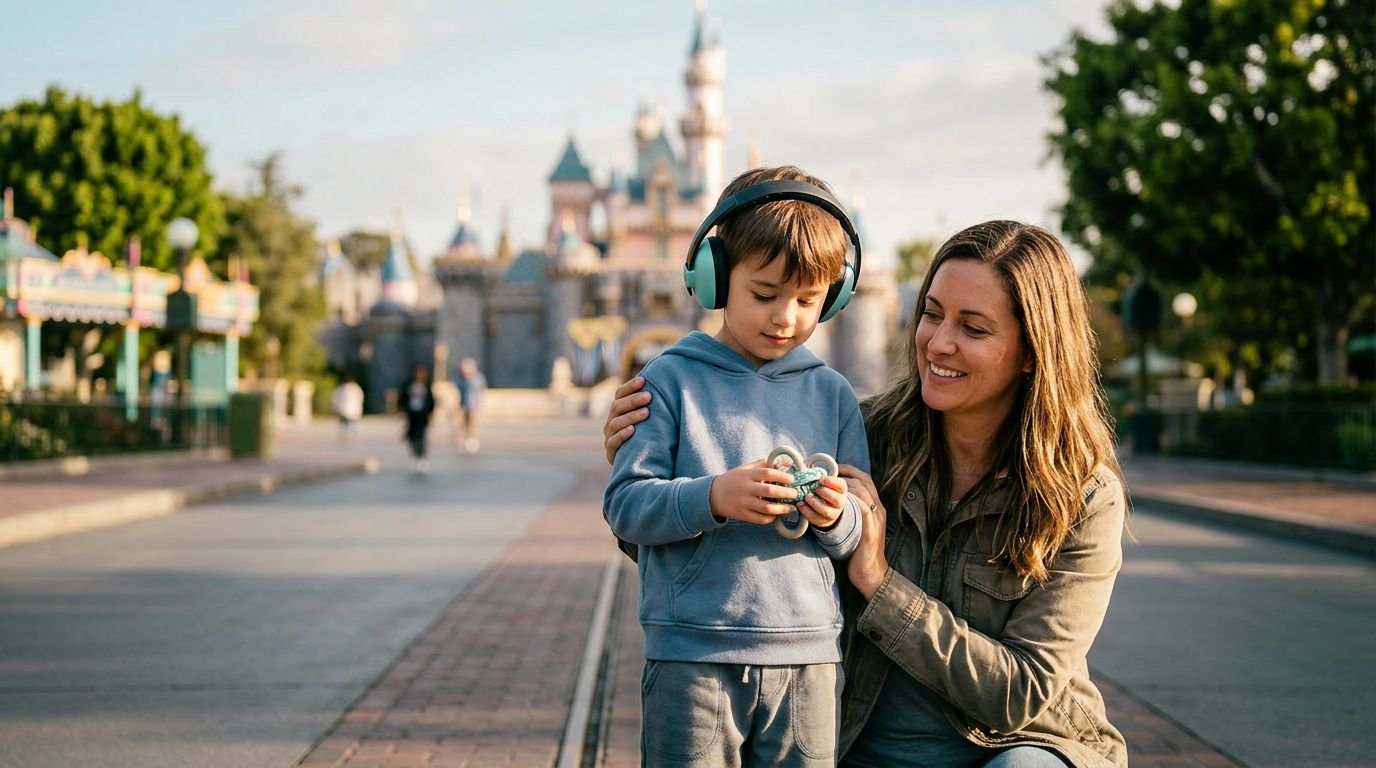
A first Disneyland Park day can feel exciting and overwhelming at the same time. The music, crowds, ride sounds, changing plans, and long walks all arrive at once during a family trip.
This Disneyland autism guide helps you plan around the sensory profile of an autistic child instead of trying to force your family into a packed Disney schedule. A calm day with a few happy memories is always better than a rushed day filled with pressure.
Start with a flexible plan, familiar comfort items, and permission to change course when your child needs a break.
Key Takeaways
- Pick only a few must-do attractions and keep the rest of the day open.
- Review the Disability Access Service before your trip, but remember eligibility is based on individual needs.
- Use the Disneyland app, a portable charger, and mobile food ordering to cut down on avoidable waiting.
- Choose sensory breaks before your child reaches their limit.
- Sticking to one park per day, such as Disneyland or California Adventure, is often easier than using Park Hopper tickets for first-time families.
A Disneyland autism guide for your first park day
Disneyland Park is compact compared with Walt Disney World. That can be a real advantage. You can move between lands without spending an hour on buses, monorails, or long resort transfers.
Still, compact does not always mean easy. Main Street, U.S.A. can become crowded at opening, parade time, and closing. Fantasyland has close walkways, bright colors, ride noise, and lots of families moving in different directions.
Your first goal is not to see everything. Your goal is to make the day feel manageable for your autistic child.
Pick one or two attractions your child truly cares about. Maybe it is meeting Mickey, riding the Disneyland Railroad, seeing pirates, or visiting a familiar area like Fantasyland. Those priorities give your day a purpose without turning the schedule into a race.
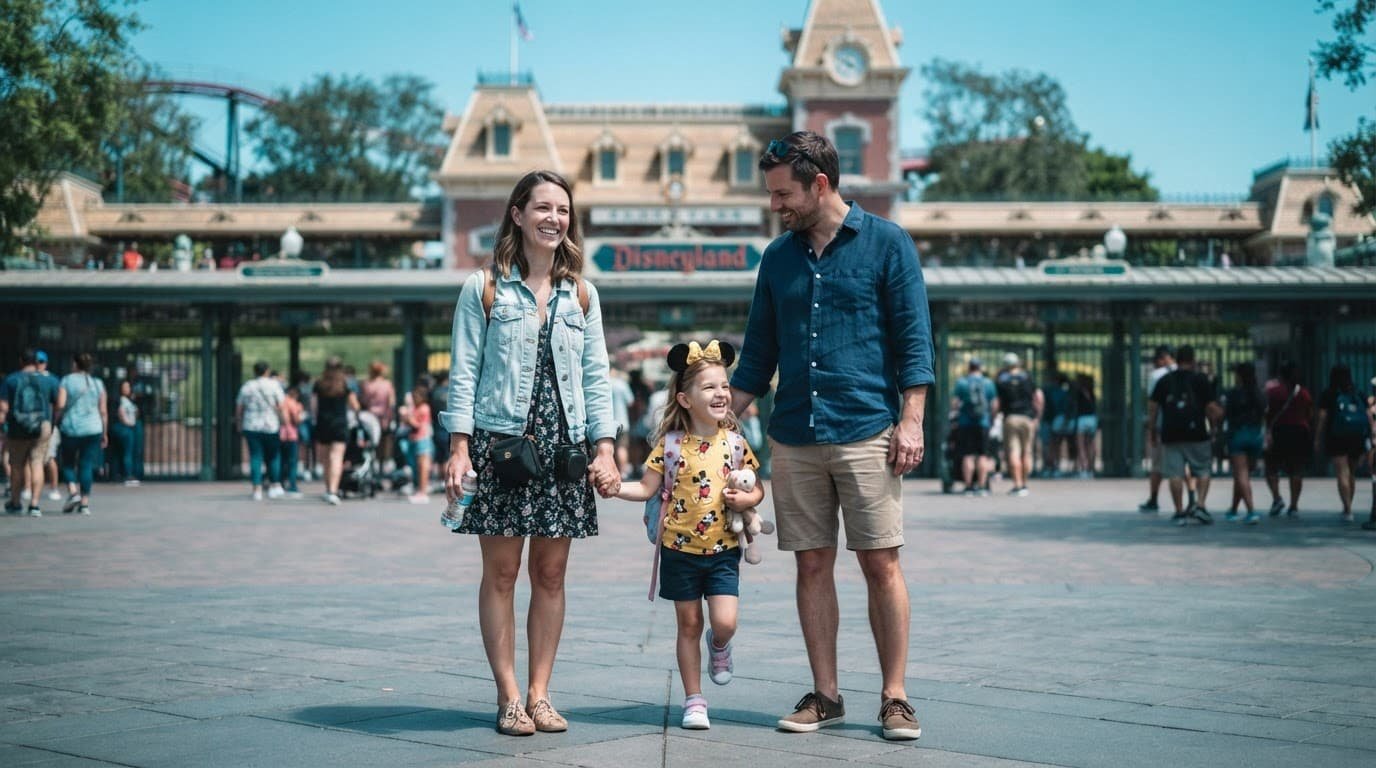
Arrive early enough to get through security without feeling rushed, but you do not need to rush for Rope Drop. A calmer arrival often matters more than being at the front of a morning crowd.
Before you travel, look through Autism Speaks’ Disneyland planning tips with your child to create a helpful social story if that fits their learning style. Photos, videos, a simple map, and a visual schedule can make the park feel less unknown.
Talk through the basics ahead of time:
- “We will go through security before we enter.”
- “There may be loud music and people close by.”
- “We can take breaks when your body needs one.”
- “We may not ride every ride, and that is okay.”
A printed plan can help, but it should never feel like a test. Rides close. Weather changes. Hunger hits early. Your child may love one attraction enough to want it again. Those moments are part of the trip.
Choose the right ticket pace
A one-park-per-day ticket is often the easier choice for a first Disneyland Resort visit. Disneyland Park has more than enough to fill a full theme park day, especially when you include meals, bathroom stops, quiet time, character sightings, and transportation back to your hotel.
Park Hopper tickets can work for some families, but hopping adds more walking, security checks, decisions, and transition time. Disney California Adventure is nearby, yet moving parks still changes the rhythm of the day.
Don’t buy Park Hopper tickets because they sound like the complete Disney experience. Buy them only if your family enjoys switching locations and can handle an extra layer of planning.
Where you sleep matters, too. An off-site Anaheim hotel may be a great budget choice if the walk is simple. Check the real walking route before booking. A hotel that looks close on a map may include busy streets, long intersections, or more walking than expected.
Disney’s Grand Californian Hotel & Spa, Disneyland Hotel, and Pixar Place Hotel keep you close to the resort. A nearby room can make a midday reset much easier.
Understand Disneyland DAS before you arrive
Disability Access Service, often called DAS, is one of the most important parts of a Disneyland autism guide. It is designed for guests with a developmental disability, including autism, who cannot tolerate long waits in a conventional standby queue and struggle with waiting in line.
DAS is not an automatic approval based on a diagnosis. Disney reviews each guest’s situation individually and focuses on how the disability affects waiting in a regular line.
Read Disney’s current Disability Access Service details before your visit. Policies, registration procedures, and attraction availability can change.
If your Disability Access Service request is approved, it does not mean immediate access to every ride. Your family requests a return time for an attraction, then waits somewhere more comfortable. You might eat a snack, sit in shade, use the restroom, watch ducks near the Rivers of America, or take a quiet break.
When your return time arrives, enter through the designated attraction entrance. You can usually hold one active return time at a time. Once your family rides, you can request another available option.
The registered guest must be present and ride with the group. Disney may use photo verification at the attraction entrance. The service is generally set up for the registered guest plus up to three additional people, although immediate-family exceptions may be considered.
Disability Access Service gives your child a different place to wait. It does not turn the day into a no-wait vacation.
Keep your Disneyland app working and your tickets linked before you arrive. Your phone may hold tickets, park maps, mobile food orders, dining reservations, messages, and return times. A portable charger is not an extra. It is a park-bag essential.
If an app feature is confusing, ask a Cast Member or visit a Guest Experience Team location. You do not have to solve every issue while standing in the middle of a busy walkway.
DAS and Lightning Lane are not the same
Lightning Lane Multi Pass is a separate paid service. It lets guests reserve arrival windows for participating attractions. Disability Access Service and Lightning Lane can both be useful, but neither one is required for a good Disneyland day.
Some families like Lightning Lane when they have a few high-priority rides. Others find scheduled return windows create more pressure. If your child gets upset by sudden changes, closed rides, or strict timing, adding several reservations may make the day harder.
Ask one question before buying any add-on: “Will this make our day easier?”
If the answer is no, skip it. A slower pace, a familiar snack, and an early hotel break may be more helpful than another reservation to track.
Build a sensory-aware Disneyland Park plan
Every autistic child is different. One child may love the music, motion, and bright colors, while another may find the same experience too loud or unpredictable, leading to sensory overload.
That is why a sensory-smart plan starts at home. Think about what helps your child regulate during a busy school day, appointment, airport trip, or family event. Those same supports can travel with you.
Disney offers a neurodivergent guest services page with current resources for guests and families. You can also review Disney’s accessibility planning guide before your trip.
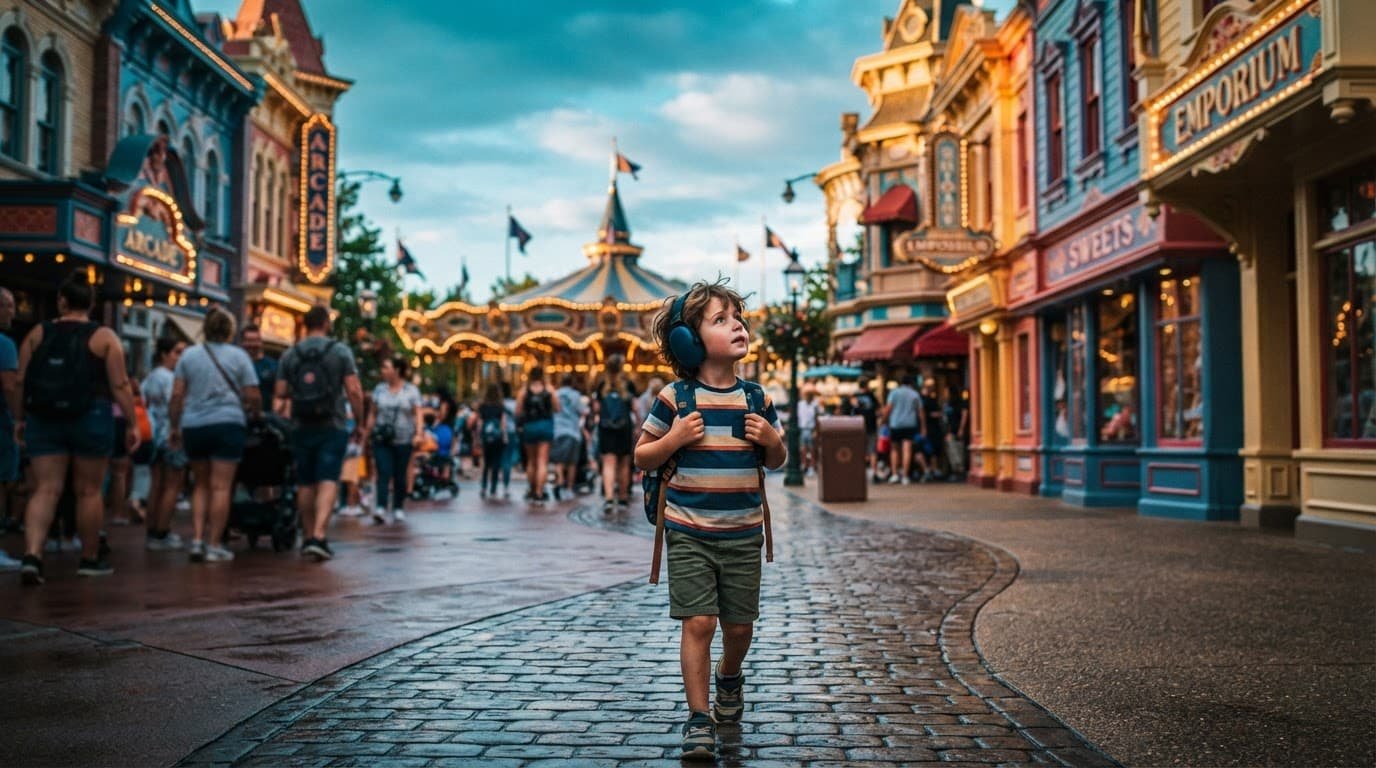
Noise-canceling headphones can help during parades, fireworks, crowded walkways, and indoor attractions with loud sound effects. A favorite hat, hoodie, fidget, chewy necklace, weighted lap item, or other sensory tools may also offer comfort.
Bring items your child already knows. A Disney day is not the time to test new noise-canceling headphones or introduce unfamiliar tools.
Pick calm spaces before you need one
Do not wait for full meltdowns before looking for quieter spots. Watch for early signs that your child needs space, such as covering ears, moving faster, becoming quiet, getting silly, repeating questions, or becoming frustrated by small changes.
Indoor shows and slower attractions can give your family a reset. The Disneyland Railroad also offers seated time without standing in a crowded line. Shaded quiet spaces, a less-busy path, or a table away from the main restaurant entrance can work well too.
If your child needs to leave the park for a while, leaving is not failure. Disneyland Park is close enough to many hotels that a midday room break can be realistic.
Sensory breaks can look simple:
- Sit somewhere quiet and drink water.
- Watch a downloaded show with headphones.
- Eat a familiar snack before hunger becomes a problem.
- Return to the hotel for a nap, swim, or time in a dim room.
- Decide later whether your family wants to return for the evening.
Fireworks can be magical, but they are loud and crowded. Watch from a farther location, use headphones, leave before the show begins, or skip them completely. Your child does not need to stay until closing for the trip to count.
Choose attractions with your child in mind
Disneyland Park has rides for many comfort levels. Familiar favorites can be a great starting point. A child who enjoys gentle movement may like “it’s a small world,” the King Arthur Carrousel, or a ride on the Disneyland Railroad.
Other attractions involve darkness, loud sound effects, sudden movement, enclosed spaces, or intense story scenes. Space Mountain, Star Tours, Indiana Jones Adventure, Matterhorn Bobsleds, and Haunted Mansion may be exciting for some guests and too much for others.
Watch ride-through videos before your trip when that helps an autistic child prepare. Be honest about what they will see and hear. Avoid telling a child a ride is not scary if you know dark rooms, loud sounds, or unexpected movement are hard for them.
Disneyland autism guide planning works best when your child has a say. Let them choose between two attractions rather than asking an open-ended question in a crowded park.
For example, ask, “Would you like the train or the carousel?” That gives your child control without creating decision overload.
Rider Switch can also help when one child does not want to ride. Ask a Cast Member at the attraction entrance for the current process. One adult can wait with the non-riding child while the other rides, then the adults can switch without both waiting through the full line.
If your child uses a stroller for support, rest, or safety, ask Guest Services whether it can be tagged for use as a wheelchair. This can make moving through queues and waiting in line much easier for your family.
Food, restrooms, and familiar routines matter
A hungry child has less patience for a wait, a crowd, or a changed plan. Pack snacks your child already eats. Do not rely only on theme park food, even though Disneyland has plenty of choices, because minimizing food stress keeps everyone grounded.
Using the Disneyland app for mobile food ordering can reduce one more line. Look at menus during a quiet moment, place the order when your child is ready, and pick up food without standing at a crowded counter. If a dining room feels too loud, look for outdoor seating, seek out quiet spaces in the park, or take a longer break.
Quick-service meals are often easier than a long table-service reservation. You have more control over timing, seating, and how quickly you can leave.
Plan restroom stops before they become urgent. Companion restrooms can provide more space and privacy for families who need it. Keep a small change of clothes, wipes, medication, and any personal care items in your park bag.
This Disneyland autism guide also recommends choosing familiar meals when possible. Vacation food can be fun, but a child who only eats fries, chicken tenders, fruit, plain pasta, or a packed snack still deserves to feel comfortable.
Pack a small bag that solves real problems
A heavy bag makes a long Disney day harder. Careful preparation helps you pack what your family uses, rather than every item you can imagine needing.
A simple park bag should include:
- Noise-canceling headphones or ear defenders
- Familiar snacks and a refillable water bottle
- A portable charger and charging cord
- Tickets, identification, medication, and care items
- A comfort item, fidget toys, or other sensory tools
- Sunscreen, ponchos, wipes, and a light layer
- A small change of clothes if accidents or spills are a concern
Put devices, chargers, and headphones in one pouch. Families often remember the tablet but forget the cable. A dead device can turn a manageable wait into a much harder moment.
If you are also planning a future Florida vacation, the Disney World with Autism Guide PDF on Etsy and its Amazon edition offer extra planning support for a larger Disney resort experience.
Let your child set the finish line
The best Disneyland Park day may end after lunch. It may include three rides instead of ten. It may mean skipping fireworks, returning to the hotel early, or spending an hour riding the train and eating popcorn during a memorable family trip.
That is okay.
Parents often feel pressure to get their money’s worth by staying longer and doing more. But pushing through exhaustion can cost more than it gives back. A child who feels safe, heard, and supported is more likely to remember Disneyland as a happy place.
Keep expectations simple. Choose a few priorities for your daily itinerary. Take breaks early. Protect your phone battery. Let a friendly Cast Member help when you need support.
Frequently Asked Questions
What is the best way to handle long lines at Disneyland with an autistic child?
Review the Disability Access Service (DAS) before your trip to see if your child qualifies for return times that let you wait in a more comfortable environment. You can also use mobile food ordering and keep a flexible schedule to minimize standing in traditional standby queues.
Should I buy a Park Hopper ticket for my family’s first visit?
For most first-time families, a one-park-per-day ticket is the easier and less stressful choice. Hopping between Disneyland and Disney California Adventure adds extra walking, security checks, and transitions that can lead to sensory overload.
How can I prepare my autistic child for the park before we arrive?
Look over planning guides and social stories together, use photos or a simple map to show what to expect, and talk through the basics of the day. Practicing with familiar comfort items and noise-canceling headphones ahead of time also helps build confidence.
A Disney Day That Fits Your Family
A good Disneyland autism guide is not a rigid itinerary. It is a plan with breathing room.
The Disability Access Service, familiar comfort items, flexible meals, and a nearby place to rest can make your first theme park visit feel much less stressful. The goal is not to copy another family’s Disney day.
Your family deserves a Disneyland day that fits your child, even if that day looks slower, quieter, and completely different from the one you first imagined.