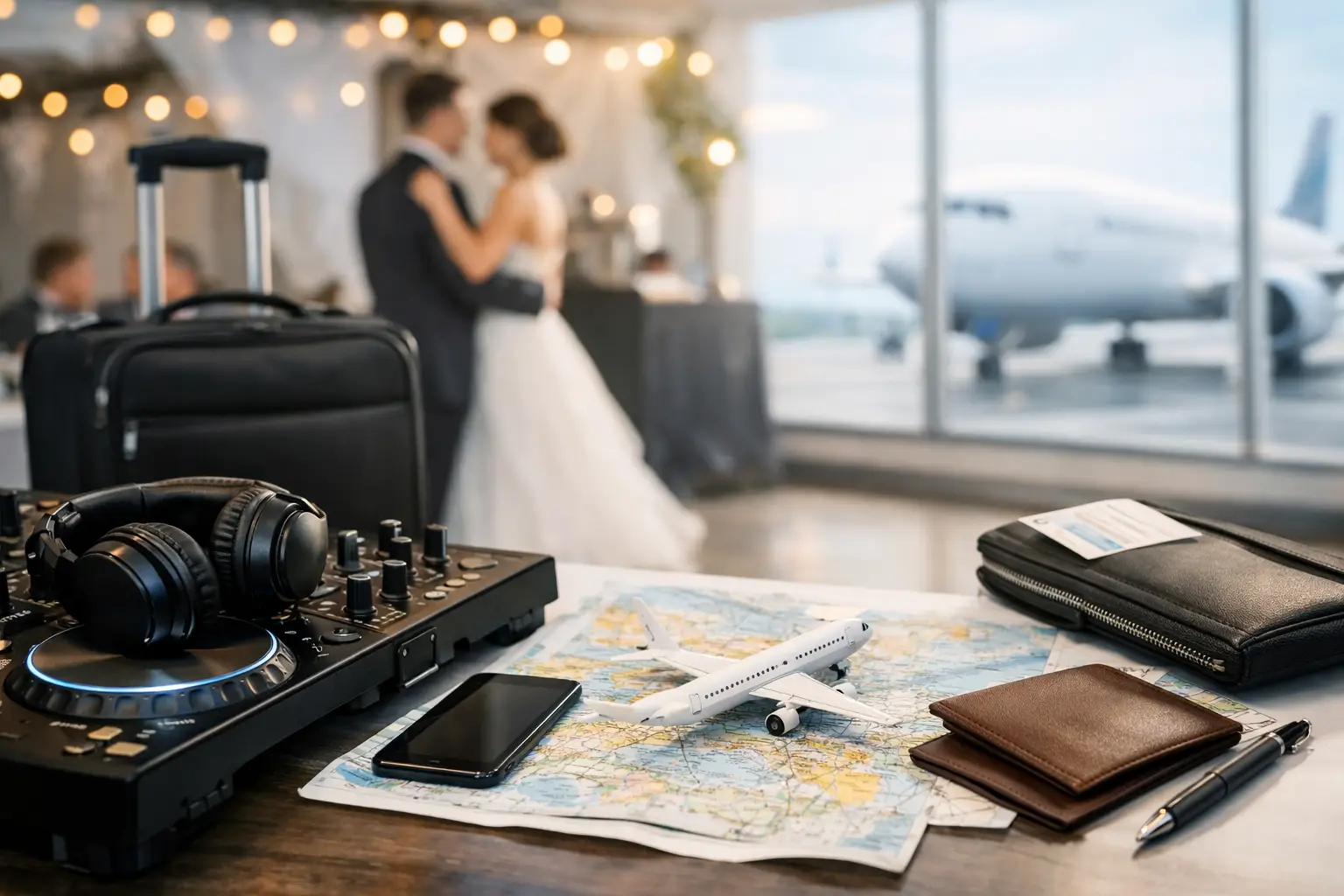
A packed dance floor can hide a lot of planning. What guests remember as a fun, effortless night often depends on one thing most couples do not see coming early enough – DJ wedding reception travel coordination.
If your DJ is traveling to the venue, especially for a destination wedding, out-of-town reception, or multi-location event, the music itself is only part of the job. Arrival windows, equipment transport, setup timing, venue access, overnight stays, and backup plans all affect whether the reception starts strong or starts with stress. For couples already juggling ceremony details, guest travel, and lodging, this is one of those logistics categories that deserves more attention than it usually gets.
Why DJ wedding reception travel coordination matters
A wedding DJ does more than play songs. They guide the energy of the room, manage announcements, track the timeline, and often act as an informal emcee. When travel is added to that role, the margin for error gets smaller.
A local reception at a familiar ballroom is one thing. A resort wedding with limited load-in hours, a mountain venue with weather concerns, or a reception two hours from the nearest airport is something else. In those cases, timing is not just about when the first dance happens. It is about whether the DJ can get there early enough to sound check, whether equipment arrives safely, and whether venue staff know when and where the setup will happen.
This is why couples who bundle event support with travel planning often feel more in control. Instead of treating travel and entertainment as separate problems, they plan them together. That approach cuts down on last-minute surprises and gives everyone a clearer picture of the full event day.
What couples often miss during DJ wedding reception travel coordination
The biggest issue is assuming travel is simple because the reception itself is simple. A four-hour party can still require a full day of logistics. Your DJ may need to account for drive time, traffic patterns, parking, elevator access, venue restrictions, setup lead time, and teardown after the event ends.
Flights add another layer. If a DJ is flying in for the reception, same-day arrival can be risky. Delays, baggage issues, and weather disruptions are not rare. In many cases, arriving the day before is the safer choice, even if it adds to the budget. That extra night may cost less than the stress of trying to recover from a missed connection on your wedding day.
Equipment is another point couples tend to underestimate. A DJ may travel with speakers, microphones, mixers, lighting, backup cables, and ceremony audio gear. That setup needs space, power access, and enough time to test everything. If the venue only allows vendor entry during a narrow window, coordination has to happen well before the event.
Build the travel plan around the reception timeline
The best way to approach DJ wedding reception travel coordination is to start with the reception timeline, then work backward. If the grand entrance begins at 6:30 p.m., your DJ should not be arriving at 5:45 p.m. hoping everything goes smoothly.
A realistic plan accounts for venue access, setup, sound check, and buffer time. For example, if setup takes 90 minutes and the venue allows entry at 3:30 p.m., that may sound fine on paper. But if the DJ is also navigating unfamiliar roads, coordinating hotel checkout, or bringing gear through a service entrance, the timeline may already be tighter than it looks.
This is where practical planning beats optimistic planning. Add time for the things that usually run late. Shuttle delays, valet backups, venue staff changes, and room flips between ceremony and reception happen all the time. A solid buffer protects the party.
Questions to settle early
Before finalizing your entertainment plan, make sure you know whether the DJ is driving or flying, whether they are bringing full equipment or renting any gear locally, when the venue allows load-in, and who is the contact person on site. You also want clarity on parking, power access, setup location, and whether the DJ will cover both ceremony and reception spaces.
If your celebration includes multiple events, such as a welcome party, rehearsal dinner, or post-wedding brunch, travel planning should reflect those commitments too. Even when the DJ is booked for only one part of the weekend, those surrounding events can affect timing, transportation, and availability.
Budgeting for DJ travel without getting blindsided
Travel costs are not just add-ons. They are part of the true service cost when your DJ is not local to the venue. That may include mileage, flights, baggage fees, hotel nights, meals, parking, rental cars, tolls, or airport transfers.
The right budget conversation is not just, “What is the performance fee?” It is, “What does it take to get this vendor to the event prepared, on time, and ready to deliver?” That framing helps couples compare options more honestly.
Sometimes a traveling DJ is absolutely worth it, especially if you want a specific style, a trusted professional, or a provider who is already integrated into your event planning. Other times, hiring local may reduce cost and complexity. It depends on your priorities. If consistency, communication, and bundled coordination matter most, the added travel expense may make sense. If your budget is tight and the event is straightforward, local talent may be the smarter fit.
The key is transparency. A good planning partner will outline those costs early so you can make a decision with confidence instead of finding out later that travel doubled the quote.
Venue coordination is where details either click or collapse
Even the best DJ can run into problems if the venue logistics are vague. Some venues are excellent with vendor access and event flow. Others require more proactive follow-up.
For smooth DJ wedding reception travel coordination, the venue should know when the DJ is arriving, where equipment enters, how long setup will take, and whether there are any restrictions on volume, lighting, or placement. Outdoor spaces need special attention because weather, power supply, and uneven surfaces can all affect setup.
It also helps to identify who is actually in charge on event day. Sometimes that is the venue coordinator. Sometimes it is the planner. Sometimes it is a banquet manager who was not part of earlier email threads. Confirming one point of contact avoids the all-too-common issue of a vendor arriving ready to work but waiting around for direction.
Why bundled planning can make the day feel easier
When travel and event entertainment are managed together, fewer details fall through the cracks. That is especially true for destination weddings and out-of-town receptions where vendor movement, lodging, and schedules all connect.
This is one reason a combined service model can be so useful. A business like K&S The Travel Crusaders can support both the travel side and the event experience side, which means the reception is not being planned in isolation from the trip itself. Hotel timing, airport arrivals, guest lodging, and DJ logistics can be aligned instead of managed across separate vendors with separate priorities.
That does not mean every couple needs a bundled package. But for busy couples, planners coordinating from a distance, or anyone managing a wedding weekend with multiple moving parts, having fewer handoffs can mean fewer problems.
Common trade-offs to consider
There is no one-size-fits-all answer in DJ wedding reception travel coordination. Flying a DJ in may give you the exact personality and performance style you want, but it usually increases budget and contingency planning. Hiring local may simplify logistics, but you may spend more time vetting vendors and managing communication.
A same-day arrival may save money, but it also adds risk. A one-night stay creates breathing room, though it increases cost. A large production setup may create an incredible party atmosphere, but it also requires more load-in time and venue cooperation.
The best decision is usually the one that matches your priorities honestly. If your reception energy matters deeply and you want one trusted team helping tie the day together, plan for the travel properly. If your event is more intimate and low-key, keep the logistics lighter.
Make coordination part of the booking decision
Couples often book vendors based on style first and logistics second. For weddings with travel involved, that order should flip a bit. Style still matters, of course, but reliability matters just as much.
Ask how travel is handled. Ask what backup plans exist for delays. Ask when arrival is scheduled, how setup works, and what the DJ needs from the venue. The answers will tell you a lot about whether the service is polished or improvised.
A great reception does not happen because everyone hopes for the best. It happens because the right people plan ahead, build in margin, and treat logistics as part of the experience, not an afterthought.
When the music starts on time, the room sounds right, and your guests move from dinner to dancing without confusion, that is not luck. That is coordination done well – and it gives you the freedom to enjoy your night the way you pictured it.