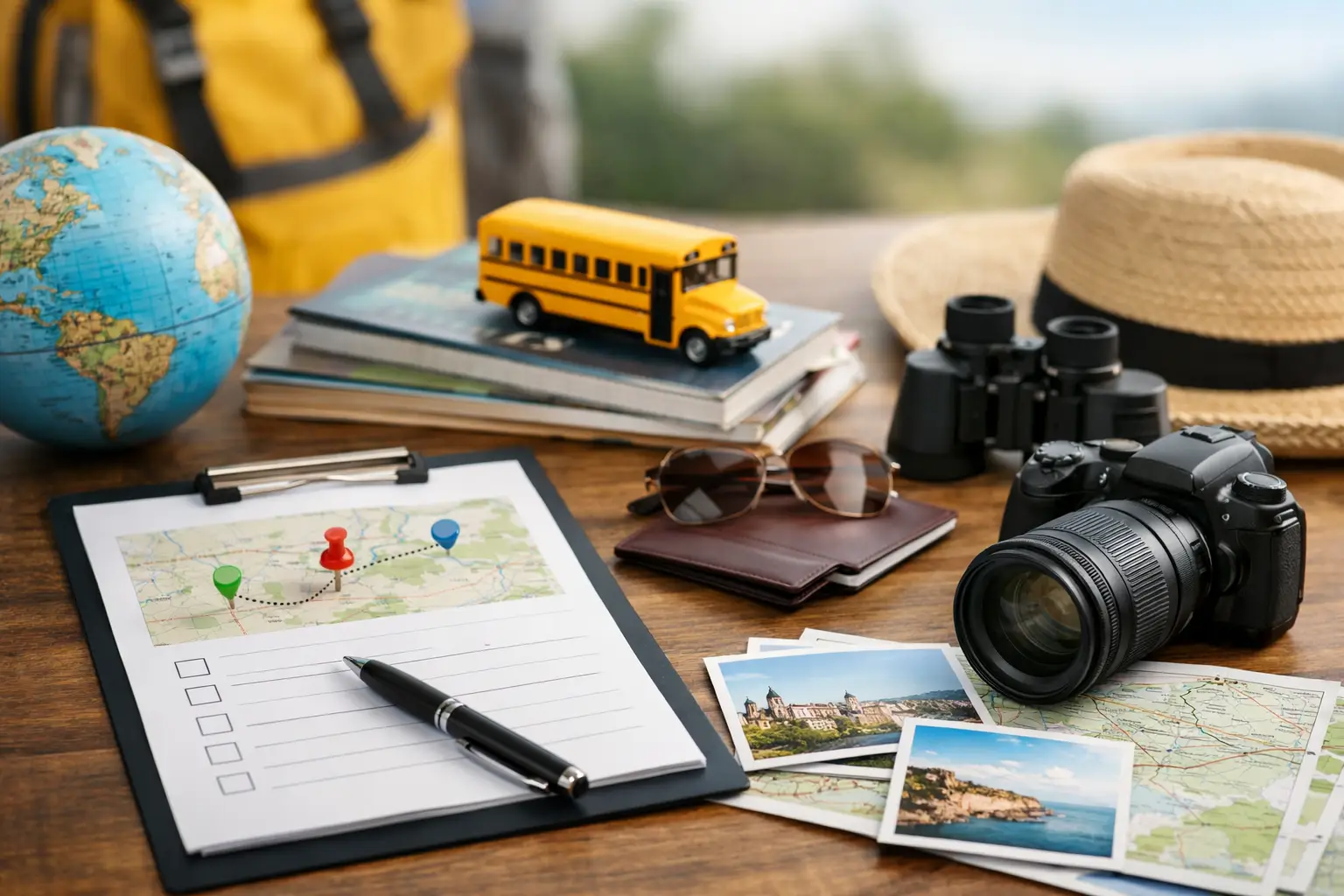
When you are planning for 30, 60, or even 100 students, the difference between a fun trip and a stressful one usually comes down to one thing – the schedule. A strong school trip itinerary three days example gives you more than a list of activities. It gives your group structure, pacing, and enough flexibility to handle real-life travel issues without the whole trip falling apart.
For teachers, school administrators, and parent organizers, that matters. You need a trip that feels educational, manageable, and safe. You also need something students will actually enjoy. The sweet spot is a three-day itinerary that mixes learning time, movement, meals, and downtime in a realistic way.
What makes a good three-day school trip itinerary?
A good school trip is never built by packing every hour. That is one of the fastest ways to end up with tired students, rushed meals, and staff trying to herd everyone from place to place. The better approach is to think in blocks.
Each day should have a clear purpose. Day one usually works best as an arrival and orientation day. Day two is your main experience day, when you place your biggest educational activity or featured attraction. Day three should still be valuable, but lighter and easier to manage around checkout and departure.
That rhythm helps with behavior, energy, and logistics. It also gives room for the things that always take longer with student groups – loading buses, restroom breaks, room check-ins, meal lines, and head counts.
School trip itinerary three days example for a student group
This example works well for a middle school or high school group visiting a major US city for educational enrichment. You can adapt the attractions to Washington, DC, New York City, Atlanta, Chicago, Boston, or another destination with museums, historical sites, and group-friendly dining.
Day 1: Travel, settle in, and start with one strong activity
Plan an early morning departure, but not so early that students show up exhausted before the trip even begins. If you are flying, build in more buffer than you think you need. Airport groups move slower than family travelers, and every transition takes coordination.
Once you arrive, start with a simple lunch in a pre-arranged group setting. This is not the moment for a complicated dining experience. Fast, consistent service matters more than variety on arrival day.
After lunch, schedule one major educational stop rather than two or three smaller ones. A museum, historic landmark, or guided city tour works well because it gives students an immediate sense of place without demanding too much energy. This first activity should be engaging but easy to follow, especially after travel.
Check-in should happen before dinner if possible. Students and chaperones need time to get settled, review room assignments, and reset before the evening. Rushing straight from activity to dinner to hotel usually creates confusion later.
For the evening, keep it structured and low-stress. A group dinner followed by a short walk, a supervised team activity, or an early room meeting is usually enough. Day one is not the time to overproduce the trip. Your real goal is a smooth landing.
A sample day might look like this in practice: depart in the morning, arrive around midday, lunch at 1:00 p.m., museum visit at 3:00 p.m., hotel check-in at 5:30 p.m., dinner at 7:00 p.m., and lights-out procedures beginning by 9:30 p.m.
Day 2: Build the core learning day
Day two is where your itinerary should do its heaviest lifting. Students are settled, the group understands expectations, and you can use the full day for your strongest academic and cultural experiences.
Start with breakfast at the hotel or a nearby venue that can serve groups efficiently. After that, place your highest-priority activity in the morning. That is when attention is better and schedules are less likely to drift.
This could be a government building tour, a science center program, a college campus visit, a historical walking tour, or a hands-on workshop tied to your curriculum. If your trip has a signature learning objective, this is where it belongs.
Lunch should be close to your next activity to reduce travel time. One of the easiest ways to lose momentum on a school trip is crossing the city too many times in one day. Keep your route tight and logical.
In the afternoon, you can add a second activity, but it should contrast with the morning. If students spent the morning in a formal guided setting, the afternoon can be more interactive. If they had a highly active morning, an exhibit or performance may be a better fit.
Dinner on day two can carry a little more personality. This is often the best time for a memorable group meal or a special evening event, such as a theater performance, educational show, cultural program, or organized student celebration. The key is still timing. A late night sounds fun until you are trying to load a tired group the next morning.
A realistic day two flow could be breakfast at 7:30 a.m., main educational activity at 9:00 a.m., lunch at 12:30 p.m., second attraction at 2:00 p.m., hotel rest break at 5:00 p.m., dinner at 6:30 p.m., evening activity at 8:00 p.m., and room checks at 10:00 p.m.
Day 3: Finish strong without overloading the schedule
The last day should feel worthwhile, but it should not depend on perfect timing. Checkout alone adds complexity, so build around that.
Have students pack the night before as much as possible. In the morning, breakfast should be quick, room checks should be methodical, and luggage handling should be clearly assigned. If you are not careful, departure day becomes a scramble.
Choose one final stop that fits naturally between checkout and travel home. Good options include a shorter museum visit, a monument or landmark, a student-friendly market area, or a reflective educational stop tied to what they learned on the trip.
This is also the best day for a closing conversation. Students do not always process a trip while it is happening. Giving them a few minutes on the bus or at lunch to reflect, journal, or discuss what stood out can add real educational value without costing much time.
A simple day three schedule might include breakfast at 7:00 a.m., checkout at 8:30 a.m., final attraction at 10:00 a.m., lunch at 12:30 p.m., and departure by 2:00 p.m.
How to adjust this school trip itinerary three days example
Not every group needs the same pace. Elementary groups usually need shorter activity windows, more snack and restroom breaks, and earlier evenings. High school students can handle more independence in some settings, but they also need clear boundaries and supervision plans.
Budget matters too. A three-day trip can be built around premium attractions and private transportation, or it can be planned with lower-cost museums, school-friendly hotels, and one central paid experience. Neither approach is automatically better. It depends on your goals, fundraising reality, and how far your group is traveling.
The destination changes things as well. In a walkable city, you may be able to fit in more because transit time stays low. In a spread-out destination, fewer stops often create a better experience because students spend less time waiting and more time engaging.
Common mistakes that make school trips harder than they need to be
The biggest mistake is trying to do too much. It is tempting to justify the trip by filling every hour, but packed itineraries often create the opposite result. Students remember the moments they could absorb, not the attractions they rushed through.
Another common issue is underestimating transition time. Group travel is full of tiny delays. Elevators are slow. Lunch takes longer. Someone forgets a bag. Traffic changes. Good planning accepts that instead of pretending it will not happen.
Meal planning also deserves more attention than it usually gets. Hungry students get tired fast, and chaperones do too. Pre-booked meals, allergy planning, and realistic dining windows make a bigger difference than most organizers expect.
This is also where working with an experienced travel planner can save a lot of stress. K&S The Travel Crusaders understands that group travel is not just about booking rooms and buses. It is about building a trip that works in real time, for real people, with safety, pacing, and educational value all working together.
The best three-day itinerary is the one your group can actually enjoy
A useful school trip is not the one with the most stops. It is the one students can move through with energy, curiosity, and enough structure to feel confident. If your itinerary gives them a strong arrival day, a meaningful full day, and a smooth final experience, you are already ahead of many group planners.
Start with the learning goals, map the logistics honestly, and give yourself breathing room. That is how a three-day school trip turns from a spreadsheet into a trip students remember for the right reasons.