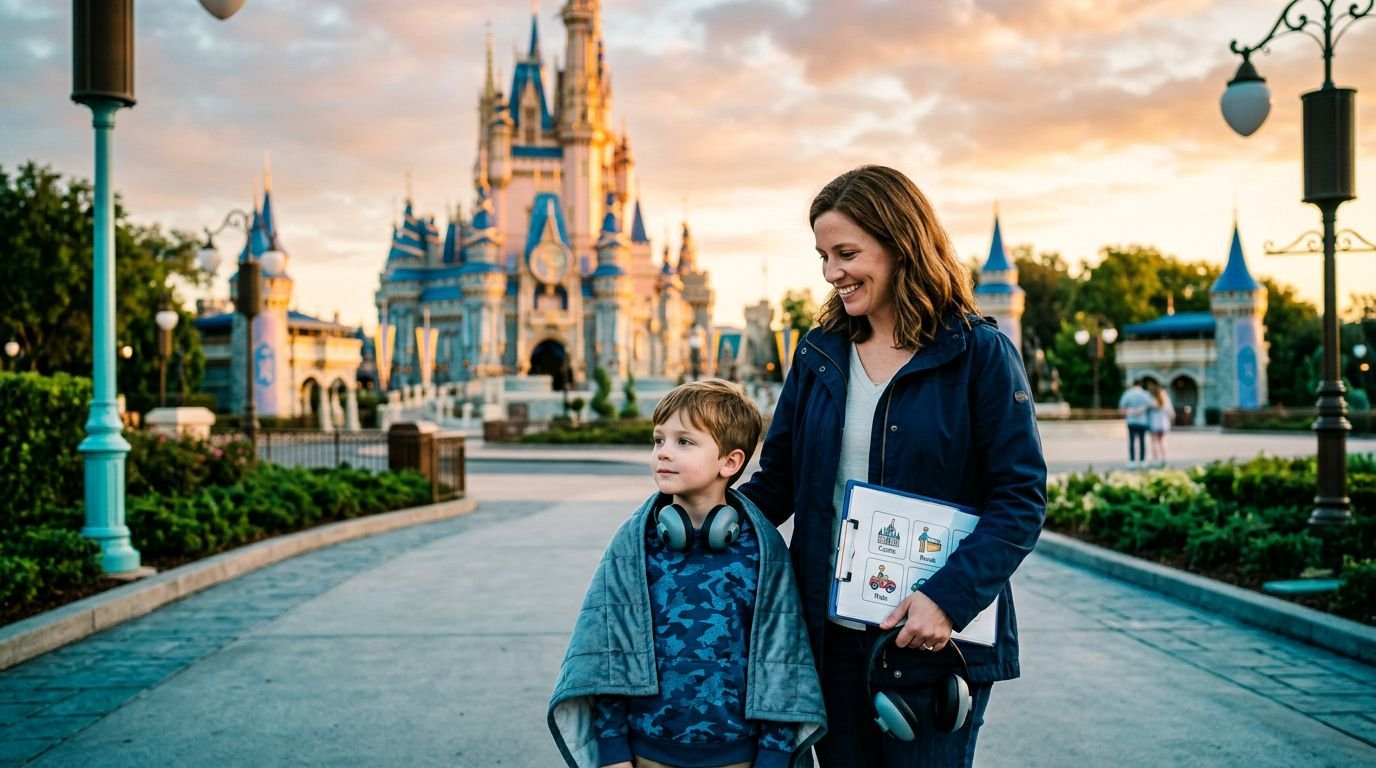
Magic Kingdom can feel like a storybook morning and a lot to take in by lunchtime. Its rides, music, crowds, heat, and characters can be exciting. Like other theme parks, its constant changes can also feel overwhelming.
This guide helps families traveling with an autistic child or other neurodivergent children focus on real needs. Children with cognitive disabilities may need a different pace than a picture-perfect park day suggests.
Start with a slower plan, a few priorities, and a clear exit plan when everyone needs a break. If your family uses a DAS pass, keep it as one part of the plan.
Key Takeaways
- Start with a short visual schedule, familiar comfort items, and a clear plan for breaks, meals, and leaving the park.
- DAS is based on a guest’s functional difficulty waiting in a traditional queue, not on an autism diagnosis alone. It changes where the guest waits but does not remove wait times.
- Plan around one area at a time, keep the schedule flexible, and leave a full hour open for lunch, a hotel break, weather, or a quiet reset.
- Watch your child’s individual sensory and communication signals, especially around loud sounds, darkness, movement, crowds, heat, and sudden changes.
- Use supports that fit your child’s needs, including headphones, preferred snacks, a stroller tagged as a wheelchair when appropriate, Rider Switch, and lower-stimulation seating.
A Magic Kingdom autism guide starts at home
The best Magic Kingdom day often begins before you leave for Orlando. Your child does not need to memorize the park map. They only need to know what comes next.
A familiar return-to-the-hotel routine at Disney resorts can make a break easier.
Build a short visual schedule with pictures, simple words, or familiar icons. Simple, predictable steps can support children with cognitive disabilities who have trouble processing changes or communicating what comes next.
Keep the schedule short. A full page packed with every ride can feel like pressure. Try a simple plan such as “arrive, ride, snack, bathroom, break, choose one more ride.”
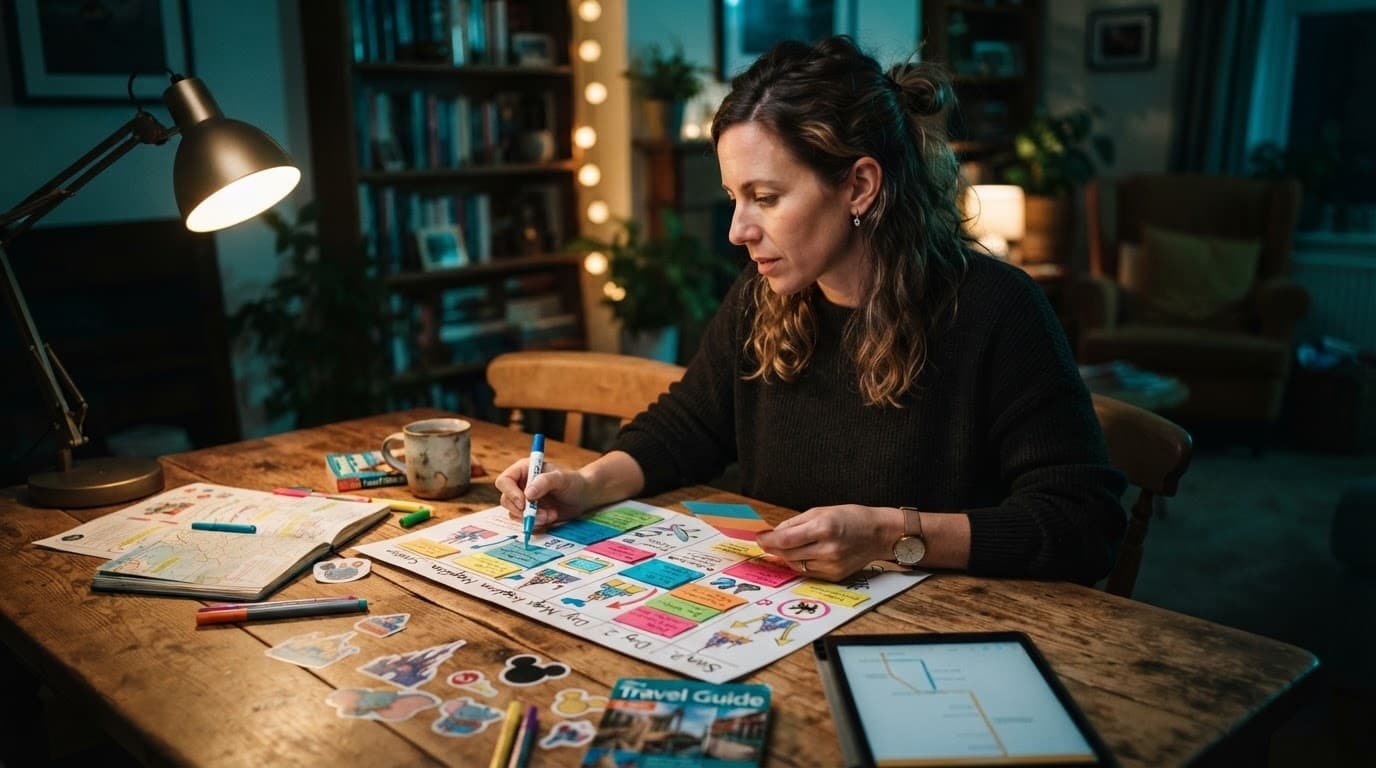
Watch ride videos together before your trip, but prepare your child for more than the ride itself. A video may not show the dark queue, the loud loading area, or the waiting near the exit. Tell your child what might happen if a ride closes or the plan changes.
An occupational therapist can help your family choose supports for home and a Disney World trip. That may include headphones, a visual timer, a first-then card, a fidget, AAC supports, or a simple “break” card.
Pack familiar items, not a bag full of new surprises. A favorite hoodie, preferred snack, downloaded show, comfort item, and trusted headphones often go further than a new park toy.
A printable Disney World with Autism Guide PDF can be helpful when you want planning notes in one place. If your family prefers an e-reader format, the Disney World autism guide on Amazon is another option to review before travel day.
Disability Access Service and other Disney accommodations
Disney’s Disability Access Service, often called DAS, is for guests who cannot wait in a traditional attraction queue for an extended time because of a developmental disability such as autism or a similar condition. Families may call it a DAS pass, but it is not a blanket pass or diagnosis-based benefit.
Disney looks at the functional reason a guest cannot manage a conventional line, including needs related to autism or cognitive disabilities. A DAS pass depends on that functional barrier, not a diagnosis alone. Share what happens in a typical queue and what support helps your child, without providing a full medical history.
Before your trip, review Disney’s current Disability Access Service rules, since procedures and eligibility can change. Guest Relations can help with general accessibility or app questions, but it cannot replace the required video chat.
Families can generally pre-register online for DAS by live video chat up to 60 days before their first park day. The adult completing registration must be at least 18, and the guest requesting DAS must be present for the conversation, even when that guest is a child.
Disney lists live video chat hours as 7:00 AM to 8:00 PM Eastern Time. Have your My Disney Experience account ready, with tickets linked for the people traveling with you.
If a DAS pass is approved, it is tied to the registered guest. Your family can request an attraction return window through the My Disney Experience app, then wait somewhere else instead of staying in the standby line. The DAS guest must be present and ride with the group.
A DAS party usually includes the registered guest and up to three additional people. Disney may consider immediate-family exceptions. Check current details before you travel, especially if you have a larger family.
Disney does not issue a general no-wait pass through DAS. DAS changes where your child waits, but it does not erase wait times.
You can usually hold one DAS return time at a time. After your family redeems it, request the next available return time. Keep a portable charger in your park bag. Your phone may hold tickets, mobile food orders, dining reservations, maps, family messages, and DAS return times.
For a second explanation of the process, this current DAS overview can help you understand what to expect before the video chat.
DAS, Lightning Lane, and the Rider Switch program are different tools
Lightning Lane Multi Pass is a separate paid service, not the older, retired fast pass. It gives guests scheduled times for participating attractions. It can work well if your family has a few must-do rides and can handle another set of timed plans.
Do not feel like you need Lightning Lane Multi Pass because you use DAS. More reservations can mean more clocks to watch. A slower pace may be the better choice for a child who needs breaks or has a hard time with sudden changes.
Rider Switch helps when someone cannot or should not ride because of a height requirement, disability, fear, or personal comfort level. Ask the Cast Member at the attraction entrance before the first group enters the line. One adult waits with the non-rider while the first group rides. Then the waiting adult can ride without everyone standing in line twice.
Build your Magic Kingdom day around one area at a time
Magic Kingdom is larger than it looks when you are tired, hot, and pushing a stroller. A plan that sends your family from Fantasyland to Tomorrowland, then back to Frontierland, can use up more energy than the rides themselves.
For most first-time families, one park per day is easier than adding Park Hopper to their park tickets. At busy theme parks, this means fewer transportation steps, fewer decisions, and less pressure to keep moving.
A sensory-seeking 5-year-old may enjoy Magic Kingdom because there are many movement-based rides, character experiences, and areas close together. Still, sensory-seeking does not mean every loud, dark, or fast ride will feel good. Start with a familiar level of movement, then watch your child’s body language.
This flexible schedule leaves room for the real day, not the day you hoped would happen on paper.
| Time of day | Area to focus on | A realistic plan |
|---|---|---|
| Morning | Fantasyland | Choose one priority ride, then add nearby attractions such as Dumbo, Prince Charming Regal Carrousel, or “it’s a small world.” |
| Late morning | Fantasyland or Tomorrowland | Use a DAS pass for one flexible return time, grab a snack, and take a bathroom break before hunger becomes a problem. |
| Midday | One indoor or seated location | Eat early, rest, cool down, and decide whether to stay in the park or return to the hotel. |
| Afternoon or evening | One nearby land | Pick one more ride, character visit, parade spot, or a calm walk. Leave when your family is ready. |
Do not force rope drop if the entrance crowd is too much. Arriving later can be the better choice. Your family may miss a few early waits, but you may gain a calmer start.
Keep one full hour open in the middle of the day. That time may become lunch, a hotel break, an unexpected favorite ride, a rain delay, or a quiet place to sit. All of those are good uses of time.
Quiet break areas and what to do when plans fall apart
Magic Kingdom does not have a dedicated sensory room. You may need to find a lower-stimulation spot as crowd levels change throughout the day.
First Aid is near the end of Main Street, U.S.A., close to The Crystal Palace. It is there for medical needs, not as a general quiet lounge, but Cast Members can help if your child is sick, hurt, or having a medical concern.
The Baby Care Center near Main Street can be useful for families with young children who need a private feeding, changing, or care space. Companion restrooms are marked in the My Disney Experience app and on the park map. They can give a child and caregiver more privacy than a large restroom.
Watch for changes in your child’s usual body language, behavior, or communication. Children with cognitive disabilities may show they need a break in different ways, so focus on their individual signs.
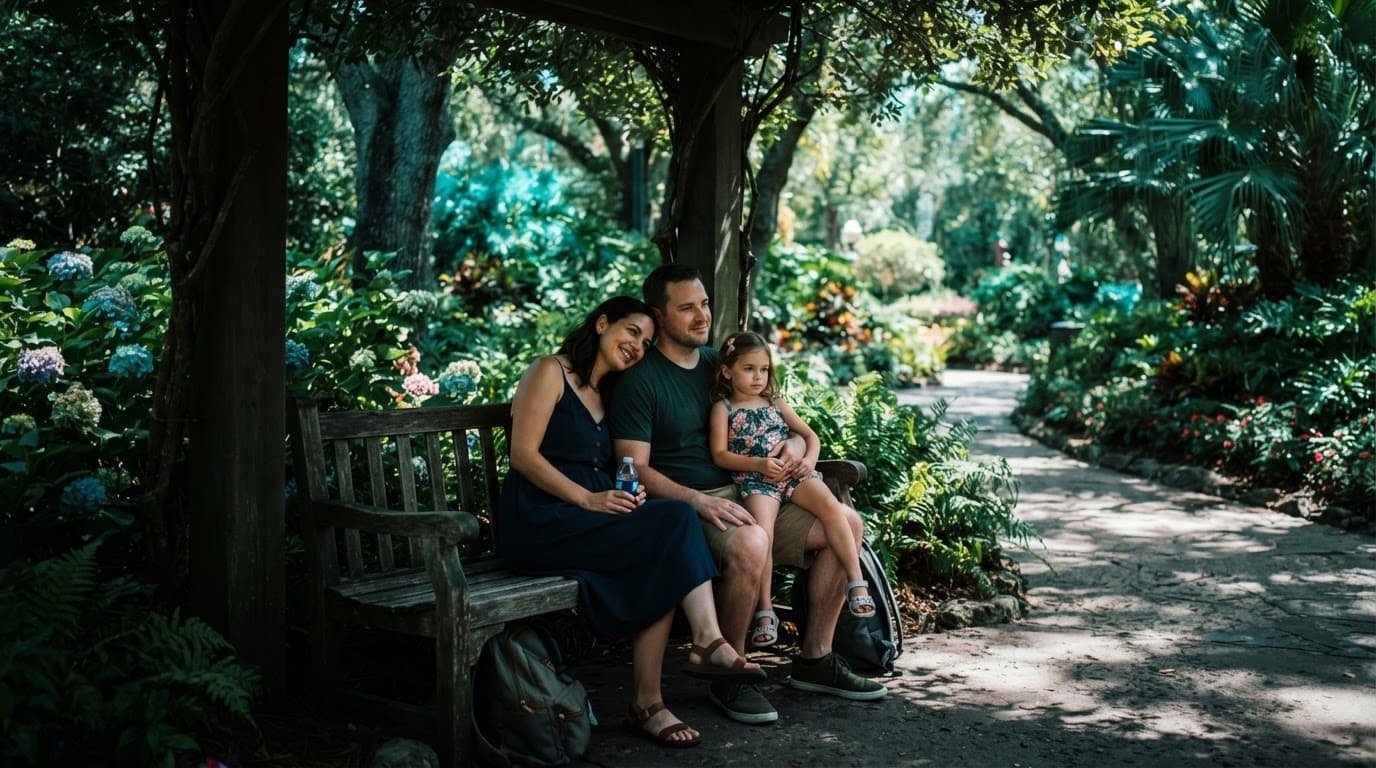
For a non-medical reset, look for outdoor tables that are not in the middle of a busy walkway. The upper level at Columbia Harbour House can be calmer during off-peak meal times. Covered seating near Tortuga Tavern in Adventureland may also work when it is not busy. A quiet space can change quickly during parades, rain, or meal rushes, so always have a backup choice.
When sensory overload starts, talk less. Give your child familiar choices instead of a long explanation.
- Move to a less-crowded spot, offer water or a preferred snack, and bring out headphones or a comfort item.
- Use a break card or simple visual like “break” or “all done” if words are hard in that moment.
- Decide whether a 10-minute reset is enough, or whether leaving the park is the kindest choice.
Leaving early is not a failed Disney day. A child who feels safe is more important than one more attraction.
Know which Magic Kingdom rides may feel intense
Every autistic child has a different sensory profile. Sensory sensitivities can make movement, sound, darkness, visual effects, water, and restraints feel different from one child to another.
Start with rides that match your child’s usual comfort level. An occupational therapist can help plan predictable movement, warnings, supports, and recovery; they cannot guarantee a ride will be tolerated. Use the attraction page in My Disney Experience to check height requirements and details before walking across the park.
| Attraction | What may work well | What to think about first |
|---|---|---|
| Tomorrowland Transit Authority PeopleMover | Gentle movement, open-air ride vehicles, and a clear ride path | Overhead audio, darkness inside some show buildings, and height exposure |
| Dumbo the Flying Elephant | Simple movement, a predictable ride pattern, and a play area nearby | Crowds around Fantasyland and waiting near the ride |
| “it’s a small world” | Slow boat ride, familiar song, and no big drops | Repeating music, bright visuals, and a busy loading area |
| Pirates of the Caribbean | Boat ride with a mild drop and cool indoor space | Darkness, cannon sounds, sudden loud moments, and pirate scenes |
| Haunted Mansion | Slow ride with lots to look at | Dark rooms, spooky themes, narration, and a stretching room |
| Space Mountain, TRON Lightcycle / Run, Big Thunder Mountain Railroad, and Tiana’s Bayou Adventure | Strong movement for some sensory-seeking riders | Speed, launches, drops, darkness, loud sound, water, and restraint systems |
Do not assume a child will enjoy a ride because they are sensory-seeking. They may love spinning but dislike loud sound. They may enjoy coasters but need a warning before a sudden drop.
If your child cannot ride, the Rider Switch program lets other family members enjoy an attraction without leaving one adult behind twice. Explain the two-group plan before approaching the entrance so everyone knows who rides first and who waits.
Food breaks can prevent a hard afternoon
A character dining experience is not always the easiest choice. The Crystal Palace can be fun for a child who loves Winnie the Pooh characters, but character visits, music, movement, and longer table time can be a lot.
Counter-service dining gives your family more control. You can mobile order when your child is ready and skip the ordering line. Then choose seating based on the noise level, especially in busy theme parks.
Columbia Harbour House is a helpful choice for many families because it has familiar food and an upstairs seating area. The menu may not work for every selective eater, so look at options before hunger hits. Bring preferred snacks, even if you have dining reservations.
Avoid putting all meals at the busiest times. An early lunch or late lunch can mean less noise and more space. You do not need to pressure your child to eat a full meal in the Florida heat. A few familiar foods, water, and small snack breaks may be enough.
Use a stroller as a wheelchair when your child needs it
Some autistic children need a stroller as a safe, familiar, and regulated space. If your child cannot safely remain in a standard queue because of special needs, visit Guest Relations and ask about having the stroller tagged as a wheelchair. This stroller as a wheelchair option can help your child remain in their stroller during attraction queues.
The Cast Member will ask why the stroller is needed. Keep your explanation focused on your child’s functional needs. A stroller tag is separate from a DAS pass, paid attraction tools, and ticketing.
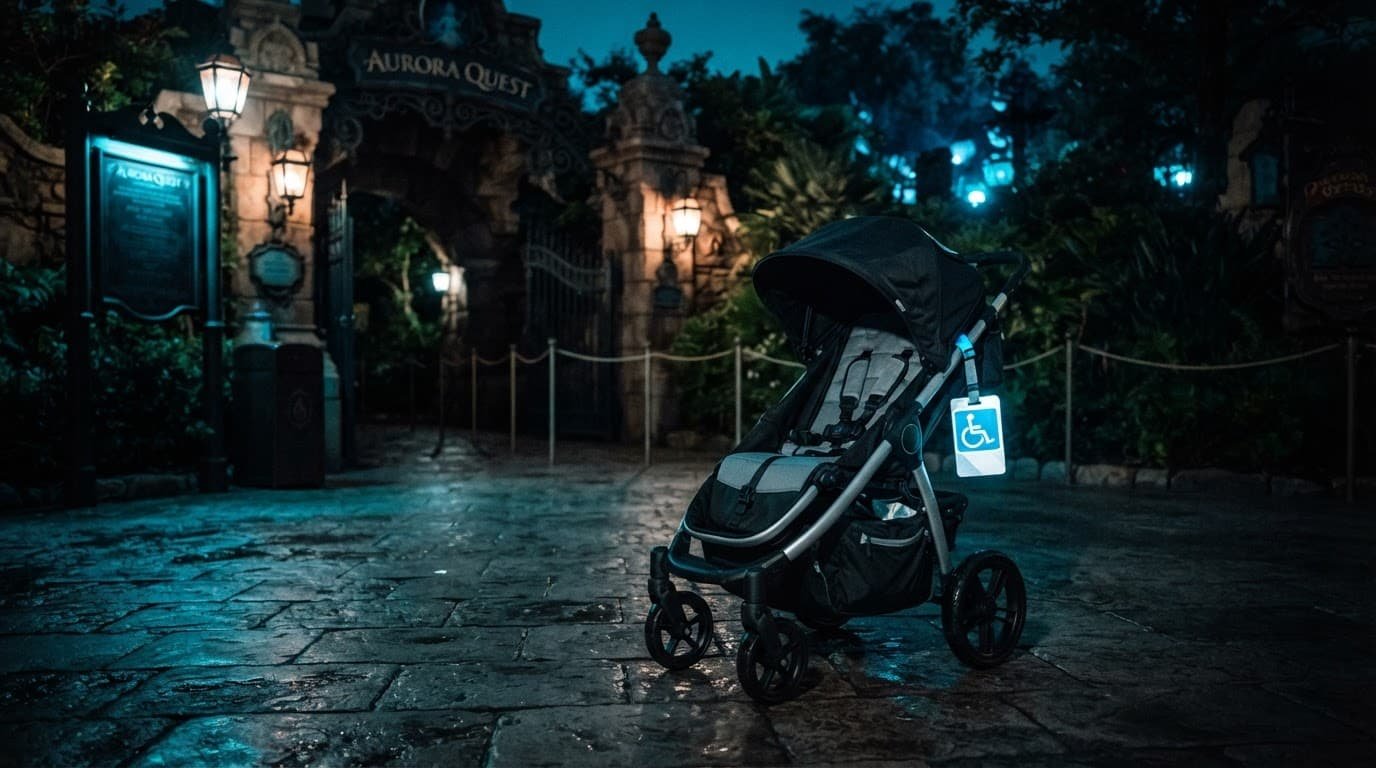
Keep the tag visible throughout the day. Take a photo of the stroller and tag before leaving it in stroller parking. Stroller areas can look different after a parade, rainstorm, or large crowd.
Disney’s regular stroller size limit is 31 inches wide and 52 inches long. A medical need does not automatically make an oversized stroller acceptable, so measure before you travel.
Before the day gets hectic, identify companion restrooms in the app and review the entry process with your child.
Security is another part of the day to prepare for. Bags may be checked, security canines may be nearby, and Cast Members may direct your family where to stand. Explain that no one is in trouble. It is simply the step before entering the park.
Frequently Asked Questions
Is DAS a no-wait pass for autistic children?
No. Disney’s Disability Access Service is based on the functional reason a guest cannot manage a traditional queue, not on an autism diagnosis alone. If approved, DAS lets the guest wait somewhere else while keeping a return time for the attraction.
Does Magic Kingdom have a dedicated sensory room?
Magic Kingdom does not have a dedicated sensory room. Families can look for less-crowded outdoor seating, use the Baby Care Center for appropriate care needs, or ask Cast Members for help when a child is sick, hurt, or experiencing a medical concern.
Which Magic Kingdom rides may be easier for an autistic child?
Gentler attractions such as the PeopleMover, Dumbo, and “it’s a small world” may work well for some children, but every child has a different sensory profile. Check for possible darkness, loud sounds, repeating music, crowds, drops, water, and restraints before choosing a ride.
Can my child stay in a stroller while waiting in attraction queues?
If your child cannot safely remain in a standard queue because of special needs, ask Guest Relations about having the stroller tagged as a wheelchair. This option is separate from DAS and other paid attraction tools, and the stroller must meet Disney’s size requirements unless Cast Members provide different guidance for the specific need.
What should we do if my child becomes overwhelmed?
Move to a less-crowded spot, offer water or a preferred snack, and use familiar supports such as headphones, a comfort item, or a break card. A short reset may help, but leaving the park early is also a successful choice when your child needs more space.
A good Magic Kingdom day feels like your family’s day
A successful Magic Kingdom autism guide is not about fitting in every ride. It is about choosing a pace that helps your child feel safe, supported, and included.
Choose a few priorities, use accommodations that fit your child’s needs, and leave room for breaks. The castle will still be there if your family needs to stop, eat, reset, or return to the hotel.
The best memories often come when everyone has enough space to enjoy the day.