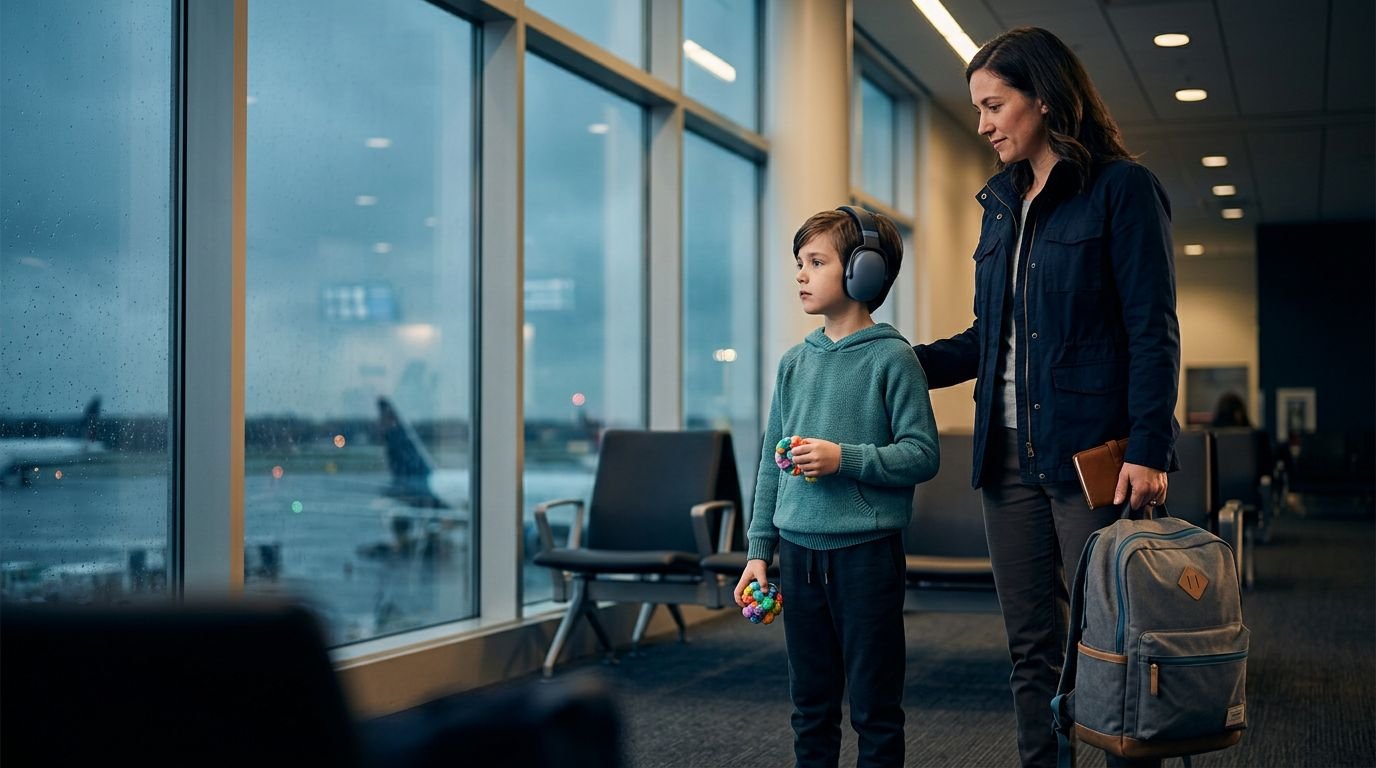
International travel can bring exciting memories, but it also brings unfamiliar sounds, new foods, and routine changes to plan around. Sensory sensitivities may make these details more important for a child with autism spectrum disorder.
A practical international travel autistic children checklist helps you plan around your child’s needs instead of hoping everything works out. The goal isn’t a perfect vacation or family trip. The goal is a trip where your family has room to rest, regroup, and enjoy the moments that matter.
Start with a plan that feels realistic for your child and your family, then let this checklist guide the details.
Key Takeaways
- Choose a manageable trip shape with fewer transitions, built-in downtime, and a comfortable place to reset.
- Prepare documents, medication, health coverage, and emergency information well before departure.
- Use visual schedules, social stories, practice trips, and familiar sensory supports to make travel more predictable.
- Plan for airport screening, flights, transfers, meals, sleep, and safety while keeping daily plans flexible.
- Treat rest, early departures, and backup activities as successful parts of the trip—not signs that the vacation has failed.
Choose a Trip Shape That Supports Your Child
A good international trip starts with the right pace. A packed itinerary may look great on paper, but it can create stress before you even leave home.
Give your family fewer transitions, more downtime, and a place to reset each day.
Pick a destination with manageable travel days
Look beyond the hotel photos. Think about flight length, time-zone changes, crowds, transportation, weather, and access to familiar groceries or restaurants with safe foods.
A direct flight may cost more, but it can remove one airport, one security line, and one major transition. If a layover is necessary, allow plenty of time. Rushing through an unfamiliar airport is hard on everyone.
Before booking, review the CDC’s international destination health information. It can help you check health notices, recommended vaccines, and other country-specific details early.
Look for trained, welcoming attractions
Some destinations, hotels, and attractions have staff training related to autism and sensory needs. An IBCCES Certified Autism Destination has a representative group of local hotels, attractions, and entertainment venues that completed private autism and sensory-awareness training.
It differs from an individual attraction or business labeled a Certified Autism Center. The IBCCES directory can help you compare participating locations. IBCCES training may improve staff awareness, but it doesn’t guarantee a quiet experience. An IBCCES designation is a useful starting point, not a promise that every site will feel easy.
Call before booking and verify current details directly with IBCCES and the property. Ask whether the specific attraction or business is a Certified Autism Center. Then ask about a quiet area, a sensory room, food options, elevator access, and room locations. Also ask whether the local airport or attraction recognizes the Hidden Disabilities Sunflower program, since participation and assistance vary.
A smaller city, a beach resort with a kitchen, or one major attraction per day may fit your family better than a busy multi-city tour.
Documents and Medication for International Travel With an Autistic Child
Paperwork is not the fun part of vacation planning. It is still one of the best ways to avoid stressful surprises.
Keep original documents in one travel folder. Save secure digital copies on a parent or caregiver’s phone, with key identification and support information ready for airport security.
For U.S. flights, save TSA Cares information with your travel documents.
Gather entry papers before booking nonrefundable plans
Check passport expiration dates for every traveler, including children. Some countries require a passport to remain valid beyond the trip dates. Visa rules, transit rules, and consent paperwork can also vary.
Your folder should include:
- Passports, visas, and any required entry confirmations.
- Copies of travel insurance details and emergency phone numbers.
- A child information sheet with allergies, medications, communication needs, and caregiver contacts.
- A consent letter if one parent, grandparent, or another caregiver is traveling alone with the child.
- Printed hotel addresses, transfer details, and flight information.
- A recent photo of your child, kept private in your phone and travel folder.
Ask the embassy or consulate for each country you will visit or pass through about its entry and medication rules. The U.S. State Department also shares helpful medicine and health travel guidance.
Plan medications and health care early
Keep prescription medications in your carry-on, not checked luggage. Bring original labeled containers, copies of prescriptions, and a clinician letter that lists generic medication names and care needs.
The CDC’s guidance for traveling abroad with medicine also recommends checking country restrictions before you travel. A medication that is routine at home may have special rules elsewhere.
If your child needs vaccines, malaria prevention, or other travel health support, book a pediatric or travel-health appointment well before departure. Pack extra medication for delayed flights and carry a simple list of doses and timing.
Prepare for the Trip Before It Arrives
Your child doesn’t need to feel excited about every step of travel. They do need a clear idea of what may happen next.
Start preparing early, so the trip feels familiar rather than surprising. Predictable practice can reduce uncertainty and may lower the chance of meltdowns, though distress can still happen.
Use a social story and visual schedule
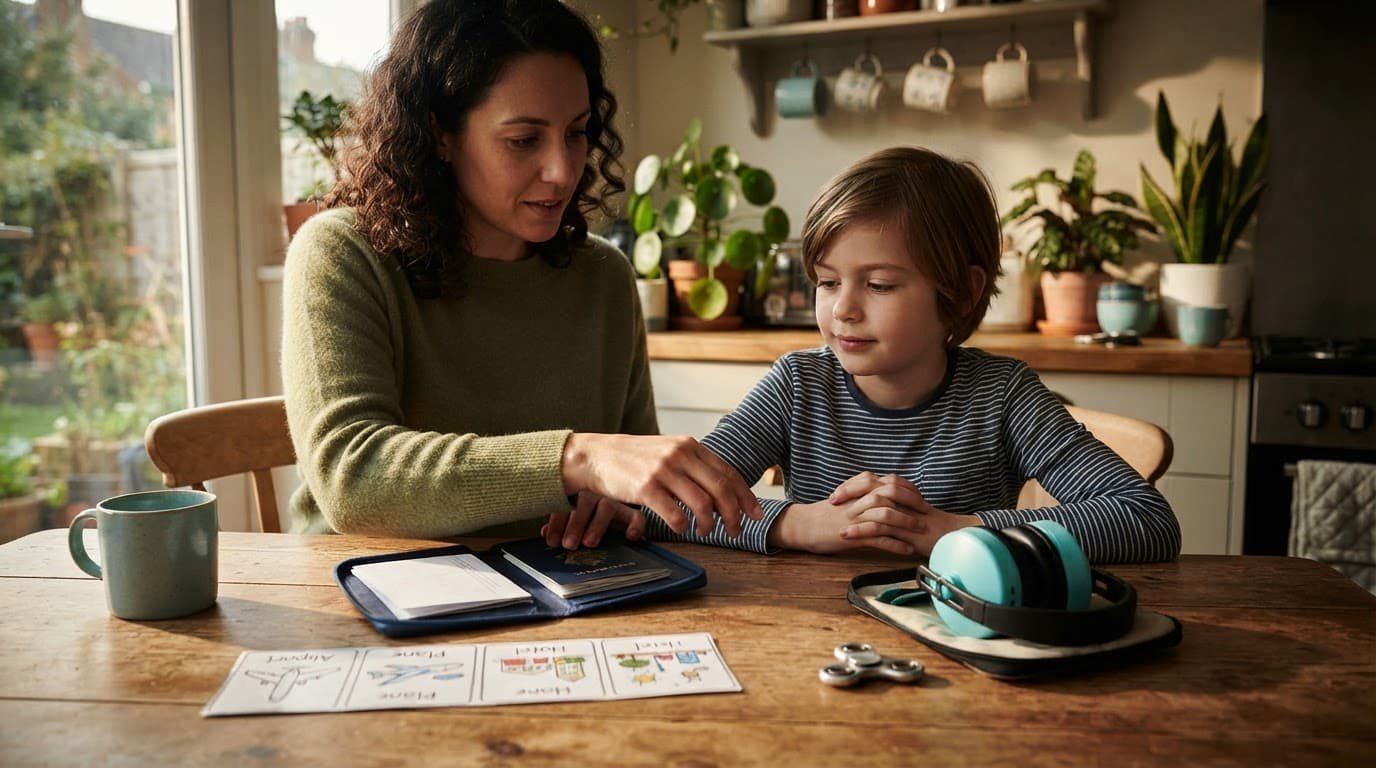
A social story can break a big trip into small, understandable steps. Use photos of your airport, airline, hotel, rental car, and the place you’re visiting when possible.
Show the order of the day: wake up, drive to the airport, check bags, go through TSA screening, wait at the gate, board the plane, land, and go to the hotel. Include realistic details such as waiting, loud announcements, seatbelts, and routine changes.
United offers a simple air-travel social story that may help families begin the conversation. You can also make your own with photos and words your child already understands.
A visual schedule should explain the plan, not pressure your child to follow every part without support.
Practice small parts of the journey
Practice wearing headphones, using a neck pillow, sitting with a seatbelt buckled, and waiting with a favorite activity. Try a short mock flight at home with a chair, a seatbelt, and a few minutes of waiting.
A sensory seeker may need movement breaks or hands-on practice instead of longer sitting exercises. Watch airplane videos together, and let your child choose a comfort item for their backpack.
Ask your local airport if it offers a familiarization visit or mock flight event. These programs aren’t available everywhere, but a practice visit can make the airport feel less unknown.
Decide in advance whether your child wants to wear a Hidden Disabilities Sunflower lanyard. Use a countdown calendar if that helps your child. Some children prefer knowing the exact number of sleeps until the trip, while others do better with a shorter countdown. You know which approach feels calmer at home.
Make Airport Security and Flights More Comfortable
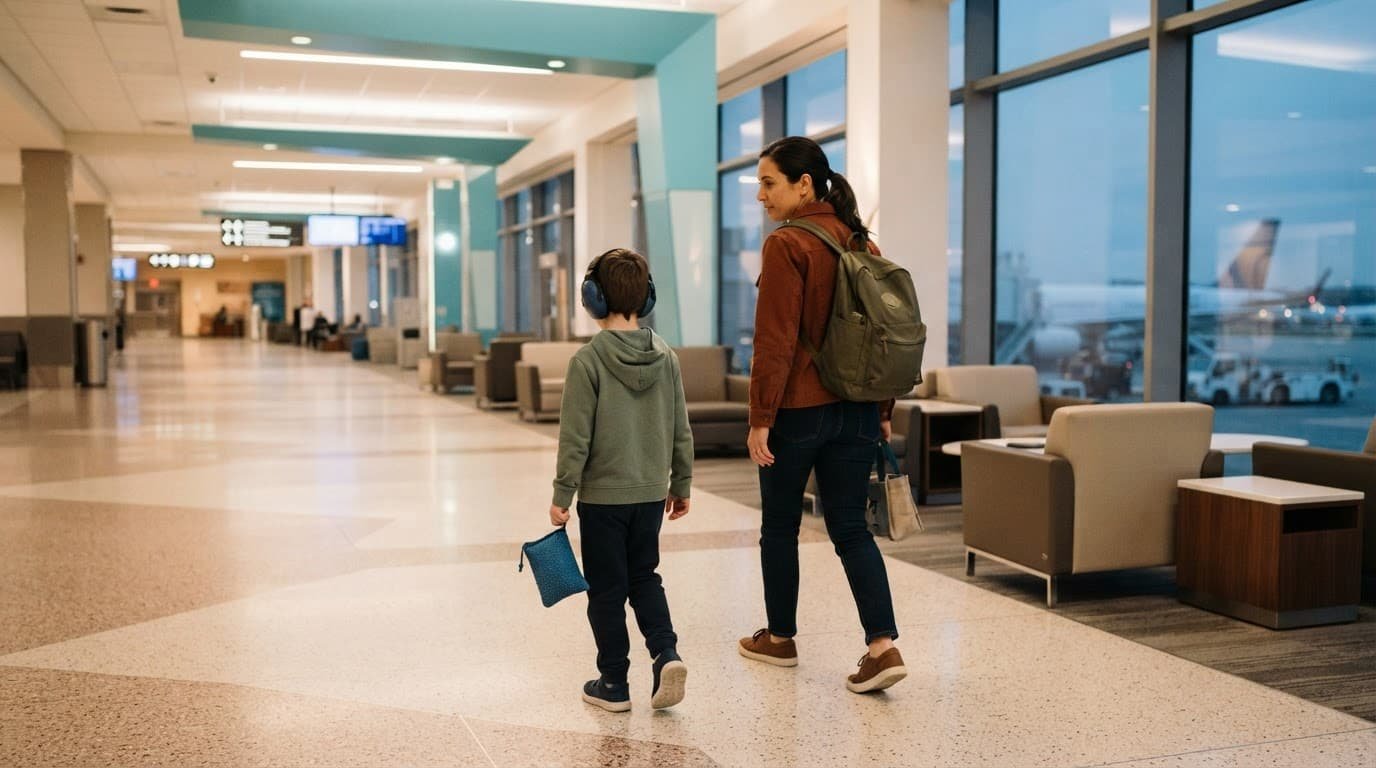
Airports can have loud announcements, bright lighting, crowds, and sudden instructions. These conditions can heighten sensory sensitivities and trigger sensory overload, so identify a place for a break. A little preparation can make the experience feel more predictable.
Request TSA support before you leave
For a U.S. departure, TSA Cares can offer support for travelers with disabilities, medical conditions, and other special circumstances during security screening. TSA asks families to contact TSA Cares at least 72 hours before travel.
Tell the representative what may help your child, such as extra time, a quieter explanation of the process, or support at the checkpoint. TSA Cares does not remove the need for TSA screening, and it does not guarantee a certain lane or outcome. It does give staff useful context before a difficult moment begins.
You can also use a notification card or an autism travel card. Calmly explain your child’s needs to a TSA officer before airport security screening starts.
Consider a Hidden Disabilities Sunflower lanyard
The Hidden Disabilities Sunflower lanyard is a voluntary way to show that a traveler may need extra patience, time, or assistance. Autism is one of many non-visible disabilities the program can support.
It does not provide automatic priority access or let a family skip security or passport control. Airport participation and staff support vary by location. If an airport advertises IBCCES training or resources, review its IBCCES information to verify what that specific airport offers. An IBCCES reference doesn’t guarantee a particular screening outcome.
A lanyard is one tool, not a requirement. Some children may find it helpful. Others may not want to wear it, and that is okay.
Plan the flight around comfort, not perfection
Ask the airline about family boarding, special assistance, disability support, seating options, and any paperwork needed before departure. A window seat can reduce movement nearby. An aisle seat may feel better for a child who needs frequent bathroom breaks or room to stand.
Bring familiar entertainment, downloaded before the trip, along with ear defenders. Cabin Wi-Fi may be unavailable, slow, or too costly. Offer sips of water or another familiar strategy during takeoff and landing to ease ear-popping discomfort.
A long flight may include tears, repeated questions, snacks at unusual times, a meltdown, and limited sleep. That doesn’t mean the trip is failing.
Pack a Carry-On Sensory Kit That Your Child Knows
Your carry-on should hold the things that would be hard to replace if checked luggage is delayed. Do not fill it with unfamiliar toys just because they are new.
Familiar comfort items are usually the better choice.
Pack comfort tools within easy reach
A sensory kit can be small. It only needs to hold the items your child already uses when they feel tired, overwhelmed, hungry, or restless.
A sensory seeker may benefit from a familiar movement or tactile item. Consider packing:
- Noise-canceling headphones or ear defenders your child has used before.
- Familiar fidget toys, a soft toy, hoodie, small blanket, or other comfort item.
- Sunglasses or a hat if bright lights are difficult.
- Familiar safe foods, gum if appropriate, and an empty refillable water bottle.
- Downloaded shows, music, games, or communication apps.
- A portable charger, charging cable, and adapter in one pouch.
- A printed visual schedule or low-tech communication card.
- Any required medication, wipes, spare clothing, and care items.
- An optional Hidden Disabilities Sunflower lanyard, if your child chooses to use it.
Keep the lanyard accessible, but don’t rely on it instead of communication supports.
Families often remember the tablet and forget the charging cord. Keep devices, cables, headphones, and battery packs together.
Keep food, sleep, and communication simple
International trips can disrupt meal times and sleep schedules. Pack safe foods your child will eat, especially for the first travel day. A familiar snack can be more helpful than searching for a new restaurant while everyone is tired.
Bring any AAC device, picture cards, sign-language supports, or written phrases your child uses at home. Keep them accessible, not buried under jackets and souvenirs.
If words are hard to find in a busy moment, offer two simple choices. “Headphones or hoodie?” “Quiet corner or snack break?” Clear choices can lower pressure.
Book Lodging That Makes Breaks Easy
Your hotel or vacation rental is more than a place to sleep. It is where your family will reset after a long day.
Think about bedtime, food, laundry, room layout, noise, and how quickly you can return after an outing.
Choose a home base that fits your routine
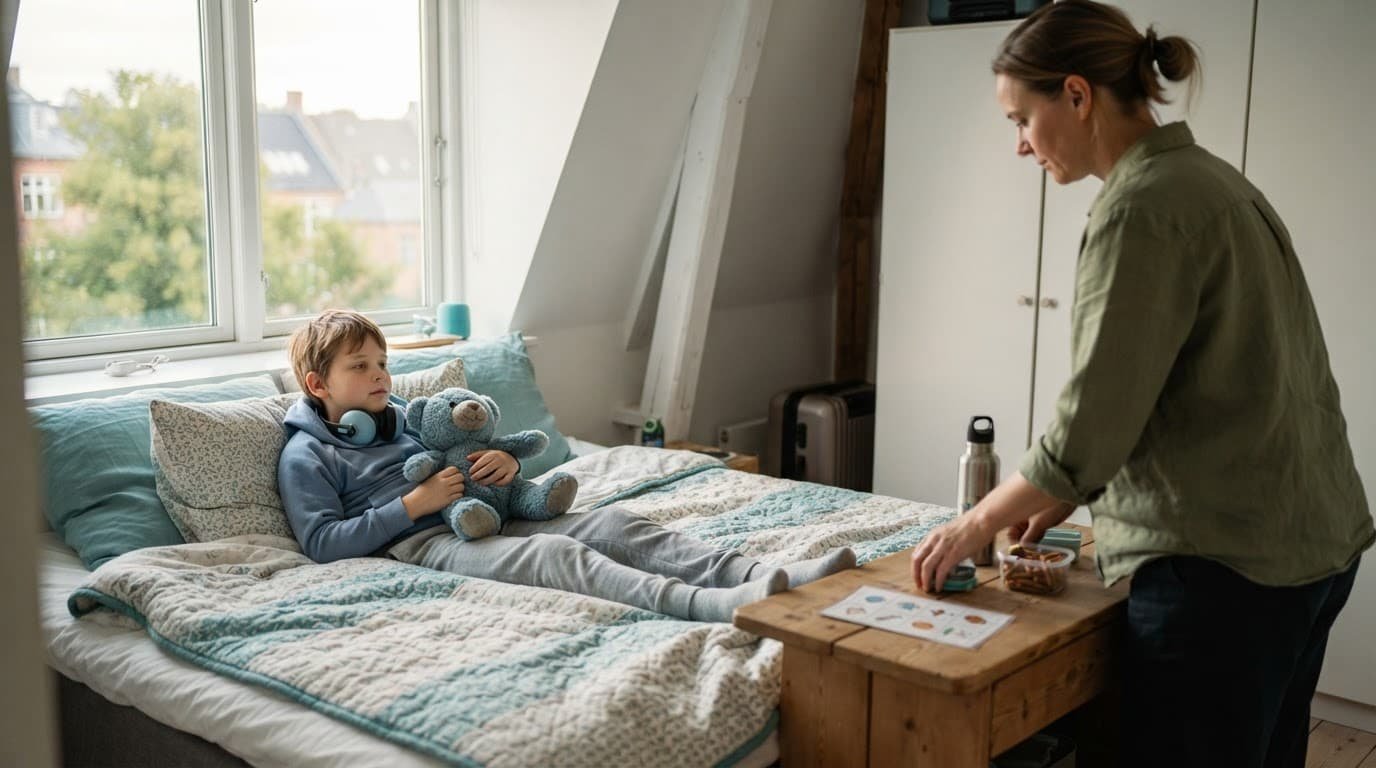
A hotel can work well if it has a refrigerator, quiet room location, elevator access, and easy transportation. Ask about rooms away from elevators, ice machines, nightlife, pools, and busy lobby areas.
Airbnbs may be a better fit if your child needs a full kitchen, more space, or separate sleep areas. They can also make it easier to prepare safe foods and manage bedtime.
When comparing Airbnbs, check the kitchen, laundry, noise, and room-layout details. Confirm what is actually available before booking.
Some hotels or lodging providers may hold the Certified Autism Center designation. Look for the IBCCES directory or training information, but don’t assume certification guarantees a quiet room.
Ask what the IBCCES training actually covered, then confirm the property’s current IBCCES status. Also ask whether the room can meet your child’s sensory needs.
Ask the lodging provider, “Do your staff recognize the Hidden Disabilities Sunflower program?” If your child uses the lanyard, ask how staff can help.
Check the real distance to grocery stores, transit stations, attractions, and medical care. A property can look close on a map but still involve steep hills, busy crossings, or long walks.
Treat the first 24 hours as an adjustment day
Try not to schedule your biggest attraction right after landing. Flight delays, customs lines, hunger, and jet lag can change the whole mood of the day.
When you arrive, unpack the comfort items first. Set out familiar supplies, including pajamas, familiar snacks, headphones, and medication. Recreate a simple bedtime routine, then tell your child the next step: “We are going to the hotel now,” or “We are having a snack, then resting.”
A quiet afternoon is not wasted vacation time. It may be what makes the rest of the trip enjoyable.
Build a Health, Safety, and Insurance Backup Plan
A complete travel checklist should include a plan for the unexpected. You may never need it, but having the details ready can lower stress for parents and caregivers.
Read the travel insurance policy, not only the summary
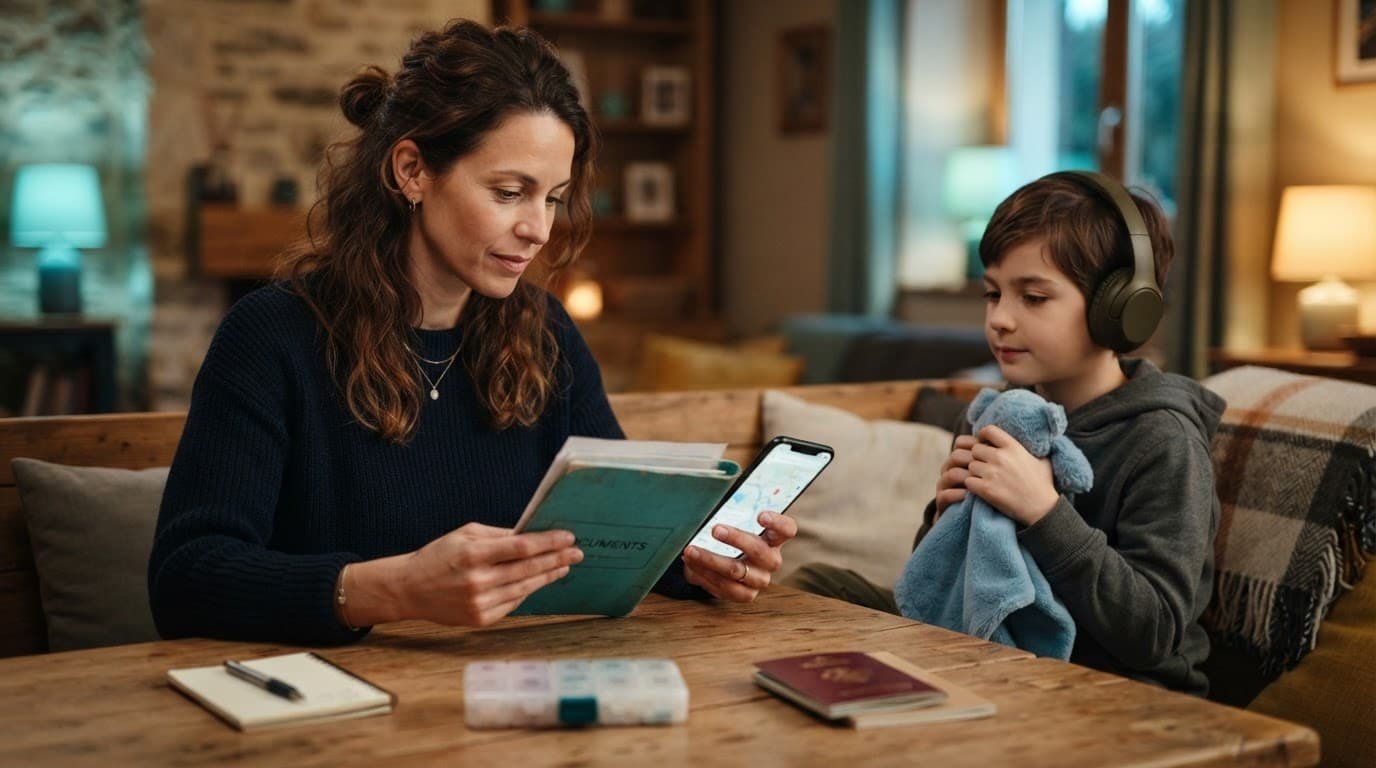
Many U.S. health plans offer limited coverage outside the country. Review your current plan before you leave, then compare travel insurance policies for medical coverage, trip interruption, emergency evacuation, and pre-existing condition rules.
Don’t assume autism-related care, behavioral needs, medication issues, or a pre-existing condition are automatically covered. Ask about the exact policy you’re considering. Check the travel insurance policy’s exclusions, evacuation and interruption terms, claim paperwork, medical stability requirements, and when coverage begins.
The State Department strongly recommends travel health coverage and explains why medical evacuation insurance matters. An air ambulance transfer back to the United States may cost tens of thousands of dollars, depending on the location and medical situation.
Prepare for separation and urgent care
If eloping is a concern during sensory overload, make a simple family safety plan. Take a current photo before leaving the hotel each day and choose a meeting point. Teach your child who can help, such as a uniformed employee, hotel desk worker, or police officer. A Hidden Disabilities Sunflower may signal that support is needed, but it doesn’t guarantee assistance.
Keep a short emergency card in your phone and travel folder. Include your child’s name, caregiver contacts, allergies, medication needs, communication preferences, and hotel address. Translate key phrases into the local language if needed.
Find the nearest pediatric-capable emergency department, urgent care, and 24-hour pharmacy before your first outing. Autism is not something you need to explain to every person you meet. Share only the information needed to get your child appropriate care and support.
Keep Ground Transportation and Daily Plans Flexible
International airports often have a long final stretch after landing. There may be passport control, baggage claim, customs, currency exchange, and an unfamiliar transfer to your destination.
Plan that first ride as carefully as the flight.
Make the transfer easy to understand
Pre-booking a private transfer can reduce waiting and decision-making for some families. Public transit may be a great fit for others, especially if your child is a sensory seeker who enjoys trains or buses. The right answer depends on your child, luggage, arrival time, and energy level.
Show your child a photo of the vehicle or station when possible. Keep the next step simple. “We are getting in the car. Then we go to our room.”
If eloping is a concern near roads, platforms, or crowded stations, decide who stays closest and where you’ll pause.
Some families choose to use a Hidden Disabilities Sunflower lanyard in a participating airport or station. It doesn’t promise priority service, but it may discreetly signal that extra understanding could help.
If you rent a car, ask about local toll systems, car seats, parking, and driving rules before leaving the airport. Surprise fees and unfamiliar roads can add stress to an already long day.
Build in rest days and backup choices
Choose one or two priorities each day. Keep a nearby backup option if a museum is too crowded, a tour is canceled, or the weather changes.
A nearby attraction identified as a Certified Autism Center may be a useful backup. Use the IBCCES listing or training description as a starting point. Verify current details directly with the venue, even if IBCCES lists it.
Your child may want to revisit the same playground, beach, aquarium exhibit, or hotel pool. That is still travel. It is still a family memory.
A flexible plan gives everyone permission to leave early, take a longer lunch, skip an attraction, or return to the hotel without guilt.
When Disney Is Part of Your International Itinerary
A Disney stop can add excitement, but it can also bring crowds, heat, bright environments, and long walks that challenge sensory sensitivities. App-based planning and frequent transitions can add to the load. Keep the days simple.
Disability Access Service, Lightning Lane options, virtual queues, and attraction procedures can change. Before visiting a Disney destination, check the current park information. If your child wants a visible support tool, consider the Hidden Disabilities Sunflower, but Disney staff policies and participation vary. Don’t feel pressured to buy every add-on. A paid return-time tool is only helpful when it gives your family more breathing room.
For optional family-focused planning ideas around breaks, park bags, and flexible Disney days, the Disney World With Autism Guide PDF is available on Etsy. You can also find the Disney autism travel guide on Amazon. These resources offer planning ideas, not official Disney policy.
One park per day, a nearby hotel, familiar snacks, and a portable charger may help more than a schedule filled with timed reservations. A good Disney day does not need every ride.
Frequently Asked Questions
How can I prepare my autistic child for international travel?
Use a visual schedule or social story to explain each step, including waiting, security screening, boarding, and arriving at the hotel. Practice small parts of the journey and bring familiar comfort items rather than introducing new tools at the airport.
What should I pack for an international flight with an autistic child?
Keep medication, documents, safe foods, communication supports, headphones, comfort items, spare clothing, and charging supplies in your carry-on. Pack items your child already uses when they feel overwhelmed, tired, hungry, or restless.
Can TSA Cares or a Hidden Disabilities Sunflower lanyard make airport travel easier?
TSA Cares can provide advance support and context for a U.S. security screening, but it does not remove screening or guarantee a specific outcome. A Hidden Disabilities Sunflower lanyard may signal that extra patience or assistance could help, although participation and support vary by airport.
How should I plan the first day after arriving abroad?
Keep the first 24 hours simple and avoid scheduling the biggest attraction immediately after landing. Unpack familiar supplies, offer safe food, recreate a basic bedtime routine, and allow time for customs, delays, jet lag, and recovery.
What should I do if my child becomes overwhelmed during the trip?
Move to a quieter area, reduce demands, and offer simple choices such as headphones, a snack break, or returning to the hotel. A flexible itinerary gives your family permission to leave early, skip an activity, or use a nearby backup plan without guilt.
A Trip Built Around Your Family
The best international travel plan for an autistic child isn’t the busiest one. It’s the one that protects routines, comfort, communication, and recovery time.
Use this international travel autistic children checklist and these practical travel tips to prepare the details you can plan. Then leave room for moments you can’t.
Optional supports might include a familiar card, a visual cue, or a Hidden Disabilities Sunflower. Choose only what feels right for your child, and follow their preference.
Your family doesn’t need to travel like anyone else. A calm pace and familiar support can make a family trip feel more accessible, even on vacation. A solid backup plan leaves room for connection and recovery.