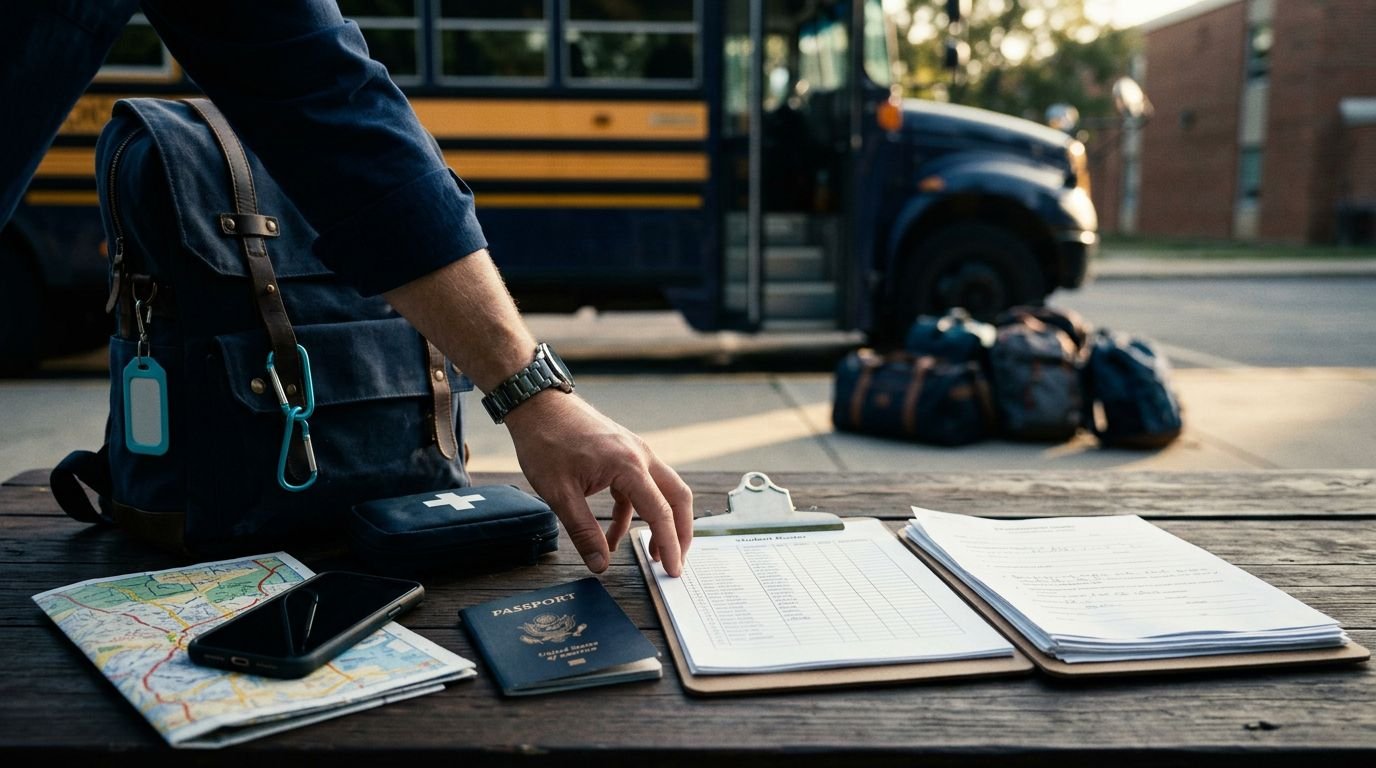
A great school trip starts long before students board the bus or arrive at the airport. A clear school trip checklist keeps small details from becoming last-minute problems.
Teachers, chaperones, and families can use the same packing list and communication plan. When everyone knows what to pack, who to call, and where to meet, the day feels safer and more enjoyable.
Use this field trip checklist as your starting point, then adjust it for your school policies, destination, age group, and student needs.
Key Takeaways
- Start the school trip checklist early with student rosters, permission forms, medical information, travel documents, reservations, and emergency contacts.
- Match the packing list and itinerary to the destination, weather, walking distances, accessibility needs, dietary requirements, and student support plans.
- Give every chaperone a clear group assignment, secure contact information, an itinerary, and instructions for attendance, communication, and emergencies.
- Use a one-week preparation timeline, verify every booking, and keep paper copies of essential information in case devices or phone service fail.
- Plan for changes and keep departure routines consistent, including repeated head counts, clear behavior expectations, medication checks, and designated meeting points.
Build Your School Trip Checklist Before Anyone Packs
Turn the trip details into one shared field trip checklist and master plan. Keep it in a secure digital folder, then print the pages adults need during travel.
Start with documents and approvals
Every trip needs a complete student roster with names, parent or guardian phone numbers, emergency contacts, medical notes, and chaperone assignments. Confirm that the school has received all parental permission forms before finalizing attendance.
Domestic trips may only need attendance, transportation, venue, and meal details. Overnight trips need extra lodging coordination, while international travel requires the checks below:
- Student and chaperone travel documents, including a valid passport and any required visa.
- Signed medication authorization forms and allergy action plans.
- Travel insurance details, if your school or group uses coverage.
- Hotel, transportation, attraction, and meal confirmations, plus a rooming list stored securely and finalized before departure.
- Emergency contact information for the school office, trip leader, and destination staff.
International travel takes extra lead time. Passports for children under 16 are valid for five years, and some destinations may ask for a notarized consent letter when a minor travels without both parents. Review the State Department’s guidance for travel with minors well before departure.
Match the plan to the students going
A museum day downtown and a three-night student travel experience need different preparation. Think about walking distances, weather, meal times, transportation changes, and the physical needs of every student.
Confirm accessible transportation, wheelchair access, dietary accommodations, and private spaces for medication or personal care. For international travel, check CDC destination health guidance for recommended vaccines, medicines, and health concerns.
A well-planned trip does not treat accessibility as an extra item. It builds support into the schedule from the beginning.
Create a Student Packing List That Works
Students pack better when the list is simple, realistic, and tied to the actual itinerary. Send the packing list home early, then send a shorter reminder two or three days before the trip. A field trip checklist helps families separate required items from optional extras.
Pack for walking, weather, and comfort
Comfortable walking shoes matter more than a new pair that looks nice in photos. Students may walk through airports, city blocks, campuses, museums, or theme parks all in one day.
Include:
- Comfortable walking shoes that have already been worn in.
- Pack weather appropriate clothing, including layers and a waterproof jacket.
- A refillable water bottle, if allowed at the destination.
- Sunscreen and sunglasses, a hat, and insect repellent when needed.
- A small backpack, not a large bag that becomes hard to carry.
- A mobile phone charger or portable battery for older students using devices.
- Spending money, only when purchases are allowed by the school and itinerary.
- For overnight trips, personal toiletries and, where appropriate, a dirty laundry bag.
- For international travel, an electrical outlet adapter.
Encourage families to label jackets, water bottles, luggage, and chargers. A student can replace a forgotten hoodie more easily than lost medication or an important document.

Photo by Anh Tuấn Lê
Handle medications with care
Medication plans should follow school policy and be reviewed with families before the trip. Prescription medications should stay in their original packaging, with clear labels, dosage instructions, and a named adult responsible for administration.
Don’t leave medication management unclear because the trip is busy. Confirm where medicines will be stored, who has access, when doses are due, and what happens if a dose is missed or a student feels unwell.
For flights, the Transportation Security Administration limits regular carry-on liquids, aerosols, gels, creams, and pastes to containers of 3.4 ounces or 100 milliliters in one quart-sized bag. Keep essential permitted items in a carry-on bag, and review the current TSA liquids rule before packing. Medically necessary liquids can be carried in larger amounts, but they should be declared at security for screening.
Give Every Chaperone a Clear Job
Helpful chaperones need more than a meeting time. Record each assignment in the field trip checklist before departure. Give adults student names, expectations, emergency contacts, and a direct line to the trip leader.
Assign student groups before departure
Divide students into small, consistent chaperone groups. Students should stay with their assigned group during bus rides, bathroom breaks, meals, activities, transitions, and free time.
Use the school’s approved student-to-chaperone ratio. Do not change groups casually during the trip, especially in busy locations.
Give each adult a secure bus roster and itinerary copies. Include only the student and contact details they need, along with meeting locations and the daily schedule. If students have phones, set clear rules about when they may use them and how they should respond to group messages.
Pack a practical bus leader bag
The group leader’s bag is the item you hope you do not need, but will be glad to have. Keep it with the lead teacher, not under luggage or in the bus storage area.
Pack a small first aid kit, emergency contact list, copies of travel documents, student medications as approved, disposable gloves, tissues, hand sanitizer, mobile phone charger, battery pack, trash bags, and a few simple snacks.
Add a pen, permanent marker, small notepad, zip-top bags, and a roll of paper towels. These inexpensive items solve many small problems quickly.
A bus leader bag should hold what helps the group stay safe and moving, not every item someone might want during the trip.
Use a One-Week Pre-Departure Timeline
A school trip can feel overwhelming when every task lands on the final afternoon. Use this practical field trip checklist to break preparation into small checkpoints and give each task an owner.
| Timing | What to complete |
|---|---|
| One week before | Confirm transportation, lodging, tickets, meal plans, final head count, and chaperone assignments. |
| Three to five days before | Review health forms, medication plans, emergency contacts, weather, and student reminders. If the forecast changes, tell families whether students need a waterproof jacket. |
| Forty-eight hours before | Send families the final itinerary, departure location, pickup time, luggage rules, and lead contact number. |
| Night before | Print rosters, charge devices, prepare the emergency bag, check tickets, and set out name tags or wristbands if used. |
| Departure morning | Take attendance, check medications and documents, review behavior expectations, and complete the first head count before leaving school grounds. |
Call hotels, bus companies, airlines, and activity providers to verify each confirmation. Ask about parking, group entrances, baggage limits, carry-on bag rules, arrival procedures, and who to contact if the group is delayed. Check special requirements for medication and international travel.
Keep a paper copy of emergency contact information and the most important trip details. A dead phone, weak signal, or misplaced charger should not stop adults from reaching families or finding the hotel.
Plan for Safety, Access, and Changes
Even the best itinerary can change because of weather, traffic, a delayed flight, or a student who needs extra support. A calm response starts with a clear plan.
Know who makes the call in an emergency
Before departure, identify who contacts emergency services, the school office, the principal or administrator, families, transportation providers, and destination staff. Chaperones should report serious concerns to the trip leader immediately instead of managing them alone.
Your off-campus emergency process should align with the school’s larger safety plan. The U.S. Department of Education’s emergency planning guidance stresses clear roles for staff and responders.
Review meeting points for a separated student, severe weather, evacuation, and transportation delays. Keep all students with an assigned adult until the situation is resolved.
Build in sensory and accessibility support
Some students need more than a packed schedule and a lunch break. Loud venues, crowded buses, unfamiliar food, long lines, changing plans, and tired feet can add up quickly.
Ask families before departure what helps their child feel comfortable. Document needed accommodations through the school’s approved plans, then prepare supports such as a familiar snack, noise-reducing headphones, a comfort item, sunglasses, a visual schedule, or a quiet break.
For a Disney school trip or family extension, the Disney World With Autism Guide on Etsy and the Amazon edition of the guide offer optional ideas for sensory needs, breaks, and flexible park days. These resources can support planning, but they don’t replace a student’s school-approved support or medical plan.
Keep Departure Morning Calm and Organized
Use your field trip checklist to organize an early arrival, relaxed check-in, and orderly loading. Last-minute rushing is where permission slips disappear, bags get mixed up, and important questions get missed.
Take attendance before loading. Count students again after boarding, after rest stops, after meals, and before leaving every attraction or venue. Use the same count routine each time.
Review the simple rules before the group gets moving: stay with your chaperone, ask before leaving the group, keep phones charged, respect the location, and tell an adult right away if something feels wrong.
A few clear reminders at the start can prevent many problems later.
Frequently Asked Questions
What should be included in a school trip checklist?
Include student and chaperone rosters, permission forms, medical and medication details, travel documents, reservations, emergency contacts, packing items, and transportation information. Add destination-specific requirements for weather, meals, accessibility, and activities.
When should teachers send the packing list to families?
Send the full packing list home early so families have time to gather required items and ask questions. Send a shorter reminder two or three days before departure with weather updates and any final instructions.
How should medications be handled on a school trip?
Follow school policy and keep prescription medications in their original packaging with clear labels and dosage instructions. Confirm where medicines will be stored, which approved adult is responsible, when doses are due, and how essential medications should be carried during travel.
What should chaperones do if a student becomes separated from the group?
Chaperones should report the situation to the trip leader immediately and follow the preplanned process for contacting staff, emergency services, and the school office. Students should remain with their assigned adults, and the group should use designated meeting points and current rosters to account for everyone.
How often should teachers take attendance during a trip?
Take attendance before loading and repeat the count after boarding, rest stops, meals, activities, and before leaving each venue. Using the same routine every time helps adults notice problems quickly and keeps the group organized.
Final Thoughts
The strongest checklist is not the longest one. It is the one every adult understands and can use when the day gets busy.
Start early, keep communication simple, and plan for real student needs. With documents, medication, adult roles, emergency details, and comfort items in place, your group can focus on the experience instead of the stress.