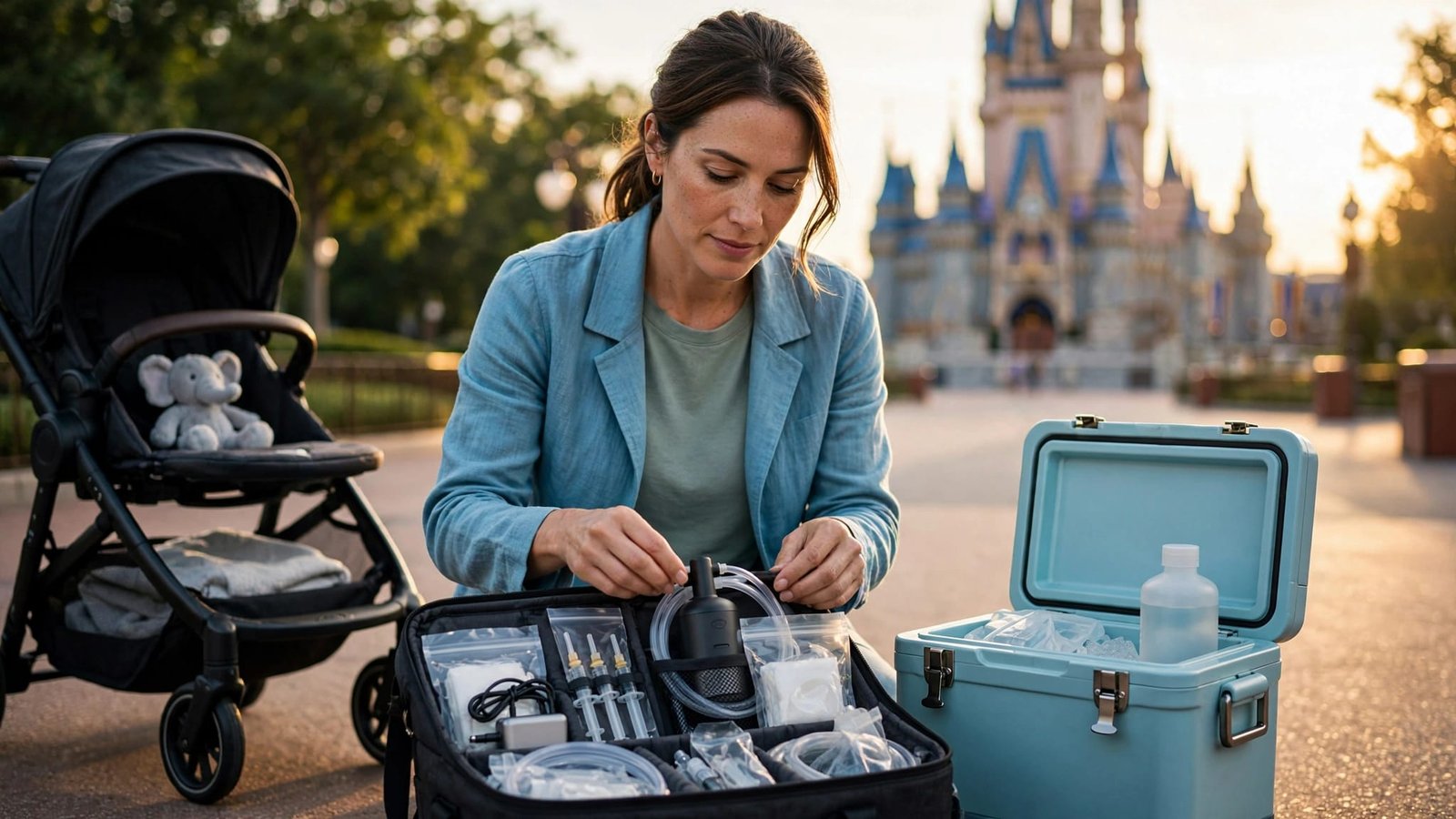
A Disney vacation with a feeding tube can be a wonderful family trip, but it needs more planning than tossing swimsuits into a suitcase. Formula and medication transport, pump power, refrigeration, feeding schedules, Florida heat, and travel delays all deserve a spot on the plan.
The good news is that Disney World feeding tube travel is manageable. Build in extra time, carry smart backups, and know where to ask for help. This guide covers Home Enteral Nutrition travel planning for families managing enteral feeds at home and in the parks. You’ll also find practical tips for accessibility, restrooms, cleaning, and backup plans.
You don’t have to plan every minute. Start with the medical details that matter most, then build park days around your family’s real routine.
Key Takeaways
- Plan with your medical team before booking, including formula, medications, hydration, feeding schedules, pump needs, stoma care, and backup supplies.
- Keep essential formula, equipment, medications, chargers, batteries, and documentation in carry-on bags, and prepare for travel delays or a missed delivery.
- Protect formula and pump equipment from Florida heat, rain, and direct sun, while following prescribed storage, hang-time, flushing, and hydration instructions.
- Ask Guest Relations about a stroller-as-wheelchair designation when appropriate, but remember that a feeding tube alone does not establish eligibility for Disability Access Service.
- Build slower park days around your family’s normal routine, with indoor breaks, First Aid locations, restroom access, flexible meal plans, and a clear contingency plan.
Disney World Feeding Tube Planning Starts Before You Book
A good Disney trip starts before you choose a hotel or buy tickets. During vacation planning, talk with your child’s medical team, or your own care team, about travel timing and feeding tube needs. Ask the clinician to approve a travel plan for prescribed formula, medication administration, storage, hydration or flush instructions, stoma care, and G tube maintenance. The plan should reflect your usual Home Enteral Nutrition or pediatric tube feeding routine.
Ask your clinician for an updated medical letter that identifies the tube, prescribed formula, pump, syringes, extension sets, medications, and other medical supplies you will carry. The Oley Foundation’s sample travel letter is a helpful starting point for showing what information to include.
Choose a trip length with room for breaks
A four-to-six-night stay usually gives families more breathing room than a rushed weekend. Travel days can be tiring. Your first park day may also take longer than expected as everyone gets used to the resort, transportation, and Florida heat.
Plan one park per day when possible. Park hopping sounds flexible, but it adds transportation, security lines, walking, and decisions. Magic Kingdom, EPCOT, Hollywood Studios, and Animal Kingdom can each fill a full day at a slower pace.
A non-park day can be helpful after two or three park days. Use it for the pool, laundry, Disney Springs, supply checks, and a quiet reset.
Pick a resort that supports your routine
Look at room layout, refrigerator access, bus stops, food options, and walking distances. A room close to the lobby or transportation can make morning feeds and late-night returns easier.
Disney says its resort hotels have accessible paths to guest rooms, restaurants, pools, shops, and other common areas. Review Disney’s resort accessibility information before booking, then contact guest services with questions about your family’s equipment and storage needs. Policies and available services can change, so check the current official information before your trip.
A lower-priced room can cost more energy if it adds long walks before and after every park day.
Build a Travel Folder and Carry-On Bag
Checked bags can be delayed. Keep essential medical supplies in carry-on bags rather than checked baggage, including formula, medications, pump parts, chargers, batteries, and backup supplies for travel delays. Plan for an unexpected overnight stay and the first day or two after arrival.
Divide supplies between two adults’ carry-on bags when possible. If one bag goes missing, you still have a backup.
Keep these items in a small travel folder or phone folder:
- A medical letter, medication list, clinician phone number, supplier contacts, and a written Home Enteral Nutrition care summary.
- Photos of the feeding pump settings, a written copy of the schedule, charging instructions, battery information, and equipment-failure documentation.
- Hotel reservation details, airline information, insurance documents, and pharmacy contacts near your resort.
- A short explanation of the medical equipment for a Cast Member, airline employee, or security officer.
- Extra tube feeding supplies, including extension sets, syringes, gauze, tape, and spare items for stoma care, based on your medical team’s recommendations.
- If your plan includes sterile water, use it for formula preparation or flushing only when prescribed or approved by your medical team or the manufacturer.
Bring a reasonable backup beyond the exact number your schedule requires. Extra supplies, chargers, batteries, and formula can help when a pump bag gets wet or a flight is delayed. Follow your medical team’s recommendations instead of packing every possible item.
For broader advice on traveling with tube-feeding equipment, review the Oley Foundation’s travel tips before you leave.
Flying With Formula, Pumps, and Medical Supplies
Airport security can feel stressful when your bag contains formula, feeding bags, syringes, medication, and a pump. Give yourself more time than usual. Arriving early means you don’t have to rush through the TSA security checkpoint.
Tell the TSA officer right away that you’re carrying a medical liquid and tube-feeding supplies. Keep formula, medications, and equipment in your carry-on luggage. Medically necessary formula and medications, plus cooling packs, syringes, and related equipment, may receive screening procedures different from ordinary liquids.
Review the current TSA guidance for formula and medical liquids before departure. It explains that liquid formula and cooling packs may be allowed above standard liquid limits, though screening can take extra time.
Make the screening process easier
Keep formula, medication, and medical supplies together in a clear, easy-to-remove section of your bag. Label containers when you can, and carry documentation that explains the medical need.
You may ask that formula not be opened or X-rayed. TSA may use another screening method, so ask the officer about alternative procedures if needed. Stay calm, direct, and ready for a few extra questions.
Call TSA Cares at least 72 hours before your flight if you want to discuss disability-related screening support. It’s an optional planning resource, not a guarantee of a particular screening outcome. Also check your airline’s rules for a feeding pump, batteries, medical equipment, and carry-on allowances before departure. Policies, battery requirements, and baggage allowances can change.
Shipping Tube-Feeding Supplies to Your Disney Resort
Shipping tube feeding supplies and bulk formula ahead can free up luggage space. It can also create problems if a delivery arrives late, goes to the wrong address, or needs refrigeration.
Before placing an order, call your exact Disney Resort hotel. Ask about the shipping address, guest name, reservation details, delivery window, package-holding period, and refrigeration capability. Also ask whether it accepts medical supplies from your supplier.
Disney’s current mail services information says a package received through the Front Desk or delivered to a resort room has a $6 handling fee per package. That published $6 charge is a package handling fee, but it may not apply to every shipment. Don’t assume the fee will be waived for a medical shipment. Ask the resort in advance, get the answer in writing if possible, and plan the charge into your trip budget.
Time the delivery carefully
Disney business centers may hold parcels for up to three days as part of their handling service, but package rules can differ by resort. Ship too early and your box may arrive before the hold window. Ship too late and your supplies may not be there when you check in.
Aim for one or two business days before arrival, not a week ahead. This is a planning suggestion, not a guarantee, so keep a delay-proof reserve in your carry-on.
Put the lead guest’s full name, arrival date, reservation number if requested, and resort name on the label.
For equipment that cannot be packed or shipped easily, Disney’s AdventHealth guest health care services can help coordinate certain medical equipment rentals and deliveries to Disney Resort hotels. Call before travel to confirm what is currently available and review AdventHealth equipment-delivery rules. Also confirm Disney’s current mail-service and resort procedures directly, since fees and policies can change.
Protect Formula and Pump Power in Florida Heat
Florida heat and afternoon storms can change the plan fast. Direct sun, a hot stroller bag, a parked car, and a pool deck can quickly affect supplies and electronics.
Plan refrigeration before leaving your resort. Pack a clean, insulated cooler with enough ice packs for the day. Keep supplies shaded, and follow the storage and hang-time instructions for liquid formula. Those rules can differ when formula is unopened, opened, mixed, or poured into a feeding bag.
Don’t improvise formula dilution, extra water, flushes, or hang times. If hydration is part of the person’s established medical plan, follow it as prescribed. Your clinician can help plan timing for a continuous feed and other prescribed routines.
Keep your feeding pump out of direct sun
Check your feeding pump manufacturer’s operating temperature guidance before the trip. Carry it in a shaded, ventilated feeding backpack or covered stroller bag, but don’t block vents or place ice directly against the device unless the manufacturer permits it.
Protect the pump and supplies from rain without sealing in heat or blocking airflow. Bring a fully charged backup battery or power source if the pump uses one. Pack the wall charger, charging cable, and portable battery separately, and recharge them during planned indoor breaks.
A portable charger isn’t an extra at Disney. Your phone may hold tickets, park maps, mobile food orders, return times, and family messages.
Plan indoor breaks during the hottest part of the day. A table-service meal, a show, a resort break, or a longer stop at First Aid can help everyone cool down.
Use a Medical Stroller in Attraction Queues
At guest services, ask Guest Relations about the “stroller as wheelchair” designation if your child uses a stroller as a medical mobility device. This can allow the stroller to be treated as a wheelchair in applicable attraction queues.
Disney’s attraction queue access guidance explains this option for guests with disabilities who use a stroller as a mobility device. Check current procedures before your visit, since attraction rules can change. Bring the stroller you actually use at home if it provides needed positioning, storage, containment, or medical equipment support.
The tag doesn’t create a return time or guarantee a particular boarding process. Some attractions require a transfer. Others may use a wheelchair-accessible vehicle or a different loading area. Confirm transfer and loading requirements with a Cast Member at each attraction before entering the queue.
Keep the feeding backpack attached and reachable
A stroller can become the center of your medical setup. Use secure hooks, zippered pockets, and a rain cover, and keep equipment out of direct heat when possible. Keep medical supplies in the same spot every day, not under souvenirs and ponchos.
At stroller parking, keep emergency items with the adult rather than leaving them in the parked stroller.
Take a photo of how your equipment is arranged before leaving the resort. If an adult takes over pushing the stroller, they will know where the supplies, pump, and backup items belong.
Disney also lists mobility supports and attraction information on its services for guests with mobility disabilities page.
Know What Disability Access Service Can and Cannot Do
A feeding tube alone does not establish eligibility for DAS. Disney currently describes DAS as a service for guests who cannot wait in a conventional queue for an extended time because of a developmental disability, such as autism or a similar condition.
For current Disability Access Service registration requirements, review the current DAS registration rules before your trip. Registration is completed by live video chat, with the guest requesting DAS present and required to ride when the return time is used.
DAS does not provide immediate ride access. It gives a return time generally comparable to the current standby wait, allowing your family to wait somewhere else.
Don’t depend on DAS for every need
You can hold one DAS return time at a time. After using it, you can request another through the My Disney Experience app. Guest Relations and Guest Experience Team locations can help if you don’t have a phone or run into an app problem while managing a return time.
DAS is separate from a stroller-as-wheelchair designation, Rider Switch, and Lightning Lane Multi Pass. Lightning Lane is a paid service with scheduled return windows. If a return time expires, ask Guest Relations or the Guest Experience Team what options may be available. You don’t need every option for a successful trip.
A slower schedule, shorter walking routes, shade breaks, and one or two must-do attractions often matter more than a packed ride list.
Plan Meals When Someone Is Fully Tube-Fed
A family member who is fully tube-fed can still join every meal. Disney restaurants are about time together, not proving that everyone ordered food. Character dining can remain part of the plan, too.
When booking table service restaurants, reserve space for your full party. At check-in, explain that one guest uses a feeding tube and may not order a meal. Ask the restaurant about dietary accommodations, seating, ingredient, allergy, or scheduling questions before your visit. These questions don’t mean the restaurant will prepare formula or provide medical care. Check with Disney Dining about prepaid meals, minimum-party requirements, and special-event rules.
Maintain the established Home Enteral Nutrition plan away from home. Bring prescribed formula, medications, pump supplies, and feeding equipment. Don’t rely on a restaurant to prepare formula, blend feeds, refrigerate supplies, or clean equipment. Plan feeds, medications, hydration, rest, and restroom access around your reservation.
Choose counter service restaurants based on comfort and location, or select a calm indoor meal with air conditioning, a chair, and a nearby restroom. This gives you time to handle a feed without racing across the park.
First Aid Stations Are Your Park-Day Backup
Each Disney theme park has a First Aid location open during normal park hours. A First Aid station may offer a quiet space, basic assistance, medication refrigeration, or information about medical care.
Disney’s First Aid services explain that transportation to Centra Care Urgent Care can be arranged through First Aid or a Disney Resort Front Desk. Hours and procedures can change, so verify current details with Disney before your visit.
Ask a Cast Member to identify the closest First Aid station when you enter each park. It is easier to learn this before a problem happens.
Call before relying on refrigerator space
Disney says First Aid can refrigerate medications and medical equipment that need refrigeration. Call Disney Disability Services or speak with First Aid before your park day if you need help storing formula or other temperature-sensitive medical supplies. Ask specifically about supplies used for stoma care.
Confirm refrigeration or storage assistance in advance. Capacity may not cover a full day’s formula or a running feeding bag, and staff may not repair pumps or replace equipment. Don’t treat First Aid as a substitute for your own supplies or clinical care plan.
Keep your clinician-provided plan for G tube maintenance accessible. If a feeding tube is dislodged, you notice a stoma concern during stoma care, the pump fails, or your child seems unwell, follow that plan and seek appropriate professional help. Don’t attempt unfamiliar repairs. First Aid isn’t a substitute for your medical team, urgent care, or emergency services.
Build a Park Day Around Your Family’s Normal Routine
A good park plan doesn’t have to look busy. Start with a familiar morning feeding routine, one or two priority theme park attractions, a meal or indoor break, and a flexible afternoon. Follow the established care plan for feeding and hydration, and schedule a resort break before everyone is overtired. If a continuous feed is part of the routine, plan pump access for the morning and afternoon.
At Magic Kingdom, group attractions by land to reduce walking. Spend time in Fantasyland instead of moving between Tomorrowland, Adventureland, and Frontierland. At EPCOT, remember that Remy’s Ratatouille Adventure, Frozen Ever After, and Soarin’ are spread far apart. Check current official Disney park maps, accessibility details, and transportation information. Leave a buffer around any scheduled return time, access window, or attraction plan.
Note nearby restrooms, indoor quiet spaces, shaded areas, and air-conditioned locations before touring. When facilities are limited, follow your usual cleaning method and seal disposable waste promptly. Use resort breaks for feeds, pump care, and cooling down.
Keep these medical supplies in one manageable park bag:
- Formula, a pump, medications, feeding bags, syringes, extension sets, batteries, and backup parts for the items you use most.
- Cleaning materials, wipes, disposable waste bags, clean towels, and a change of clothes for spills.
- Sunscreen, ponchos, other weather protection, water for hydration according to the established care plan, a portable charger, and comfort items for long waits or sudden storms.
For extra planning support around sensory needs, breaks, and accessibility, the Disney World With Autism Guide on Etsy and the Disney World With Autism Guide on Amazon can offer practical ideas for calmer park days. Check current official Disney information first, and remember that third-party guides don’t guarantee access or medical support.
Prepare for Small Problems Before They Feel Big
A pump alarm during a parade or a spilled formula bag can derail a busy day. A dead phone, storm, or missed bus can create another problem. A simple contingency plan helps you respond without panic.
Before each park day, assign one adult to carry the care bag. Assign others to monitor feeds and medications, manage the Disney app, or contact the supplier or medical team. Put emergency contacts on every adult’s phone and in the park bag. Choose a meeting point in case your group gets separated.
Pack enough equipment and care items for a delay, even if you plan to return to the resort at lunch. Include formula, cleaning and disposal supplies for stoma care, spare power, and clinician-approved backup equipment. Buses run late, storms pause outdoor rides, and a child may fall asleep before a feed.
If a pump alarms or equipment fails, follow the pump manufacturer’s troubleshooting instructions and your clinician-approved emergency plan. Don’t improvise repairs or change a feed. If transportation is missed, move to a safe location and ask a Cast Member or resort desk for help.
If a missed access window changes your return time, check the current Disney app or ask a Cast Member for help. If equipment still fails or the traveler becomes unwell, follow your plan for professional care through the medical team or local emergency services.
For optional travel basics, stroller options, wipes, cleaning supplies, and items that may help after a sick day on vacation, visit Trip Rescue Shop. These products are optional and aren’t medical advice.
Frequently Asked Questions
Can I bring formula and feeding-tube supplies through airport security?
Yes. Medically necessary formula, medications, cooling packs, syringes, pumps, and related equipment may be allowed in carry-on luggage above standard liquid limits. Tell the TSA officer about the medical supplies when you arrive and review current TSA guidance before traveling.
Can Disney ship tube-feeding supplies to my resort?
Many families ship formula or supplies ahead, but you should call your exact resort first to confirm the address, delivery window, package-holding rules, refrigeration, and any handling fee. Ship only shortly before arrival and keep a delay-proof supply in your carry-on bags.
Can First Aid refrigerate formula or help with a feeding pump?
Disney says First Aid can refrigerate medications and medical equipment that require refrigeration, but capacity and procedures may vary. Confirm available storage before your park day, and do not rely on First Aid to repair a pump, replace supplies, or provide care beyond its services.
Does a feeding tube qualify someone for Disability Access Service?
A feeding tube alone does not establish eligibility for DAS. Disney describes DAS as a service for guests who cannot wait in a conventional queue for an extended time because of a developmental disability, so review the current registration rules before your trip.
What should I do if the pump alarms or the tube becomes dislodged at Disney World?
Follow the pump manufacturer’s instructions and your clinician-approved emergency plan rather than improvising a repair or changing the feed. Ask a Cast Member for help locating First Aid, and seek professional medical care or emergency services when appropriate.
A Disney Trip Can Still Feel Like a Vacation
Traveling with a feeding tube means carrying more supplies, planning carefully, and pausing when needed. It doesn’t mean giving up character meals, favorite rides, pool time, or family memories.
The strongest Disney World feeding tube plan follows your family’s normal care routine. Carry backups, protect formula and batteries from Florida heat, plan feeds and breaks, confirm accessibility support, and know where to seek help.
A slower day can still be a complete Disney vacation.
Comments
One response to “Disney World With a Feeding Tube: Plan a Calmer Trip”
[…] families managing insulin, injections, seizure medication, tube-feeding supplies, or daily prescriptions, a dependable medication plan keeps each need organized. Pack for the […]