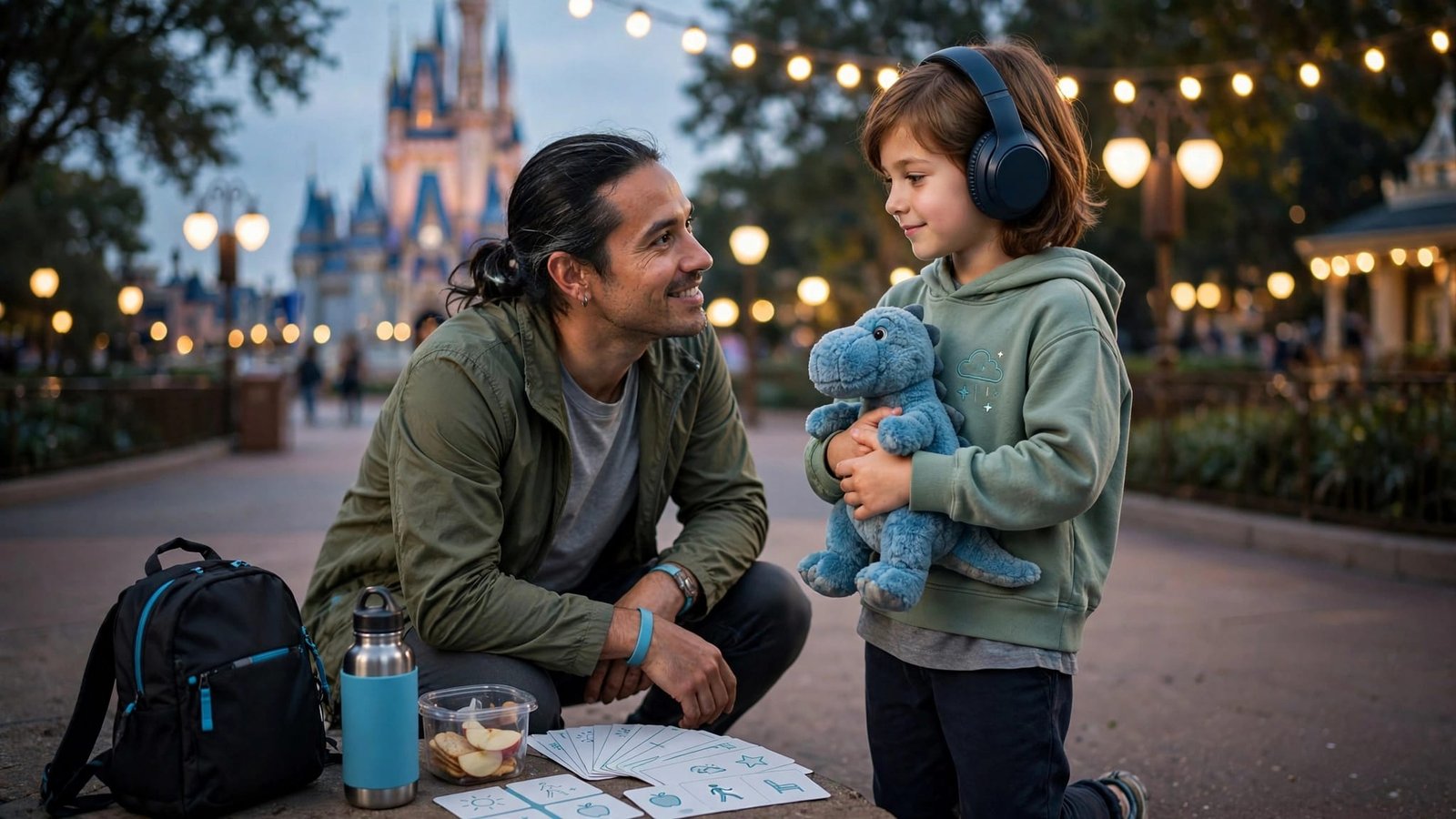
A successful Disney trip doesn’t have to look like anyone else’s vacation, especially with Disney World autism travel planning. The best days usually include fewer demands, more breaks, and room to change course.
Autistic children, teens, and adults can enjoy Walt Disney World in many different ways. The goal isn’t to push through every ride, show, and fireworks spectacular. The goal is to build a trip where your family feels comfortable, supported, and included.
Start with what helps your traveler feel safe, then build the vacation around that.
Key Takeaways
- Build your Disney World autism plan around your traveler’s sensory profile, communication style, energy, food preferences, and comfort level.
- Plan fewer must-do experiences, regular breaks, and flexible days instead of trying to complete every attraction, show, or fireworks spectacular.
- Prepare familiar supports before you leave, including headphones, comfort items, snacks, communication tools, chargers, medication, and a simple visual schedule.
- Choose a resort and park plan that make rest, transportation, dining, and early departures easier for your family.
- Review Disney’s current DAS, Lightning Lane, stroller, and accessibility rules before your trip, since these policies and app features can change.
Disney World Autism Planning Starts With the Sensory Profile
Autism doesn’t come with one set of travel needs. One person may love the music, movement, and character experiences. Another may enjoy rides but struggle with crowded walkways, bright sunlight, or sudden schedule changes.
Think about the full day, and notice early signs of sensory overload, not only the attractions.
A diagnosis of sensory processing disorder may be relevant for some travelers, but planning should still be based on the individual’s actual responses.
Look at noise, crowds, heat, and waiting
Write down the situations that usually feel hardest at home, school, outings, or previous trips. Include the early signs that often appear before your traveler feels overwhelmed. This gives you a more useful plan than copying a busy Disney itinerary online.
Consider questions like these:
- Does your child need headphones during loud shows, parades, or fireworks?
- Are long indoor lines harder than outdoor waits?
- Does heat lead to fatigue, irritability, or shutdowns?
- Are transitions difficult, especially when leaving a favorite activity?
- Does your traveler need a stroller, mobility device, or quiet space to reset?
- Are certain foods, textures, or dining environments more comfortable?
Disney’s official Disney neurodivergent guest resources provide general information about attraction details, sensory considerations, and available support. Use that information alongside a practical sensory plan based on your family’s needs.
Build around strengths, not pressure
A child who loves trains may enjoy the Walt Disney World Railroad more than a high-speed coaster. Adults with autism may prefer predictable attractions, a quiet table-service meal, or time exploring resort shops. Stimming may support self-regulation or communication, so it shouldn’t be discouraged merely because it looks different.
There is no prize for staying in the park until closing. There is no failure in skipping fireworks. A good Disney day is one your family can enjoy and recover from.
Prepare for Sensory Needs Before You Leave
Disney can feel easier when a neurodivergent child encounters some big surprises at home first. A few simple practice steps can lower anxiety for everyone.
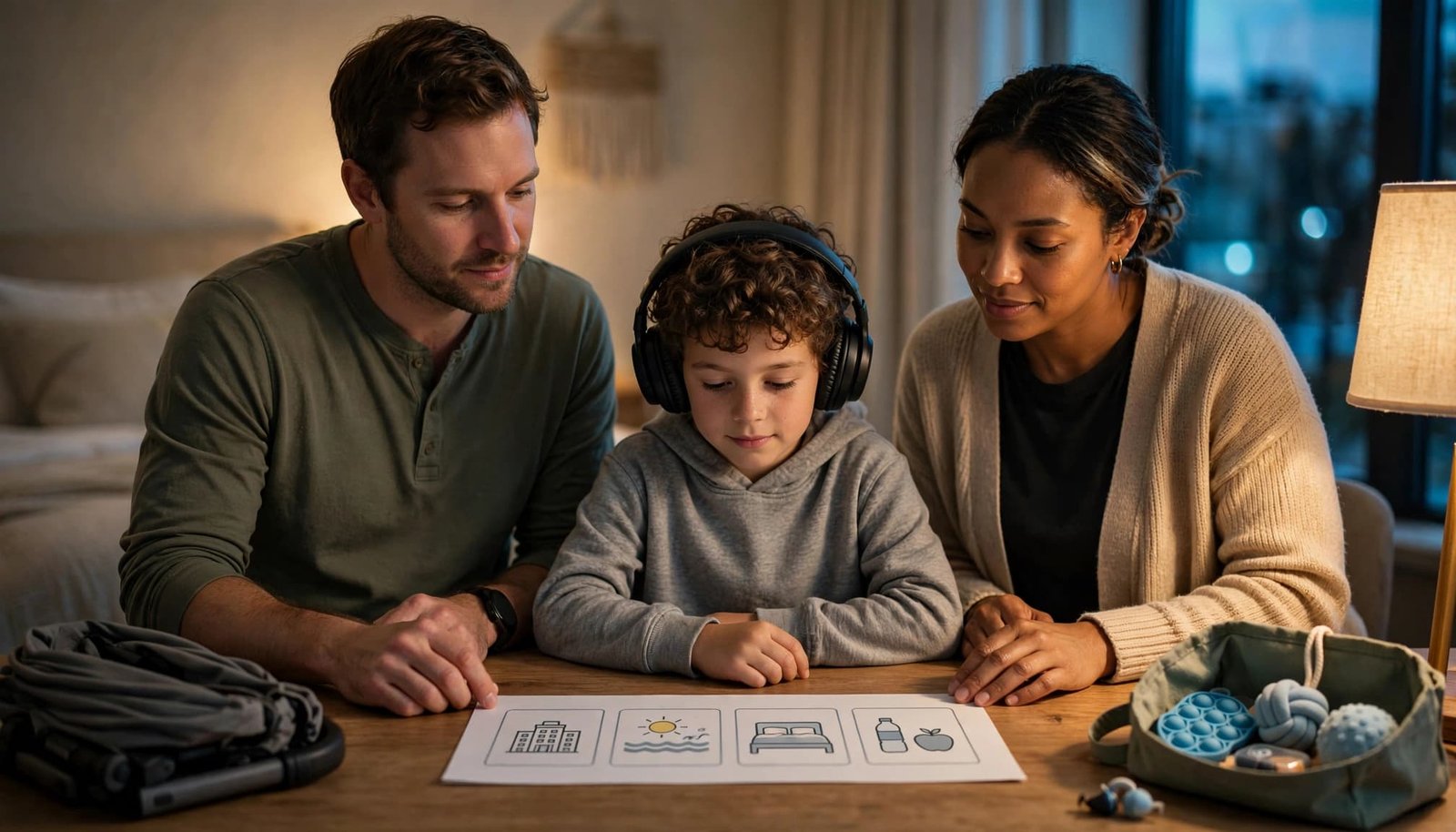
Use photos, videos, and a simple schedule
Watch ride videos only if they help your traveler. Some people like knowing every sound and turn ahead of time. Others become more anxious when they see too much.
Use real photos of your hotel, the airport, Disney transportation, and favorite attractions. Make a short visual plan with a few clear steps:
- Fly or drive to Orlando.
- Check into the hotel.
- Sleep.
- Go to one park.
- Take a break.
- Go back to the hotel.
Use only the preparation tools your traveler finds useful. A visual schedule should prepare your child, not trap your family into completing every box.
Pack supports where you can reach them
Your park bag should support communication, comfort, and quick changes of plan. Keep headphones, charging cords, comfort items, wipes, sunscreen, water, medication, snacks, and a low-tech communication backup in the same place every day.
A portable charger is not an extra at Disney. Your phone may hold park tickets, maps, mobile food orders, family messages, and return times in the My Disney Experience app.
If a tablet or AAC device matters to your child, bring the charging cable. Families often remember the device and forget the cable.
Put “break,” “all done,” “food,” “bathroom,” and “change” options where your child can access them quickly. Finding the right words is harder in a loud crowd.
Choose a Resort That Makes Breaks Easy
Disney resorts are more than places to sleep. They give your family space to rest after a busy park day, eat familiar food, change wet clothes, and reset after a hard moment.
A less expensive room far from the parks may not feel like a bargain if the return trip takes too much energy.
| Stay option | It may work well when | Ask before booking |
|---|---|---|
| Disney value resort | You want Disney transportation and lower on-site pricing | How far is the room from buses, food, and laundry? |
| Port Orleans Resort, French Quarter | A smaller moderate-resort layout feels easier | Which building is closest to the bus stop and food court? |
| Art of Animation family suite | You need extra sleep space, two bathrooms, and a kitchenette | Is the themed common area likely to feel too busy? |
| Off-site hotel or vacation rental | You need a full kitchen, quieter space, or private vehicle | What is the real drive time, parking plan, and grocery access? |
Give everyone room to sleep and decompress
Families with different sleep schedules often benefit from a suite, connecting rooms, or a rental home. A toddler may need an early bedtime while a teen needs a quiet space for a device, favorite show, or downtime.
A kitchenette can also make mornings easier. Familiar breakfast foods and preferred snacks take pressure off when your child won’t eat a park meal.
Ask for details that affect your real stay. Room location, elevator access, refrigerator needs, walking distance, stroller storage, bed setup, and a quieter building request all matter.
Protect rest days during longer vacations
After two or three park days, a slower day can help more than another ticket. You might sleep in, use the pool if it feels comfortable, do laundry, visit Disney Springs, or stay in the room with familiar activities. These are options, not requirements, so choose what helps your family recover.
A slow day is not wasted money. It can be what makes the next park day possible.
Understand Disney World Autism Support and DAS
Disney’s Disability Access Service, often called DAS, is intended for guests who cannot wait in a conventional queue for an extended time because of a developmental disability such as autism or a similar condition.
It isn’t a front-of-the-line pass. For an eligible guest, it may provide a different way to wait, subject to Disney’s current rules.
A virtual queue, DAS, and paid Lightning Lane products are separate systems. Check Disney’s current app and attraction rules rather than assuming one system works like another.
Review Disney’s current Disability Access Service information before your trip. Registration steps, eligibility requirements, timing, party rules, and return-time features can change. The official page is the best place to confirm the current process.
What to expect during the DAS video interview
Disney’s registration process may include a live virtual video chat before arrival or an in-person conversation at Guest Relations. The guest who needs the accommodation must be present, and a parent or legal guardian may need to participate for a minor. Check Disney’s current participation requirements before starting.
Registration hours and advance-registration windows can change. Use the current timing listed by Disney, and choose a time when your child or adult traveler is rested and comfortable.
You don’t need to turn the conversation into a medical history. Describe the actual access barrier in plain language, focusing on what happens when a traditional queue isn’t manageable.
Relevant barriers may involve crowding, confinement, safety, sensory regulation, or unpredictable waits. Mention only what genuinely affects that traveler. An autistic adult should describe their own access needs directly when possible.
A diagnosis alone doesn’t explain what support someone needs. The conversation focuses on the effect of a conventional queue on that person.
How DAS works in the My Disney Experience app
After entering the park, follow Disney’s current instructions to request an available return time in the My Disney Experience app. Depending on current rules, the registered guest or another adult in the linked party may be able to make the request.
Disney’s current app instructions are the authority. Verify the screens and attraction rules before relying on these steps:
- Open the app after entering the park.
- Tap the menu at the bottom of the screen.
- Choose the DAS option.
- Select an attraction and request a return time.
- Return when the app tells you it is time.
Return-time limits, party size, and linking rules can change. Disney may limit guests to one active return time, with another available after use. The registered guest must be present and ride with the group, which must meet current party requirements.
Practical suggestion: If the app is confusing, step away from the crowd. Find a bench, shaded space, or quiet table. A Guest Experience Team member or Guest Services Cast Member can help.
Plan One Park at a Time
Park hopping sounds flexible, but it often adds transportation, security checks, walking, crowd exposure, and more transitions between theme parks. For many families, one park per day is the calmer choice, but it isn’t right for every family.
Each of the four parks can fill a full day at a slower pace. Let your family’s interests, energy, mobility, and sensory comfort guide the plan.
Keep Magic Kingdom days in one area
Magic Kingdom can feel especially busy because there is so much to do. Pick one land for the morning and stay nearby.
A Fantasyland morning might include a few familiar rides, a snack, a character moment, and a break. Choose priorities based on interest, energy, mobility, and sensory comfort. That’s easier than racing from Fantasyland to Frontierland and then Tomorrowland because a return time popped up.
If your family is done after lunch, leave Magic Kingdom. You can always come back another day if your tickets allow it.
Give Epcot more walking time than you think
This park is beautiful, but it is large. Remy’s Ratatouille Adventure is in France. Frozen Ever After is in Norway. Soarin’ Around the World is in a different area of the park.
Those attractions may all be priorities, but they are not close together. Build in time for bathrooms, water, indoor breaks, food, and the possibility that your child wants to stop and look around.
A smaller plan often feels better. Choose one or two must-do experiences that match your family’s interests, energy, mobility, and sensory comfort. Then let the day unfold.
Build Quiet Breaks Into Every Park Day
Waiting until a meltdown, shutdown, or exhaustion happens can make recovery harder, even though these responses aren’t misbehavior. Plan a break before sensory overload makes recovery harder.
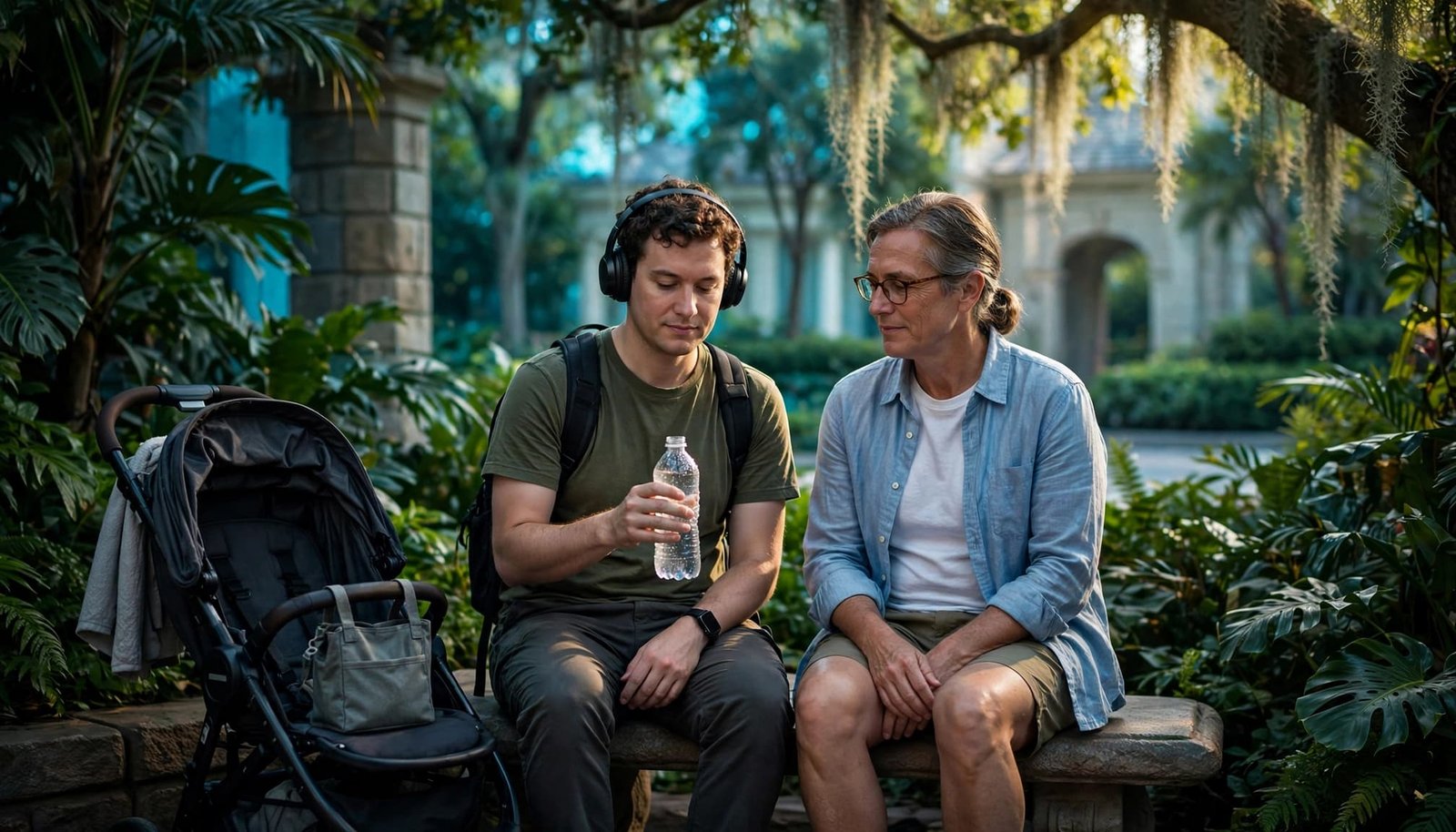
A break might be 10 minutes in a shaded area, a quiet snack, time in a baby care center, a slow indoor attraction, or a trip back to the resort. Test each option against your traveler’s preferences, since no single break works for everyone.
Heat can be a major sensory challenge in Central Florida. Bring water, cooling towels if your traveler likes them, sunscreen, and a change of shirt. Rain ponchos can also help during afternoon storms, but some children dislike the sound and texture of plastic.
Choose a simple family signal for “we need a break.” A person may use stimming, a communication card, a gesture, or leave the area when they need regulation. Every adult should know that leaving early is always an option.
Choose Dining That Matches Your Family
Food can become one of the hardest parts of a Disney trip. Hunger, noise, unfamiliar smells, waiting, and packed tables can all build up fast.
Quick service restaurants often give families more control. You can review menus at a calm time, use mobile ordering, and choose flexible pickup when your traveler is ready. These options may reduce pressure, but they don’t make every restaurant sensory-friendly.
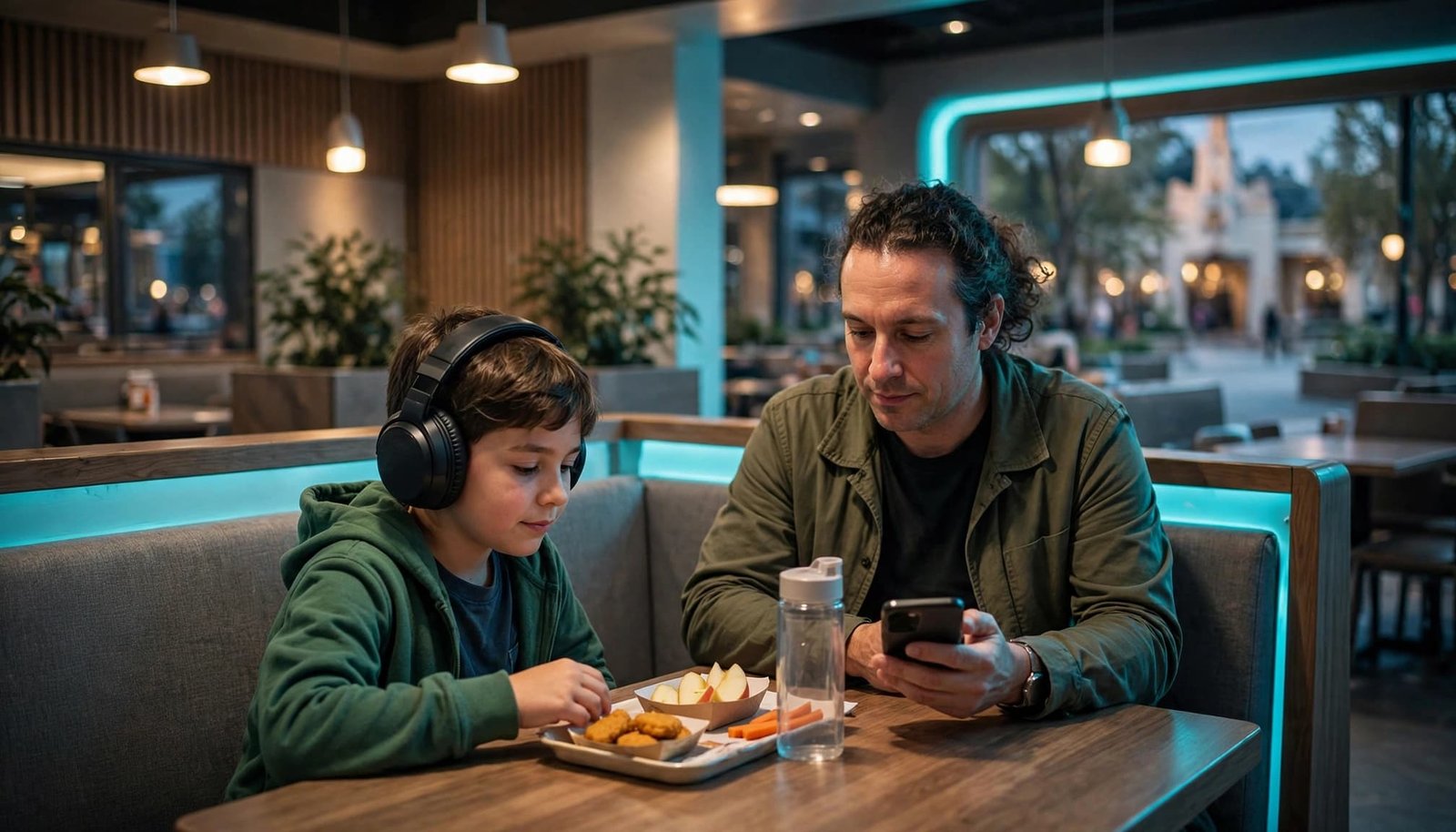
Use mobile ordering to avoid another line
Mobile Order through My Disney Experience can reduce waiting at busy counters. Look at menus before hunger becomes urgent, and order familiar items when possible.
Sunshine Seasons at Epcot has many choices and large indoor seating areas. Before visiting, check current Sunshine Seasons hours, menu availability, seating, and crowd levels. Docking Bay 7 Food and Cargo at Hollywood Studios can work for families who enjoy Star Wars and need a quick meal. Seating conditions change throughout the day, so arrive earlier or later than the main lunch rush when you can.
If the dining room is too loud, look for an outside table or take food back to your hotel if that is an option.
Character meals are not automatically sensory-friendly
Chef Mickey dining, Crystal Palace, Hollywood & Vine, and other character meals can be fun, but they are often loud and active. A character buffet may be lively, with characters approaching tables, music playing, and excited children nearby.
For some travelers, that is the best part. For others, it is too much.
Check Disney’s current venue information before booking a character buffet, since menus and formats can change. Details at Hollywood & Vine may also change, including character interactions and dining formats. Tell the host if your party needs a quieter table when possible. Let characters pass your table if your child does not want an interaction. Your family does not need to participate in every moment.
Make Airport and Transportation Days Easier
Travel day can set the tone for the whole vacation. Keep the first day simple. If you arrive late, skip grocery shopping, Disney Springs, and extra plans.
Orlando International Airport has a Hidden Disabilities Sunflower Lanyard program, and using it is voluntary. The MCO accessibility program explains that travelers can choose to identify a hidden disability to airport staff. Policies vary by airport, so check current guidance before traveling.
The Hidden Disabilities Sunflower Lanyard can start a conversation
A lanyard doesn’t guarantee faster security screening or special treatment. It can help staff recognize that a passenger may need patience, extra communication, or more time.
The Hidden Disabilities Sunflower airport guide is useful if you are flying through other airports too.
Bring snacks, comfort items, downloaded shows, headphones, medication, chargers, and a change of clothes in your personal item. These supplies may help with flight anxiety, but don’t put must-have supports in checked luggage.
For transportation at Walt Disney World, explain each step before it happens. Buses, monorails, and Skyliner transfers can be exciting, but they can also be loud and unpredictable.
Be Careful With Timed Add-Ons
Lightning Lane Multi Pass is a paid service separate from DAS, with scheduled return windows for participating attractions.
It can help when your family has a few true must-do rides. It can also add another clock to watch.
At Epcot, it may help if Remy’s Ratatouille Adventure, Frozen Ever After, or Soarin’ are top priorities. At Magic Kingdom, it may help if your family wants several popular rides in one day.
Check the My Disney Experience app for current details before buying. Lightning Lane names, prices, attraction eligibility, return-window rules, and stroller-as-wheelchair procedures are time-sensitive official policies. A paid product or DAS doesn’t replace an attraction-specific virtual queue.
Don’t buy every upgrade because it sounds like the “right” Disney plan. More reservations don’t always mean a calmer day.
A paid add-on is only helpful when it lowers pressure for your family. If timed plans create anxiety, use your money for an extra night, a grocery delivery, or a comfortable stroller instead.
If your child needs a stroller for mobility or regulation, ask Guest Services about current stroller-as-wheelchair procedures and whether a tag is appropriate. Disney also offers Rider Switch for families when one guest can’t or doesn’t want to ride.
Get Support Before the Trip Feels Overwhelming
You don’t have to piece together every Disney detail alone. A travel planner who understands sensory needs can help with resort choices, park pacing, dining, and transportation. They can also answer special needs travel questions without assuming every autistic traveler needs the same supports.
Our Disney World with Autism Guide on Etsy includes family-friendly planning ideas for DAS, park days, sensory breaks, and accessibility needs. You can also find the guide through Amazon.
Pack the items that make your family feel prepared, not the items someone else says are essential. At Trip Rescue Shop, you can find optional travel items for Disney vacations, including stroller needs, park-day basics, and cleaning supplies for unexpected sick-on-vacation moments. These are tools to consider, not universal requirements.
A few familiar supports can make a big difference when the day changes fast.
Frequently Asked Questions
How should we plan Disney World with an autistic traveler?
Start with the individual’s sensory needs, interests, communication style, and early signs of overload. Build the day around a few priorities, regular breaks, familiar supports, and the option to change plans or leave early.
What is Disney’s Disability Access Service?
DAS is intended for guests who cannot wait in a conventional queue for an extended time because of a developmental disability such as autism or a similar condition. It is not a front-of-the-line pass, and eligibility, registration, return times, and party rules can change, so review Disney’s current official information before traveling.
Where can we take a sensory break at Disney World?
A break might include a shaded bench, a quiet indoor area, a baby care center, a slow attraction, a calm snack, or a return to the resort. The best option depends on your traveler’s preferences, so plan breaks before exhaustion or sensory overload becomes severe.
Should we use park hopping or paid Lightning Lane products?
Park hopping and timed add-ons can help some families, but they may also add transportation, deadlines, walking, and transitions. Use them only when they genuinely lower pressure, and choose a slower one-park plan when that feels more manageable.
A Disney Vacation That Feels Like Yours
The best Disney World autism plan is not the busiest one. It respects your family’s sensory needs, communication style, energy, food preferences, and comfort level.
Choose a resort that makes breaks easy. Understand DAS before you arrive. Keep your phone charged, carry familiar supports, and leave room to change the plan.
A calmer family matters more than a packed itinerary. Disney memories do not depend on completing every attraction across the theme parks.