
A Disney vacation can be full of happy memories, but it can also be loud, hot, crowded, and full of changes. Disney autism planning gives your family a way to prepare for the real trip, not a picture-perfect version of one.
Your child doesn’t need to ride every attraction, eat every Disney snack, or stay for fireworks. A successful trip is one where your child feels supported, your family has room to pause, and everyone can enjoy the moments that matter.
Key Takeaways
- Build the trip around your child’s sensory sensitivities, communication style, food preferences, and energy level.
- Choose one or two priorities for each park day. Everything else is a bonus.
- Review Disney’s current accessibility options before you travel, because policies can change.
- Treat hotel breaks, snacks, pool time, and early exits as part of the vacation plan.
- Keep printable worksheets, a visual schedule, noise-reducing headphones, and a backup plan easy to reach on your phone or in your park bag.
Start Disney Autism Planning Before You Book
The best time to consider sensory needs is before choosing tickets, a resort, and dining reservations. Vacation planning should start early. Research Disney’s accessibility services before making those decisions.

Write down your child’s real needs
There is no one Disney plan that works for every autistic child. Some children love movement, music, and character interactions. Others may enjoy rides but struggle with sensory sensitivities, bright sun, crowded walkways, waiting, or unexpected changes. These factors can affect the environment and expected pace of different theme parks.
Start with what you already know about your child’s needs related to autism spectrum disorder. Write down preferred foods, comfort items, early signs of overload, bathroom needs, communication supports, other individual special needs, and activities your child enjoys. Children with cognitive disabilities may need different communication, processing, or waiting supports.
For unfamiliar routines or transitions, consider visual preparation or a social story if those tools help your child. Record triggers, preferences, and successful calming strategies in a simple sensory profile. Also write down what helps your child reset at home.
A Disney World autism planning guide for multiple disabilities can help you keep those details together while you compare Disney resorts, transportation, and park days.
Before booking, check current park reservations guidance and verify whether reservations are required for your ticket type.
Choose a good-day goal
A good Disney day may be one favorite ride, a calm lunch, time at the pool, and an early bedtime. That is a real vacation day.
Avoid building an hour-by-hour schedule that falls apart after one late bus or bathroom stop. Use a loose rhythm instead: arrive, do one priority, take a break, eat, choose the next step.
The goal is not to push through every hard moment. The goal is to give your child choices, comfort, and time to recover.
Pick a Resort That Makes Breaks Easier
Your hotel is more than a place to sleep. Disney resorts can be your quiet place, snack stop, laundry room, pool break, and backup plan when the park feels like too much.
Look for space and familiar routines
Families who need more room may prefer a villa, suite, or cabin over a standard hotel room. More space can make bedtime easier when one child needs quiet and another still needs to move around.
The Cabins at Disney’s Fort Wilderness Resort have room for up to six guests, along with a kitchen, living area, dining space, and private patio. A kitchen can be especially helpful for families with selective eaters who depend on familiar meals and snacks.
A Disney resort isn’t automatically the right answer for every family. Vacation rentals can offer space and kitchens too. Think about your child’s comfort with new rooms, transportation, walking distance, and transitions.
Consider transportation and early entry
Eligible Disney Resort hotel guests can use Early Theme Park Entry, which gives them 30 minutes before regular opening at all four theme parks. Verify current Early Entry rules and eligible resorts before travel, since an earlier start may reduce wait times for some families.
Disney transportation can reduce parking stress, but buses, boats, monorails, and Skyliner travel all bring different sounds, crowds, and waiting experiences. Watch transportation videos with your child before the trip if new vehicles may feel difficult. Before traveling, identify quiet break areas in or near the park, then check current Cast Member guidance about suitable locations.
Plan your hotel break before the day starts. If your child needs a snack, swim, nap, or quiet room, leaving the park early is not wasting a ticket.
Understand DAS, Rider Switch, and Stroller Options
Disney’s accessibility services can help, but they don’t promise a stress-free day. Read the current rules before your trip and build your park plan around your child’s needs, not one accommodation.
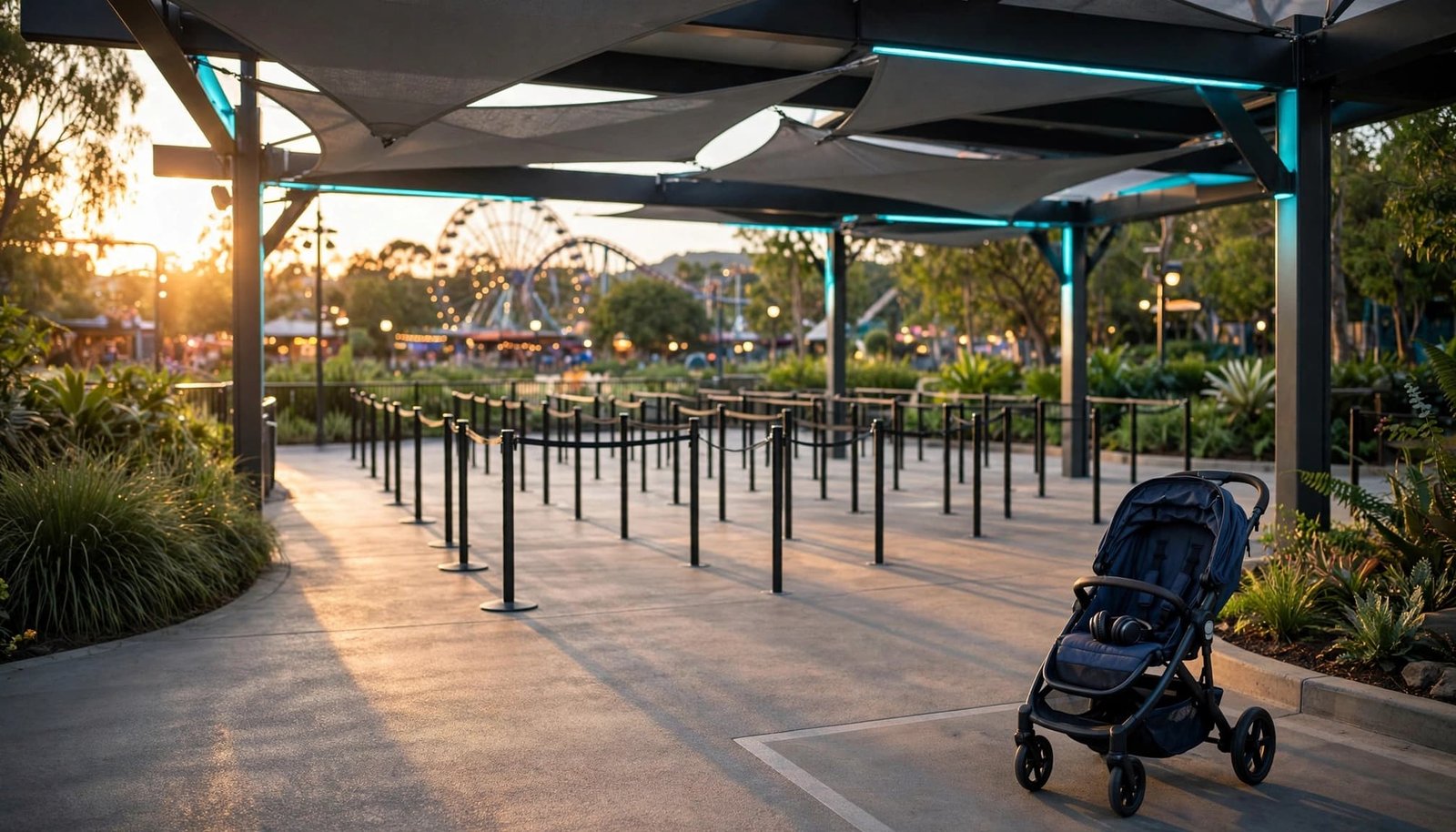
How Disability Access Service works
Disney’s Disability Access Service may be available for a guest with autism or another developmental disability who cannot wait in a conventional queue for an extended period. Approval isn’t automatic based on a diagnosis. Explain how extended queue waiting affects the guest, including barriers related to cognitive disabilities.
DAS isn’t a front-of-the-line pass. If approved, it gives an eligible guest a return time comparable to current standby wait times, subject to Disney’s current rules. Your family can wait somewhere more comfortable, then return when the time is ready. Lightning Lane is a separate planning option and isn’t the same accommodation as DAS.
Disney currently uses live video chat for DAS registration. The registering guest must be at least 18, and the guest requesting DAS must be present. Disney states that registration can begin up to 60 days before a park visit, with video-chat hours from 7:00 a.m. to 8:00 p.m. Eastern Time. Check the official page before traveling because requirements can change.
When speaking with Disney, describe the individual’s actual waiting barriers rather than relying only on a diagnosis. This can clarify support needs related to cognitive disabilities. After entering a park, you can select a DAS return time in My Disney Experience. Your party can hold one DAS return time at a time. DAS, the Rider Switch program, and stroller accommodations are separate accessibility services.
Rider Switch program and special needs stroller options
The Rider Switch program can help when one person in your party cannot or doesn’t want to ride. The full group checks in at the attraction entrance. One caregiver waits outside with the non-rider, then may ride afterward with up to two other guests. Verify current limits before traveling. Disney offers Rider Switch information as part of its accessibility services.
If your child uses a special needs stroller as a mobility device, ask guest services about a “Stroller as a Wheelchair” tag. It may allow the stroller in queues where a mobility device is needed. Approval isn’t automatic, and Cast Members at each attraction will give the final direction. Disney explains the current process in its attraction queue access guidance.
Prevent Sensory Overload Before It Builds
Big feelings often build slowly. Hunger, heat, noise, crowds, waiting, and one unexpected change can all add up. A break taken early is usually easier than a break taken after everyone is overwhelmed.
Pack supports your child already trusts
Your park bag doesn’t need to be complicated. It needs familiar items that work for your child and match their sensory sensitivities.
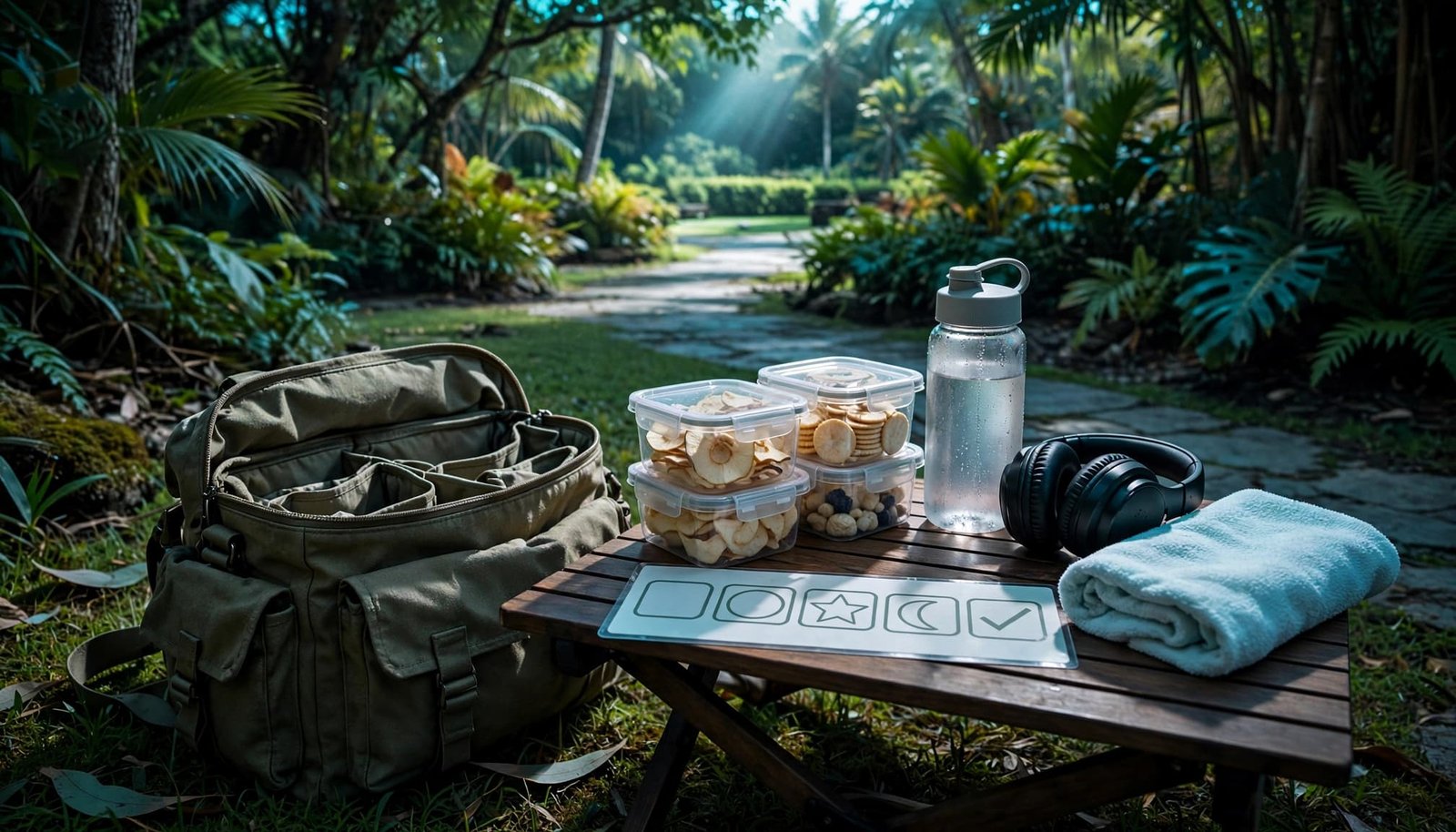
Bring noise-reducing headphones, sunglasses, a hat, comfort items, water, snacks, medication, and a change of clothes if needed. Choose familiar foods that fit your child’s dietary restrictions and safe-food preferences. Keep these supplies in the same bag every day so you don’t have to search for them in a busy moment.
If a special needs stroller is part of your child’s mobility plan, practice using it before the trip. Your child can become familiar with the stroller before navigating the busy parks.
For AAC users and nonspeaking children, pack a charged device and a low-tech backup. Printable cards, a simple communication board, and a “break” card can be helpful if a device loses power. Use this Disney World communication checklist to prepare your technology and backup supports.
Use a calm meltdown response plan
When your autistic child starts to struggle, lower the demands right away. Skip the next attraction. Move away from noise when possible. Offer water, a snack, headphones, a familiar item, or simple choices.
Don’t try to reason through a full meltdown in the middle of a crowded walkway. Ask Cast Members about current quiet break areas, then move somewhere calmer when possible. Focus on safety, space, and reducing stimulation. One adult can stay with the child while another handles bags, siblings, or the next reservation.
After your child settles, reset the plan. Going back to the hotel may be the right choice. So may be a quiet snack and one gentle activity. You don’t need to “make up” missed rides.
Turn Your Plan Into Printable Worksheets
A printable plan takes the pressure off your memory. It also helps grandparents, relatives, and other travel companions understand what your child needs without a long conversation in the middle of the park.
Create three simple planning pages
Start with these worksheets:
- A pre-trip page with your child’s triggers, comfort items, safe foods, dietary restrictions, medication, communication tools, emergency contacts, and a reminder to check official Disney information for current accessibility services.
- A park-day page with a simple visual schedule for arrival, one or two must-do experiences, a planned break, a meal idea, and a flexible exit plan.
- A recovery page with signs your child needs a break, calming tools that work, and choices for hotel time.
Add ride-through videos to your preparation page. A social story may also help some children preview transitions, queues, or unfamiliar settings. Watching a ride entrance, queue, vehicle, and exit can make a new attraction feel less surprising. Stop the video if it feels like too much. Your child does not need to watch every ride.
Keep food plans simple
Look at menus before your trip and save a few reliable choices in the My Disney Experience app. Quick-service meals can give families more control over timing and seating than a long table-service meal.
Bring familiar snacks when they are important for regulation. A snack can be food, comfort, and a break from decision-making all at once. For travel items, stroller needs, park-day basics, and supplies for unexpected sick-on-vacation moments, visit Trip Rescue Shop.
For more support at your own pace, the Disney World With Autism Guide PDF on Etsy is an optional planning resource with practical ideas for DAS preparation, sensory needs, flexible park days, dining, and breaks. It isn’t official Disney guidance or a guarantee of DAS approval. The Disney World with Autism guide on Amazon is another optional resource for families who want the guide available in their preferred format. Check official Disney information for current policies and services.
Frequently Asked Questions
Can an autistic child use DAS at Disney World?
An autistic child may be eligible if a developmental disability makes extended waits in a conventional queue difficult. DAS is one of Disney’s current accessibility services, but autism does not guarantee approval. Explain how waiting affects a guest with cognitive disabilities, and review Disney’s current DAS rules before your trip.
Are strollers allowed in ride queues?
A stroller may be allowed if Disney approves it as a “Stroller as a Wheelchair” mobility accommodation. Ask Guest Relations after arrival, and always follow the directions given by Cast Members at the attraction.
Should we buy Lightning Lane if we use DAS?
It depends on your budget, park priorities, current offerings, and your child’s stamina. Some families find paid Lightning Lane selections useful, while others prefer a slower day with DAS, breaks, and fewer attractions. You don’t need every add-on for a meaningful trip.
A Comfortable Disney Trip Is a Successful One
Disney autism planning works best when it is flexible. Start with your child’s needs, plan fewer priorities, and keep room for food, rest, sensory supports, and changing your mind.
The best memory may not be the biggest ride or the latest fireworks. It may be the moment your child felt safe, heard, and included.
Leave a Reply