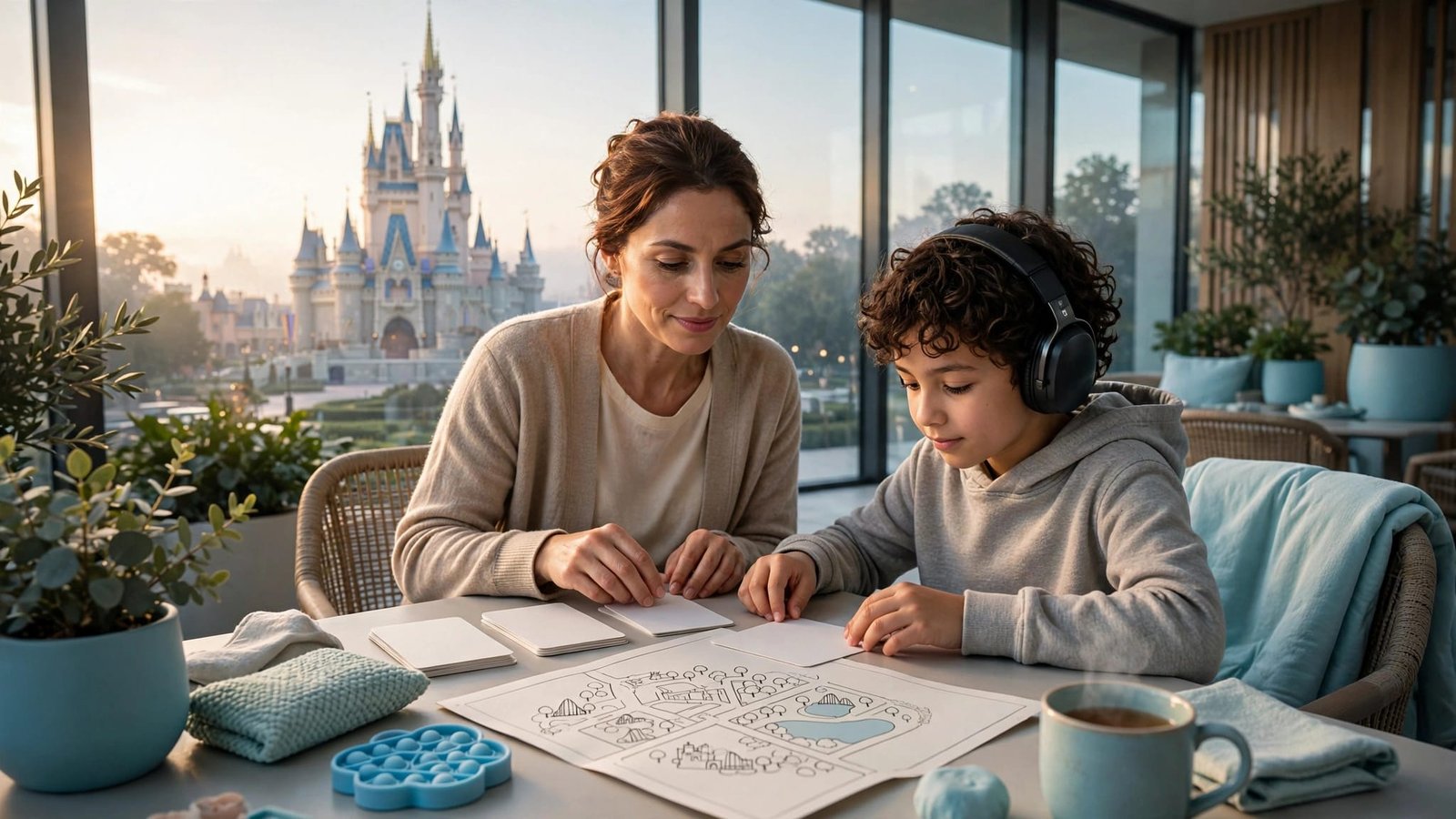
A Disney trip can feel exciting long before you leave home. It can also bring crowds, heat, noise, long walks, and changes that are hard for many families.
Disney World autism travel starts with choosing dates that fit your neurodivergent child’s needs, not the dates that look best on a crowd calendar. The best dates for a family vacation give everyone room for rest, familiar routines, and flexibility.
A calm Disney vacation does not need to include every ride, show, or late-night event. It needs to feel comfortable enough for your family to enjoy the moments that matter.
Key Takeaways for Choosing Your Dates
- Pick travel dates around your child’s school schedule, sleep needs, medication routine, weather tolerance, and recovery time.
- Avoid treating lower crowds as a promise. A lighter week can still have busy park days, ride closures, storms, and unexpected changes.
- Plan fewer park days than you think you need. A resort day can protect the whole trip.
- Check park hours, special events, and ticket prices before you book. Two weekdays in the same week can feel very different.
- Build your plans around support needs such as communication, mobility, food restrictions, anxiety, or sensory overload, not only a diagnosis.
- Review Disney’s current accessibility services for guests with disabilities before your trip, since procedures can change.
Disney World Autism Travel Dates Should Fit Your Family
The best Disney dates are not always the least crowded dates. A child who handles warm weather well may enjoy September. Another child may do better in January, even if it means cooler mornings and heavier layers.
Think about what makes a regular day hard at home. Is it a missed meal? A late bedtime? Loud crowds? Too many transitions? Your date choice should reduce those stress points.
Look beyond crowd calendars
Crowd calendars are helpful starting points, but they’re only one part of vacation planning. They shouldn’t make the final decision for your family. School breaks, runDisney events, holiday weekends, EPCOT festivals, conventions, and weather can all affect a park day.
Before booking, check current event dates, operating hours, ticket prices, and expected wait times in the My Disney Experience app. A Disney vacation planner may also help compare school breaks, special events, date-based ticket prices, and hotel availability.
Crowd calendars are estimates, so choose a week that gives you flexibility if one day feels too full. Many families look first at late January, weekdays in early February, late August, early November before Thanksgiving, or early December. These periods can offer more breathing room than major holiday weeks.
Dates many families may want to avoid
Spring break crowds often build from mid-March through early April. Thanksgiving week, the week around July 4, and December 23 through New Year’s Day are also busy choices for families who need more space and predictable movement.
Summer brings another concern. Florida heat, humidity, and afternoon storms can make lines, transportation, and outdoor waiting much harder. The Atlantic hurricane season runs from June 1 through November 30, according to NOAA’s hurricane information.
That doesn’t mean summer or fall trips can’t work. It means your family needs a real indoor break plan, weather flexibility, and cancellation or travel insurance coverage that fits your needs.

Build Recovery Time Into the Vacation
A five-day Disney trip does not need five park days. For many autistic children, scheduled rest breaks away from park gates protect sleep, support regulation, and make the next park day possible.
Protect sleep, downtime, and familiar food before adding more tickets or dining reservations. The plan should have space to change.
Choose fewer park days on purpose
For a first visit, three park days with one non-park day between them may feel better than four parks in four days. A shorter trip can also be a good choice if travel days are tiring.
One park per day keeps transitions lower. Trying to hop between Magic Kingdom, EPCOT, Hollywood Studios, and Animal Kingdom can add buses, parking, security, decisions, and walking.
A rest day is not lost Disney time when it prevents a difficult day from becoming a difficult trip.
Start early if mornings are usually easiest. Leave before your child reaches their limit, even if you planned to stay longer.
Have a plan for a hard morning
Pick one adult who can take the lead if your child needs to leave quickly. Decide where siblings will go, who carries medication or comfort items, and whether returning to the hotel is realistic if sensory overload leads to meltdowns.
Meltdowns aren’t a parenting failure or misbehavior. An early-exit plan can reduce demands and support safety.
Sometimes the best backup plan is a quiet table, shade, a familiar snack, a stroller walk, or a calm indoor attraction. Sometimes it is going back to the room. Both choices are okay.
For families planning around sensory, medical, mobility, or communication needs, Disney World autism planning for multiple disabilities can help you think through the details before booking.
Choose a Resort That Makes Breaks Easier
Disney resorts are more than places to sleep. They can provide a predictable recovery space after heat, noise, walking, and a full day of transitions.
A resort closer to the parks may make midday breaks easier. A larger room, kitchenette, quiet building request, or two bathrooms may matter even more.
Ask practical room questions before booking
Consider transportation, room layout, food storage, laundry, stroller storage, elevator access, and bed setup. Requesting a quiet room away from the pool, lobby, bus stop, or elevator may help, but room requests aren’t guaranteed.
All-Star Music and Art of Animation offer Family Suites with more space for larger families. Animal Kingdom Lodge can suit families who enjoy animal viewing and want reasons to stay at the resort.
A closer resort helps only if its layout, room, and transportation work for your child.
A resort-only trip can still be a Disney vacation
Not every family needs major theme parks every day. A Disney resort stay can include the pool, character meals, Disney Springs, movies under the stars, animal viewing, familiar meals, and downtime in the room.
This option can be especially helpful for a first Disney visit or after a hard travel season. Your family can enjoy Disney details without committing every morning to a park gate.
Compare room layouts, transportation, and sensory needs with these Disney World resorts for autism families.

Prepare for DAS and Mobility Support Early
The Disability Access Service, often called DAS, may help guests with developmental disabilities who cannot tolerate extended conventional queue lines. Eligibility is based on the queue-related barrier, not an autism diagnosis alone, so it isn’t automatic for autistic guests or an immediate ride-access pass.
The service allows eligible guests to receive a return time and wait outside the regular queue. That time can be used for a snack, a quieter space, a restroom break, or time to regulate.
Know the current DAS process
Disney requires registration through live video chat before your visit. An adult must complete the registration, and the guest requesting DAS needs to participate in the conversation. Registration can begin up to 60 days before the visit, or you can ask about registering at Guest Relations on the day of your visit.
Be ready to explain the queue-related barrier your child experiences. Focus on what makes a conventional line difficult, not only the diagnosis.
Disney generally allows one DAS return time at a time. The registered guest must be present when it is used. The service covers the registered guest and up to three additional guests, for a maximum party of four. Check Disney’s current Disability Access Service details before travel.
Ask about stroller accommodations when they apply
A stroller can support safety, fatigue, mobility, regulation, and medical equipment needs for a child with special needs. If your child uses their stroller as a mobility device, ask Guest Relations about a “Stroller as a Wheelchair” tag.
This accommodation is separate from DAS. It may allow the stroller to be used in attraction queues where wheelchairs are used, though access and transfer requirements vary by attraction. Disney explains the current process in its attraction queue access guidance.
Prepare the Sensory Plan Before You Leave
A familiar routine can make a new place feel less overwhelming. Start preparing before travel day, but keep it simple.
Watch YouTube walkthroughs together if they help your child prepare. Practice security, hotel check-in, bus rides, mobile ordering, and pool time through a short visual schedule. You can also explore the My Disney Experience app to review maps and wait information. Don’t introduce a brand-new communication system during the trip.
Families can adapt these steps for sensory processing disorder or other sensory differences. Every autistic child has a unique sensory profile.
Use the communication tools your child knows
Bring the AAC device, picture cards, signs, gestures, or short phrases your child already uses. Simple messages such as “break,” “help,” “bathroom,” “water,” “hungry,” and “too loud” can make a big difference when the park feels busy.
Tell the adults in your travel group what those messages mean. Decide how you will respond before you are standing in a loud walkway or crowded queue.
A sunflower lanyard may help your child feel more comfortable signaling an invisible disability during travel. It can serve as a personal support tool, but a sunflower lanyard doesn’t guarantee priority, DAS, or another accommodation. Airport and park policies vary, so check current guidelines before you travel.
Pack for comfort, not perfection
Bring familiar snacks that fit any dietary restrictions, water, headphones, chargers, medication, comfort clothing, a fidget, wipes, and a change of clothes. Keep essential items together and easy to reach.
For travel basics, Trip Rescue Shop has practical family travel items, including stroller supplies, comfort items, and cleaning products for unexpected sick-on-vacation moments.
Our optional Disney World With Autism Guide PDF on Etsy and Disney autism travel guide on Amazon offer extra planning ideas for sensory needs, DAS preparation, breaks, and flexible park days.
Frequently Asked Questions
What is the best park for an autistic child?
There is no single best park for every child. Magic Kingdom has familiar characters and many attractions, but it can feel crowded. Animal Kingdom often offers more open space, while EPCOT has indoor attractions and wider walkways in some areas. Hollywood Studios may suit specific interests, but loud shows and bottlenecks can be challenging.
Start with your child’s interests. A child who loves animals may enjoy a wildlife-focused park more than a long Magic Kingdom day.
Should we schedule a character buffet or another character meal?
A character buffet can be fun, but not every character meal is buffet-style, and neither option is always low-sensory. Buffet noise, music, crowds, and characters approaching the table can feel like too much for some children.
Choose an early reservation when possible. Let your child know characters may come close, and give them permission to wave from a distance or skip an interaction.
What if we leave the park early?
Leaving early is a successful choice when your child is overwhelmed. Take a resort break, swim, order familiar food, or watch a favorite show in the room.
A Disney vacation is not measured by ride count. It is measured by whether your family had a safe, enjoyable day together.
Choose Comfort Over a Packed Disney Schedule
The best dates give your family time to rest, recover, and change plans without feeling behind. Lower crowds can help, but your child’s routines, sensory needs, and energy level matter more.
A successful family vacation is measured by comfort, connection, and flexibility, not by the number of attractions completed. Choose dates with room for slower mornings, hotel breaks, and early exits. In Disney World autism travel, a calm day with a few happy memories is always enough.
Leave a Reply