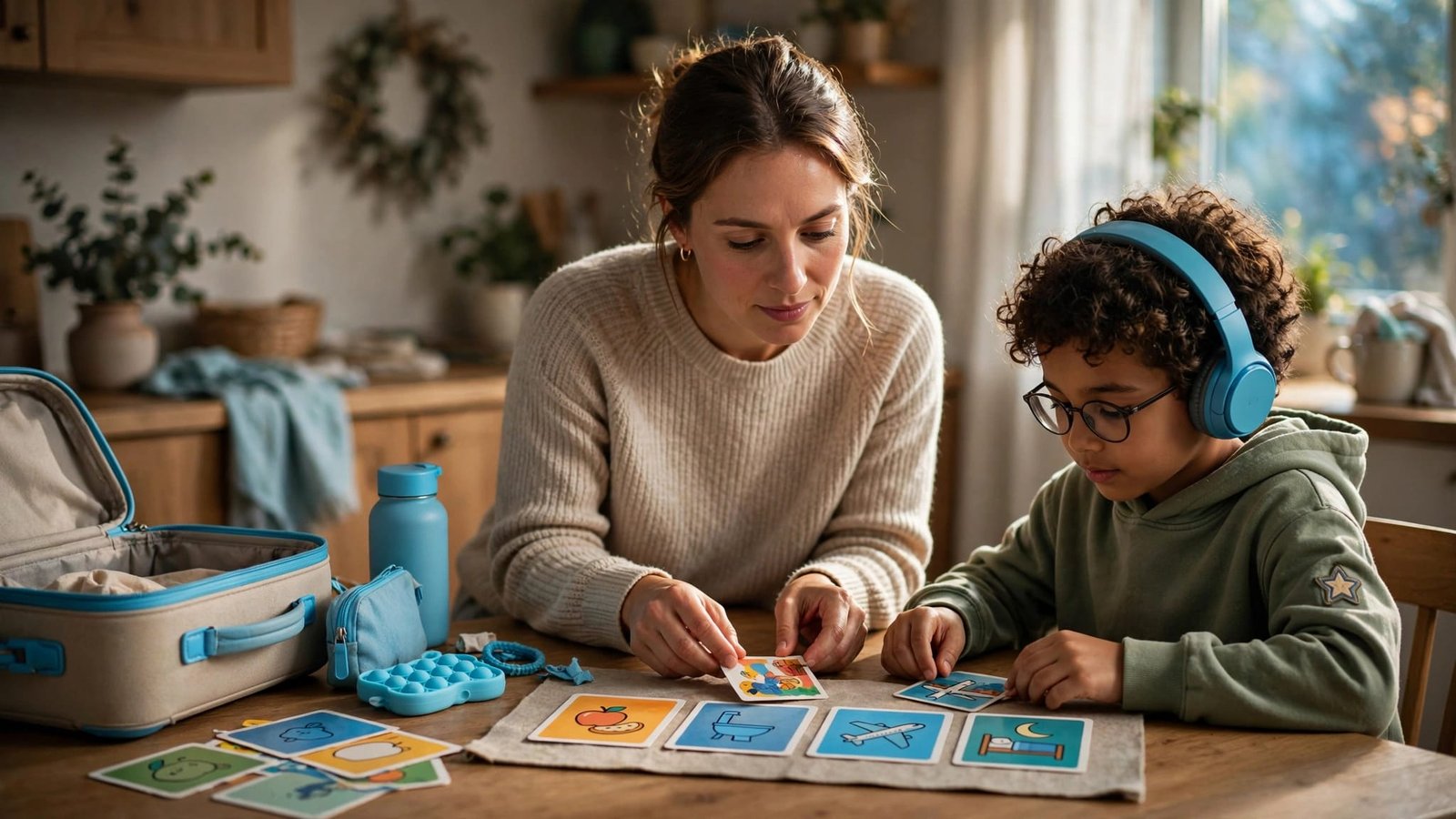
Travel days can feel long before you leave home. A missed snack, bathroom stop, loud airport, or change in plans can make the day feel upside down.
For visual schedule family travel planning, the goal isn’t to control every minute. It’s to help neurodivergent children understand what’s happening now, what comes next, and what can change without making the trip feel scary.
A flexible plan can reduce anxiety and give your family a calm place to return to when the day gets busy.
Why visual schedules help on travel days
A visual schedule gives travel day a clear shape. Neurodivergent children can see transitions, communication needs, and steps toward independence. It can also preview sensory input, such as loud crowds or busy terminals.
The Duke Center for Autism and Brain Development travel toolkit also recommends practicing visual schedules during regular routines before the trip. A schedule works best when it already feels familiar.
A social narrative can explain a new setting, while a distraction toolkit can support waiting or downtime. These tools work alongside the schedule without promising that every moment will feel easy.
Small steps feel easier to understand
Don’t show a full 10-day vacation plan all at once if that feels overwhelming. Start with the first travel day.
Your cards might show:
- Wake up
- Eat breakfast
- Get in the car
- Stop for the bathroom
- Eat lunch
- Check into the hotel
- Take a bath
- Go to bed
Use the same wording and picture style your child already knows from home, school, or therapy. Familiar routines make an unfamiliar day feel more manageable.
Flexibility belongs in the plan
A schedule is not a promise that every activity will happen. It is a support for what happens next.
A hotel break, an early exit, or a skipped attraction can still be a successful vacation day.
Add a simple “change” card to show that plans are different. You can also include a “break” card, “all done” card, and “choose” card. These small visual supports give your child a way to understand a shift without a long conversation when everyone is tired.
Visual schedule family travel starts with your child’s visual stage
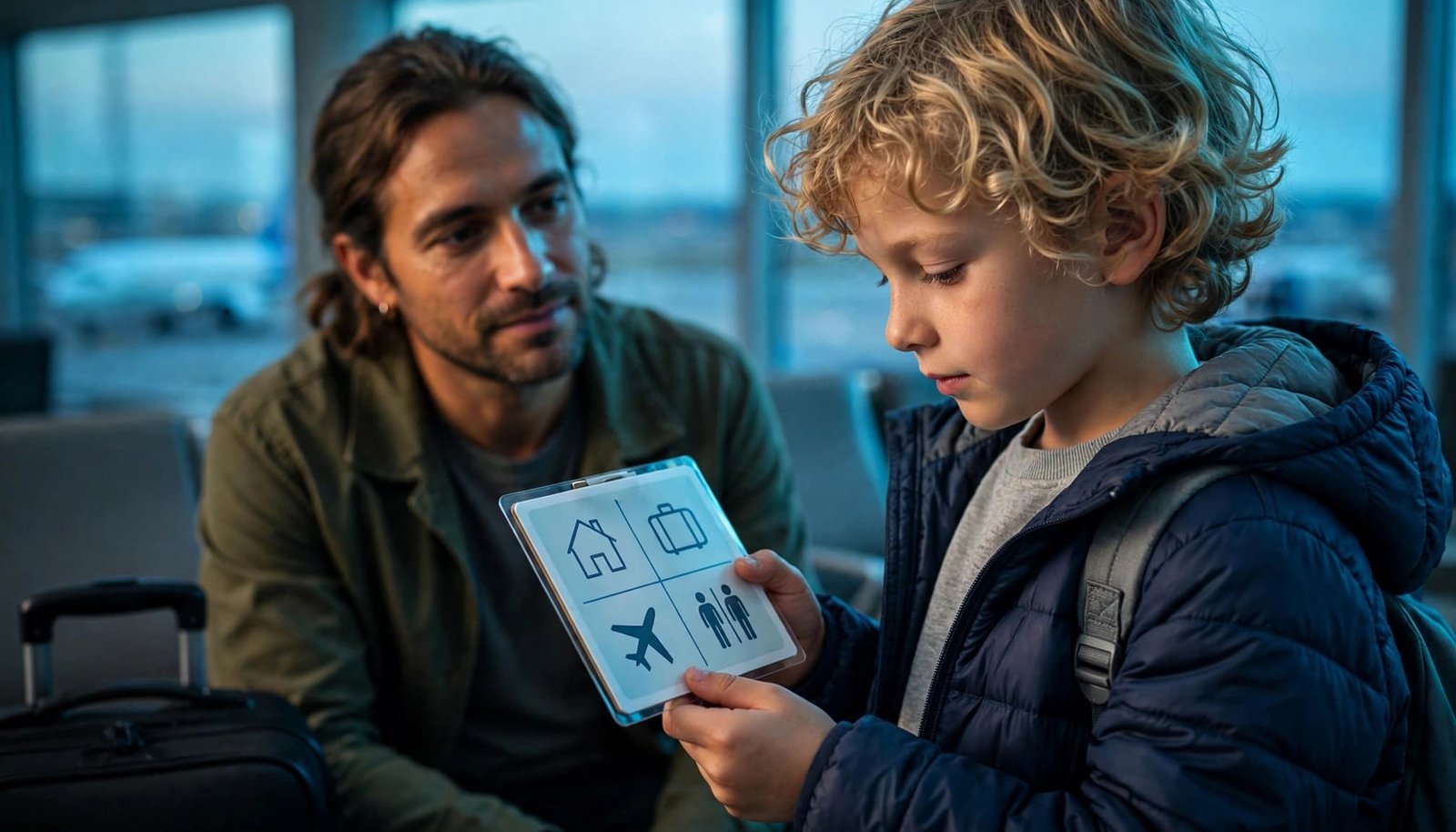
Visual schedules can use real objects, photos, picture symbols, drawings, or written words. There is no one right format. Choose a visual support that matches how your child understands information.
This flexibility can help neurodivergent children use a format that feels familiar and clear. Choose an age appropriate option based on your child’s communication needs.
A toddler may need a favorite snack wrapper or a small toy car. An older child may prefer a phone checklist, a written plan, or pictures mixed with words.
Use objects, photos, and simple picture cards
Real photos can be especially helpful before a big trip. Take pictures of your own suitcase, car, hotel room, travel stroller, favorite snack, or the airport entrance.
A photo of your family’s car may feel clearer than a generic car icon. A photo of the hotel bed can make “sleep at hotel” easier to understand.
Keep each card calm and easy to read. One picture with one or two words is enough. Consider how your child processes sensory input, including busy images, sounds, and unfamiliar environments.
Use drawings or words for older children
Some children understand line drawings, icons, or short written steps. A simple sequence such as “airport, security, plane, bags, hotel” may work well.
Some children on the autism spectrum may benefit from concrete photos or predictable sequences. A social narrative can offer more explanation about what to expect in a new place.
Teens may prefer a written daily routine with estimated times and clear choices. Give them a role when it fits, such as checking the next stop, holding a boarding pass, or choosing between the pool and quiet time.
For Disney trips, flexible Disney park days for families can be built around a few clear steps instead of a packed attraction list.
Build the first travel day before planning the whole trip
The first day is often the hardest. Everyone is excited, tired, and adjusting to a new routine. For neurodivergent children, starting with one travel day can feel more manageable than planning an entire vacation.
Think through the hardest moments for your family. It may be getting dressed, waiting for food, airport security, finding a bathroom, or hotel check-in. Put visual support around those moments first.
Try a “now, next, later” layout
A long row of cards can feel like too much. A three-part layout keeps the plan simple:
| Now | Next | Later |
|---|---|---|
| Eat breakfast | Drive to airport | Go through security |
| Wait at the gate | Get on the plane | Eat a snack |
| Check into hotel | Rest in the room | Go to dinner |
Move cards as the day changes. Cards can also be removed or replaced as your child’s energy and sensory tolerance change. Place completed cards in an envelope, pouch, or “all done” pocket.
This gives your child a sense of progress without showing every detail of a long day.
Put breaks and delays on the schedule
Travel delays happen. Flights change, traffic builds, hotel rooms are not ready, and a favorite attraction can close. A flexible family plan makes room for real life.
Include cards for “wait,” “quiet break,” “snack,” “bathroom,” “hotel room,” and “change.” Prepare a distraction toolkit for waiting, unexpected changes, and long transitions. These supports aren’t extra. They’re part of the plan.
Some families begin looking at travel visuals several weeks before departure. An optional social narrative can preview difficult steps in a calm way. This summer travel preparation guide suggests starting four to six weeks ahead, but your family’s timing may look different. Keep it short, calm, and age appropriate.
Make your portable schedule easy to reach
A schedule only helps if you can find it when you need it. Keep it with the adult or child who will use it most, not buried under jackets and souvenirs.
A small binder, laminated ring of cards, dry-erase board, or simple phone album can all work. Bring a low-tech backup even if you use a device.
Pack cards that can change with the day
Your portable schedule should include the basics for your type of trip:
- Transportation cards for car, bus, plane, train, rideshare, or boat
- Routine cards for meals, bathroom, medication, hotel, pool, and bedtime
- Support cards for break, help, too loud, wait, change, and all done
- Choice cards for a quiet walk, screen time, snack, or comfort item
Keep the day view short. Three to six cards are often enough. You can hold the rest in a zip pouch and add them later.
Keep a phone version and paper backup
Take a photo of the schedule each morning. Save photos of your hotel, rental car, airport gate area, or destination entrance in the same folder.
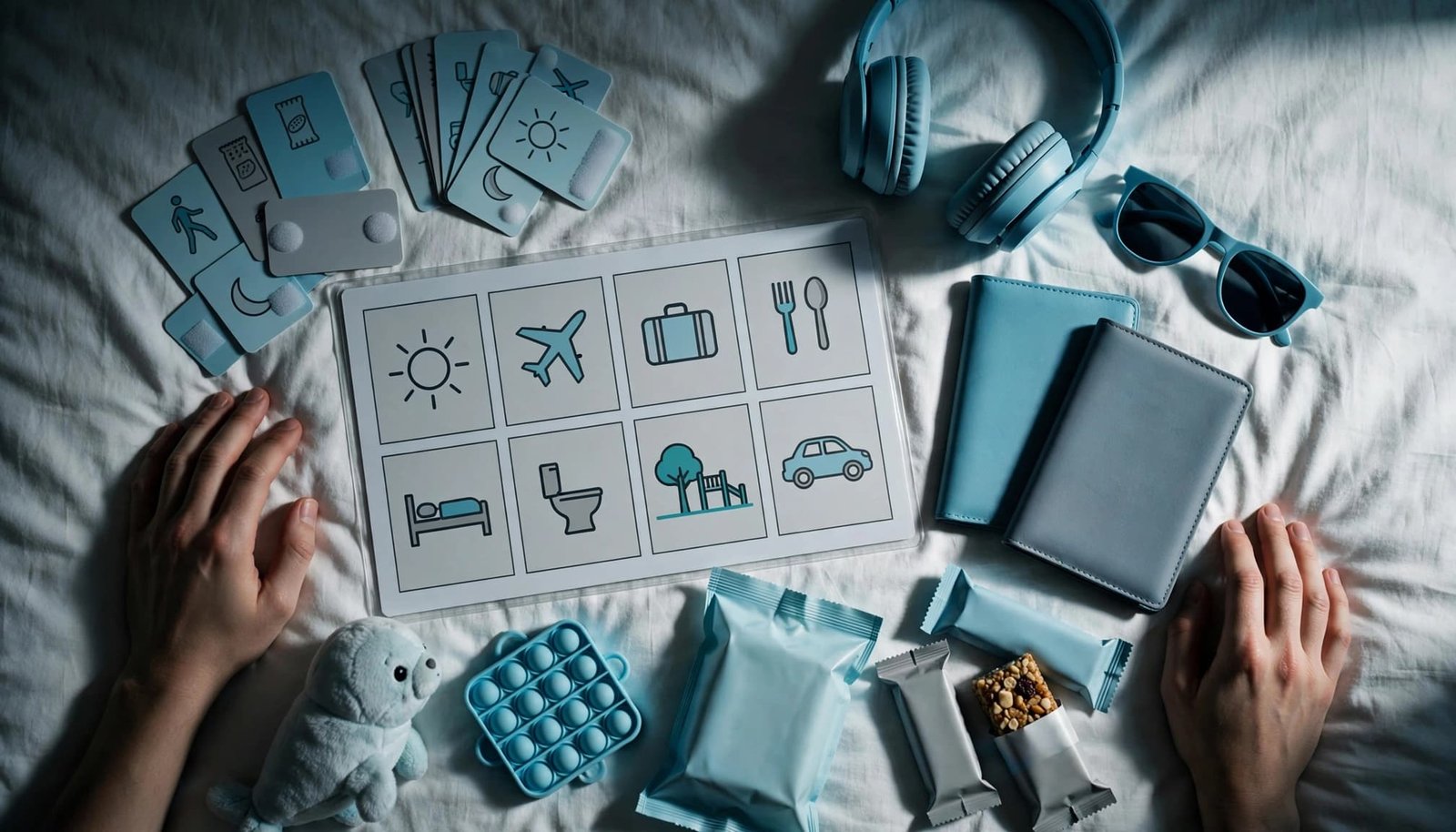
Phones can run out of battery, lose service, or become too hard to use in a stressful moment. Paper cards, a written support note, and a charged communication device can support different communication needs. Store headphones, comfort items, and other regulation tools in a small distraction toolkit beside the schedule.
A compact, easy-to-reach travel toolkit can also save the day. Trip Rescue Shop has practical travel items, including strollers and supplies for unexpected illness while you are away.
Build a distraction toolkit around the five senses
A distraction toolkit isn’t about filling every quiet moment. It gives your child familiar coping strategies when the car is loud, the line is long, or the hotel feels different.
Pack items your child already uses and likes. A distraction toolkit works best with familiar tools, not untested products. Travel day isn’t the time to try brand-new headphones, foods, fidgets, or apps.
Choose familiar supports for sight, sound, and touch
Think about what helps at home, in stores, on school outings, or during long car rides. Neurodivergent children can have different sensory sensitivities, even within the same family. Your child’s sensory needs may change from one day to the next.
Headphones, sunglasses, clothing, and fidgets can help manage sensory input. A simple travel toolkit may also include a hat, a familiar hoodie, a small blanket, or a comfort item.
Organize the distraction toolkit in one easy-to-reach pouch. Don’t bury headphones at the bottom of a large suitcase.
Add food, comfort, and communication supports
Preferred snacks, water, wipes, safe foods, and a change of clothes can prevent a small problem from becoming a hard moment. Bring medication and medical supplies your family needs, plus a written medication list.
A charged tablet, portable battery, charging cord, downloaded shows, and music can help during long waits. Add low-tech cards for “help,” “break,” “bathroom,” “water,” and “too loud” to support communication needs.
Adjust the distraction toolkit based on your child’s current tolerance for sensory input. Your family doesn’t need every item on someone else’s checklist. Choose what works for your child.
Use a social narrative to prepare for new places
A social narrative is a short, calm story that explains what may happen and what your child can do. It can support communication needs when spoken explanations feel difficult or tiring. Read it with the visual schedule or use it on its own.
Keep it honest. Don’t promise that the airport will be quiet or that every ride will be fun. Explain that some things may feel different, and show the support your child can use. Keep the story, schedule, and sensory items together in a distraction toolkit for easy access.
Write the story in simple, calm language
Use photos when possible. A short story might say:
“I will ride in the car. We may stop for gas. The car may be loud. I can use my headphones. After the gas stop, we will keep driving.”
For air travel, show the car ride, airport, security line, gate, plane seat, baggage claim, and hotel. Read one or two sections at a time if the whole story feels like too much.
Practice the hard parts at home
Try a short drive before a road trip. Practice wearing headphones in the car. Visit a new restaurant for a quick meal. Let your child see the suitcase and sensory bag a few days before departure. Read the social narrative during these practice moments.
Bring familiar bedtime routines, too. The same book, snack, card game, pajamas, or music can make a hotel room feel less new.
Keep your daily routine while leaving room for vacation
You do not need to recreate home perfectly. You do need a few dependable anchors.
Meals, sleep, medication, toileting, familiar foods, and recovery time should be on the schedule. For neurodivergent children, these anchors can make vacation more manageable than fitting in one more attraction.
Choose one main activity each day
Pick one major outing, such as a museum, beach morning, zoo, theme park, or family visit. Match it to your child’s energy, sensory needs, and tolerance for the day. Keep one lower-demand option available if everyone still feels good.
A pool visit, quiet walk, library, or hotel-room recovery can offer gentler sensory input than a crowded attraction. Keep a familiar distraction toolkit ready for downtime, waiting, or an early return to the hotel. A break is not lost time. It may make dinner, bedtime, or tomorrow’s outing easier.
Give choices without losing the routine
Offer small, age appropriate choices inside the schedule. Match them to your child’s communication level, independence, and age appropriate interests. Your child might choose the snack, pick the fidget, decide between the pool and a quiet walk, or choose which book comes to bed.
For Disney planning, Disney autism communication plans can help you build visual choices and clear transition support into a busy park day.
Families who want more Disney-focused support can use the Disney World With Autism Guide PDF on Etsy or Amazon. It includes practical ideas for visual schedules, sensory supports, flexible park plans, and downtime.
Key Takeaways
- Use the visual format your child already understands, whether that is objects, photos, pictures, drawings, or written words.
- Start with the first travel day instead of showing the entire vacation at once.
- Build in cards for breaks, waiting, snacks, bathrooms, and changes to the plan.
- Keep familiar sensory tools, communication supports, safe foods, and comfort items within reach.
- Treat a hotel break, an early departure, or a changed plan as part of a successful trip.
Frequently Asked Questions
How can a visual schedule help reduce anxiety during travel?
A visual schedule can make travel feel more predictable because your child can see the next step. It can also give you a calmer way to explain a change, such as a delay or an early return to the hotel.
It won’t remove every hard moment. It gives your child familiar visual support when words aren’t enough.
What should I include on a travel schedule for a toddler?
Use real objects or simple photos when possible. Show only a few steps at a time, such as breakfast, car, snack, hotel, bath, and bedtime.
Toddlers may also benefit from a first-then layout. For example, “First car, then favorite snack.”
How can I prepare my child for a new airport, hotel, or attraction?
A short social narrative can introduce the setting and what your child may see, hear, and do. Review it before departure while everyone is calm.
How do I plan for flight delays or changes?
Add “wait,” “snack,” “bathroom,” “quiet break,” and “change” cards before you leave home. Review them when everyone is calm, not for the first time at the gate.
Keep headphones, snacks, water, wipes, downloaded content, a comfort item, and a paper schedule in your carry-on bag.
A Flexible Plan Gives Your Family More Room to Enjoy the Trip
The best visual schedule family travel plan is the one your child can understand and your family can use when the day changes. Keep it short, familiar, portable, and honest.
You don’t need a perfect vacation schedule. You need enough structure for comfort, plus enough space for rest, choices, and real family memories.
Leave a Reply