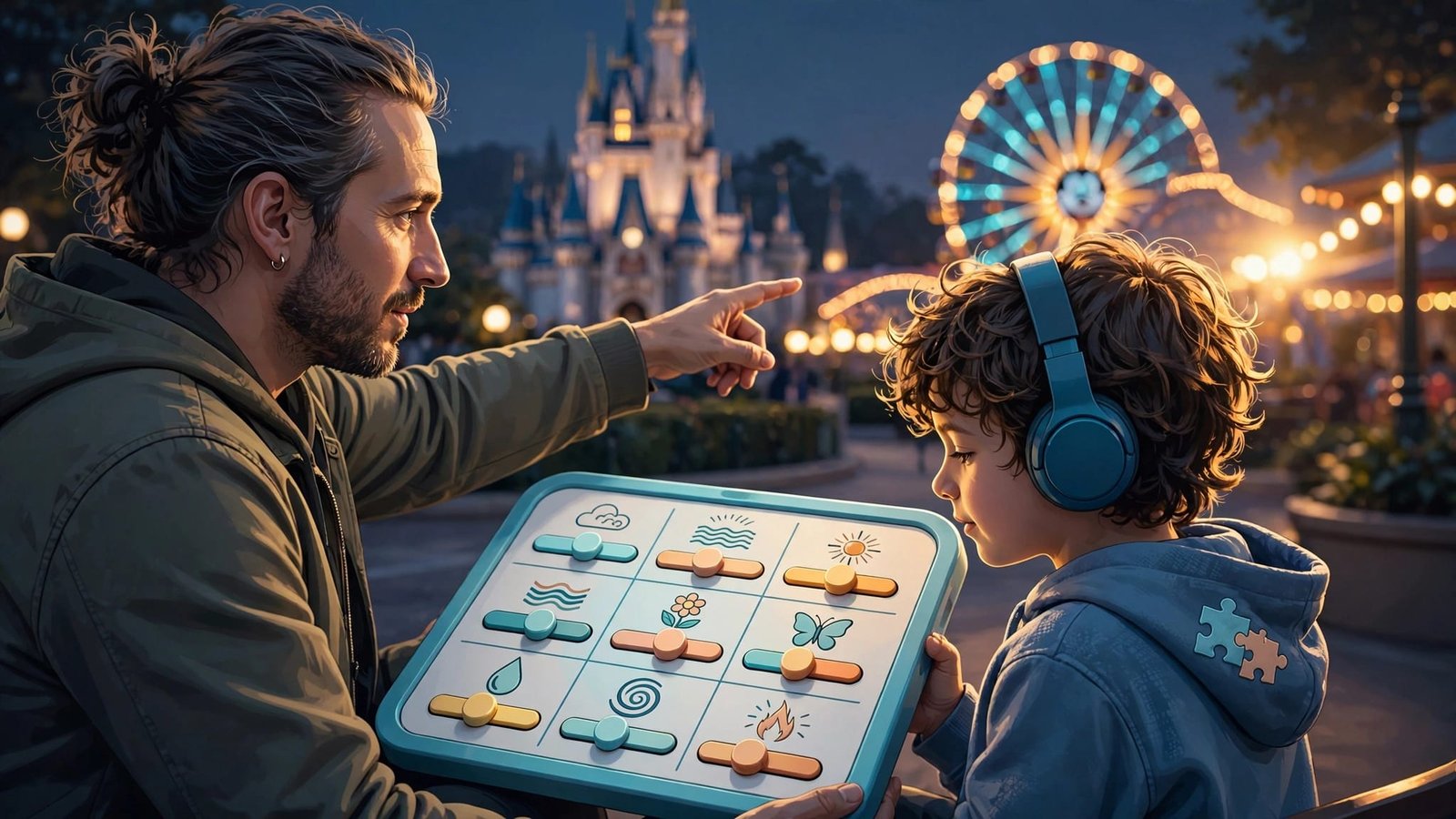
The best Disney autism rides are not always the quietest, slowest, or most popular. They’re the rides that fit your child’s sensory needs, comfort level, and energy that day.
A child may love spinning but dislike darkness. Another may enjoy a dark ride but struggle with a tight restraint or a long indoor queue. A simple comfort rating system helps your family choose rides without pressure.
Use it before your family vacation, then adjust it as you learn what works in the parks.
Key Takeaways
- Rate each attraction by motion, sound, lighting, darkness, queue demands, restraints, and recovery needs.
- A ride with a low overall score may still be a poor fit if one sensory trigger is a major concern.
- Watch ride-through videos before your trip so your child can see what to expect.
- DAS may help eligible guests wait outside a conventional queue, but it does not make every attraction comfortable.
- Build breaks, food, transportation, and a back-up plan into your Disney day.
Why Disney Autism Rides Need a Comfort Rating System
A basic “yes” or “no” ride list doesn’t tell the whole story. Disney attractions combine many sensory experiences at once. A gentle ride may still include loud music, darkness, crowded loading areas, or unexpected effects.
A comfort rating system gives you a more personal way to choose. It can also reveal combinations that may lead to sensory overload before your child feels overwhelmed.
The rating card is a personalized planning tool for your child’s special needs, not a prediction based on a label or diagnosis. It gives your child a clear way to share what feels good, what feels hard, and what they may want to try later.
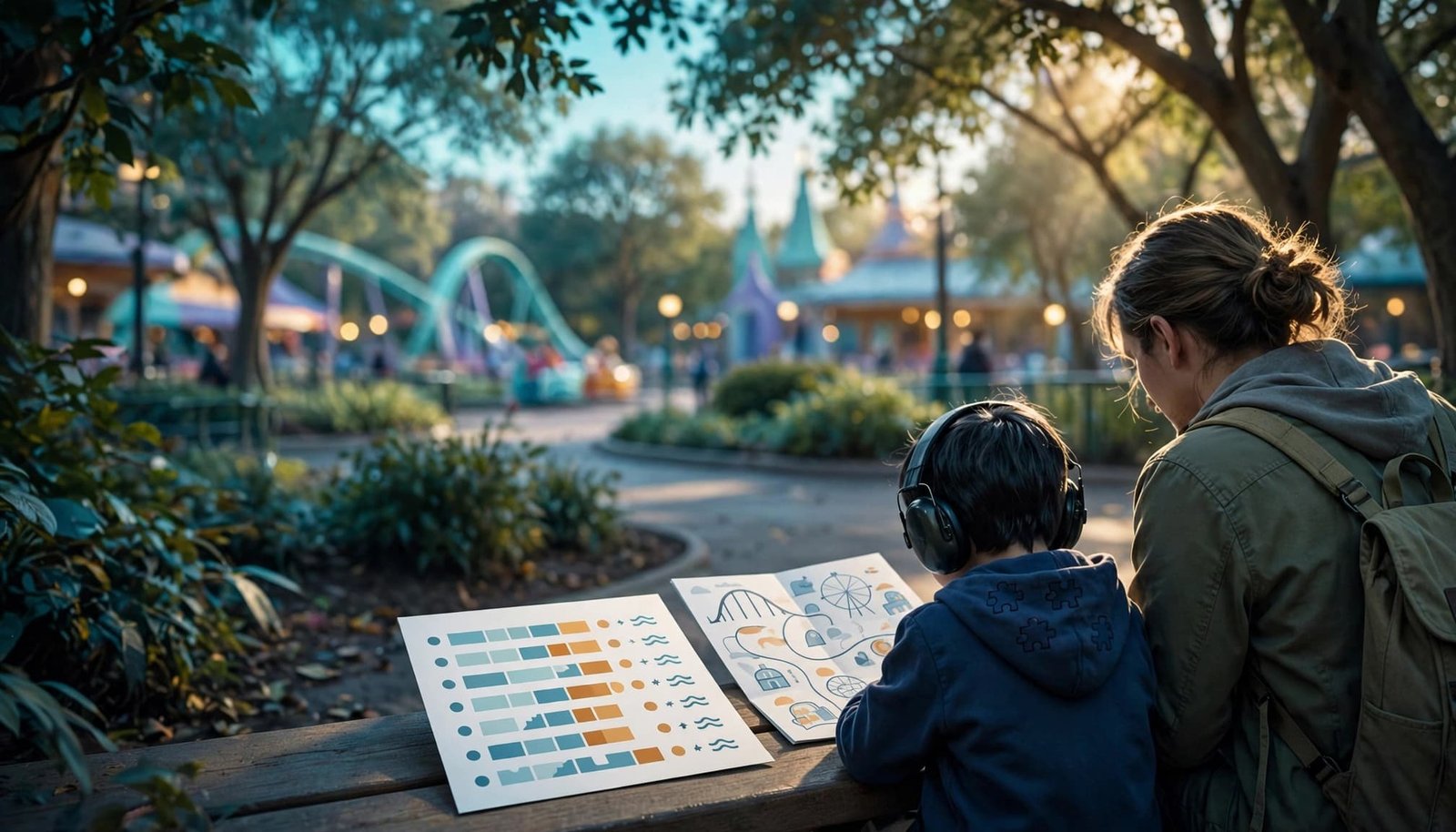
Rate your child’s needs, not a diagnosis
Autism spectrum disorder looks different for every child. Some children enjoy enclosed spaces because they feel predictable. Others need open areas, daylight, and an easy exit.
Think about real experiences your child has already had. Do music or loud noises bother them? Do they seek fast movement? Are darkness, sudden drops, or restraints upsetting? Do they need time to recover after a busy activity?
Your answers matter more than a general ride recommendation. Disney guest services for neurodivergent guests can also help families review available supports before they leave home.
Queue comfort is separate from ride comfort
A child may be ready for a ride but unable to tolerate a long, enclosed standby line. Heat, crowds, noise, unfamiliar smells, and slow movement can build up long before the ride begins.
Give the queue its own score. Also consider the walk to the ride, the loading area, and what happens if your child changes their mind. A ride is only a good choice when the full experience feels manageable.
One strong trigger can matter more than the total score. A child who is highly distressed by darkness may not enjoy a ride rated low in every other category.
Build Your Ride Comfort Rating Card
Keep the system simple. Use a notes app, a small notebook, or a printed page in your park bag. Families can adapt the card to special needs, communication styles, and individual preferences. Score each category from 0 to 3, then write one short note about what may help.
| Comfort area | 0 points | 1 point | 2 points | 3 points |
|---|---|---|---|---|
| Motion | Slow and steady | Gentle movement | Fast or bumpy | Drops, spinning, or intense movement |
| Sound and effects | Quiet | Moderate sound | Loud music or effects | Sudden, unexpected, intense, or constant noise |
| Lighting | Daylight or soft light | Dim areas | Darkness or flashing effects | Extended darkness and strong visual effects |
| Space and restraints | Open and easy exit | Standard seat | Tight seating or restraint | Enclosed space or restrictive restraint |
| Queue and transitions | Short and predictable | Some waiting | Busy or confusing | Long, crowded, or hard to leave |
| Duration and recovery | Brief and easy to reset | Short with little recovery | Longer or noticeable recovery | Long or likely to require an extended break |
With six categories, a total of 0 to 6 may be a comfortable starting point. A score of 7 to 12 may work with preparation. A score of 13 or more may need a ride-through video, a calm day, or a skip option. Use the score as a planning aid, not a universal prediction. Compare attractions alongside your child’s current energy, comfort, and flexibility.
Add the sensory details that matter most
Numbers are helpful, but notes are where the real planning happens. Written notes capture sensory experiences such as “spins only if we control the cup,” “loud at the beginning,” “may need headphones,” or “dark but slow.”
Disney shares attraction details through its accessibility services information. Check current ride information before your vacation, since procedures and sensory details can change. If something is unclear, ask a cast member before joining the queue.
Include recovery time in the score
A three-minute ride can affect the next hour. Think about how your child usually feels after motion, crowds, loud sound, or an unexpected effect. Some children bounce right back. Others need water, shade, a snack, or quiet time.
Add a recovery note to every ride card:
- “Can ride before lunch.”
- “Plan a quiet break after.”
- “Better early in the morning.”
- “Only if the next stop is familiar.”
This keeps the schedule realistic. It also helps siblings and caregivers understand why one short ride may need a longer reset.
Start With Familiar, Lower-Pressure Attractions
In busy theme parks, many families begin with familiar, lower-pressure rides that have steady movement and less intensity. The Tomorrowland Transit Authority PeopleMover, Living with the Land, Kilimanjaro Safaris, and Na’vi River Journey can be sensory-friendly rides for some families.
That does not mean any ride is automatically comfortable for every child. A safari vehicle can be bumpy. A boat ride can be dark. Even a relaxing experience can include a surprising sound or crowded loading area.
Use videos before you get in line
Watch attraction ride-through videos together at home if your child finds previews helpful. Pause the video when you see darkness, water, restraints, loud moments, or sudden movement.
You do not need to explain every detail. A short preview is often enough to remove one big unknown. Our guide to preparing children for Disney rides includes more sensory preparation ideas for park days.
Let your child choose a simple response after each video: yes, maybe, not today, or never. “Maybe” is a valid answer. It gives you options without creating pressure.
Rate spinning rides with extra care
Some children seek movement and may love attractions such as Mad Tea Party, Dumbo the Flying Elephant, or TriceraTop Spin. Others may become uncomfortable after a few turns.
Look at who controls the motion. A ride where your family can make the movement gentler may feel more comfortable than one with a set spinning pattern. Plan one spinning ride at a time, then allow a recovery break before adding another active experience.
For children who enjoy motion but dislike surprises, steady experiences may be a better fit than rides with sudden drops, loud launches, or fast direction changes.
Use DAS and Queue Planning Together
Disney’s Disability Access Service, often called DAS, may support queue access for eligible attractions when a guest cannot tolerate a conventional queue because of autism or another developmental disability. It is not a front-of-the-line pass.
When DAS is approved, it provides a return-time accommodation. Your family can wait in another area instead of remaining in the standby queue. Include broader mobility and waiting supports, such as a special needs stroller, in that plan.
Review Disney’s current Disability Access Service information before you travel.
Prepare for the DAS conversation
Disney’s process may include a pre-registration video chat. The guest requesting DAS needs to be present, and a parent or guardian can help explain their needs.
Focus on the real barrier. Explain what happens during a long, crowded, enclosed, or unpredictable wait. Describe the child’s specific special needs and queue-related barriers. A diagnosis alone does not guarantee approval, because eligibility is based on the guest’s current queue-related needs.
Set up your My Disney Experience account and link valid tickets. Review using DAS at Disney World and verify current eligibility and procedures with Disney guest services before your trip.
Make a return-time plan
DAS changes where your family waits. It doesn’t change the sensory demands of attractions, heat, walking, closures, or the need for a calm plan. Ask a cast member about current procedures, closures, or loading instructions when needed.
Use return-time windows for something low-pressure. Sit in shade. Have a snack. Browse a quieter shop. Visit a nearby restroom. Avoid filling every wait with another line or a long walk across the park.
If one child rides and another cannot, Disney’s current option, Rider Switch, may help your group, though some families call it a child switch pass. Disney planning for multiple disabilities can help families think through sensory, mobility, communication, and sibling needs together.
Plan Comfort Beyond the Ride
A successful day at theme parks involves more than a list of attractions. Transportation, weather, food, walking, and transitions can affect what your child can handle.
Your rating card should include supports that make the whole day feel more familiar. Build them into a broader special needs travel plan.
Bring the supports your child already uses
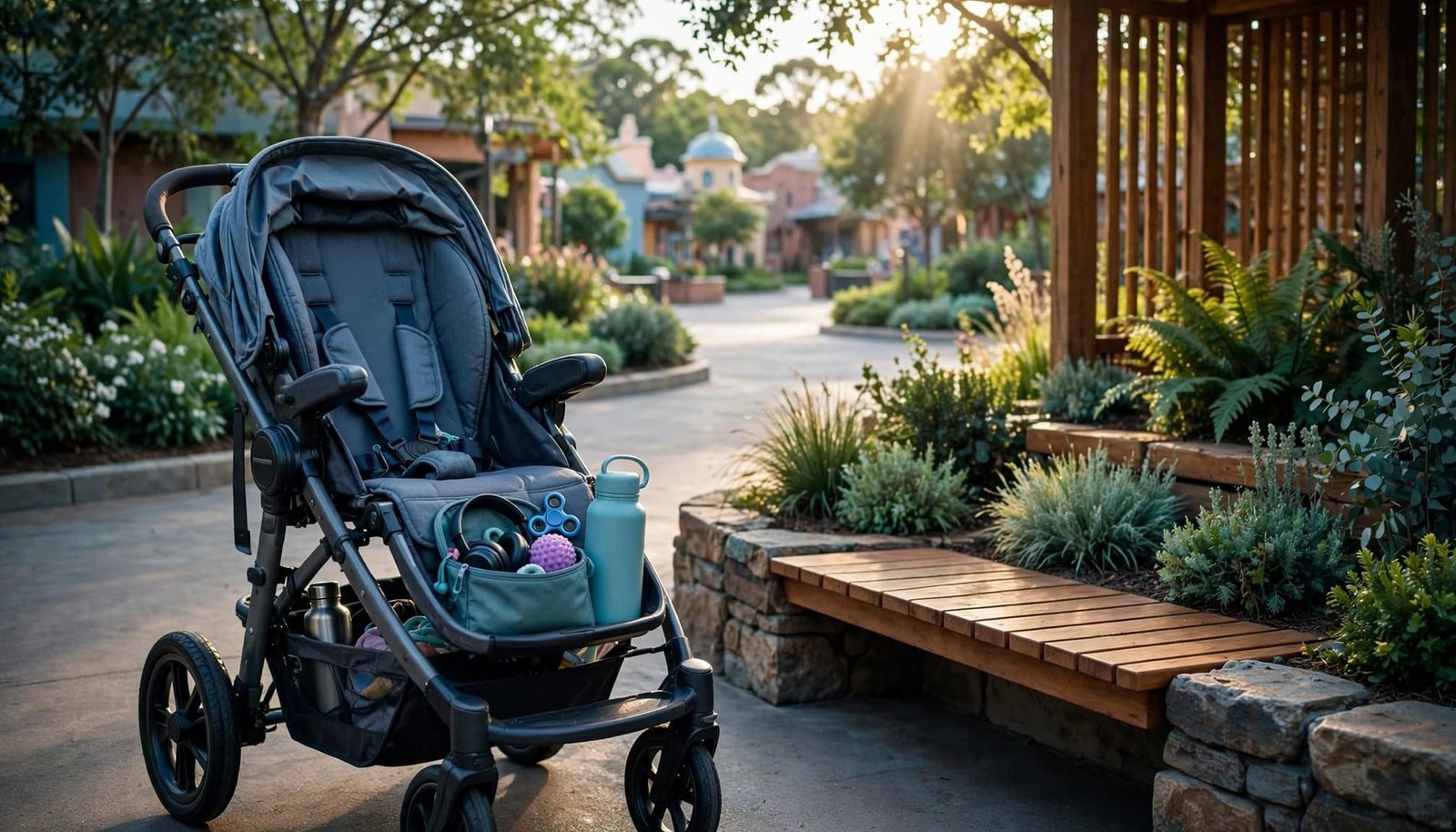
A special needs stroller can support mobility, fatigue, safety, and sensory regulation. If you use a special needs stroller as a mobility device, ask Disney guest services about current stroller tag options. Follow current Disney instructions and each cast member’s directions for attractions.
Pack familiar items, not a pile of new products. Noise-cancelling headphones, a comfort item, a communication device, chargers, medication, safe snacks, water, and a change of clothes may all be useful.
For stroller basics, comfort items, and cleaning supplies for an unexpected sick-on-vacation moment, browse Trip Rescue Shop travel supplies.
Make a safety and reset plan
Take a current photo of your child each morning. Consider a temporary ID tattoo, shoe tag, card in a pocket, or another method that includes a caregiver phone number. If there is an elopement risk, choose what your child will tolerate and practice using it before the trip.
Tell your resort what would make the stay easier, such as a room location request or accessibility need. Confirm what the resort can provide instead of assuming any request is guaranteed.
Plan quiet spots before your child experiences sensory overload. A shaded path, a less crowded area, a hotel room, or a familiar snack break can change the direction of the day. Disney transportation may work well for some families, while others prefer a car to reduce crowded waits and transitions. If plans change, a cast member may help explain available options.
If swimming is part of your plan, review pool safety rules and supervise closely around hotel pools.
Food matters too. Mobile ordering or a quick service meal can make dining more predictable. Many table-service locations can help with dietary needs, allergies, or intolerances. Ask whether there is a gluten-free option, review this Walt Disney World disability dining guide, and confirm current options directly with Disney.
Frequently Asked Questions
How do I know if a ride is right for my autistic child?
Start with the sensory details, not the popularity of the attraction. Rate motion, sound, lighting, space, restraints, queue conditions, and recovery time. A ride-through video can help your child make the final choice.
Should we make every ride decision before the trip?
No. Make a starting list with yes, maybe, and not today choices. Your child may feel differently after a busy morning, a missed nap, rain, heat, or a long walk.
What if my child gets overwhelmed after a ride?
Move to your planned reset option. Offer water, a snack, headphones, shade, a comfort item, or a return to the resort. Leaving early is not a failed park day.
Can DAS make all Disney rides easier?
DAS may help eligible guests wait outside a conventional queue. It does not change ride motion, darkness, restraints, noise, or attraction rules. Your comfort rating still matters.
Where can I find more help planning?
The Disney World With Autism Guide PDF on Etsy offers family-focused ideas for DAS, sensory needs, breaks, and flexible park days. You can also keep the Disney autism travel guide on Amazon with your trip plans. These are optional planning resources, not official Disney policy. Qualifying purchases may earn a commission.
Build a Disney Day That Fits Your Child
Disney can be loud, bright, busy, and full of surprises. Your family doesn’t need to push through every difficult moment to have a meaningful vacation.
A personal comfort rating system gives you a better way to choose Disney autism rides, create an attractions list, plan breaks, and change direction when needed. Comfort comes before the checklist.
Leave a Reply