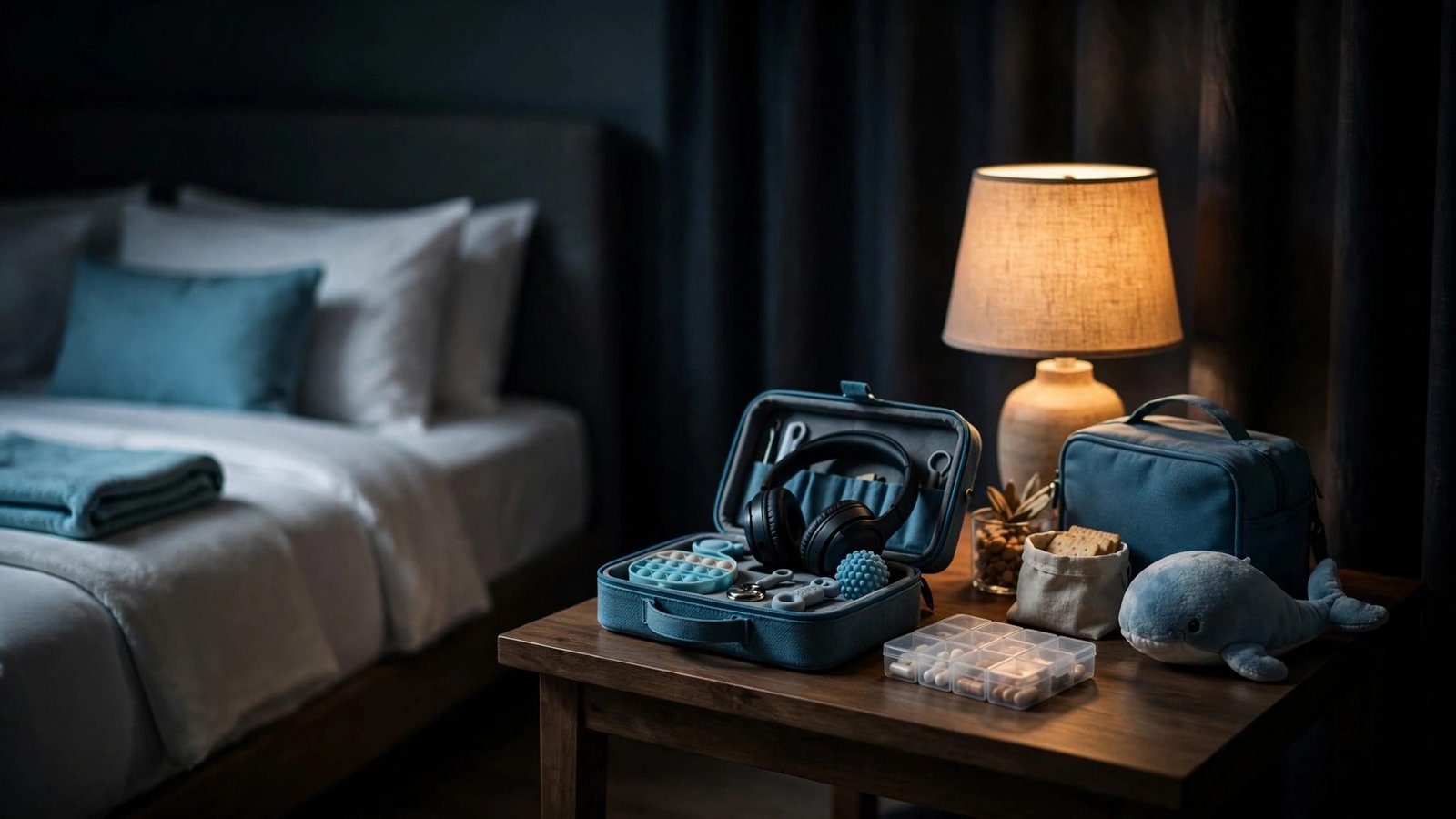
A hotel room can either help your family recover or make every part of vacation feel harder. The goal of an autism-friendly hotel room is not a picture-perfect space. It is a calm, familiar base where your child or adult traveler can rest, eat, regulate, and reset.
Small details matter. For autistic travelers, a quieter location, familiar snacks, and a simple arrival plan can create a predictable base for rest and recovery. Reducing sensory overload looks different for each person, so leave room for downtime and adjust the setup to fit your family’s needs.
Key Takeaways
- Ask about staff training and whether the property offers quiet zones or sensory rooms. Request a room away from elevators, ice machines, pools, busy entrances, and event spaces.
- Confirm practical details before booking, including refrigerator space, blackout curtains, microwave access, housekeeping options, and parking.
- Pack affordable sensory kits with familiar supports, safe foods, medication, bedtime items, and communication tools in an easy-to-reach bag.
- Treat autism-friendly hotels, certification programs, and a certified autism center designation as starting points, not guarantees. Autism awareness alone doesn’t promise a quiet room or a specific level of support.
- Check accessibility resources from kulturecity and other travel providers, then confirm what this property offers. Keep vacation days flexible, since a room break, early dinner, or quiet evening can still be a successful family choice.
Start With Your Family’s Actual Needs
Every autistic traveler is different. Individual sensory sensitivities may involve noise, light, scents, unfamiliar bedding, or crowded hallways.
Some children need a dark, quiet room to sleep. Others need space to move, a predictable breakfast, or a refrigerator for safe foods and medication.
Before comparing hotels, think about what makes home, school, or other familiar places feel comfortable. Then look for lodging that gives your family more control. Autism Speaks’ planning information may also help you identify useful questions before booking.
Think About Sleep, Food, and Sensory Needs
Make a short list of the things that can make a hotel stay hard. These details can contribute to sensory overload, especially in unfamiliar surroundings.
Sensory-friendly design and practical accommodation options may matter more than a fancy pool. Look for features such as a refrigerator, microwave, kitchenette, or laundry access. Separate sleeping areas can also help when one child needs an earlier bedtime or a quieter place to wind down.
Request a Room Location That Helps
A larger room is not always the calmer room. A suite beside a loud pool, busy lobby, or elevator can be harder than a standard room in a quiet wing.
Ask for a room in quiet zones, such as quieter wings or low-traffic areas, away from:
- Elevators, ice machines, vending areas, and staff closets.
- Pool decks, live music, restaurants, and busy entrances.
- High-traffic hallways or rooms used by large groups.
Staff training and general autism awareness don’t replace direct questions about the actual room. Ask what you’ll hear, see, and encounter nearby before arrival.
Put important requests in writing before arrival. Call again a few days before check-in, then confirm the room location when you arrive.
Set Up the Room Right Away
The first hour in the room sets the tone for the stay. Keep arrival simple, especially after a long drive, flight, or busy airport.
Don’t schedule a major activity right after check-in. Give everyone time to unpack, eat, rest, and get comfortable before asking for one more transition.
Create Familiar Zones in the Room
Start by bringing in the things your child needs first. Bedtime items, comfort objects, snacks, medication, headphones, and a favorite blanket shouldn’t be buried under suitcases.
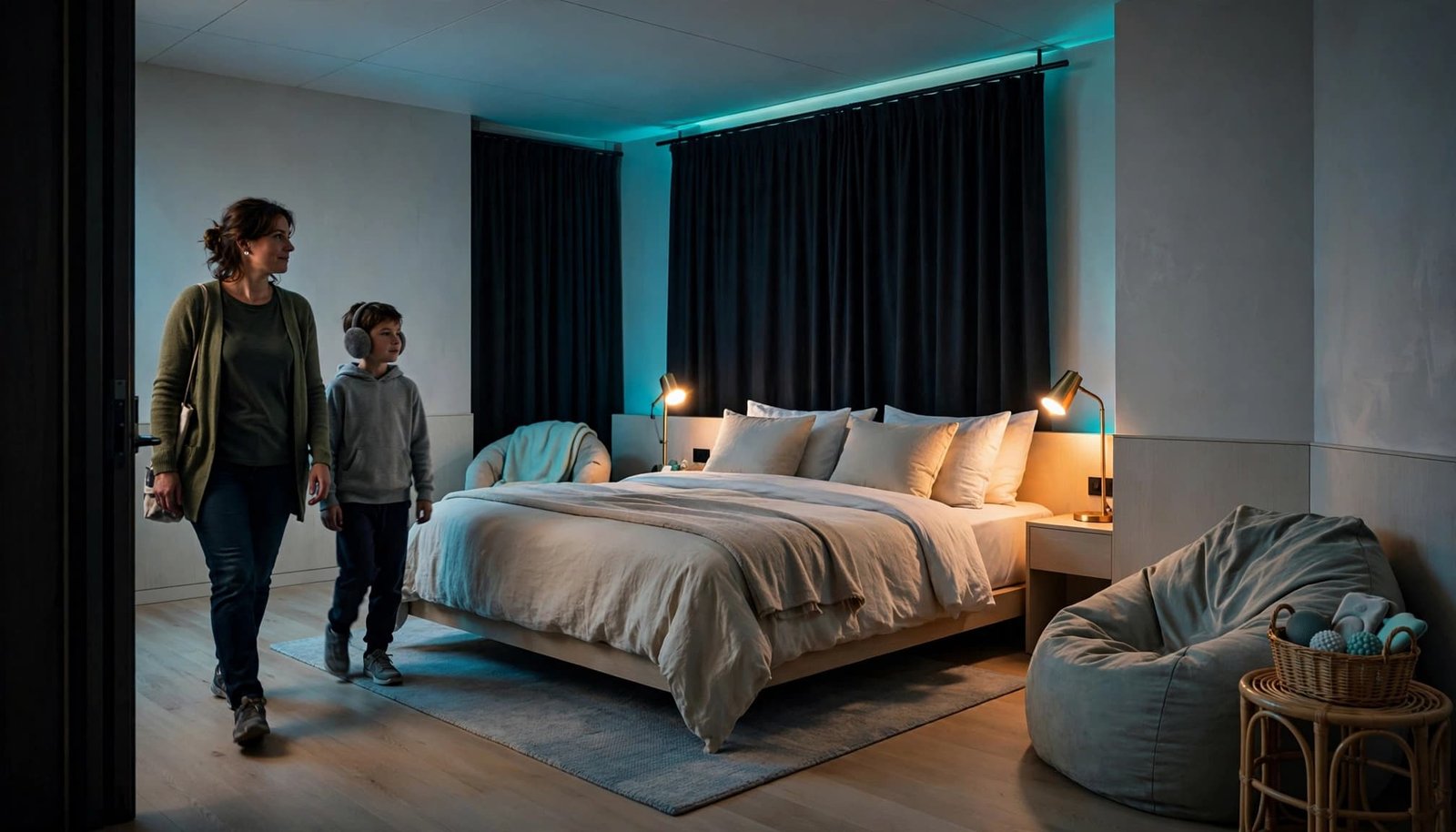
Set up simple areas for sleep, food, play, and regulation. These low-cost environmental modifications can make the room feel more predictable. Keep sensory kits and other essentials easy to reach.
Check the bathroom fan, shower, toilet, towels, toiletries, lights, curtains, thermostat, and television early. Ask about a quieter room or quiet zones if noise is a problem. You can also check whether existing soundproofing limits hallway or neighboring-room sounds.
Sensory rooms aren’t guaranteed in hotels, and staff training may vary. Even when a hotel offers these supports, families should still inspect the room themselves.
Reduce Noise, Light, and Strong Scents
Sensory sensitivities can make unfamiliar lighting, scents, or sounds difficult to manage. Ask whether the hotel can offer flexible housekeeping and a fragrance-free approach, especially if sensory overload is a concern.
Blackout curtains, familiar bedding, and noise-canceling headphones can support sleep. A familiar pillowcase may also help the room feel more predictable. Autism Speaks offers practical support for families planning travel, but your own observations remain essential.
Keep the door secured, and use any extra safety measures your family already uses at home.
A good hotel room doesn’t need to look special. It needs to give your family a reliable place to reset.
Build a Routine That Still Leaves Room for Changes
Vacation does not have to follow a strict schedule. It helps when your child knows what happens next.
A simple routine might be breakfast, one activity, lunch, hotel break, dinner, and bedtime. Keep one or two priorities each day. Everything else can stay flexible.
Use Visual Supports for Hotel Transitions
A small picture schedule can make unfamiliar steps feel easier. It can show check-in, room time, swimming, meals, transportation, and bedtime.
Autism Speaks explains how visual schedules can support transitions with less prompting. Use photos, simple drawings, or a phone note if that works better for your child.
Review the plan before leaving the room. If plans change, use visual supports to show the revised order. Concise communication strategies can make the next step clearer. “The pool is closed. We are having a snack, then going back to the room” is easier than a long explanation.
Make the Hotel Your Reset Plan
Do not treat the hotel as only a place to sleep. It is part of the vacation plan.
Build in time to return after a loud attraction, a hot afternoon, or a difficult meal. A planned break can help prevent sensory overload and make inclusive travel more manageable. Your child may need quiet television time, a shower, a favorite snack, or time under a blanket. Leaving an activity while your child is still doing well is often the best choice.
Some hotels provide staff training that makes it easier to request a quiet area or quiet zones. Still, don’t rely on staff to anticipate every need. Explain what helps your child and ask directly for support.
For Disney trips, compare recovery time, transportation, privacy, and food needs with this guide to Disney hotels versus vacation rentals for autism families.
Pack Sensory Kits You Can Find Fast
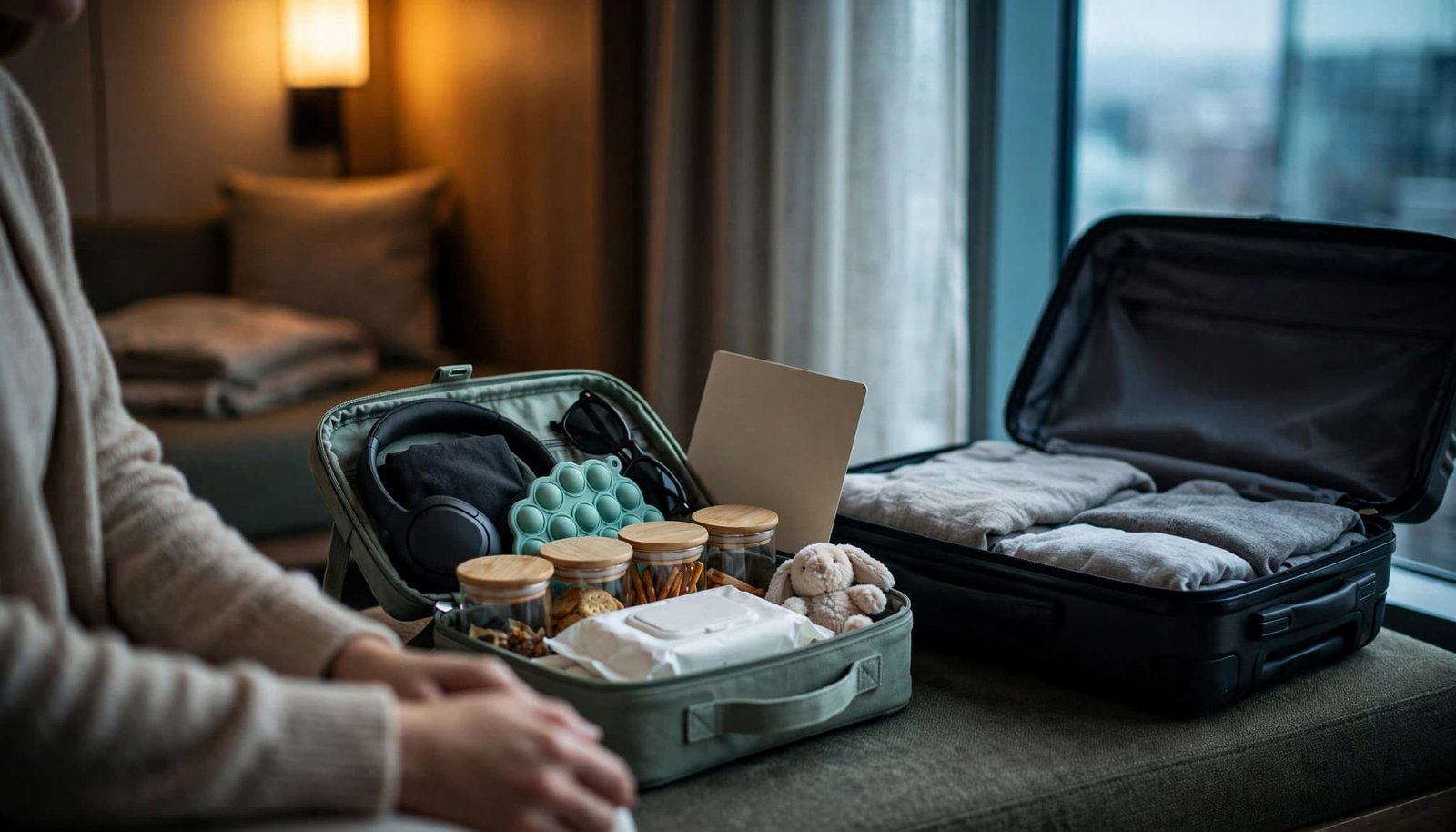
The items that help at home can also help in a hotel room. Keep them together in one backpack or pouch. These sensory kits can help autistic travelers manage sensory overload, though every child’s needs vary.
Bring What Already Works at Home
Your sensory kit may include noise-canceling headphones, sunglasses, fidgets, a comfort item, familiar snacks, water, wipes, and a change of clothes. Add visual supports, such as a small schedule card or communication note. Bring medication, medical supplies, charging cords, a portable battery, and communication supports too.
Some families may encounter KultureCity as a sensory-support resource, but hotel access isn’t guaranteed. Ask whether hotel staff can provide basic supplies or direct you to assistance, and whether staff training covers these requests.
Keep bedtime supports in a separate bag. This makes it easier to settle in without unpacking every item after a long travel day.
Make Food and Medication Easy to Reach
Unpack safe foods first. Put snacks, drinks, breakfast items, and medication in one predictable spot.
Confirm the room refrigerator before you rely on it for food or medication. If your child eats the same breakfast every day, pack it or arrange grocery delivery before arrival. Familiar food can make a new hotel room feel less overwhelming.
The Trip Rescue Shop has practical travel supplies for families, including stroller items and cleaning supplies for those sick-on-vacation moments.
Ask Hotels How Staff Can Support Your Family
Kind staff are helpful, but clear support is better. You don’t need to share every detail of your child’s diagnosis. Tell the hotel what will help your family, and ask about staff training, including what front-desk and housekeeping staff are trained to do.
Ask if there’s a calmer check-in option, a guest services contact, flexible housekeeping, or a way to request help if plans change. You can also ask about quiet zones or sensory rooms, along with simple environmental modifications, such as a room away from the pool.
Look for Clear, Respectful Communication
Helpful hotel staff listen to the request, speak clearly, and avoid making assumptions. They should understand that neurodivergent guests may communicate differently, need more processing time, or need space during a hard moment. Visual supports and clear communication strategies can make requests easier to follow.
Before travel, Autism Speaks recommends contacting guest services, preparing for sensory concerns, and offering choices when possible. Ask what autism awareness means in practice, and whether KultureCity resources or certification programs guide the hotel’s support. A quick call can show whether claims about inclusive hospitality reflect actual support.
Keep Housekeeping and Check-In Predictable
Ask when housekeeping normally visits and whether you can decline it, schedule it, or request supplies without a room visit. Unexpected knocks and unfamiliar people entering the room can be difficult for some travelers. Even strong staff training doesn’t replace a property-specific conversation about your family’s needs.
A front desk note can help staff understand simple requests, such as calling before entering, avoiding a room near the pool, or directing you to a quieter waiting area.
Understand Autism-Friendly Hotel Certifications
Certification programs can be useful when narrowing down autism-friendly hotels. They show that a property or travel provider has participated in a particular training or review process.
Still, a badge does not guarantee sensory rooms, quiet zones, sensory-friendly design, fragrance-free products, or support from every staff member on every shift. Always ask property-specific questions.
Autism Double-Checked and IBCCES Programs
Autism Double-Checked certification levels build on one another. Level 1 begins with accepting the Autism Passport. Level 2, Autism Ready, and Level 3, Autism Double-Checked, include more detailed planning information for families.
The Autism Passport can help families share sensory needs, communication preferences, triggers, and helpful supports before travel. That gives a hotel a clearer idea of what may make the stay easier.
IBCCES hotel and resort certification follows a different model. Its Certified Autism Center program requires at least 80% of guest-facing staff to complete staff training focused on autism and sensory differences. The certification renews every two years. Autism Speaks, KultureCity, and travel providers may use different standards for autism awareness and inclusive hospitality in the hospitality industry.
Ask What the Program Means at This Property
Ask whether the hotel has current certification, which employees have received staff training, and what supports are available during your stay. Ask about noise, lighting, scents, pool areas, dining, room placement, and early check-in options when sensory sensitivities affect your plans.
Staff training can improve awareness, but it doesn’t guarantee a particular room or response from every employee. These certification programs can offer useful information, but direct answers still matter.
Karisma Hotels and Resorts has introduced programs for neurodivergent, autistic, and sensory-sensitive guests at participating resorts. Review Karisma’s autism travel information and confirm details directly with the specific resort before booking.
A certification can help you start the conversation. Direct answers about your room and your dates are what help you make the final choice.
A Simple Hotel Room Audit for Families
Use this quick review before booking and again when you enter the room. It can help you spot problems while there is still time to ask for a change.
Before You Book
Ask about accommodation options, including refrigerator or microwave access, blackout curtains, parking, accessible routes, flexible cancellation terms, and nearby low-demand activities.
Look at satellite maps too. A hotel may look close to an attraction but require a long walk through crowds, traffic, or a busy resort complex. KultureCity may also offer an accessibility resource, but participation varies by property.
When You Arrive
Check the room before unpacking everything. Listen for pool noise, elevators, hallway traffic, loud air conditioning, and construction. Note possible triggers related to sensory sensitivities, and verify any advertised sensory rooms or environmental modifications rather than treating them as guarantees.
Test the lights and curtains, then confirm that requested items are available. General claims about staff training and autism awareness don’t replace checking the actual room and available support.
If the room does not fit your needs, ask for a change early. Sensory overload can build quickly in a noisy or uncomfortable space. Keep the request calm and clear. “We need a quieter room away from the pool because noise makes sleep difficult” gives staff useful information.
Before checkout, pack sensory kits, dispose of food safely, return borrowed items, and ask about housekeeping or cleanup procedures.
Frequently Asked Questions
What makes a hotel room autism-friendly?
An autism-friendly hotel room supports your family’s sleep, food, communication, safety, sensory, and routine needs. Needs vary by family, but helpful features may include a quieter location, simple layout, blackout curtains, refrigerator access, flexible housekeeping, and space for breaks.
Does a certified hotel guarantee a sensory-friendly room?
No. Certification programs and staff training can show that a hotel has prepared for accessibility needs. Neither guarantees a quiet room, fragrance-free products, a sensory room, or a particular accommodation. Call the hotel directly and confirm the details that matter most.
What should we do if the room or schedule becomes too much?
Return to the room, lower demands, and use familiar supports from your sensory kits. Lower the lights, offer a familiar snack, and reduce noise when sensory overload begins. Skipping an activity or changing plans isn’t a failed vacation. It’s your family taking care of itself.
Are there resources for planning a Disney trip with autism?
The Disney World With Autism Guide on Etsy and the Disney guide on Amazon share family-focused ideas for park days, breaks, and accessibility planning. Families may also encounter organizations such as Autism Speaks and KultureCity while researching accessibility. You can use the Disney World autism guide for flexible planning that leaves room for rest and changes.
A Comfortable Room Makes More Room for Memories
The best hotel setup for your family is not always the biggest resort or the lowest nightly rate. It is the setup that helps autistic travelers rest, eat, reset, and feel safe after a busy day.
Plan around familiar supports, protect your family’s pace, and ask direct questions before booking. Inclusive travel can mean choosing comfort and connection over completing every activity.
Leave a Reply