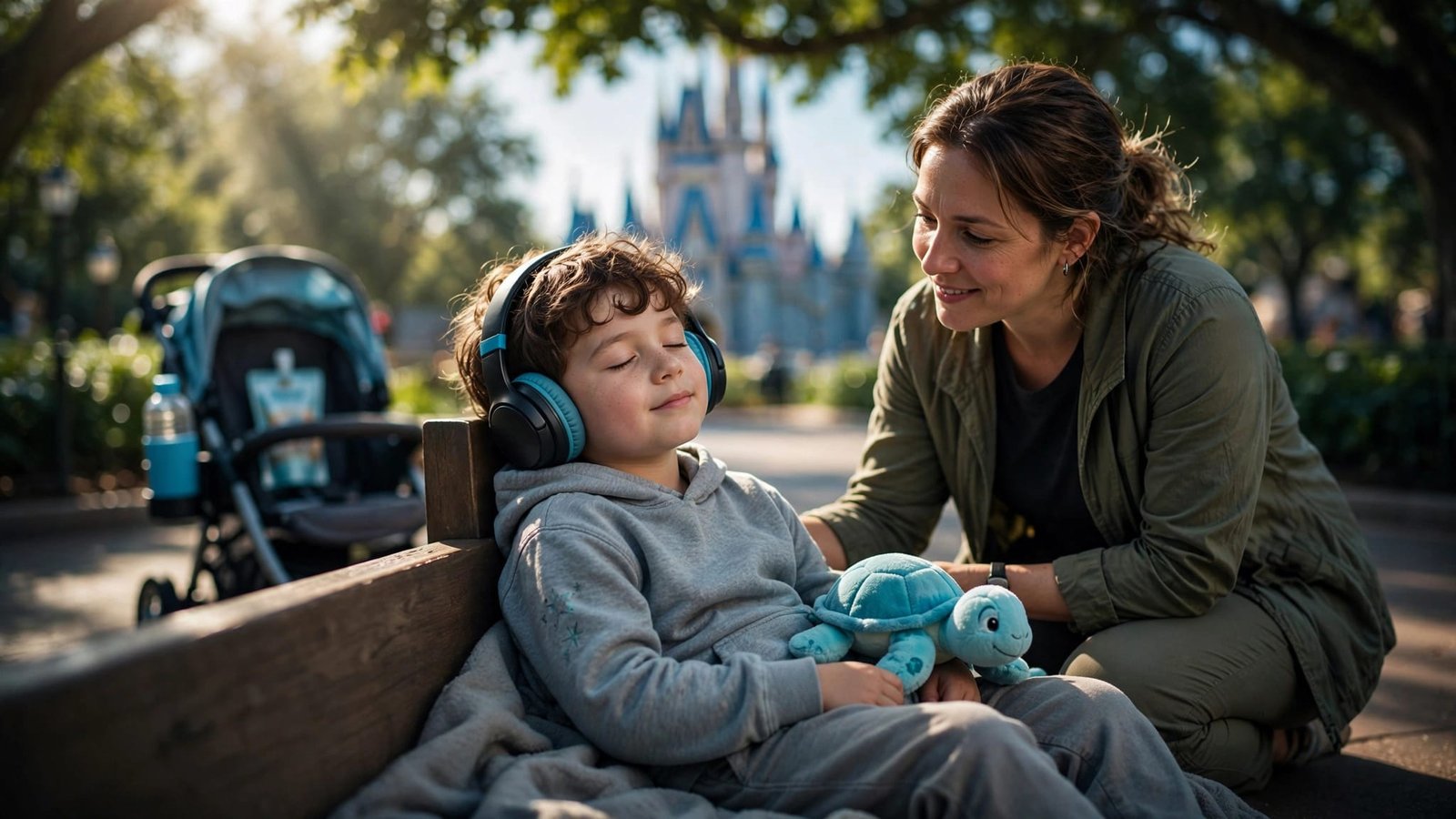
A Disney day can go from exciting to too much in a short time. Heat, crowds, long walks, loud rides, hunger, and one unexpected change can quickly lead to sensory overload.
When visiting a theme park with an autistic child, the best plan isn’t the one with the most rides. It’s the one that builds in breaks before your child reaches their limit. Your child needs time to feel safe, rest, eat familiar foods, and reset.
A calmer family vacation starts with fewer demands and more room to change plans. Rest isn’t a backup plan, it’s part of a successful Disney day.
Key Takeaways
- Choose one or two priorities for each park day. Everything else is a bonus.
- Plan breaks before your child looks overwhelmed, not after a meltdown begins.
- Use visual schedules, ride videos, familiar snacks, headphones, and comfort items to make new places feel more predictable.
- Disability Access Service may help eligible guests, including some guests with cognitive disabilities, whose disability-related needs make extended waits difficult. Eligibility is based on queue needs, not diagnosis alone, and policies can change.
- Treat hotel time, pool time, quiet meals, and early exits as part of the vacation, not a missed opportunity.
- Give siblings choices too. Every child deserves to feel included in the trip.
Start With Your Child’s Real Needs
There is no one Disney plan that works for every autistic child. Some children love the rides, music, characters, and movement. Others may enjoy one attraction, then need quiet, food, and a familiar routine.
Start with what you already know. Think about communication, mobility, food preferences, dietary accommodations, sleep, bathroom needs, sensory sensitivities, and how your child handles transitions. Autism may be one part of a broader developmental disability or support profile. Some families may also choose a Sunflower Lanyard as an optional communication aid, but it isn’t a Disney access pass or guarantee of assistance.
Disney World autism planning for multiple disabilities can help families think through sensory, communication, mobility, medical, and food needs together.
Write Down Early Signs of Overload
Your child may not say, “I need a break.” Their signs may look different. They may get quiet, move faster, repeat questions, cover their ears, refuse choices, become silly, or struggle with a small request.
Write down the signs you see at home, school, stores, or family events. Share them with every adult traveling with you. When everyone knows what to watch for, you can act sooner.
Build a Loose Visual Schedule
A visual schedule doesn’t need every ride and reservation. Keep it simple: breakfast, transportation, one ride, snack, break, lunch, hotel, pool, dinner.
Use photos, icons, a social story, or a note on your phone. Show your child what comes next, but include flexibility. Weather, crowds, ride closures, and changing preferences can affect the day.
Watching ride-through videos together can also help. Your child may want to see darkness, loud sounds, drops, water effects, or character scenes before deciding whether to ride.
Disney Autism Kids Need Breaks Before They Look Tired
Waiting until your child is in visible distress can make recovery from sensory overload harder. Put breaks on the plan early, even if the morning is going well.
Shaded benches, indoor shows, quiet tables, hotel lobbies, and less crowded paths can serve as quiet break areas. Choose a sensory-safe place your family knows feels regulating, or use a hotel room or pool for a longer reset.
Use Time, Not Behavior, to Trigger Breaks
Try setting a break point before you enter the park. It might be after two attractions, before lunch, after 90 minutes, or at an early sign of strain.
Use a timer if that feels helpful, and take the break sooner if your child needs it. A Disney accessibility return time handles scheduling, not regulation. Don’t delay a needed break for the return time.
This keeps the break from feeling like a consequence. A short social story can rehearse saying “break time,” leaving, and returning to the hotel. It becomes part of the expected routine, like eating lunch or riding the bus.
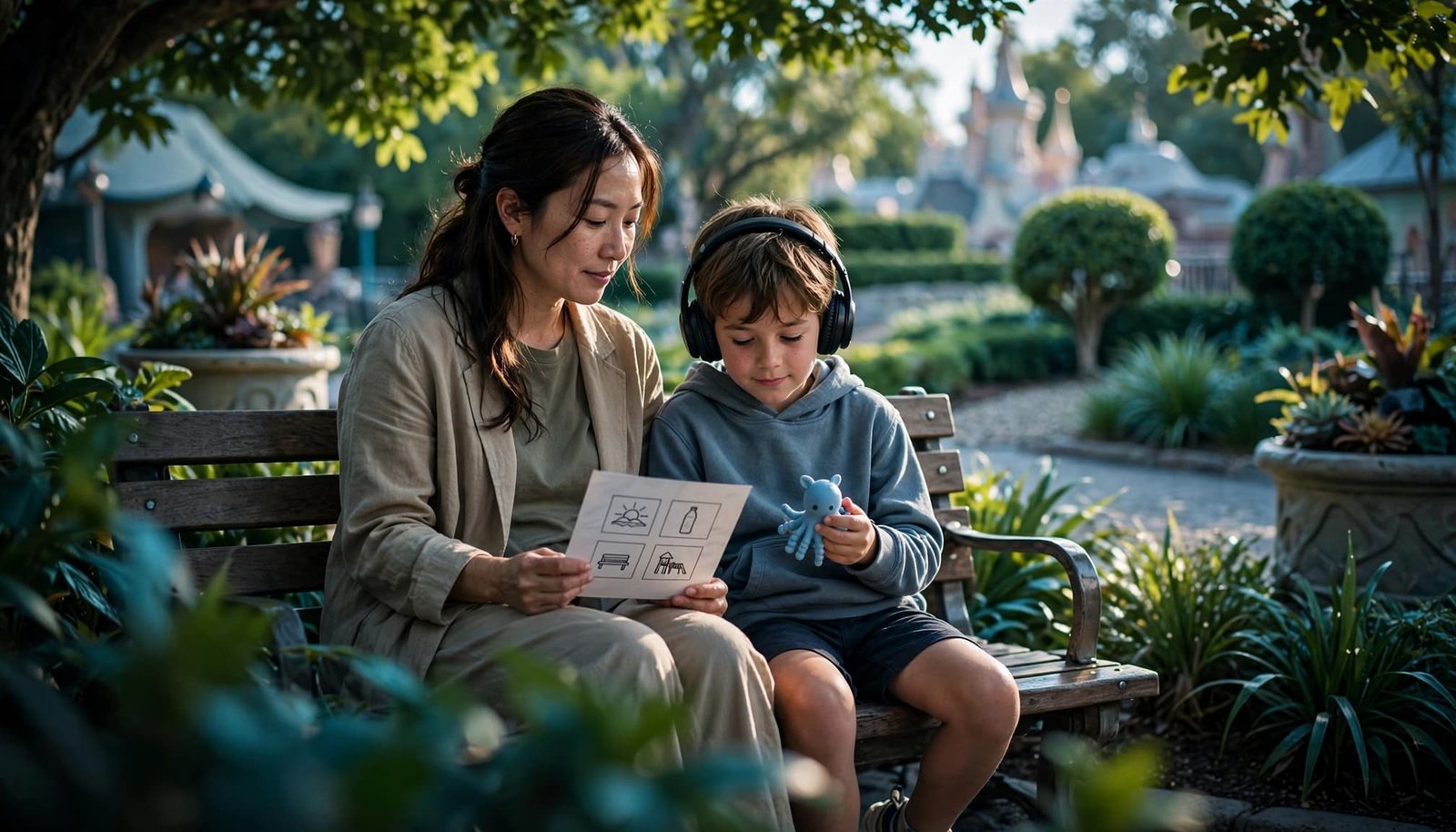
Make an Exit Plan Before You Need One
Choose a simple family phrase such as “break time” or “hotel reset.” Decide who stays with siblings if one adult leaves the park with your autistic child.
Practice the phrase and the route before anyone feels overwhelmed. You don’t need to explain or apologize to anyone. Leaving early can protect tomorrow’s energy and make the whole trip feel more comfortable.
A successful park day may be one favorite ride, a familiar snack, and a calm return to the hotel.
How Disability Access Service Works at Walt Disney World
Disney’s Disability Access Service is for guests whose developmental disability, including autism or a similar condition, makes it hard to tolerate an extended conventional queue.
DAS isn’t a front-of-the-line pass. Eligible guests receive an attraction return time, then wait outside the traditional standby line. This virtual wait may feel more manageable, but it doesn’t guarantee a shorter wait.
An autism diagnosis alone doesn’t guarantee approval. Disney considers how cognitive disabilities affect a guest’s ability to tolerate a queue. Disney doesn’t automatically approve every guest with cognitive disabilities. Review Disney’s current policy before every trip, because procedures can change.
Disneyland Resort has separate current policies. Don’t assume Disneyland Resort works exactly like Walt Disney World.
Prepare for the Live Video Chat
Disney states that Live video chat for DAS is available from 7:00 AM to 8:00 PM Eastern Time. During the Live video chat, the guest requesting DAS must be present. For a child, a parent or guardian joins too.
Set up your child’s My Disney Experience account and link valid park admission before starting Live video chat. Families may pre-register online through the available advance process, according to Disney’s current stated guidance. Disney says families may register by live video chat up to 60 days before their park visit, including the visit date if needed.
Before travel, use the My Disney Experience app to review attraction information and check Disney’s current attraction queue access details. Confirm the latest Disability Access Service requirements after the Live video chat, since Disney’s timing and procedures can change.
Use Return Times With a Realistic Plan
Once registered, use the My Disney Experience app to select an available DAS return time. Check the return time before leaving your current location, then plan around each return time realistically.
Use the return time to get a snack, sit in shade, visit a restroom, browse a quiet shop, or return to your hotel if the timing allows. If a return time falls during a meal or scheduled break, adjust your plan instead of rushing.
Keep the next return time flexible around walking and transitions. A return time doesn’t remove heat, walking, crowds, ride closures, or transitions. Disability Access Service also doesn’t replace proactive sensory breaks.
Lightning Lane is a separate paid service from DAS. Don’t assume Lightning Lane provides the same process or benefits as DAS.
Other Disney Supports Worth Asking About
DAS is only one option. A Cast Member or Guest Relations team member can help you understand which current services fit your child’s needs. Ask whether a current support involves a return time, and what that return time means for your visit. Families of children with cognitive disabilities can ask about available supports, but eligibility and availability vary.
Disney’s guest disability services also include information on attraction access and Rider Switch.
Ask About a Stroller as a Wheelchair Tag
Some children need a stroller for regulation, safety, stamina, or mobility. A developmental disability may affect how a child manages walking or waiting. If your child must remain in their stroller as a mobility device, ask the team about the current process for using a stroller as a wheelchair.
Bring the stroller that works for your family. A special-needs stroller may be more comfortable than a rental. Think about storage, sun coverage, rain, and whether your child can rest safely in it. A Sunflower Lanyard may offer optional visibility or communication support, but it doesn’t provide attraction access or priority.
Use Rider Switch for Bigger Rides
Rider Switch can help when one child cannot or does not want to ride. One adult waits with the non-rider while the rest of the party experiences the attraction. Then the adults switch without making everyone wait through the full line again.
This can make a big difference for siblings. It can also reduce pressure to use a conventional standby line when a ride feels too loud, dark, fast, or unpredictable. Using Rider Switch helps support siblings while respecting the needs of non-riders.
Pack a Park Bag That Supports Comfort
Pack for your child, not for someone else’s Disney day. A few familiar items can help when the park feels busy or plans change.
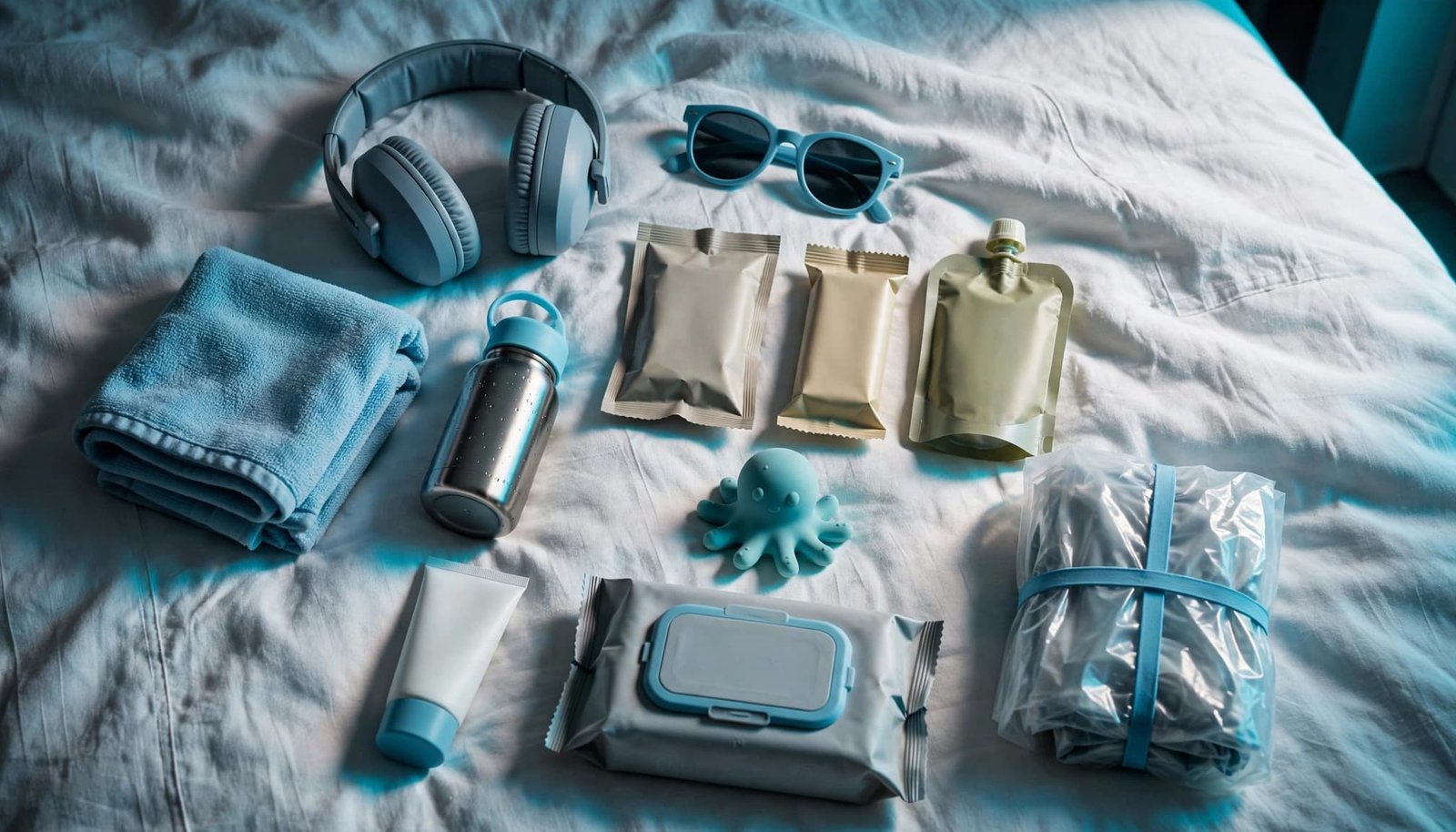
Keep essentials together in one easy-to-reach bag:
- Choose noise-canceling headphones, sunglasses, fidgets, and comfort items around your child’s known sensory sensitivities.
- Familiar snacks and a refillable water bottle help when hunger or heat makes waiting harder. For dietary accommodations, confirm available options with Disney and bring foods that work for your child.
- Cooling towels, sunscreen, wipes, a change of clothes, and medication should stay easy to reach.
- A charged phone and portable charger keep your schedule, return times, and family communication available.
For practical vacation basics, Trip Rescue Shop has travel items including stroller supplies, comfort essentials, and cleaning products for situations when someone becomes sick during vacation.
Give Your Family Time to Recover
Theme parks take energy, even when the day goes well. Plan quiet evenings, familiar meals, early bedtimes, and slower mornings after busy park days.
A nearby hotel can make a midday reset easier. Some families prefer an on-site resort for transportation and quick returns. Others need a vacation rental with a kitchen and more room for familiar meals. If you have a return time or another scheduled park commitment, balance it against your child’s need for a hotel reset.
Don’t measure the trip by fireworks, ride count, or how late you stayed. An early exit, a restful evening, and an early bedtime are valid parts of a family vacation. A child who returns to the hotel calm has still had a successful vacation.
Our Disney World with Autism Guide was created from firsthand family travel experience and Kellie’s B.A. in Child Development. Families can find the optional Disney World with Autism Guide PDF on Etsy or the Disney autism travel guide on Amazon for practical ideas about DAS preparation, sensory needs, breaks, and flexible park days.
Frequently Asked Questions
Where can we find quiet break areas at Disney?
Quiet break areas vary by park, crowd levels, and time of day. Look for a shaded path, quieter seating area, indoor attraction, hotel lobby, or space away from the main walkway. Ask a Cast Member or Guest Relations for current guidance on where your family may be more comfortable.
Scout a few possible break spots when you arrive. A return time doesn’t remove the need to plan for breaks before your child feels overwhelmed.
Should we plan a full Disney park day?
Most families do better with one or two meaningful priorities and room to change plans. If you have a return time, build a hotel break, long lunch, or early exit around it.
You don’t need to use every return time for the day to feel successful. Your child may surprise you and want more time, or they may need less. Both are okay.
How can siblings feel included?
Give each child a small choice. One child can choose a snack stop. Another can pick between two nearby attractions. A teen may want to help find a quiet lunch table or check the park map.
Fair doesn’t mean every child gets the same day. It means each child feels heard, supported, and part of the family vacation.
A Calmer Disney Day Is a Successful Disney Day
The best Disney memories often happen when families stop chasing every attraction. A slower pace gives your child more comfort, more choices, and more time to enjoy the moments that feel good.
Plan breaks before overload. Keep one or two priorities in sight. Let your child’s needs guide the day, and let comfort count as part of the magic.
Leave a Reply