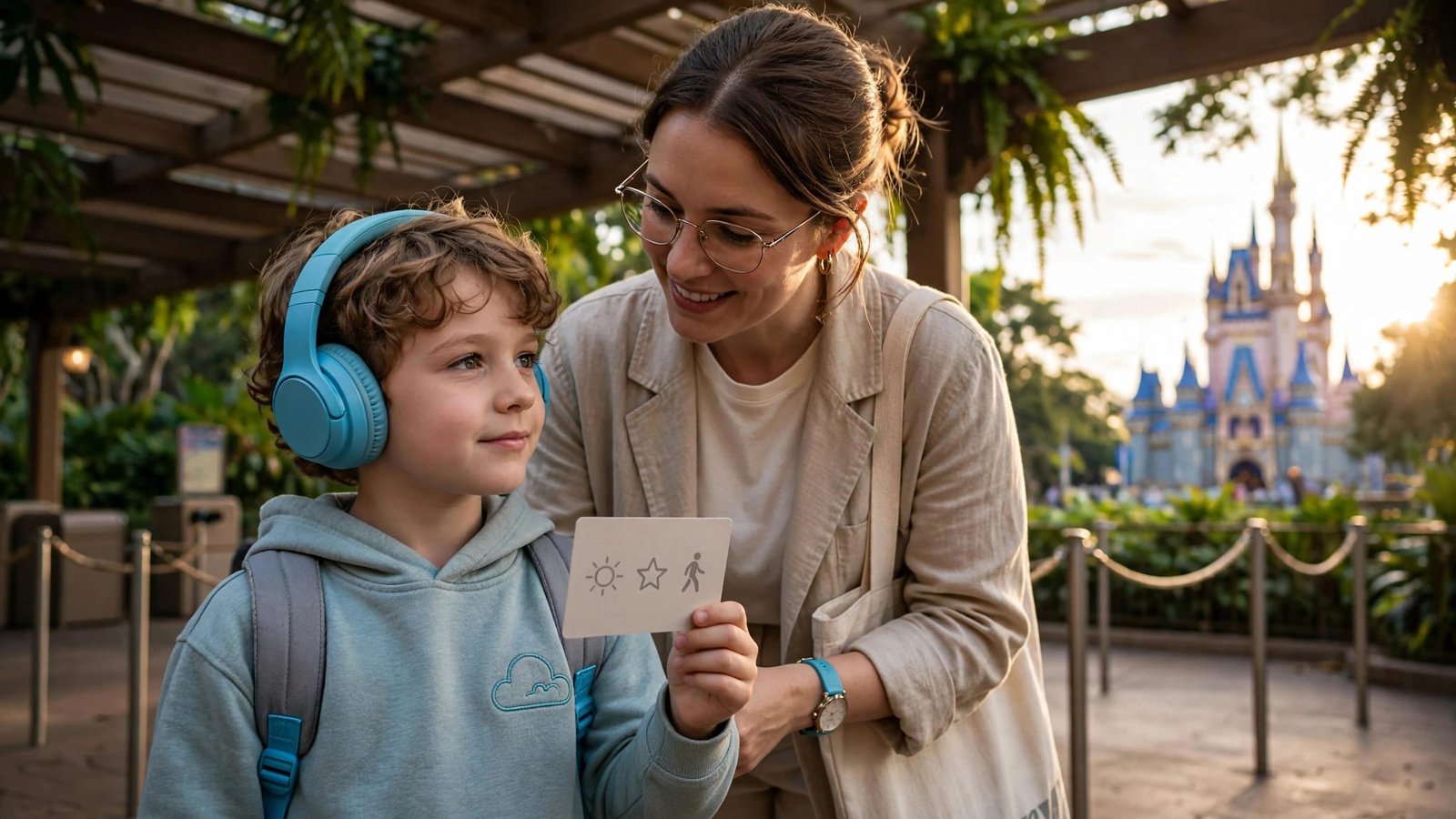
Waiting at Disney with autism can feel harder than the ride itself. The line, the noise, the close spaces, and the unknown timing can turn a fun plan into a stressful moment fast.
Your child does not need a perfect park day. They need a plan that feels familiar, flexible, and safe. A few simple supports can make waiting more manageable before you ever reach Walt Disney World.
Start with the parts of the day your child finds hardest, then build around them.
Key Takeaways
- Practice small waits and transitions at home before visiting Walt Disney World.
- Keep park plans short, visible, and flexible.
- The DAS program may help eligible guests wait outside a conventional attraction queue, and registration may involve a live video chat.
- DAS isn’t immediate ride access, and an autism diagnosis alone doesn’t guarantee approval.
- Use breaks, familiar snacks, quiet time, and backup choices even if DAS is approved.
- Use My Disney Experience for current park information and return-time management. Check Disney’s latest policies close to your travel date, because procedures can change.
Disney autism waiting starts before you leave home
Waiting at theme parks, including Walt Disney World, isn’t only standing in a ride line. It can mean waiting for the bus, going through security, sitting for food, joining queue lines, or changing plans when rain closes an attraction.
Small practice sessions at home give your child a chance to learn what waiting may feel like without the pressure of a busy park.
Practice the day in small pieces
Use a simple visual schedule with a few steps: breakfast, transportation, park entrance, one ride, snack, break. Pictures, icons, or a handwritten list can work well.
Practice using a timer during a short activity. Start with two or three minutes, then stop before frustration builds. The goal isn’t teaching your child to tolerate every wait. It’s helping them understand that a wait has an end.
Watch ride-through videos together before your trip. Your child can preview an attraction’s darkness, loud sounds, drops, enclosed spaces, or water before you spend time getting there.
Make a comfort plan, not a packed schedule
Bring items your child already knows and uses. Noise-cancelling headphones, a comfort item, a fidget, preferred snacks, water, medication, and a communication device can all belong in the park bag.
Choose one or two must-do experiences per day. Everything else is a bonus. Build in shade, a calm lunch, time at the hotel pool, or an early exit.
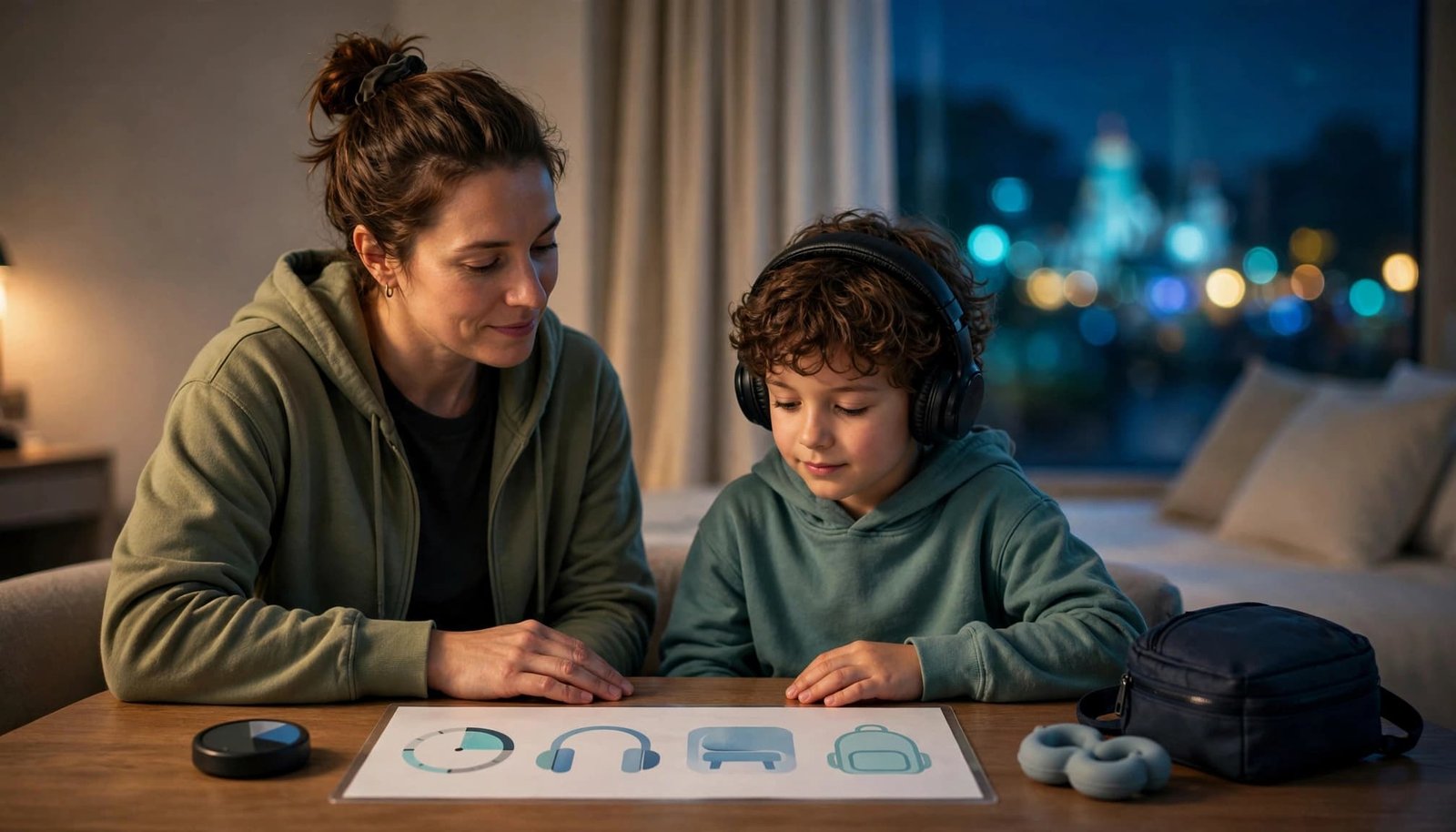
A visual plan also helps with disappointment. Tell your child what the backup choice will be before a favorite ride closes or the weather changes. “If this ride is closed, we can have a snack and choose another ride” is clearer than “We’ll see what happens.”
What Disability Access Service can and cannot do
At Walt Disney World, Disney’s Disability Access Service supports some guests with a developmental disability, such as autism. This may apply when they cannot wait in a conventional queue for an extended period.
Families often refer to this as the DAS program. It isn’t a physical pass, a fast pass, or a front-of-the-line benefit. Procedures at Disneyland Resort may differ from Walt Disney World.
Read Disney’s current Disability Access Service information before you travel. For help, contact Disney guest services or ask guest relations about current procedures. A virtual queue is separate and follows its own rules, so it isn’t automatically equivalent to DAS.
Eligibility is based on waiting needs
Disney reviews each guest’s needs individually. An autism diagnosis, sensory disability, visual disability, or another diagnosis by itself does not guarantee approval.
DAS is one possible support among several accommodations. During registration, explain what happens for your child in a standard queue.
You may describe panic in crowded spaces, unsafe elopement risk, distress in enclosed lines, or difficulty with close contact and unpredictable waits. Keep it honest and simple. You don’t need to share every detail of your child’s medical history. Focus on the real barrier to waiting in a regular line.
A return time changes where you wait
If approved, DAS gives an eligible guest a return time for attractions. Your family waits outside the physical queue, then returns to an attraction when the time is ready under Disney’s current procedures.
A return time changes where you wait rather than removing the wait. It may feel different from a standby wait in a regular queue.
That time can be used for a snack, restroom break, shade, a quiet spot, or a slow walk. The wait has not disappeared. It has moved to a setting that may feel more comfortable for your child.
DAS can support attraction waiting, but it doesn’t replace rest, familiar food, a quiet hotel room, or permission to leave early.
For more family-centered ideas, our Disney World autism guide includes practical support for sensory needs, breaks, transportation, and flexible park days.
Register for DAS without turning it into a test
Walt Disney World’s current DAS registration process uses live video chat for advance DAS registration. During the live video chat, families can explain their child’s waiting needs and answer questions. Disney says video chat is available from 7:00 AM to 8:00 PM Eastern Time, and the conversation cannot be recorded.
Registration may begin up to 60 days before a park visit. Review the official page again when your dates are close, since timing and procedures may change.
Get your account ready first
Link valid park tickets in My Disney Experience before you start. Check that your Family & Friends list is connected, then test your camera, microphone, and internet connection.
The adult completing registration must be at least 18. The guest requesting DAS needs to be present for the live video chat, and a parent or guardian can help a child answer. Let your child participate with support, if that feels comfortable.
Choose a calm time of day. Have your notes nearby, but don’t read from a long script. Share what regular queue waiting looks like for your child and what helps them stay regulated.
Use everyday language during the chat
You can say, “Crowded enclosed lines cause my child to panic,” or “My child may bolt when a queue for an attraction is long and unpredictable.” Those clear examples explain functional waiting needs better than a diagnosis alone.
Disney’s eligibility criteria focus on how a guest manages waiting, not just on a diagnosis. Share honest details about panic, elopement risk, sensory overload, or unpredictable waits.
Don’t promise that your child can handle a situation when they cannot. This isn’t a test of parenting or a request to be judged. It’s a conversation about whether Disney’s current accommodation fits your child’s functional needs.
Our Disney autism planning support is built around real family routines, sensory needs, transportation concerns, and room for a changed plan.
Use return times with a gentle park rhythm
Before leaving your resort, open My Disney Experience and check your plans. Once you’re in Walt Disney World, keep your phone charged, since My Disney Experience may hold your tickets, mobile food orders, park maps, family communication, and available return time options.
A portable charger is one of the most useful items in a Disney bag. It is hard to manage plans when a phone battery is low at midday.
Choose the wait location on purpose
Don’t treat a return time as a fast pass or extra time to rush to another loud activity. A virtual queue follows separate rules and doesn’t replace your child’s sensory or communication supports.
You might sit in shade, have a familiar snack, visit a quiet area, use the restroom, or return toward your resort if your schedule allows. Some children need movement. Others need stillness. Plan for your child, not the schedule on someone else’s phone.

Verify rules before each park day
Attraction availability, return-time procedures, party rules, and app features can change. Check each attraction’s details and access rules before leaving your resort, especially during a busy season or special event.
Ask a Cast Member, guest services, or Guest Relations for help if the app isn’t working or you don’t have a mobile device. It is better to ask early than to wait until your child is already overwhelmed.
DAS is not the only Disney accessibility support
Families sometimes put all their hope into DAS. That can add pressure before the trip even begins. A comfortable Disney day often needs more than one support.
Mobility needs, medical equipment, food restrictions, communication needs, heat sensitivity, anxiety, and sensory needs may all call for different accommodations.
Plan for mobility and physical needs separately
Mobility aids, a stroller, wheelchair, or ECV can help conserve energy and create a familiar personal space in a busy park. Ask Disney directly about current attraction access, transfer needs, and supports that may fit your family’s situation.
DAS has a specific purpose. It should not be treated as the only answer for physical disabilities or medical needs. Disney’s accessibility options can be different depending on the guest and attraction.
A practical park bag also matters. Trip Rescue Shop has travel basics ranging from strollers to cleaning supplies for those unexpected sick-on-vacation moments.
Universal Orlando has its own process
Do not assume Disney, Universal Orlando, and Universal Studios use the same disability policies. Universal Orlando has separate accessibility information, procedures, and attraction details.
If you are adding Universal to your trip, review its current requirements separately. Bring the same flexible mindset, but do not carry over assumptions from Walt Disney World.
Why families are still talking about DAS changes
Disney narrowed DAS eligibility to focus mainly on guests with developmental disabilities, including autism, who cannot wait in conventional queues. That change has brought relief for some families, but it has also frustrated guests whose disabilities do not fit the newer criteria. Older fast pass terminology is historical and shouldn’t be used to assume current DAS benefits.
A PBS NewsHour report on Disney’s policy changes describes concerns from disabled visitors, along with federal legal action and shareholder pressure connected to the change. Since disability policies can change, verify current procedures with guest services. Walt Disney World guidance shouldn’t automatically apply to Disneyland Resort, and eligibility can differ by attraction.
Your family’s experience matters. At the same time, each guest’s situation is different. Keep the focus on your child’s real support needs, verify current options, and make a plan that does not depend on one accommodation alone.
FAQ
Does DAS mean my child skips every ride line?
No. DAS isn’t immediate ride access. It may give eligible guests a return time, allowing them to wait outside a conventional queue and return later under Disney’s current rules.
Does my child’s autism diagnosis guarantee DAS approval?
No. Disney reviews eligibility individually. The current registration process may include a live video chat and focuses on how your child’s needs affect waiting in a conventional queue. Explain those functional waiting needs rather than relying on the diagnosis alone.
What should we do if our child becomes overwhelmed?
Leave the line or area if needed. Find shade, offer water or a familiar snack, use headphones, return to the hotel, or change the plan. A reset isn’t a failed Disney day.
Where can I find a Disney autism ebook for our trip?
Our Disney World With Autism Guide on Etsy offers a practical PDF for parents and caregivers. You can also keep the Disney autism travel guide on Amazon with your trip planning notes.
A calmer Disney day leaves room to change plans
Disney autism waiting becomes more manageable when your child knows what comes next and has a safe place to reset. DAS may be helpful for eligible guests, but your strongest support is a flexible plan built around your family.
Prepare at home, keep the day simple, and let comfort matter more than checking off every attraction. A successful trip is one where your family feels supported.
Leave a Reply