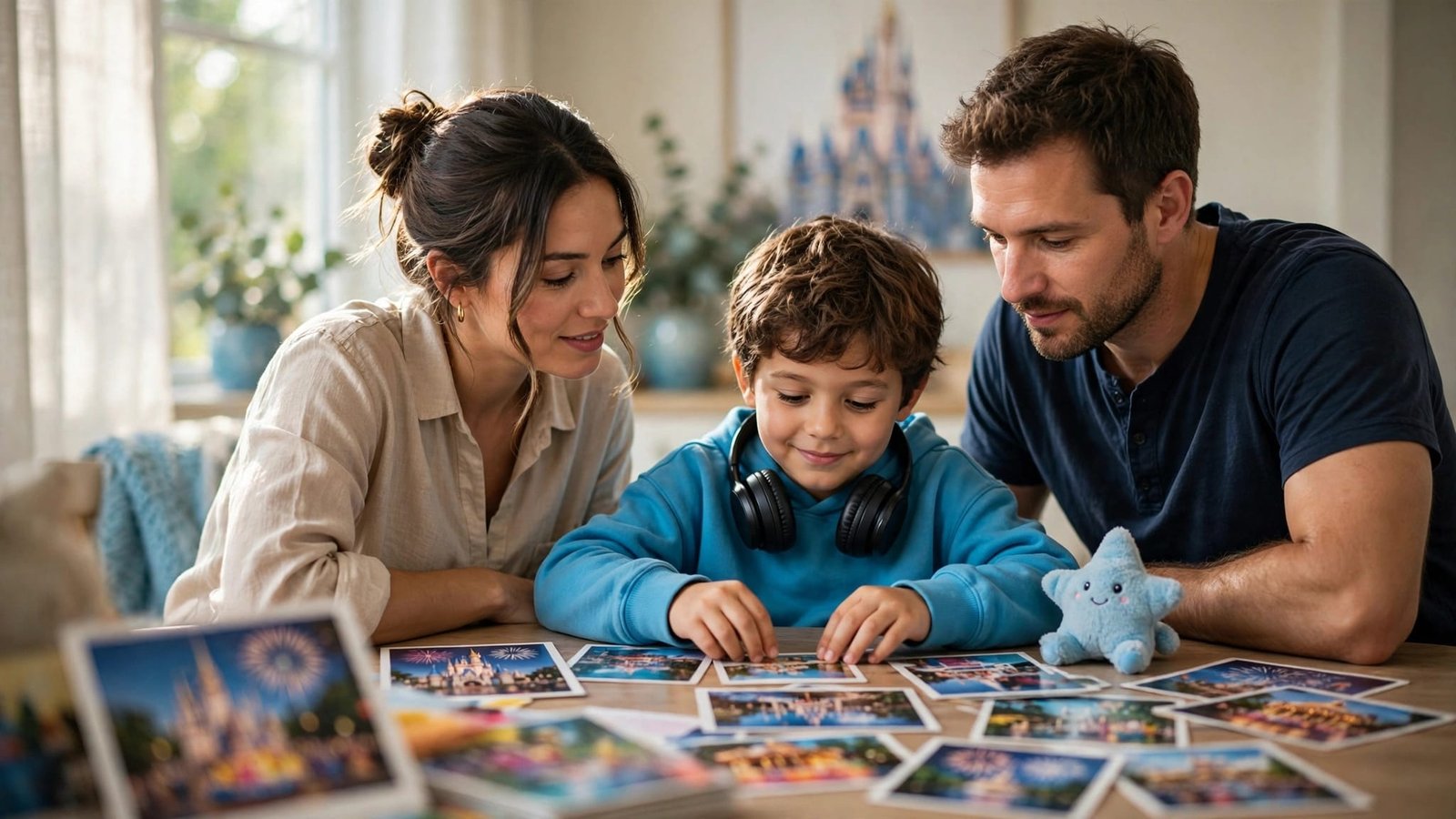
Your Walt Disney World Resort vacation starts before you pack a park bag, with a conversation about what your family needs. For neurodivergent families, a family meeting makes Disney trip planning autism-friendly by centering your child’s comfort, communication, and interests.
A short family meeting can help you choose priorities, prepare for sensory challenges, and agree on backup plans. Start with a comfortable setting and a few clear choices, then build in flexibility as you plan together.
Key Takeaways
- Include your child through familiar communication tools, pictures, or simple choices, without requiring them to sit through every discussion.
- Choose a small number of priorities, with meals, breaks, and transportation planned around your family’s needs.
- Review Disney’s current accessibility policies and assign adult responsibilities before departure, including what happens when someone needs to leave early.
Keep the Family Meeting Short and Supportive

Choose a Comfortable Setup
Try a 15- to 20-minute conversation as a starting point. Shorten it or divide it into smaller conversations if that suits your child.
Meet somewhere familiar, away from distracting noise. Bring a few resort photos, a park map, and your child’s usual communication supports. Keep a favorite comfort item nearby.
Adults can discuss prices, reservations, and policy details separately. Your child doesn’t need to process every booking decision to have a meaningful say.
Give Every Child a Voice
Ask concrete questions: “Would you like to see characters or look at animals?” Offer two manageable choices instead of a long attraction list.
Your child may communicate through speech, pointing, pictures, gestures, or a familiar AAC system, whether they’re verbal or nonverbal. Allow processing time without repeating questions quickly.
Invite each family member to share one vacation wish in the way that works best for them. Explain that family members may sometimes do different activities with different adults. Everyone gets a voice without making one child responsible for changes.
Start Disney Trip Planning With Your Child’s Needs
Write Down Comfort and Communication Supports
For neurodivergent families, Disney trip planning autism support starts with a short description of what helps your child during busy outings. Include sensory sensitivities, food preferences, bathroom needs, energy levels, and early signs of overload.
Be concrete. Your notes might identify difficulty with enclosed spaces, sudden announcements, wet clothing, or stopping a preferred activity.
Record how your child communicates “break,” “help,” “hungry,” and “too loud.” Keep those messages accessible during travel. Disney’s services for neurodivergent guests and Accessibility Planning Guide offer preparation guidance and visual-schedule ideas. These supports can help you respond if sensory overload or meltdowns occur, though preparation can’t guarantee they’ll be prevented.
Preview the Whole Journey
Preview the full journey to Walt Disney World Resort, including the theme parks, rather than focusing only on rides. Airport security, hotel elevators, transportation waits, and park entrances can feel unfamiliar.
Show short videos or photos when your child finds previews helpful. Ride-through videos can reveal darkness, movement, and sound, but they can’t reproduce the full sensory experience.
Practice manageable transitions at home, without recreating overwhelming conditions. Our ideas for practicing transitions before Disney can help you prepare for leaving activities, waiting briefly, and moving to the next part of the day.
Turn the Meeting Into a Preparation Timeline
Keep the timeline simple enough to revisit as you plan your Walt Disney World Resort trip. Separate adult tasks from previews your child may find helpful.
Use this sequence to organize your next steps.
| When | Family Planning Task |
|---|---|
| Before major bookings | Review sensory needs, spending limits, resort options, and transportation. Check current official Disney information about early park access and consider your family’s sleep and energy needs. |
| After booking | Preview the hotel and journey, choose park priorities, and check familiar food options in the My Disney Experience app. Consider whether a rest day would help your family. |
| Up to 60 days before a park visit | Review Disney’s DAS registration process and request a conversation if appropriate. |
| During the final weeks | Practice transitions, test familiar supports, and prepare contact information. |
| Before each park day | Confirm priorities, meals, break options, weather, and the return-to-hotel plan. |
The timeline should help your family prepare without creating daily homework.
Build a visual schedule around recognizable anchors, such as breakfast, transportation, an attraction, lunch, and a break. Include a change card or question mark. Explain that weather, closures, or energy levels may change the order, then revisit the plan together and adjust it.
Discuss DAS Without Making Promises
Check the Current Registration Process
At Walt Disney World Resort, Disney’s Disability Access Service, or DAS, supports eligible guests who can’t wait in conventional attraction queues for an extended period because of a developmental disability such as autism.
An autism diagnosis doesn’t guarantee approval. Disney determines eligibility through its own process, which is separate from other queue options, including Lightning Lanes.
Before relying on registration timing, who must attend, party size, or available options, verify each detail on Disney’s linked page and current official sources. Registration is available through live video chat up to 60 days before a park visit. The guest requesting DAS must be present, and there isn’t an in-person registration option.
Review Disney’s current DAS requirements and Accessibility Planning Guide before your conversation. Describe your child’s actual queue-related needs honestly rather than preparing a script intended to secure approval.
Agree on How Return Times Fit the Day
DAS provides a return time comparable to the current standby wait. It doesn’t promise eligibility or immediate boarding, and waiting may still be involved after returning.
Families can use the waiting period for an appropriate nearby activity, food, or rest. Keep walking distances and return logistics manageable.
Disney currently lists a DAS party as the registered guest plus up to three additional members. Larger families should verify current party rules before promising everyone will ride together.
A DAS return time changes where eligible guests wait. Your family still needs a plan for heat, crowds, transportation, and sensory recovery.
Choose a Hotel, Meals, and Budget That Support Breaks
Make Hotel Breaks Practical
A resort hotel at Walt Disney World Resort may make sense when its transportation and location suit your family’s park plans. Compare the actual journey back to your room, including waits, transfers, and walking inside the resort.
Staying at a Disney hotel doesn’t guarantee a quick or quiet return. Ask about room location, resort layout, and available transportation before booking.
If familiar breakfasts matter, check refrigeration and food-preparation facilities for the exact room category. A comfortable room and manageable return journey can be more useful than an ambitious attraction schedule.
Plan Meals and Protect Your Budget
Choose food around your child’s preferences and the dining environment. Character meals may involve noise, movement, and repeated interruptions. Give your child a preview before reserving one.
Disney’s mobile food ordering instructions explain how to place a mobile order at a participating location and select an arrival window through the My Disney Experience app. When the window opens, tap “I’m Here, Prepare My Order” to let the location prepare your mobile order. Pickup waits can still happen.
Set a spending limit that includes lodging, tickets, transportation, meals, sensory supplies, and a backup fund. Discuss optional purchases separately. Avoid buying extra park days or add-ons solely to fit everything in.
Plan Sensory Breaks and Separation Safety
Choose Break and Exit Options
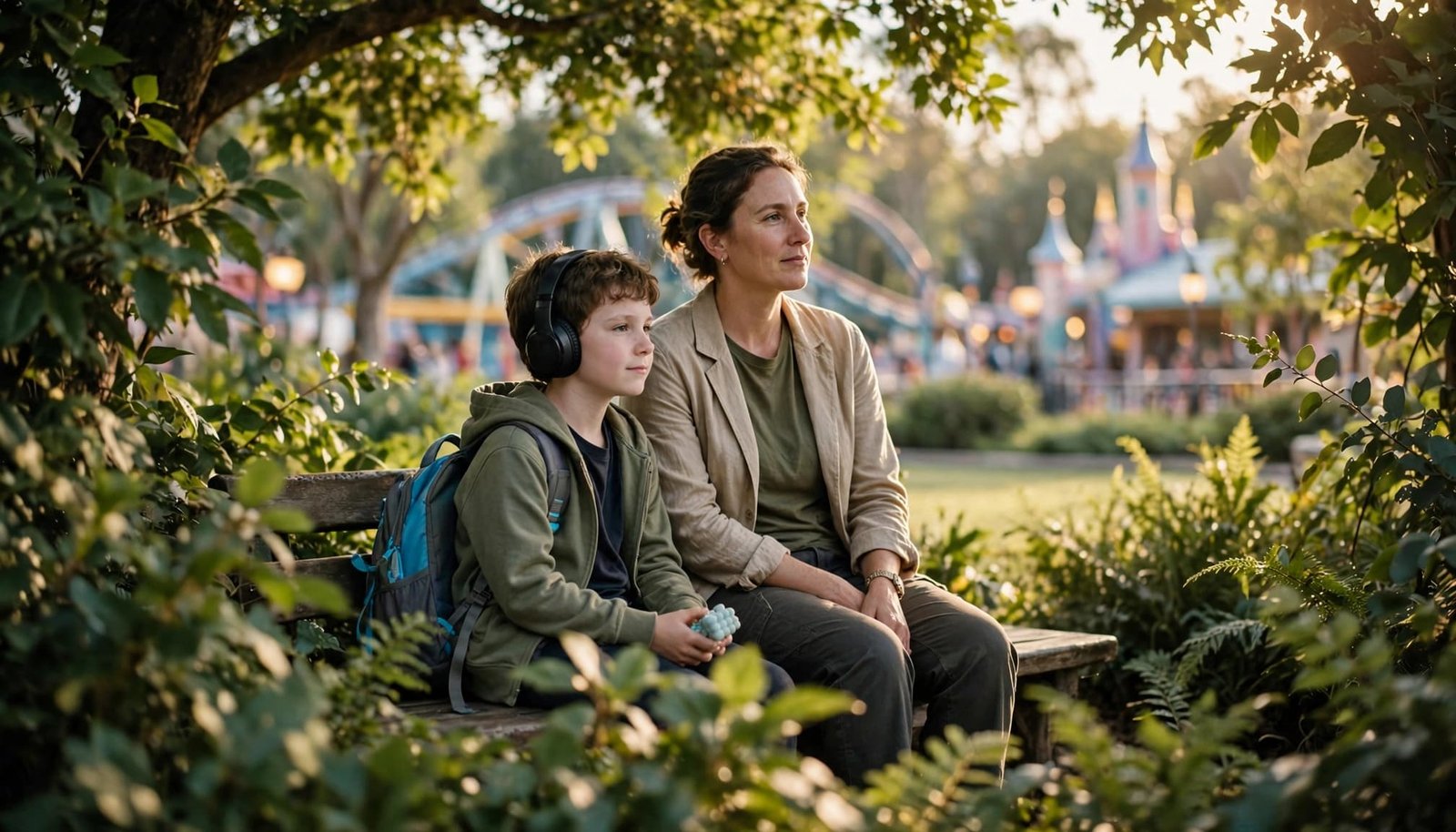
Decide what a useful break looks like for your child. Shade, a snack, less conversation, or returning to the hotel may help more than another attraction.
Review Disney’s Accessibility Planning Guide. When you arrive at Walt Disney World Resort, ask a cast member about nearby break areas at Magic Kingdom, EPCOT, Hollywood Studios, or Animal Kingdom.
Crowds and conditions change. Quiet areas aren’t guaranteed sensory rooms, so identify a second option and a clear route toward the park exit.
Agree on Adult Roles and Safety
If your child elopes or may wander, assign one adult to provide close supervision during queues, meals, and transportation transitions. Clearly say when another adult takes over.
Take a current photo each morning and carry discreet identification with a caregiver’s phone number. Choose a reunion location for family members who can use one independently.
If your child moves out of sight, notify a Cast Member immediately. Identification and meeting points supplement active supervision.
Before entering a queue, agree on who stays with your child, who supports siblings, and how you’ll request staff assistance if someone needs to leave.
Pack Familiar Supports and Bring Your Ebook
Use the meeting to identify what belongs in your park bag. Start with items your child already knows, such as noise-cancelling headphones, a preferred fidget, familiar snacks, sunglasses, and communication supports.
Keep medication, chargers, and necessary care supplies accessible. Try new equipment before departure rather than introducing it during a difficult park moment.
Our Disney autism ebook on Amazon and Disney World autism guide on Etsy offer family-focused planning support. Use the ideas that fit your child and budget. These are independent resources, not official Disney guidance. Qualifying purchases may earn a commission.
Visit our travel supply shop for optional travel items, including a stroller, park-day supplies, and cleaning supplies for unexpected illness on vacation. Check Disney’s current guidance before choosing equipment.
Buy what fills a real need. Familiar supports don’t have to be expensive, and your family may already own much of what you’ll use.
Close the Meeting With Three Clear Decisions
Before finishing, write down the decisions that will guide your next steps.
- Choose one or two priorities for each park day, with permission to skip them if needed.
- Assign adult responsibilities for reservations, accessibility research, packing, supervision, and sibling support.
- Agree on a break signal, an early-exit plan, and when you’ll review the plan together.
Keep this page somewhere both adults can access.
At K&S The Travel Crusaders, our personalized Disney planning support draws on firsthand family experience, real-world travel planning, and Kellie’s B.A. in Child Development. We help families connect these decisions with resort, dining, and transportation choices.
Frequently Asked Questions
What If My Child Doesn’t Want to Attend?
Offer a smaller way to participate, such as choosing between two photos or sharing preferences during a familiar activity. Adults can handle the remaining discussion. You can return to the choices later without making attendance a requirement.
Should We Plan Fireworks or Character Meals?
Discuss your child’s interest and sensory needs first. Preview the experience, consider available exits, and keep participation optional. Headphones may help with sound, but they won’t remove crowds, lighting effects, or unexpected interactions. Leaving before an event is a valid plan.
Build a Disney Vacation That Fits Your Family
A family meeting gives your child a voice and helps adults agree on practical support. The strongest plan protects comfort and flexibility, even when the day changes.
Start with a few choices, clear responsibilities, and a realistic break plan. Your family can enjoy Disney without completing every attraction or staying until closing.
Leave a Reply