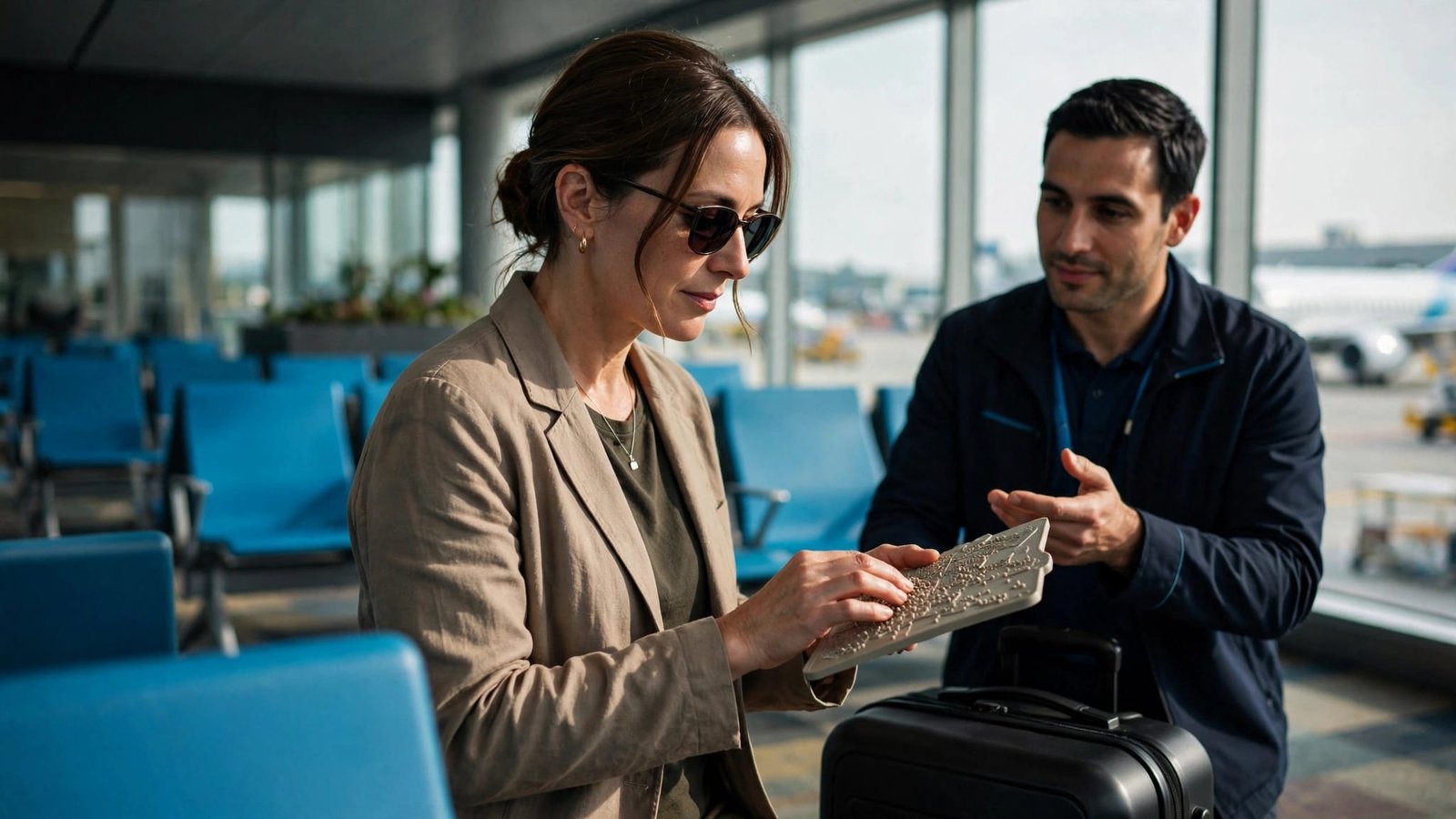
Low vision travel is easier to manage when you plan each handoff: airport arrival, security, boarding, ground transportation, and hotel check-in. If you’re visually impaired, describe the help you want in practical terms, and keep the plan available in a format you can use comfortably.
Accessible travel should respect your independence and preferences, with support tailored to what works for you. Start with the parts of the travel day where clear directions, extra time, or a familiar routine will help most.
Key Takeaways
- Request airport assistance when booking, with support arranged for departures, connections, and arrivals.
- Choose hotel features around your vision, lighting preferences, and daily routine, rather than an “accessible room” label.
- Carry familiar tools, accessible contact information, and a backup plan that doesn’t depend on your phone.
You can travel independently and still request assistance. Accepting help for an unfamiliar terminal doesn’t mean giving up control of your trip.
Build Your Low Vision Travel Airport Plan
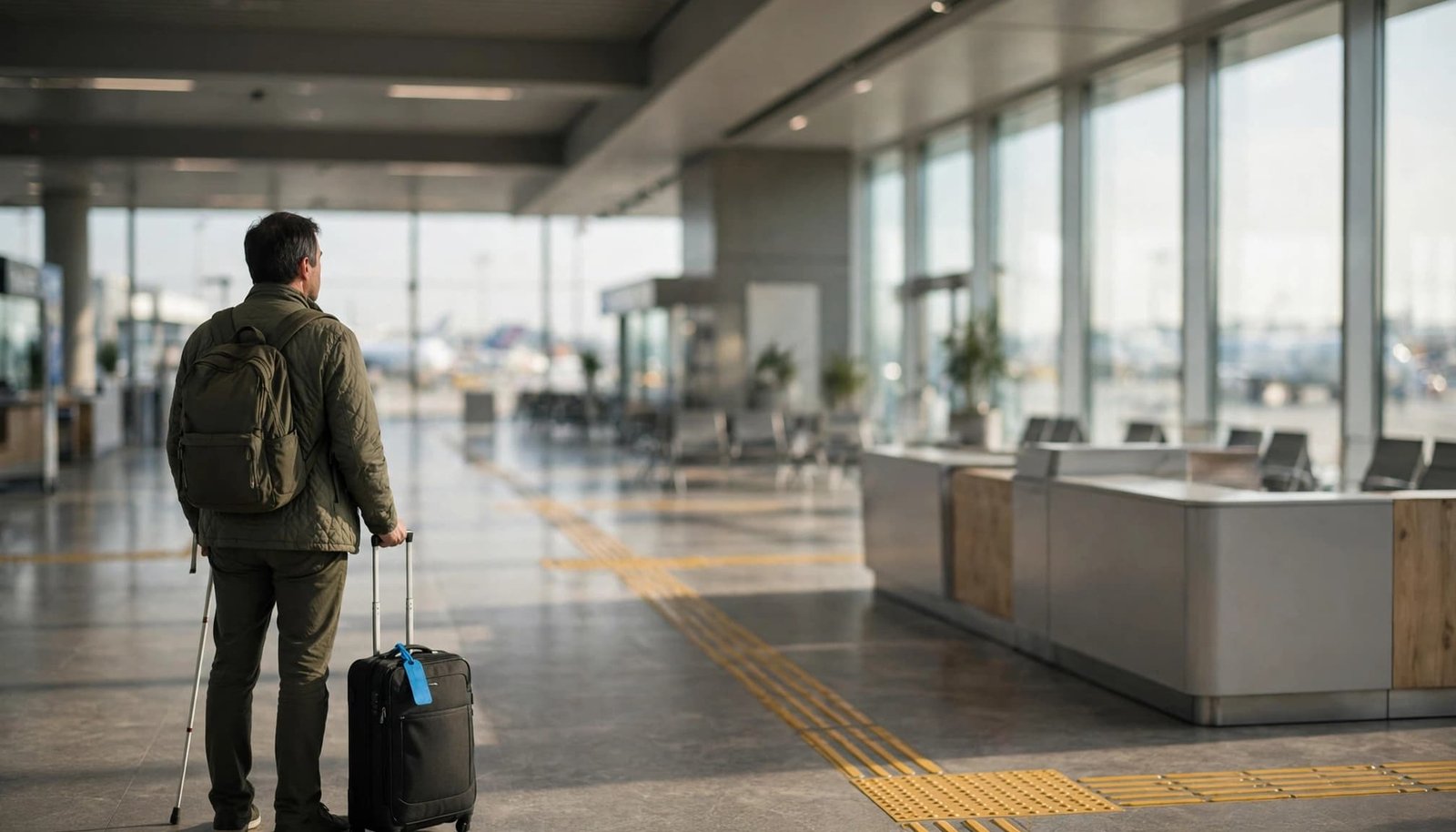
Request the Support You Need
Start your airline call with: “Hi, I’m visually impaired.” Then describe the help you want: “I need a walking guide through the terminal, help finding my connection, and assistance reaching baggage claim.”
Request meet-and-assist at least 48 hours ahead as a planning target. Some airport programs use that notice period. However, U.S. airlines generally can’t require advance notice for ordinary wheelchair and guided assistance.
Add airport assistance during booking, then save the reservation notes. Include every flight segment. State whether you want walking guidance, wheelchair assistance, or both.
Confirm directly with the airline or airport where meet-and-assist begins and how staff will hand you off.
A letter from your eye-care provider stating your diagnosis can help explain your needs. It’s optional for ordinary U.S. guided assistance, not proof you must provide to qualify.
Separate Airline Help From Security Help
TSA Cares passenger support helps travelers prepare for security screening. Request support at least 72 hours before departure through TSA Cares or call 855-787-2227.
TSA assistance covers the checkpoint. It doesn’t replace airline assistance through the terminal.
At each handoff, explain your preferred guiding method. Ask staff to identify themselves and describe changes in direction, stairs, and obstacles. Request spoken boarding updates and an explanation of the aircraft’s call button and restroom location.
Your airport plan needs a clear handoff after landing, including baggage claim and the ground transportation pickup point.
Book Hotel Features That Work for Your Vision
Describe Lighting, Contrast, and Controls
An accessible room may have mobility features, communication features, or both. That label doesn’t tell you whether the lighting or layout works for you.
When booking, you might describe yourself as visually impaired, then explain your specific needs. Request adjustable lighting, a clear walking route, and clear instructions for the thermostat, telephone, safe, and bathroom controls.
If central vision loss makes print difficult, prioritize accessible instructions and readable controls. If peripheral vision loss affects obstacle detection, prioritize uncluttered routes. Your own experience should guide the request.
Our accessible hotel room questions cover additional mobility, bathroom, and communication needs.
Balance a Short Route With a Quiet Location
A room near the elevator reduces walking, but elevator traffic can interrupt rest. A quieter room farther away may require a longer hallway route.
Describe the balance you need. Include distance to breakfast, transportation pickup, and the lobby.
Request the agreed room features in writing and save them with your reservation. A large resort with several buildings may require more orientation than a smaller property. Room location matters as much as the room itself.
Make Hotel Arrival an Orientation Stop

Ask a staff member to walk the route between reception, the elevator, your room, and breakfast. Request useful landmarks and distances instead of directions such as “over there.”
Inside the room, locate switches, charging outlets, the bathroom, and the telephone before unpacking. Have staff explain the emergency exit route and assistance procedures.
Keep luggage out of walking paths. Put your cane, glasses, magnifier, medications, and phone in consistent places.
Ask housekeeping to leave furniture and personal items where you placed them. If you prefer fewer room visits, request supplies without routine entry.
If the room doesn’t match the features recorded in your reservation, raise the issue before unpacking. Keep arrival day light so you have time to settle in without rushing.
Pack Familiar Tools and a Phone Backup
Make Important Items Easier to Identify
Mark luggage with bright tags or colored duct tape. Add tactile dots to passport covers and document sleeves without covering official information or altering passport pages.
Carry a familiar magnifier, spare glasses, charging equipment, and any lighting aid you already use. Bring a white cane if you use one, and keep essential items in your carry-on.
Save your itinerary and hotel address in large print, audio, or another accessible format. Share the itinerary with a trusted person at home.
For preparation beyond packing, your state’s Office of Vocational Rehabilitation or State Commission for the Blind can connect you with an orientation and mobility specialist.
Match Technology to the Task
Aira connects blind and low-vision travelers with trained visual interpreters. It’s free at many participating airports through sponsored access; other locations or uses may require paid minutes or a subscription. Check participating-airport availability and access costs before departure.
Be My Eyes provides remote visual assistance. Test Be My Eyes before travel to confirm it works on your phone. Seeing AI reads text and describes surroundings. GoodMaps offers indoor navigation where mapping is available.
Envision Glasses and OrCam support tasks such as reading and identification. eSight uses electronic vision enhancement. Pack the Envision Glasses charger and any accessories you use. These products serve different needs.
Blind travelers who use visual-assistance technology can choose tools based on the tasks they want help with. Availability and features vary, and apps or devices don’t guarantee navigation or replace mobility skills.
Practice before departure. Keep enough environmental sound available to hear announcements, traffic, and people around you.
Plan Transit Around Your Actual Route
Ask train customer service to guide you to the correct track and boarding position. Request a seat near a door when suitable, and tell staff your destination. Avoid waiting at the platform edge.
Public transportation can support independent travel when the route fits your skills and comfort. An orientation and mobility specialist can help you prepare for unfamiliar stations and street crossings.
London buses provide audible stop announcements. Tube stations use tactile paving and audible information, although layouts and facilities vary. Transport for London’s sight-loss guidance explains available support.
For sightseeing, distinguish ordinary audio guides from audio description designed for people with low vision. Check whether an attraction’s audio guides are available in an accessible format or can be downloaded in advance. Barcelona’s Sagrada Familia descriptive audioguide is available in English, Spanish, and Catalan.
Build your day around manageable journeys rather than a city’s general reputation for accessibility. Allow time for crowded platforms, unfamiliar entrances, and rest breaks.
Give Guide Dog Travel Its Own Plan
Airline access and international animal-entry requirements are separate. Airline service-animal forms don’t satisfy another country’s border rules.
Your itinerary needs to account for airline policies, destination and transit-country requirements, vaccinations, health certificates, possible quarantine, and return-to-U.S. rules.
USDA APHIS international travel guidance explains country-specific requirements. A USDA-accredited veterinarian can arrange the required veterinary preparation and documentation.
In the aircraft cabin, your dog must remain within its permitted space and can’t occupy a passenger seat or block an aisle.
Build relief breaks into airport arrival, connections, and hotel arrival. Keep feeding supplies and essential documents accessible throughout the travel day.
Compare Independent Trips, Tours, and Cruises
The right choice varies by traveler; blind travelers may prefer independent trips, guided tours, or cruises based on their needs and budget. Budget separately for transfers, guides, and assistance beyond included services.
Mind’s Eye Travel includes sighted guide assistance, boarding-pass preparation, cruise bag tags, embarkation help, and braille menus when available. Traveleyes pairs blind and sighted travelers, with sighted participants guiding in exchange for subsidized trip costs.
Compare the included support, not only the headline price. A lower-priced independent itinerary may leave more assistance for you to arrange.
Cruises can be a comfortable first international option because layouts stay familiar and staff assist passengers with disabilities. Ports, gangways, and tender boats can still add challenges. Our accessible cruise planning guidance covers cabin and itinerary considerations.
Companions need breaks, too. Sighted-guide fatigue is real. Agree on guiding time, independent activities, and time to relax so one person isn’t responsible for every task.
Support for Families With Additional Needs
For families combining low vision and autism-related needs, predictable transitions and rest time deserve space in the same plan.
Our Disney World with Autism: The Complete Family Guide is available as a PDF guide on Etsy and through our Amazon book listing. It covers DAS preparation, quiet spots, pacing, and family planning.
Our travel essentials shop includes strollers, practical travel supplies, and cleaning supplies for times when someone gets sick on vacation. Pack around your family’s needs without adding unnecessary luggage.
Frequently Asked Questions
Can I Request Help Without Using a Wheelchair?
Yes. Walking guidance is a separate form of assistance. Explain that you can walk but need help locating gates, handling terminal changes, or reaching transportation.
Your request should describe the support you need rather than assume that wheelchair service is the only option.
What Happens if My Gate Changes?
Tell the gate agent you’re receiving guided assistance and need spoken updates. If a change occurs, request an escort to the new gate.
Keep the airline’s contact information accessible. Don’t leave an agreed meeting point without communicating where you’re going.
A Comfortable Trip Starts With Clear Handoffs
A helpful low vision travel plan supports accessible travel with clear handoffs at each transition. It also leaves room for rest and the choices that matter to you.
We offer personalized special-needs travel planning for families who want help coordinating their vacation. Your needs should guide the arrangements, so you can spend less energy managing uncertainty and more time enjoying your trip.
Leave a Reply