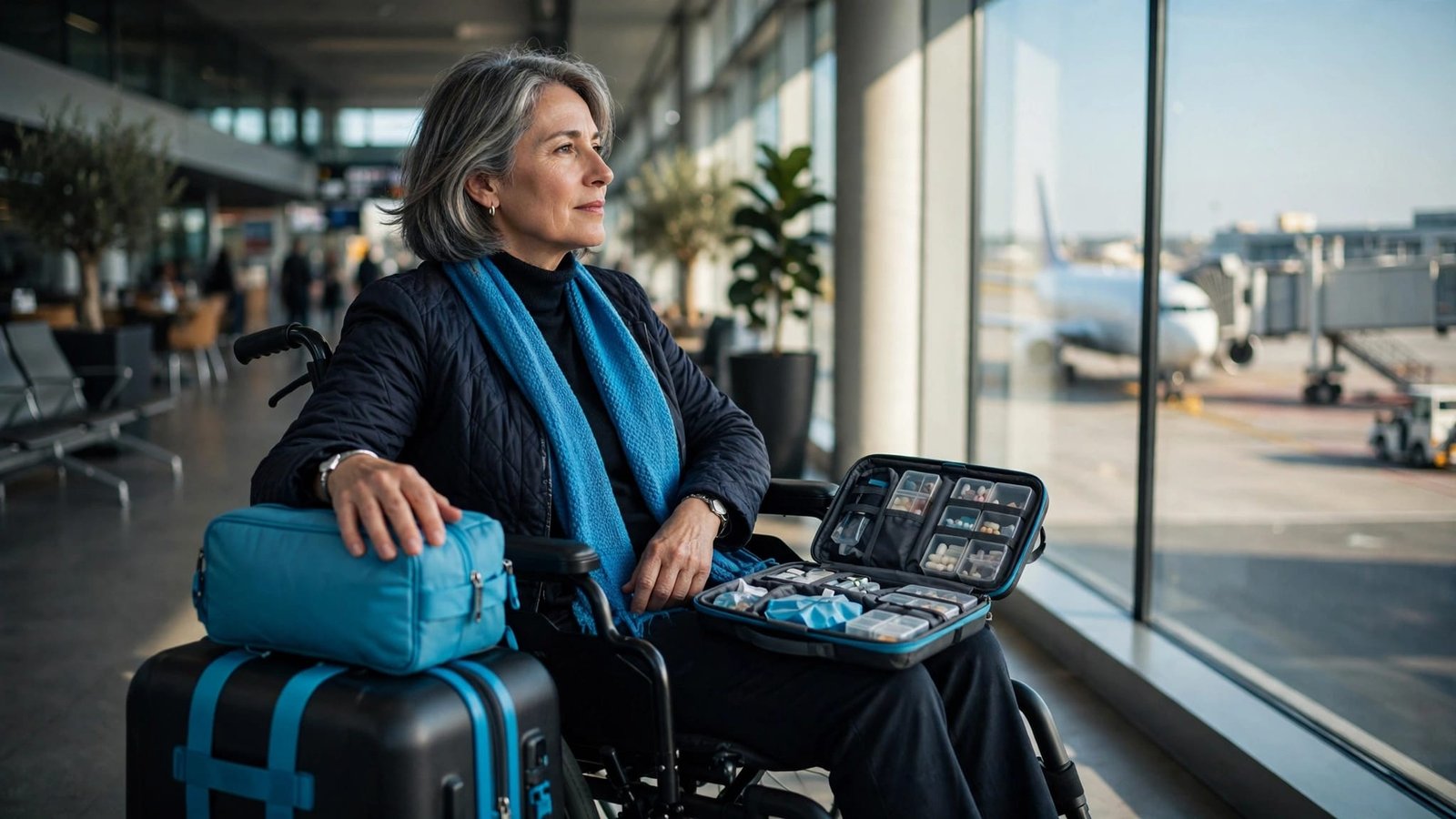
A trip is more manageable when your plans include rest, cooling, prescription access, and the right mobility support. A comfortable trip starts with a realistic pace, rather than a schedule that fills every hour.
Fatigue can change what feels possible during a travel day, even when you’re excited about your vacation. Start with the support you need, then build your transportation, accommodations, and activities around it.
Key Takeaways for a More Comfortable Trip
- Request airline assistance early, and explain your boarding needs again at the gate.
- Keep prescriptions, cooling supplies, and medical letters with you throughout the journey.
- Protect your energy with shorter activity days, indoor cooling breaks, and recovery time after returning home.
Before Booking: Build the Trip Around Your Energy
Choose Transportation That Leaves Room to Rest
A nonstop flight reduces connections and mobility-equipment handoffs. However, a very early departure may cost you needed sleep. Compare the whole travel day, including your arrival time, transfers, and when you’ll reach your room.
If you need a connection, allow room for bathroom stops, meals, and assistance between gates. A tight connection can become exhausting before your vacation begins.
Talk with your MS care team about recent symptom changes and how travel affects treatment timing across time zones. Travel planning doesn’t replace an individual medical plan.
Choose Specific Accessibility Features
An “accessible room” doesn’t describe every feature you may need. Request the details that matter: a roll-in shower, grab bars, suitable bed height, elevator access, and enough space for your mobility device.
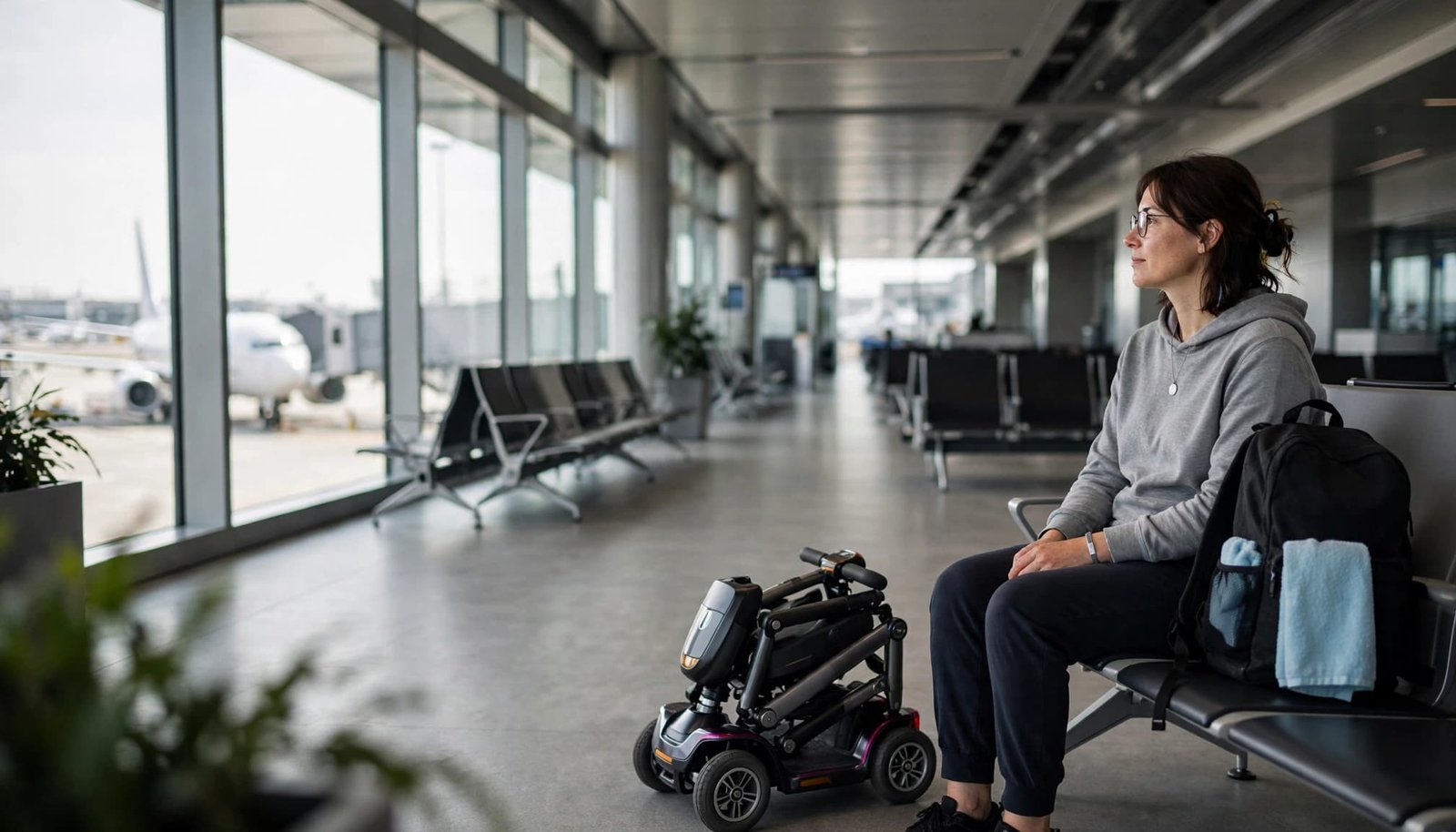
If you use a scooter, arrange accessible transportation that can accommodate it, separately from airport mobility assistance. Include room access, nearby meal options that fit your diet, and an easy route back for afternoon rest.
Our special needs travel planning helps coordinate accommodations, transportation, and a comfortable pace. Travel insurance also deserves attention, since pre-existing-condition coverage and medical evacuation benefits depend on the policy.
Request Special Assistance Before Departure
Describe the Help You Need
Contact the carrier’s accessibility or special assistance line after booking. Explain whether you need curbside assistance, a wheelchair, transfer support, or help during connections. Services and meeting locations differ.
Request a bulkhead seat through the carrier if the extra space meets your disability-related needs. Carriers hold certain seats for qualifying accessibility needs, but a bulkhead isn’t always the most comfortable choice. Fixed armrests or overhead-only bag storage may create difficulties.
Request TSA Cares screening support at least 72 hours before a U.S. flight when possible. This is separate from boarding assistance.
Understand Preboarding and the Sunflower Lanyard
Under 14 CFR Part 382, covered carriers must offer preboarding to passengers with disabilities who self-identify at the gate as needing extra time or assistance to board, stow accessibility equipment, or get seated.
You can request preboarding by saying, “I have a disability and need extra time to board and get seated.” An invisible disability still qualifies.
The Hidden Disabilities Sunflower program helps signal that you may need patience, time, or assistance. Participating airports offer free lanyards or accessories to travelers with hidden disabilities and caregivers. The program reports 340 participating airports across 70 countries.
A sunflower lanyard doesn’t replace requesting assistance or identifying your preboarding needs.
The Week Before: Pack Without Exhausting Yourself
Spread packing across about a week. Leaving everything until the final evening can use energy you need for departure.
Keep your packing list in three practical groups:
- Gather technology, including chargers, mobility-device charging equipment, a power bank, and downloaded itineraries.
- Set aside comfort items such as cooling towels, comfortable layers, headphones, snacks, and a refillable water bottle.
- Finish packing-related tasks, including charging devices, digital check-in, and saving assistance details offline.
Protect a full night’s sleep before your flight whenever possible. Give your companion specific responsibilities, such as managing luggage or keeping transfer information available.
Pack familiar foods that fit your usual diet, such as protein bars, trail mix, fruit, or hard-boiled eggs kept safely chilled. Request an airline meal that fits your diet, but carry backup food in case it doesn’t arrive.
Our travel supplies shop includes strollers, cleaning supplies, and practical items for families handling illness away from home.
Keep Medication Close and Temperature-Safe
Pack Documentation With Your Medication
Keep all prescriptions, prescription paperwork, and medical letters in your carry-on rather than checked luggage. Include a medication list with doses, allergies, your clinician’s contact information, and an emergency contact.
Original labeled containers make identification easier, especially internationally. A clear plastic freezer bag can keep the containers together. Prescription bottles aren’t generally required for screening, but destination laws may have different requirements.
International travel may require import permits, quantity limits, or additional documentation for prescriptions. Arrange required permissions for destination and transit countries before departure.
Pack a clinician-approved extra supply in case of delays. If your bag is gate-checked, remove the medicine kit first.
Plan Cooling for Every Transition
Follow your medication’s exact storage instructions. Your pharmacist can explain safe temperature ranges, room-temperature allowances, and what to do after a temperature problem.
Use a suitable insulated case and a thermometer when tight temperature control is required. Protect medicine from freezing as carefully as you protect it from heat. Don’t place it directly against an ice pack unless its instructions allow that.
TSA permits medically necessary gel ice packs, including reasonable quantities that are melted or slushy. Syringes may travel in carry-on baggage when accompanied by injectable medicine. Declare medical liquids and related supplies before screening.
Arrange appropriate refrigeration at your destination. A beverage cooler may not maintain safe storage temperatures for the medicine, and onboard refrigeration shouldn’t be your only plan.
Prepare Your Wheelchair or Scooter for the Flight
Give the carrier your device’s dimensions, weight, battery type, and handling instructions. Include the scooter’s model, photos, removable parts, fragile controls, and an emergency contact in a short equipment profile.
Carriers may use an online assistance form and issue a reference number. Save it with your reservation.
For a folding scooter with a removable battery, the lithium-ion battery travels in the passenger cabin, protected against damage and short circuits. FAA mobility-device battery guidance includes a 300-watt-hour limit for removable battery units. An overhead bin isn’t a universal requirement; cabin placement follows the applicable handling instructions and crew direction.
Photograph your device before handing it over for the flight. Keep essential removable equipment with you when permitted.
Inspect your device before leaving the arrival airport. Report damage, missing parts, or loss of function immediately, even when you’re tired.
During the Trip: Manage Heat and MS Fatigue

Make Cooling Part of the Daily Plan
Heat can temporarily worsen MS symptoms. The National MS Society describes these temporary changes as pseudo-relapses or pseudo-exacerbations. They don’t automatically mean new disease activity.
Pack a cooling vest or cooling towels. Schedule outdoor activities during cooler mornings or evenings, with air-conditioned breaks between them.
Grounded aircraft can become uncomfortable when air conditioning is reduced. Keep cooling supplies within reach and tell the crew promptly if heat is affecting you.
Symptoms that are new, severe, or don’t improve after cooling and rest need medical advice.
Plan Fewer Activities, With Easier Exits
Start with one main activity and leave room to adjust. Choose seated experiences, nearby meals, and transportation that shortens long walks.
Use mobility support, including a scooter, when it helps preserve energy. You don’t need to wait until you’re exhausted.
Discuss the plan with your companion before heading out. Agree on a simple way to say you need rest, a bathroom, or a return to your room.
Include the return journey in every outing. An activity may feel manageable until you’re tired and still have a long trip back.
Protect Sleep and Leave a Recovery Day
Crossing time zones can add jet lag to existing MS fatigue. Keep your arrival day light and avoid an ambitious evening schedule.
The CDC’s jet lag guidance recommends shifting bedtime toward the destination schedule before departure. For eastbound travel, that means earlier sleep; for westbound travel, later sleep.
After arrival, use daylight and a regular sleep schedule to help your body adjust. Keep naps short when possible, and follow your clinician’s instructions for medication timing.
Plan a recovery day after returning home. Leave unpacking, errands, and demanding appointments for later when your schedule allows. The journey home deserves the same thoughtful pacing as the vacation.
Questions About Traveling With Multiple Sclerosis
Does TSA PreCheck Replace Disability Assistance?
TSA PreCheck provides expedited screening lanes for enrolled, eligible travelers and can reduce some screening steps. It doesn’t guarantee a short wait or replace wheelchair assistance, TSA Cares, or airline preboarding.
Your assistance plan should still account for any difficulty standing, walking, or moving through security.
Will Staff Help With Personal Care?
Airline assistance can include airport mobility support, boarding help, and connections. It doesn’t include administering medication, feeding, or personal bathroom care.
Arrange a companion or caregiver when you need those services. An onboard wheelchair doesn’t mean the aircraft lavatory is fully accessible.
What If Our Family Also Needs Autism Planning?
For Disney trips that include a child with autism, our family guide supports sensory preparation, transitions, and flexible park plans. It’s available as an Etsy Disney autism PDF guide and through our Amazon Disney autism guide listing.
These resources complement, rather than replace, your MS treatment and mobility plan.
Plan for Comfort, With Room to Adjust
Traveling with multiple sclerosis works better when rest and accessibility are part of the original plan. Keep essential supplies close, arrange assistance early, and leave enough flexibility for changing energy levels.
We can help you build a vacation around your mobility needs, preferred pace, and family routines. Your itinerary should support a comfortable trip, with time to enjoy being there.
Leave a Reply