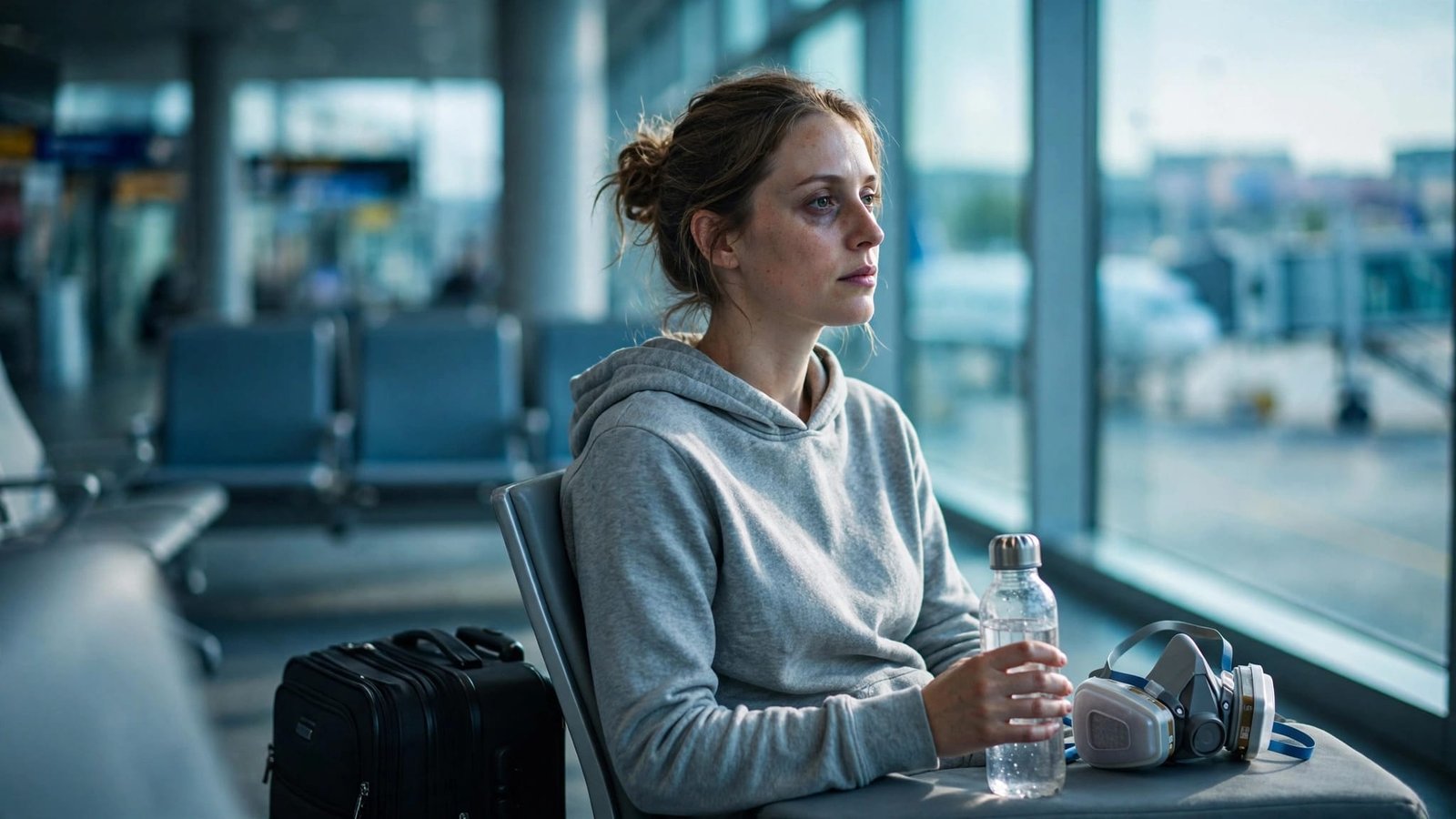
Traveling with long COVID may be possible, but your plans need to fit your current symptoms and energy limits. Rest, flexible reservations, and practical assistance can reduce demands, although they can’t guarantee you’ll avoid a setback.
You deserve a vacation that leaves room for your actual needs. Start with what you can comfortably manage at home, then build a trip that gives you support and room to adjust.
Key Takeaways for a More Comfortable Trip
- Plan around your usual energy limits, including mental effort and time spent standing.
- Request airport assistance for departure, connections, and arrival.
- Keep arrival day light and protect recovery time after returning home.
- Reduce infection exposure with a well-fitting respirator and outdoor meals.
- Postpone travel when symptoms are unstable or you may be contagious.
Before Booking, Decide Whether Travel Fits Your Health
Recognize When Fatigue Includes PEM
Post exertional malaise (PEM) is a worsening of symptoms after physical, mental, or emotional effort. It often starts 12 to 48 hours later and can last days or longer.
That delay matters. Feeling comfortable during an outing doesn’t tell you how you’ll feel tomorrow.
If showering, preparing meals, or brief appointments already trigger setbacks, fatigue and other symptoms may worsen during a travel day. Shorter trips close to home may offer more manageable choices.
Get Medical Support for Unstable Symptoms
Discuss flying with your clinician if you have breathing problems, heart disease, fainting, or poorly controlled symptoms. New chest pain, severe breathlessness, or fainting needs prompt medical attention.
Autonomic dysfunction can cause dizziness, rapid heart rate, temperature sensitivity, and exercise intolerance. Heat and prolonged standing may add difficulty.
Long COVID can follow COVID-19, and care may involve several specialties. Rehabilitation should account for PEM rather than require fixed increases in exercise. Avoid medical-tourism providers who guarantee recovery.
Build the Trip Around Rest
Count the Whole Travel Day
With long COVID, budget for fatigue across the full travel day. Include packing, getting ready, transportation, queues, baggage claim, and the journey to your room. A short flight can still create a long day.
Choose departure times that protect sleep. A nonstop route reduces connections, but an early departure may cost more energy than it saves.
Leave fewer commitments before departure and after returning home. Pack gradually instead of saving everything for the night before.
Rest Before Symptoms Build
Keep arrival day free of sightseeing. Plan seated breaks and an easy route back to your room.
Noise, bright lights, conversation, and decision-making also use energy. Save documents in one place and give a companion responsibility for luggage or transportation.
Budget for the return journey and delayed recovery from post exertional malaise. Reaching an attraction comfortably doesn’t mean you’ll have enough energy to get back.
If symptoms worsen, reduce activity rather than trying to maintain the original itinerary. Unused reservations are less important than your health.
Arrange Airport Assistance for Every Stage
You can request wheelchair assistance even if you can walk short distances. Explain the functional need: “I can walk briefly, but prolonged standing makes my symptoms worse.”
Under the DOT’s wheelchair assistance guidance, covered airlines provide disability-related assistance without an additional charge. Ordinary wheelchair assistance generally doesn’t require advance notice or medical documentation.
Add requests when booking, then identify yourself at check-in and the gate. Include connections, baggage claim, and the pickup area.
Assistance can reduce walking and standing. It doesn’t guarantee no queues or a quiet waiting room.
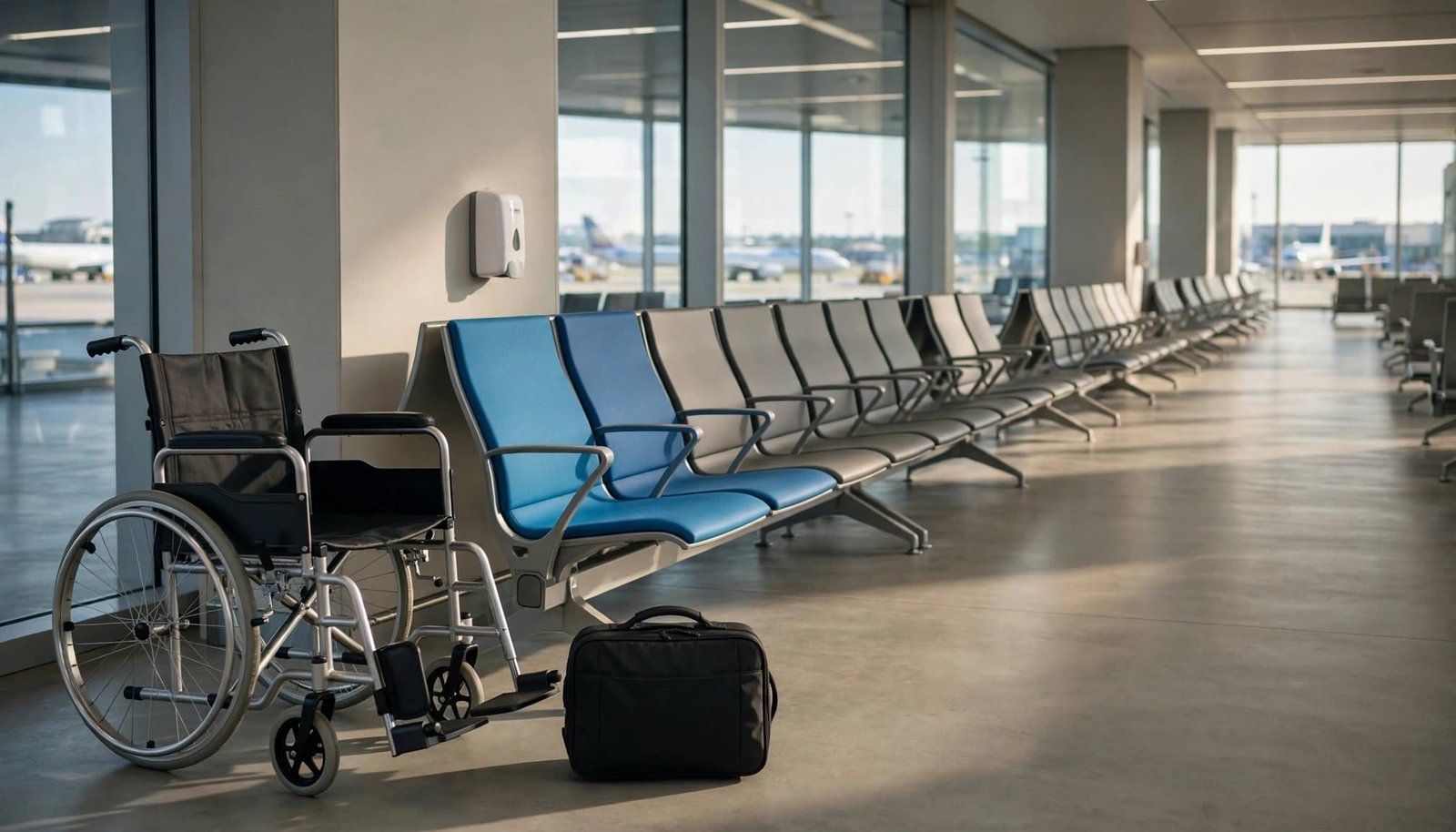
TSA Cares handles screening support separately. Request it at least 72 hours before a U.S. departure when possible. Airline staff don’t provide personal care, so bring a caregiver if needed.
Your airport wheelchair request also doesn’t include a vehicle to your hotel. Our wheelchair airport transfer guidance explains those separate arrangements.
Understand What Flying Adds to Your Symptoms
Cabin Pressure and Dry Air
The CDC Yellow Book’s air travel guidance reports typical cabin humidity of 10% to 20%. Dry air can irritate eyes and airways.
Most cabins operate at an altitude equivalent of 6,000 to 8,000 feet. FAA rules generally limit that equivalent altitude to 8,000 feet, or 2,440 meters.
Individual tolerance and needs vary with long COVID, so discuss supplemental oxygen with your clinician. Travelers who need supplemental oxygen should notify the airline at least 72 hours before departure. Personal oxygen cylinders are prohibited onboard; permitted portable oxygen concentrators are a separate option. Confirm supplemental oxygen arrangements for every leg.
Pressure changes during ascent and descent can cause middle ear barotrauma. Ear, sinus, or nasal infections and severe congestion may justify postponing. Ask a clinician before using decongestants, especially with rapid heart rate or blood pressure problems.
Filters Help, but Exposure Still Happens
Large jets recirculate 35% to 55% of cabin air through HEPA filters, which capture 99.97% of particles at least 0.3 micrometers across. Ventilation refreshes cabin air 20 to 30 times hourly. Filtration and ventilation reduce airborne particles, but neither eliminates close-range exposure.
For historical context, CDC reports 4.5 billion passengers and nearly 47 million international flights in 2019. In 2020, totals fell to 1.8 billion passengers and 22 million flights. Those figures don’t measure an individual’s infection risk.
Reduce Reinfection Risk Throughout the Journey
Wear a high-quality, well-fitting N95 or other suitable respirator in crowded indoor spaces. Fit matters, and no mask provides complete protection. California public health’s mask selection guidance explains protective options.
Keep it on during boarding and deplaning, when crowding, reduced ventilation, and limited cabin air circulation can increase exposure. Cabin air filtration doesn’t prevent close-range exposure from nearby passengers. Eating and drinking require removing your mask, so plan meals outside crowded indoor areas when practical.
Carry hand sanitizer containing at least 60% alcohol. Discuss recommended vaccinations with your clinician.
One Reddit traveler described wearing a KN95 from airport arrival to their resort room, eating outdoors, and using TSA PreCheck and Global Entry. They also described first-class seating to avoid a seatmate and saline spray before and after travel.
Those are personal experiences, not a proven plan to prevent reinfection. Premium seating doesn’t guarantee separation, and saline spray isn’t established protection against infection. Expedited screening programs don’t replace disability assistance.
Choose Lodging That Makes Rest Easier
A comfortable room is only part of the plan. Consider the distance between your room, transportation, meals, and the elevator.
Choose dependable elevators, manageable walking routes, nearby food, and temperature control. An “accessible” room label doesn’t describe every feature you may need.
When traveling with long COVID, room service, grocery delivery, or a kitchenette can support rest and reduce unnecessary outings. Outdoor dining provides another option without adding a long journey.
Keep medications, your medication list, masks, tests, snacks, and familiar symptom-management supplies in your carry-on. Use hydration or compression products according to your established care plan.
Our travel essentials shop includes strollers, practical travel supplies, and cleaning supplies for times when someone gets sick on vacation. Pack what supports your needs without adding unnecessary luggage.
Choose flexible reservations where possible. Travel insurance may have pre-existing-condition exclusions, covered-reason requirements, and limits on illness-related cancellation.
Give Family Members a Clear Support Plan
Family travel is easier when companions understand that plans may change. Agree on who handles bags, transportation, meals, and communication when you’re tired.
Our personalized special-needs travel planning can help coordinate accommodations and transportation around your family’s needs.
If your family also includes a child with autism, our Disney World guide supports sensory preparation, routines, and flexible park planning. It’s available as a Disney autism PDF on Etsy and through our Amazon Disney autism guide listing.
Have a Plan for Illness Away From Home
New respiratory symptoms deserve attention, including possible COVID-19, even when you already live with long COVID. Consider testing before departure. CDC advises delaying travel with a suspected or confirmed acute respiratory infection until you’re no longer thought to be contagious. Check CDC guidance before your trip for current advice.
If you become sick away from home, stay apart from others and contact a clinician promptly about treatment options. Some antiviral treatments have short starting windows.
Leave financial room for extra lodging, meals, and changed transportation. Save airline and insurance contact details where your companion can access them.
In a 2022 account on Rick Steves’ site, Cameron Hewitt described testing positive on his departure morning and being unable to change his Lufthansa booking online within 24 hours. That was one traveler’s experience, not a universal airline rule.
The account’s historical Scotland infection estimate isn’t a current risk measure. Reduced testing also makes reported case counts incomplete.
Frequently Asked Questions
How Long Should I Isolate Before Traveling?
The older fixed-duration isolation rule isn’t the current general-public CDC framework. The Lung.org guide’s 14-day quarantine after international travel is also outdated.
Current guidance doesn’t set one universal isolation period. It uses improving symptoms overall and at least 24 hours without fever, without fever-reducing medicine, before resuming normal activities. Use added precautions for the next five days.
These isolation criteria don’t prove you’re no longer contagious. Travel guidance remains more cautious: delay travel during a suspected or confirmed contagious respiratory infection. Immunocompromised travelers may need individualized medical advice.
Can I Change a Flight Within 24 Hours if I’m Sick?
Sometimes, but symptoms don’t automatically create a refund or free change. Ticket conditions, airline policies, insurance coverage, and available flights determine your options.
Contact the airline promptly rather than becoming a no-show. Keep test results, medical documentation, receipts, and cancellation records for any insurance claim.
Plan a Trip That Respects Your Energy
Traveling with long COVID works best when rest and flexibility are included before anything is booked. Assistance, manageable transportation, and easy access to your room can reduce unnecessary demands.
Your vacation doesn’t need a full schedule to be meaningful. We’re here to help you plan around your needs, with room to rest, adjust, or postpone when that’s the healthier choice.
Leave a Reply