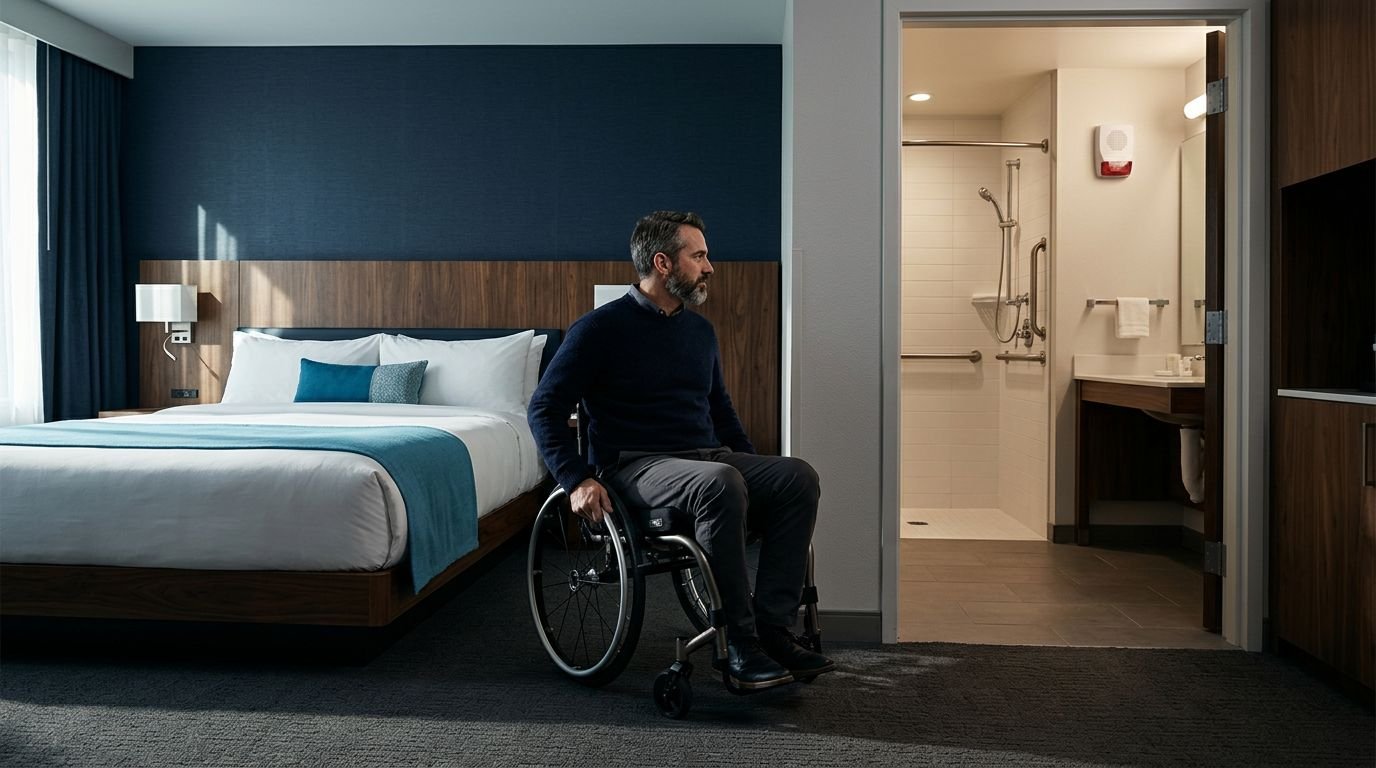
An “accessible room” may differ by property. Its accessible features may not meet every disabled individual’s needs. Accessible hotel rooms can vary in layout, bathroom design, bed height, and communication systems.
The best time to find out is before you pay, not when you arrive tired after a long travel day. A few clear questions can improve the guest experience while protecting your comfort, independence, and peace of mind. They can also help create more predictable, inclusive stays.
Key Takeaways
- An accessible hotel room may include mobility features, communication features, or both, so confirm the specific features you need instead of relying on the room name.
- Share practical details such as wheelchair width, transfer direction, bed height, bathroom layout, caregiver space, and service animal needs before booking.
- Ask specific questions about clear door widths, turning space, roll-in or transfer showers, grab-bar placement, visual alerts, room location, and noise levels.
- Call the hotel directly after booking, request written confirmation and photos when needed, and reconfirm the room before travel.
- Check the room at arrival and speak up immediately if it does not match the features or setup that were confirmed.
Start With the Access You Need
Every traveler has different needs. An accessible room can be configured for different ways of using the space. Some guests need room for a wheelchair or walker. Others need a quiet room, visual alerts, a lower bed, or space for a service dog.
Before calling the hotel, write down the details that matter most to you. Keep the list simple and focused on how you use the room.
Mobility features and communication features are different
Hotels often separate accessible rooms into two groups: rooms with mobility features and rooms with communication features.
A mobility-accessible room may include a wider path, grab bars, a lower peephole, accessible switches, automatic doors, and a modified bathroom. Wheelchair access also depends on the route to the room, not only the doorway.
A communication-accessible room may include visual fire alarms, door alerts, and phone notifications.
If you need both, say so clearly. Ask which accessible features are included instead of relying on the room label. Do not assume one accessible room includes every feature.
The ADA lodging accessibility checklist from the Americans with Disabilities Act offers a useful reference for legal standards and accessibility standards. It isn’t a substitute for confirming what the property provides.
The checklist also supports offering accessible hotel rooms across room types. Guests should be able to compare them with regular rooms and standard rooms, rather than finding accessibility only in one isolated option.
Bring your real measurements
A hotel agent can’t guess what works for your chair, walker, lift, or transfer needs. Give them practical information about your equipment and how you use the room.
Ask yourself:
- What is the width of your wheelchair, power chair, or walker?
- Do you need roll-in showers, a transfer shower, or a tub that works for transfers?
- Do you transfer from the left or right side of the bed?
- Does a caregiver need room to assist you?
- Do you need space under the bed for a lift?
- Would adjustable beds help, if the property offers them?
- Would a ground floor room help you avoid stairs or limit elevator use?
You do not need to share private medical details. The hotel only needs the facts that help them match you with the right room.
How to Compare Accessible Hotel Rooms Before Booking
The room name is not enough. “ADA room” or “accessible king” can mean different things at different hotels. Accessible hotel rooms can also vary widely in how usable they feel.
Ask the hotel to describe the room itself, not only the building’s general accessibility.
Ask about doors, pathways, and turning space
Start with the doorway measurement. Ask for the clear opening width of the guest room and bathroom doors. This is the usable space when the door is fully open, not the door panel’s width.
Many ADA-compliant doors provide at least 32 inches of clear space. Treat that measurement as a starting point, then compare it with your equipment. A power chair, oxygen equipment, or caregiver can change what feels comfortable.
Then ask about pathways and turning space:
- Is there a clear path from the entrance to the bed and bathroom?
- Can a wheelchair make a full turn in the bathroom?
- Is there a 60-inch turning circle or T-shaped turning area?
- Can you position your equipment for a safe transfer?
Ask how the doors operate, too:
- Are the room and bathroom doors heavy or self-closing?
- Does the hotel offer automatic doors?
- Does the hotel have power door assist?
A wide doorway doesn’t solve the problem if the door is too heavy to open independently.
Room location can matter as much as room layout. Ask whether the room is near an elevator, accessible entrance, or high-traffic area. If you prefer a ground floor room, confirm that option before booking.
Confirm the bed setup before you arrive
Bed height matters more than many travelers realize. “Standard bed height” isn’t a helpful answer if you need a safe transfer.
Ask the hotel to measure from the floor to the top of the mattress. If bed positioning or transfers matter, ask whether the room has adjustable beds. Also ask whether there is open space beneath the bed if you use a lift.
Confirm the bed size, too. The bed size you reserve should remain comparable to options in regular rooms. Ask which room types are available, including a king, two queens, or a suite with the features you need.
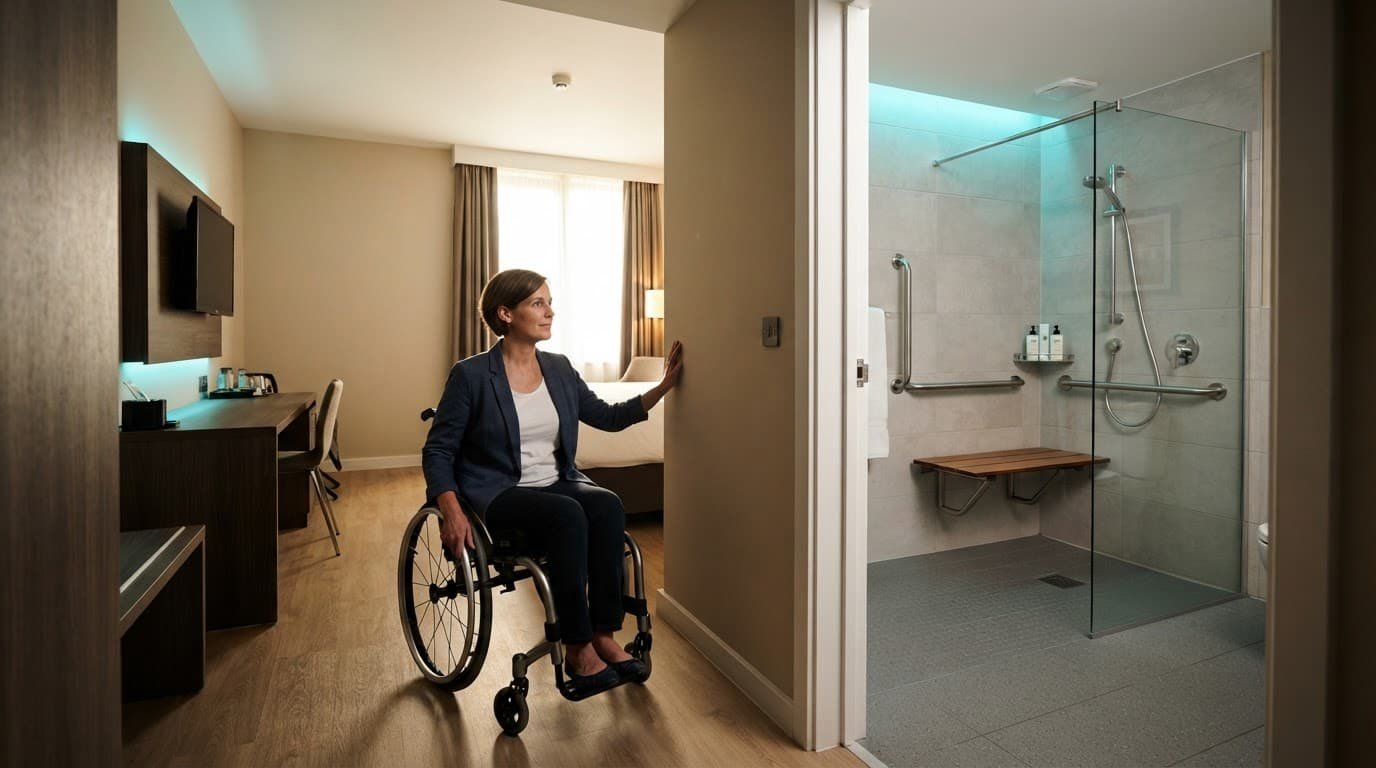
Before booking, confirm the full bathroom setup, including whether roll-in showers are available. Ask for the door and bed measurements at the same time.
“I need a mobility-accessible king room with the shower setup I need. Can you confirm the clear door width and bed height before I book?”
That one question can prevent a lot of stress later.
Ask Bathroom Questions That Leave Nothing Unclear
The bathroom is often the deciding factor when choosing accessible hotel rooms. Their bathroom layout can affect transfers, caregiver assistance, and movement, even when the entrance is wide.
Never settle for a vague answer such as, “Yes, it has an accessible shower.”
Is it a roll-in shower or a transfer shower?
Roll-in showers use a zero-entry shower design, allowing a wheelchair user to roll directly into the shower area. A transfer shower is usually smaller and may require transferring to a built-in or portable seat.
Ask whether the shower has:
- A fixed folding bench or a removable shower chair
- Grab bars near the seat and shower entrance
- A handheld showerhead
- Enough clearance for your chair and caregiver
- A curtain or barrier that helps control water
These features work together, so confirm seating, grab-bar placement, clearance, and drainage before booking.
Not every room with an accessible bathroom has roll-in showers. If you need one, make it a non-negotiable request.
Ask how the bathroom handles water and space
This design is helpful for many travelers. It can also leave water on the bathroom floor when the slope, drain, or curtain setup isn’t right.
That can be frustrating for anyone. It can also create a real fall risk.
Ask whether the bathroom has non-slip flooring and how water is kept away from the toilet and sink area. Also ask whether the toilet has grab bars. Confirm that the grab bars are positioned where you need them, and that the sink has open knee space below it.
Small details matter. A shower bench that has been removed, a trash can blocking grab bars, or a decorative stool in the wrong spot can make a room much harder to use. Before arrival, confirm that the shower seat, handheld showerhead, and grab bars will be in place.
Confirm Hearing, Sensory, and Service Animal Needs
Accessible hotel rooms involve more than doorways and shower benches. Hearing, low-vision, sensory, and service animal needs all deserve clear planning.
The right room can make the guest experience feel calmer and more comfortable.
Ask about visual alerts and quiet-room needs
If you are Deaf, hard of hearing, or traveling with hearing-impaired guests, ask whether the room has a visual fire alarm and alerts for the phone, door, or doorbell. Ask whether staff training covers communication devices and room features.
If you have low vision, ask about lighting, contrast, and clear explanations of the room’s controls. Don’t assume a captioned TV alone makes the room accessible for communication.
For sensory needs, ask where the room is located. A room near the elevator may cut down on walking, but it can also bring hallway noise. A room near an exterior exit may be convenient, but door traffic can be loud.
Ask about accessible features such as blackout curtains, thermostat controls, and nearby ice machines. The room’s view can also affect the guest experience, especially near a pool, highway, or busy parking lot.
For families traveling to Disney with autistic children, our Disney World with Autism guide and Disney World autism guide on Amazon can help you plan a hotel stay and park days with more breaks, familiar routines, and less pressure.
Confirm the service animal policy
A service dog is not a pet. Under the Americans with Disabilities Act, hotels must allow service animals in guest rooms and public areas where other guests are allowed. The Department of Justice lodging guide explains these legal standards for lodging access and service-animal protections.
Tell the hotel when you book if you’re traveling with service animals. This gives staff time to note your reservation and avoid confusion at check-in.
A hotel can charge for damage caused by a service animal under the same rules used for other guests. It cannot charge a pet fee solely because you have a service dog.
Make the Booking Process Work for You
Online booking is a good starting point. It should not be the last step in the booking process when comparing accessible hotel rooms.
A wheelchair icon or accessibility filter may help narrow your choices, but it rarely answers every question you need answered.
Call the hotel directly after booking
Once you find a room online, call the hotel directly. Ask to speak with the front desk, reservations manager, or accessibility contact.
Have your confirmation number ready. Then ask staff to read the notes attached to the specific room types.
Request real photos of the entrance, bathroom, shower, and bed if the listing feels unclear. Ask staff to confirm automatic doors, roll-in showers, and grab bars in writing. A real room photo is more useful than a generic image from the hotel’s website.
Ask whether staff training prepares employees to explain or verify the requested features. Also confirm the room’s location, including whether it is on the ground floor.
The Justice Department has documented cases where hotel guests arrived to find that a reserved room with requested accessibility features was not available. Those accessible-room reservation failures are exactly why written confirmation matters for accountability and hotel compliance.
Get the details in writing
Ask the hotel to email you a summary of the features and room location they confirmed. Save the email, booking confirmation, reservation number, and hotel’s direct phone number.
Reconfirm your room a few days before travel. This is especially important during busy holidays, conventions, weddings, and school vacation weeks.
Keep your hotel information available offline, too. Your phone may hold your reservation, maps, medication information, and family contacts. Pack a portable charger, charging cable, headphones, and communication devices together in one easy-to-reach pouch.
Protect Your Room and Resolve Problems at Check-In
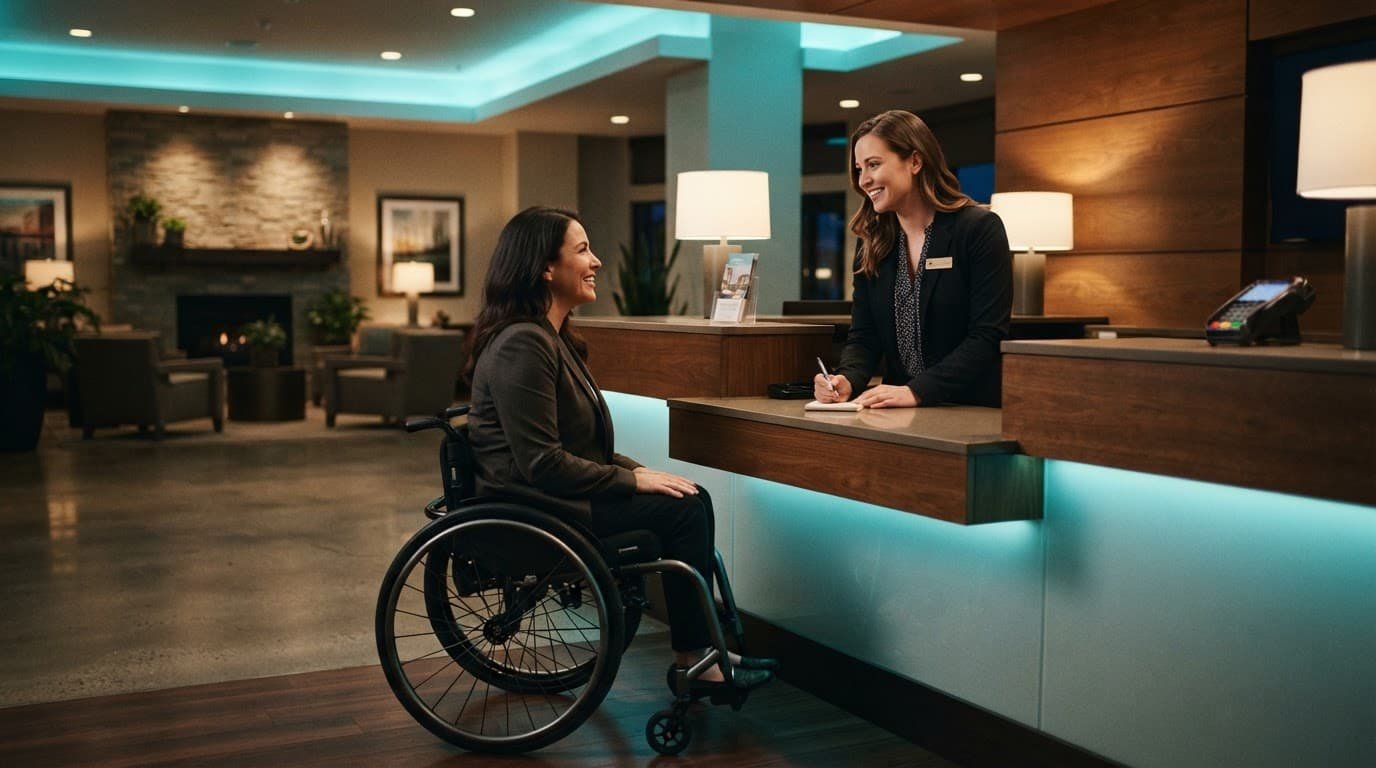
When you arrive, take a few minutes to check the room before unpacking. Accessible hotel rooms can vary, so verify the features you requested.
Test the entry door, inspect the bathroom, and check the bed height. If adjustable beds were promised, make sure they work. Confirm that needed equipment is there.
It is easier to solve a problem before bags, groceries, medical supplies, and family belongings fill the room.
Speak up right away if the room is wrong
If the room does not match what was confirmed, go back to the front desk right away. Notes from the booking process and your written confirmation can help show what was requested.
You can say, “This room does not have the roll-in shower we confirmed,” or “My wheelchair cannot fit through this bathroom door. Please show me another room that meets the notes on my reservation.”
Ask for a manager if the first staff member cannot help. Keep your written confirmation available.
If you were assigned an accessible room you do not need
Some guests are assigned this type of room after other comparable rooms have been rented. Its larger space, lower counters, wet bathroom floor, or different furniture layout may differ from regular rooms or standard rooms, so check those details against your needs and reservation.
It is okay to request a room change if the room does not work for you. Just remember that keeping these rooms available matters. A historic Bass Hotels accessibility agreement included rules about holding certain accessible rooms until late in the booking process.
Do not remove shower benches, grab bars, or other accessibility equipment. If something is in the way, ask the hotel whether it can be moved safely without affecting the room’s access features.
Frequently Asked Questions
What should I ask before booking an accessible hotel room?
Ask about clear door widths, pathways, turning space, bed height, bathroom layout, shower type, grab bars, and room location. Also explain any communication, sensory, caregiver, or service animal needs that affect how you use the room.
Does an accessible hotel room always have a roll-in shower?
No. Some accessible rooms have transfer showers or tubs instead of roll-in showers, so you should confirm the exact bathroom setup before booking. Ask about shower seating, grab-bar placement, handheld showerheads, clearance, and drainage.
How can I confirm that the hotel will provide the requested features?
Call the hotel directly after making the reservation and ask staff to review the notes for your specific room type. Request the confirmed features and room location in writing, then save the email and reconfirm a few days before travel.
What should I do if the room is not accessible when I arrive?
Check the entrance, bathroom, bed, and promised equipment before unpacking. If the room does not match your confirmation, contact the front desk immediately, show your written confirmation, and ask for a manager or another room that meets your needs.
A Comfortable Stay Starts With Clear Answers
The right room supports your independence, comfort, and ability to enjoy the trip. It shouldn’t feel like a gamble at the end of a travel day.
Ask direct questions about doors, grab bars, bathroom details, alerts, room location, and service animal needs. Then get the answers in writing for a smoother guest experience.
Accessible hotel rooms work best when the hotel understands what you need before you arrive.