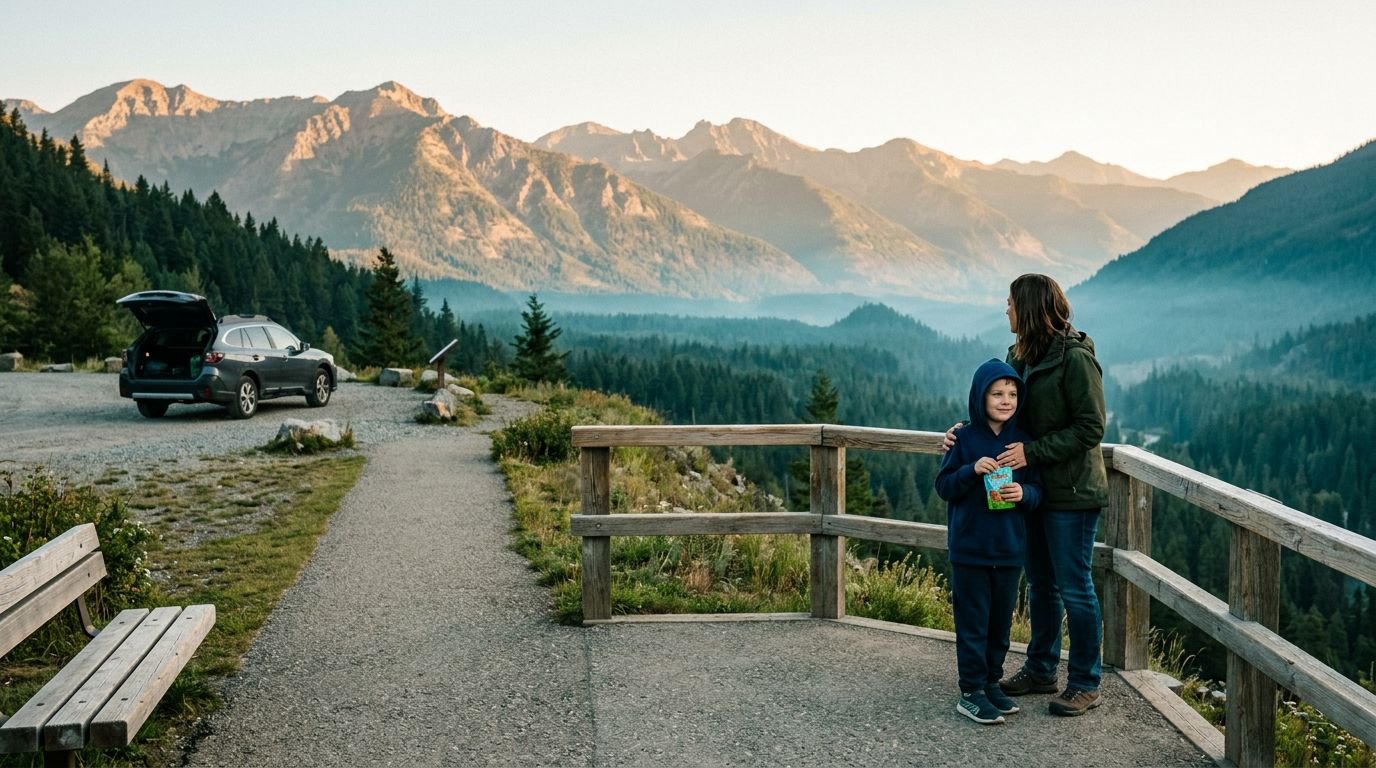
A national park vacation doesn’t need to look like a packed road trip to be special. For many neurodiverse travelers, the best autism-friendly national parks are places where a child can walk, rest, and leave before the day becomes too much.
Big views and fresh air can feel wonderful. So can a quiet hotel room, a familiar snack, and a plan your child understands. The goal isn’t to hike every trail or collect every Junior Ranger badge. It is to build a trip that feels safe, comfortable, and possible.
Start with your child’s real needs, then choose the park, lodging, and daily pace around what helps your child on the autism spectrum feel comfortable.
Key Takeaways
- Choose the park, lodging, and daily pace around your child’s sensory, communication, mobility, safety, and routine needs.
- Plan one main experience each day, build in breaks, and treat an early exit or a quiet hotel afternoon as a successful choice.
- Contact the park before booking to ask about sensory kits, visual guides, accessible facilities, quiet spaces, transportation, and current conditions.
- Pack familiar comfort and communication tools, prepare for safety concerns, and review heat, terrain, wildlife, traffic, and cell service before each outing.
- The best autism-friendly national park trip is not the busiest itinerary; it is one that helps your family feel comfortable, flexible, and able to enjoy the day.
Begin With a Trip Your Child Can Enjoy
You know what makes travel harder for your child. It may be a long drive, a crowded park building, a sudden weather change, loud hand dryers, or a skipped meal. Sensory triggers, communication needs, energy levels, and routines should shape the trip.
Nature therapy is not a treatment, and outdoor time won’t feel calming for every child. Nature can give your child room to move, observe, and reset. Wind, bugs, uneven ground, and unfamiliar sounds can also be hard. A good plan makes room for both possibilities.
Pick one main experience each day
Choose one main plan, such as a scenic drive, a boardwalk trail, a ranger program, or a park building. Everything else is optional.
A park day can be successful if your child sees one waterfall, touches a giant sequoia, watches wildlife from the car, or earns a Junior Ranger badge. You don’t need a long list of stops.
Keep the first park day short. A two-hour visit gives your family a chance to learn what the park feels like without pushing through exhaustion.
Let “enough” be a family decision
Some children are ready for a second activity after lunch. Others need to return to the hotel before noon. Both are okay.
Talk about the plan before you leave. Use simple language: “We will drive to the park, use the bathroom, walk to the overlook, eat a snack, then decide what is next.”
When the day changes, offer two clear choices. “Do you want to sit in the car or walk to the park building?” Small choices can help your child feel more in control.
How to Choose Autism-Friendly National Parks
There is no single national standard that labels a park autism-friendly. A park can have accessible trails and still feel too crowded. Another park may have fewer formal sensory supports but offer quiet roads, short walks, and easy exits.
Look beyond beautiful photos. Think about driving time, cell service, bathroom locations, weather, crowds, food options, and how fast you can return to your room or car. The National Park Service shares accessible trip ideas and planning resources, but each family still needs a plan that fits their child.
Choose quieter times, not only quieter places
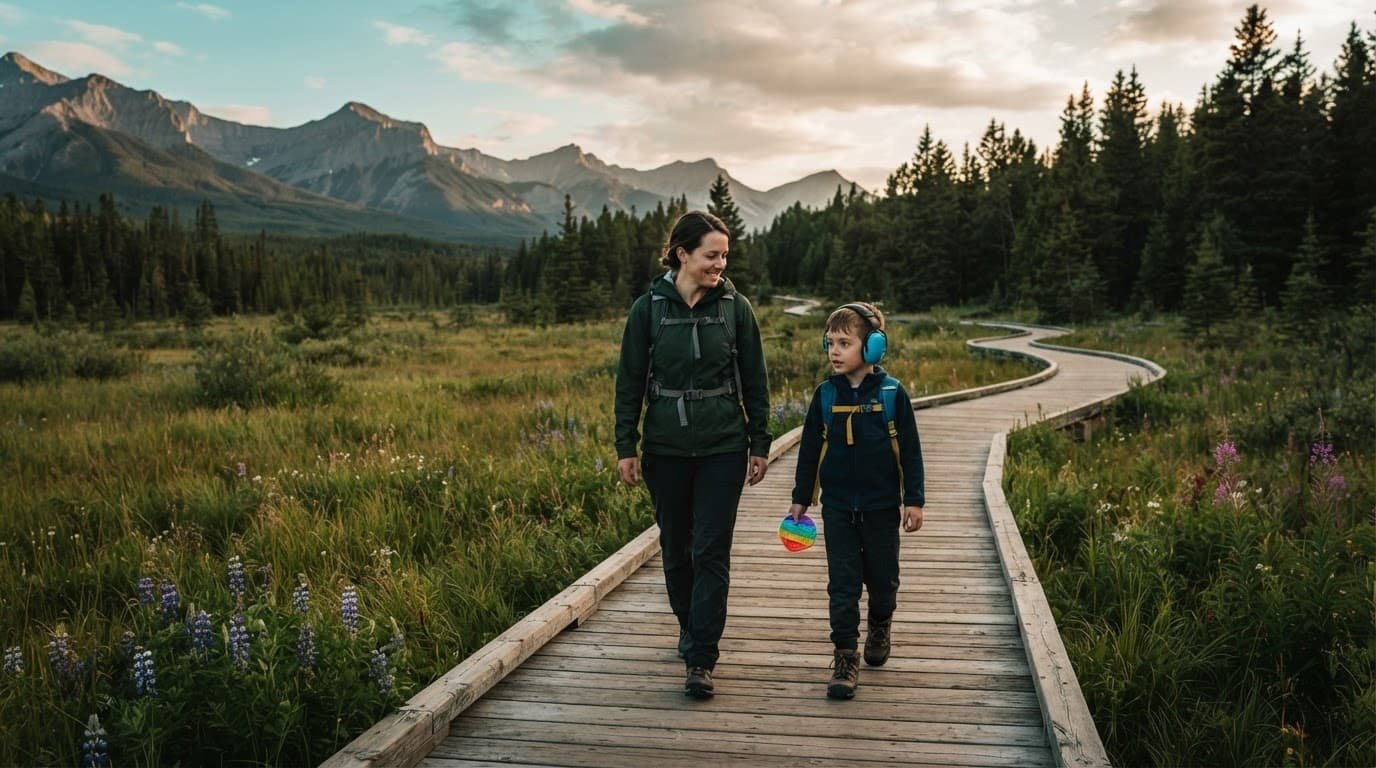
Arrive early, especially at well-known parks such as Acadia National Park. Check shuttle schedules, parking, and timing before you go, since mornings often bring cooler weather, easier parking, and fewer people.
Weekdays outside school breaks can feel more manageable. Check timed-entry rules, shuttle schedules, road construction, and park facility hours before booking. At Death Valley National Park, review heat forecasts and plan a midday exit. Extreme heat or a closed road can create a long, stressful detour.
If your child likes familiar routines, stay for several nights near one park. Changing hotels every night can take away the recovery time your family needs.
Look for practical comfort features
A developed park facility with restrooms, a water-filling station, benches, and a short film may be more useful than a difficult trail. Paved paths, scenic pullouts, and accessible overlooks can give your family a real park experience without a major hike. At Sequoia National Park, consider elevation, terrain, and return-to-car logistics; Sleeping Bear Dunes may bring sand, uneven ground, and changing weather.
Keep your car nearby when possible. It can be a quiet place for a snack, a change of clothes, or an early exit.
Contact the Park Before You Book
Park accessibility information is not one-size-fits-all. Sensory kits, social stories, visual guides, and quiet spaces are park-specific. Don’t assume they’ll be available because another park offered them.
Start with the National Park Service accessibility hub, then review your chosen park’s accessibility guide and website. Contact the park’s accessibility coordinator or another park contact before your trip if your child needs particular support.
Ask clear questions before you arrive
Tell staff what would help your child enjoy the visit. You don’t need to share every personal detail.
Ask whether the visitor center loans sensory kits, has a low-traffic time of day, or offers a visual guide. Some sensory kits may include noise-canceling headphones, sunglasses, fidgets, or visual supports. Confirm what’s available and whether supplies can run out.
You can also ask about accessible restrooms, food options, parking near trails, ranger program accommodations, and places to take a break away from crowds. The NPS also offers guidance for visitors with intellectual disabilities that can help families start the conversation.
Use social stories and visual previews
Photos and simple visual schedules can make an unfamiliar park feel more predictable. Show your child the entrance sign, parking lot, park building, trail surface, and bathroom before the trip.
Create a short picture plan with the order of the day. Include a “change” card and an “all done” card. If the park has sensory guides or a social story, read it together at home.
A visual preview doesn’t mean every part of the day will go perfectly. It helps your child know what may happen next.
Parks With Helpful Accessibility Features
The best park depends on your child’s needs, travel distance, and the season. These places offer practical features worth comparing.
Larger destinations such as Yosemite National Park and Grand Canyon National Park may require careful pacing. Select one developed area and verify current access details before you go. Terrain also varies widely, from Sequoia National Park’s mountain roads to Sleeping Bear Dunes’ sandy hills, so review conditions against your child’s needs.
Yellowstone has useful accessibility supports
Yellowstone National Park can be busy, but it also has many developed areas, scenic drives, and accessible facilities. The park’s accessibility page points families to current details for facilities and select trails in the official NPS app.
Several developed facilities offer accessibility supports. Films shown at Canyon, Old Faithful, and Grant are captioned. Albright Visitor Center at Mammoth Hot Springs has tactile exhibits and an induction loop at the information desk.
Plan early mornings and choose one area. Trying to see Old Faithful, Canyon Village, wildlife, and Grand Prismatic Spring in one day can feel like too much.
Acadia can reduce parking pressure with its shuttle
Acadia National Park in Maine is beautiful, but parking can be limited during busy months. The fare-free Island Explorer buses are wheelchair accessible and usually operate from late June into early October. Not every stop is accessible, so check the current route details first.
The shuttle may help your family avoid a crowded parking search. Still, a private car can be the better choice if your child needs a familiar and immediate break space.
Cuyahoga Valley offers cognitive disability resources
Cuyahoga Valley National Park in Ohio has a dedicated page with resources for people with cognitive disabilities. The Cuyahoga Valley Environmental Education Center also offers services for groups of children and adults with special needs.
Boston Mill Visitor Center has tactile exhibits, a tactile floor plan, braille park information, and audio-described exhibits. It can be a comfortable first stop before heading out on the Towpath Trail or a short scenic drive.
Castillo de San Marcos National Monument in Florida also received Certified Autism Center recognition from IBCCES in 2025. A Certified Autism Center designation indicates that staff have completed autism-focused training, but it doesn’t guarantee an identical experience for every family. Call ahead with your family’s questions.
Build a Low-Stress Park Day
A detailed itinerary may look good on paper and still fall apart by lunch. Weather changes. Parking fills. Someone gets hungry. Your child may want to repeat the same trail three times, or may be done after 20 minutes.
Keep the day simple enough that a change doesn’t feel like a failure.
Use a simple arrival routine
Try to repeat the same first steps at each park. Park the car. Use the restroom. Show the visual schedule. Put on sunscreen. Choose the first stop.
Bring a printed map, even if you use your phone. Cell service can be weak in national parks, and a dead phone creates an unnecessary problem. Download maps, reservations, and trail information before leaving your hotel.
The same routines that help with a Disney trip can help in the outdoors. Families planning both types of vacations can use the Disney World With Autism Guide on Etsy or find the guide on Amazon for practical ideas about breaks, visual planning, and flexible park days.
Plan breaks before your child needs one
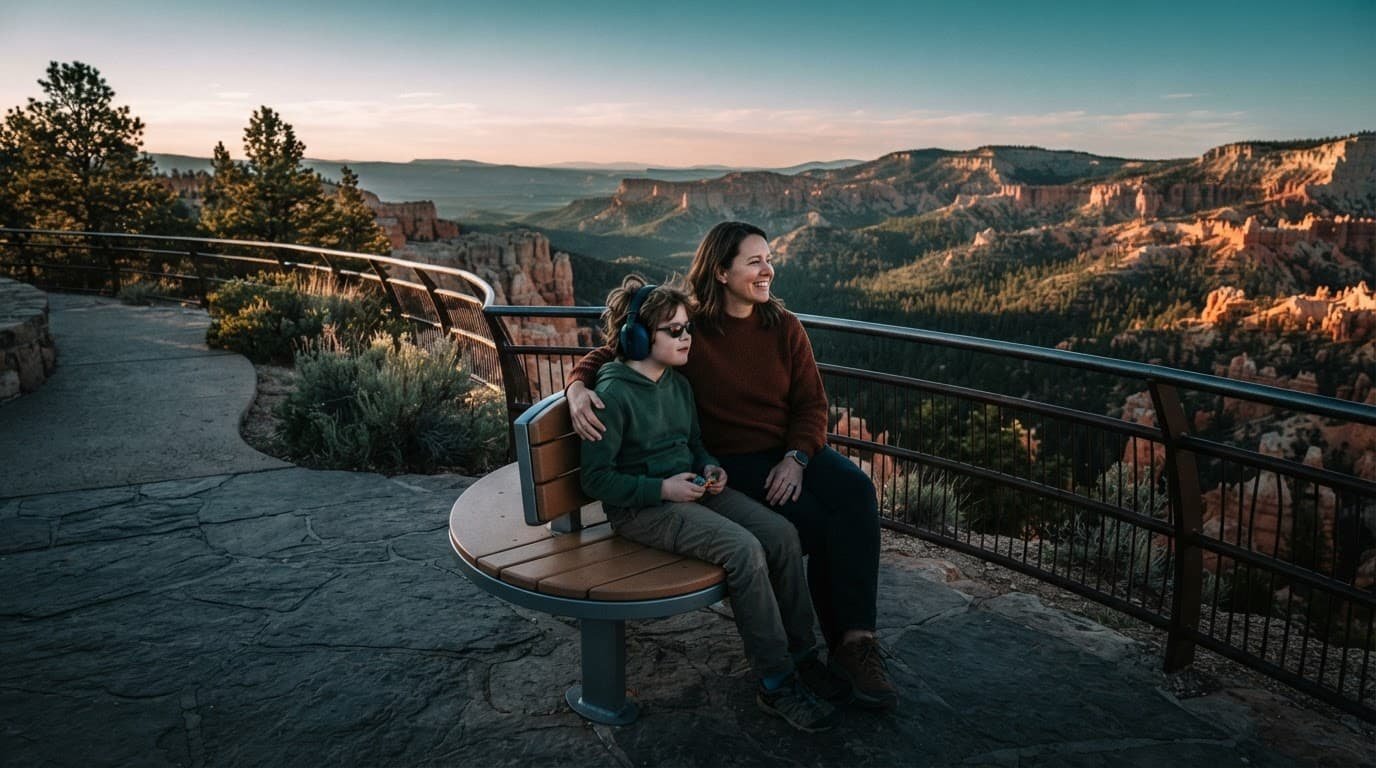
Choose a break point before you begin walking. It may be a bench, the visitor center, a picnic table, or the car.
Offer water and a familiar snack before signs of stress build. Give your child a quiet job, such as taking photos, holding the map, or checking off a planned stop.
A break isn’t wasted time. It is often what makes the next activity possible.
Pack Familiar Tools for Comfort
Your park bag should hold items your child already knows how to use. A new fidget or unfamiliar headphone style may not help when your child feels overwhelmed.
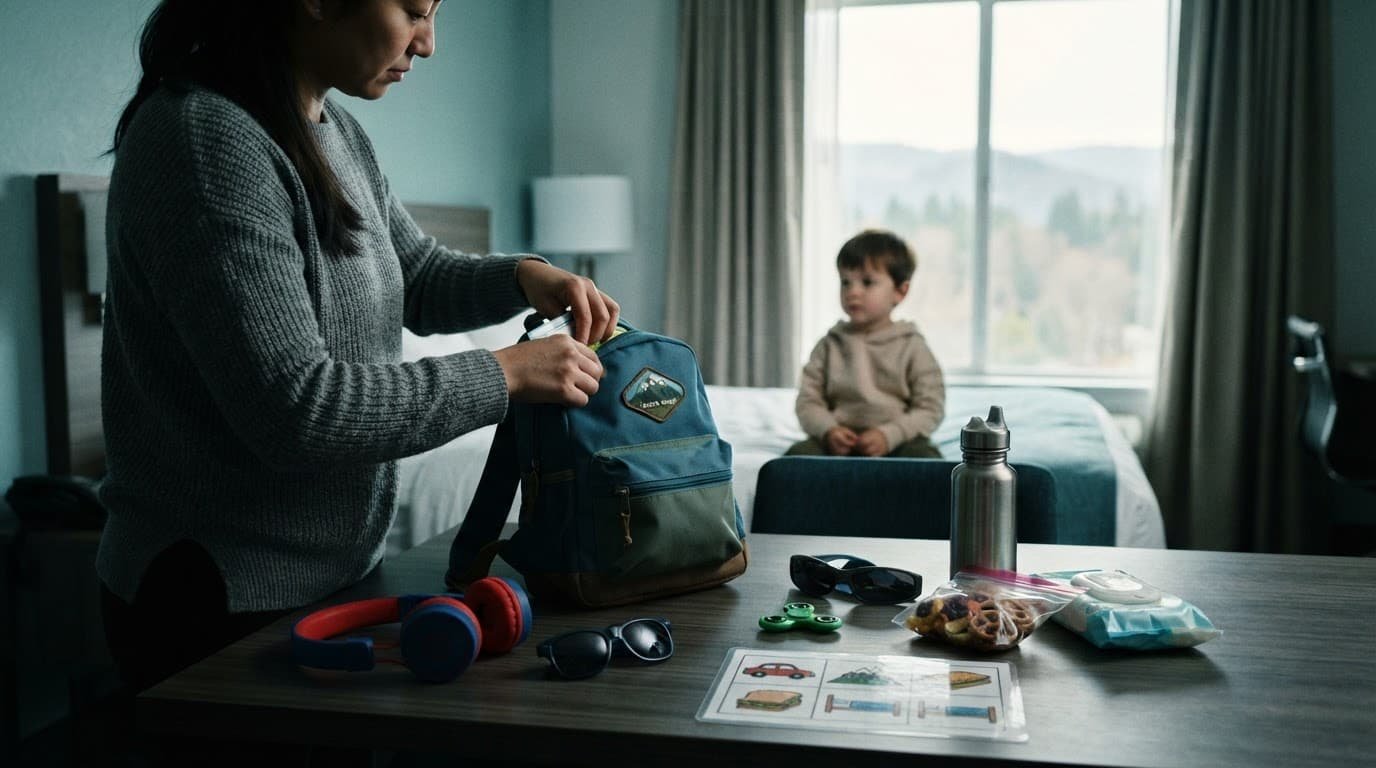
Keep the most important items in the same pouch each day. Headphones, sunglasses, communication supports, charging cords, a portable battery, medication, and comfort items should be easy to reach.
Bring a small sensory and safety kit
A practical kit may include noise-canceling headphones, a favorite fidget, a hat, a lightweight blanket, wipes, familiar snacks, water, and a small first-aid kit.
Pack a low-tech communication backup if your child uses a tablet or AAC device. A printed choice board or simple cards for “bathroom,” “break,” “car,” “food,” and “all done” can help if the battery dies.
Bring more clothing than you think you’ll need. Dirt, rain, spills, and wet socks can quickly end a park day when your child is sensitive to texture.
Prepare for messy travel moments
Keep cleaning wipes, disposable bags, extra underwear, and a change of clothes in a separate pouch. If someone gets sick in the car or hotel, you’ll be glad those supplies aren’t buried under snacks.
Trip Rescue Shop has travel items for family trips, including stroller options and cleaning supplies for those sick-on-vacation moments. A few well-chosen supplies can make a difficult moment easier to handle.
Make Safety and Mobility Part of the Plan
National parks are wide open, beautiful places, but they may also have fast-moving traffic, steep drops, wildlife, water hazards, and unreliable cell service. Death Valley National Park requires extra planning for heat, hydration, shade, and sun exposure.
Talk through safety in calm moments, not only during a stressful day. Use clear rules your child can understand.
Make an elopement plan before each stop
Take a current photo of your child each morning. Keep it on your phone with a note that lists clothing colors, communication needs, and safety concerns.
At every trailhead, agree on a meeting point. Tell your child what to do if they cannot see you. If your child tends to run when overwhelmed, keep them close near roads, cliffs, water, and crowded boardwalks.
Practice one simple safety routine before the trip: stop, stay with your adult, and return to the car or park office.
A GPS tracker, bright shirt, or identification bracelet may help some families. Choose tools your child will comfortably wear.
Check mobility needs for caves, dunes, and trails
An accessible park facility does not mean every trail, cave tour, beach, or dune is accessible. Rugged areas may involve loose sand, steps, narrow passages, heat, or long distances.
Mammoth Cave National Park, Great Sand Dunes National Park, Sleeping Bear Dunes, Sequoia National Park, and Kings Canyon can all be wonderful destinations. Before booking, families with physical disabilities should ask each park about current trail surfaces, transfer requirements, mobility equipment, and accessible guided tours.
A shorter route is still a real adventure. Your family does not need to reach the hardest viewpoint for the trip to matter.
Understand the National Park Access Pass
The America the Beautiful Access Pass can lower the cost of a national park vacation. It is a free lifetime pass for U.S. citizens or permanent residents who have been medically determined to have a permanent disability.
Autism may qualify when related limitations are permanent and severely limit one or more major life activities. An autism diagnosis alone does not automatically qualify someone for the pass.
Apply with the right documentation
Review the official Access Pass requirements before you travel. You’ll need valid photo identification and documentation that supports eligibility.
The documentation may be a letter from a licensed physician explaining that the qualifying disability is permanent and severely limits daily life. Documents from a federal or state agency showing eligibility for disability benefits may also qualify.
You can get the pass in person at participating locations on federal recreation lands at no cost. The pass covers entrance fees at eligible sites and may offer discounts on some expanded amenity fees.
Check current national park entrance fees before setting your budget. Camping, tours, reservations, and other services may still have separate costs.
Choose Lodging That Supports Rest
A comfortable place to sleep can matter more than a fancier itinerary. Look for enough room to spread out, a refrigerator for familiar food, and easy access to your car.
Ask about noise, elevators, laundry, parking, and the distance between your room and the lobby. For stays near Sequoia National Park or Sleeping Bear Dunes, compare refrigerator access and the ease of an early return. A ground-floor room may help one family but feel too noisy for another, so share key needs when booking.
Give travel days extra time
Long drives can be easier when you schedule planned stops before everyone is tired. Use rest areas, quiet parks, or grocery stores for bathroom and snack breaks.
For flights, keep medication, a charger, headphones, snacks, identification, and communication tools in a carry-on bag. Families often remember the tablet and forget the charging cord.
Avoid booking a major park activity right after a long travel day. A calm hotel evening and familiar dinner may be the better first plan.
Leave room for an early exit
Choose refundable or flexible reservations when your budget allows. Know the cancellation rules before paying a deposit.
You may use every day you planned. You may also need a quiet afternoon at the hotel. Both outcomes can still lead to good memories.
Frequently Asked Questions
What makes a national park autism-friendly?
An autism-friendly park offers features that can make a visit more predictable and manageable, such as short accessible trails, quiet areas, developed facilities, scenic drives, or sensory resources. The best choice still depends on your child’s individual needs, the season, and how easily your family can take breaks or leave.
How should we plan a national park day for an autistic child?
Choose one main experience and keep everything else optional. Use a simple visual plan, repeat a familiar arrival routine, schedule breaks before stress builds, and leave room to return to the car or hotel early.
Should we contact the park before our trip?
Yes. Ask about sensory kits, social stories, quiet visiting times, accessible restrooms, parking, food options, ranger program accommodations, and current trail conditions. Accessibility supports vary by park and may not always be available.
What should we pack for an autism-friendly park visit?
Bring familiar headphones, fidgets, sunglasses, comfort items, snacks, water, extra clothing, medication, communication supports, and charging equipment. A printed choice board or simple cards can provide a useful backup if a tablet or AAC device loses power.
Does autism qualify a person for the America the Beautiful Access Pass?
Autism may qualify when related permanent limitations severely limit one or more major life activities, but an autism diagnosis alone does not automatically qualify someone. Review the official requirements and bring valid identification and supporting documentation when applying.
Let the Park Fit Your Family
The best park destinations for neurodiverse travelers are not always the biggest or most famous ones. They are places where your child can feel comfortable, your family can take breaks, and nobody has to push past their limit.
A calm day with one trail, one snack, and one beautiful view is a successful vacation day. Comfort matters more than checking every box.
Give your family permission to slow down, change plans, and leave early when needed. The memories can still be unforgettable.
Comments
2 responses to “Autism-Friendly National Parks: Plan a Calmer Family Trip”
[…] Park Service accessibility information can help you find park-by-park planning details, and our autism-friendly national parks guide walks through choosing a park and pacing the day around your child’s […]
[…] gives families access to Sequoia and Kings Canyon national parks for quiet outdoor time, which our autism-friendly national parks guide covers in depth. Visalia’s autism-friendly road trip ideas can help you compare local […]