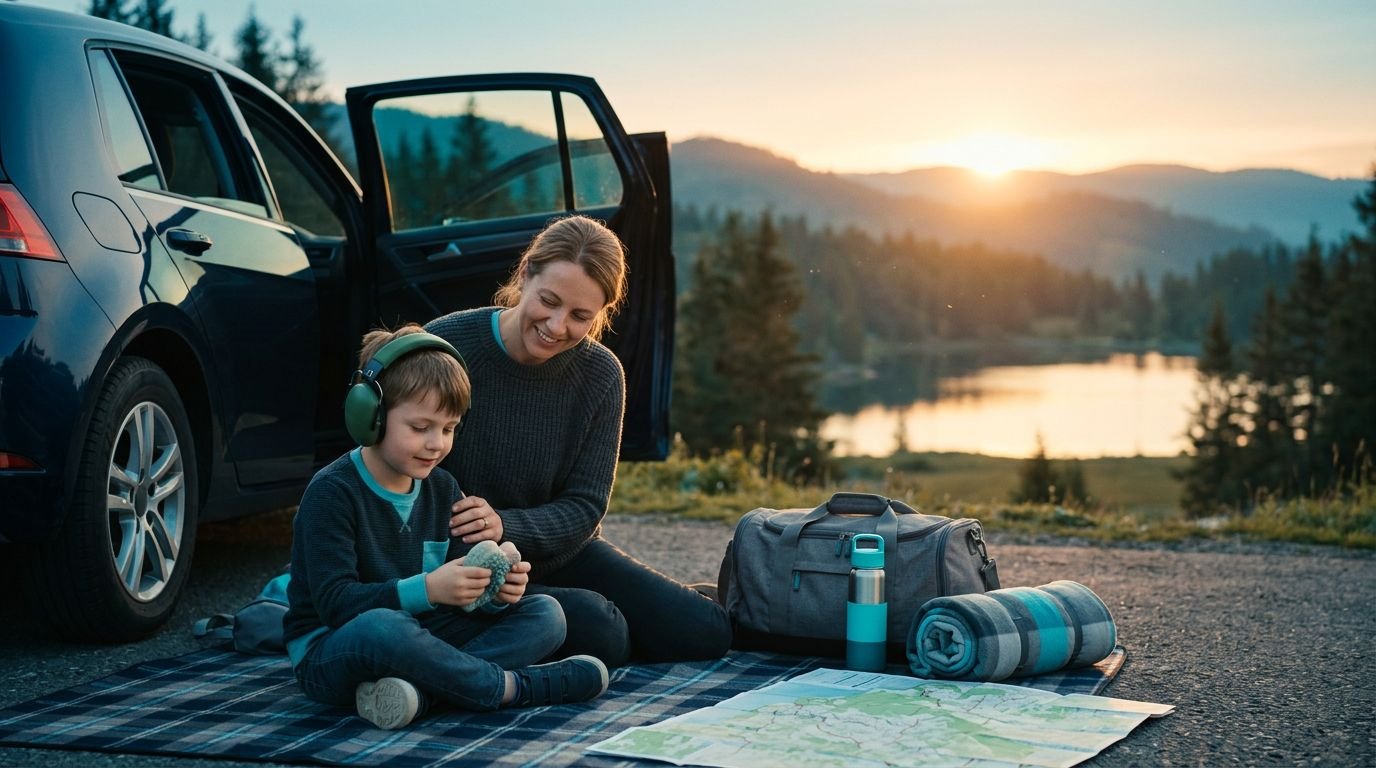
Travel can feel like freedom, until the car door closes and every unknown starts piling up. Trips shaped around your child’s needs work best when they don’t depend on a packed route or long list of attractions.
Your autistic child or family member may love travel, need extra preparation, or feel differently on every trip. That is normal. The most useful travel tips begin with your child’s actual needs, not an ideal itinerary. The goal is not a perfect vacation. It is a family trip with more comfort, choice, flexibility, and fewer stressful surprises.
Key Takeaways
- Plan around your child’s actual sensory, communication, food, sleep, and transition needs instead of trying to fit in every attraction.
- Use visual schedules, social stories, familiar sensory supports, and short practice trips to make travel days more predictable.
- Build driving days with flexible rest stops, movement breaks, reset time, and permission to change or skip the plan.
- Choose hotels and destinations that offer space to recover, then ask practical questions about noise, lighting, bathrooms, food, and accessibility.
- A successful autism friendly road trip is measured by comfort, safety, flexibility, and shared time—not miles traveled or stops completed.
How to plan a manageable family trip
Good travel planning starts with your child, not the map. Autism spectrum disorder affects each person differently, so a trip that feels easy for one family may feel overwhelming for another.
Think about the moments that are usually hardest. Is it getting into the car? Long stretches without a bathroom? Sleeping somewhere new? Busy restaurants? Knowing this helps you build a route that fits your family.
Build around the hardest part of the day
If your child struggles with hotel changes, choose fewer overnight stops. If transitions are hard, skip the plan to visit three attractions in one day. A shorter journey with two calm hotel nights can be more enjoyable than a week filled with driving.
Ask yourself a few honest questions before booking:
- Does your child need quiet time at the same time each day?
- Are familiar foods a must-have?
- Would an early arrival or evening drive feel easier?
- Is a hotel pool, kitchenette, or separate sleeping area worth paying more for?
- Can you leave early if the day becomes too much?
A good plan leaves room for a change of mind. You do not need to push through every stop because it was on the itinerary.
Choose one reason for the trip
Maybe the trip is about visiting family. Maybe it is a national park, a beach, or a Disney vacation. Pick the main reason, then let everything else support it.
Your trip does not need to become a sightseeing marathon. One special destination and a few comfortable stops are enough for meaningful family memories.
Build the trip before you load the car
Visual schedules can lower anxiety because your child can see what happens next. They also give you a simple way to talk about changes before everyone is tired.
The Duke Center for Autism and Brain Development travel toolkit explains that these schedules can use objects, photos, pictures, drawings, or written words. Use the format your child already understands.
Show the trip in small pieces
Do not show a 10-day schedule all at once if that feels overwhelming. Start with the first travel day.
Your visual schedules for the first travel day might show: wake up, breakfast, get in the car, drive, bathroom stop, lunch, hotel, dinner, bath, bedtime. Use real photos when possible. A picture of your car, hotel, or favorite snack can feel more useful than a generic icon.
Social stories can also explain what may happen. Keep them short and calm: “We may stop for gas. The car may be loud. I can use my headphones. After the gas stop, we will keep driving.”
Practice the hard parts at home
Try a short drive before a longer trip. Practice using headphones in the car. Visit a new restaurant for a quick meal. Let your child see the suitcase and sensory bag a few days before departure.
Don’t introduce every new travel tool during the same week. Familiar items are usually more helpful than brand-new items that looked good online.
Set up the car for calm travel
The car is your main travel space. It needs to feel safe, predictable, and comfortable while accounting for your child’s individual sensory sensitivities.
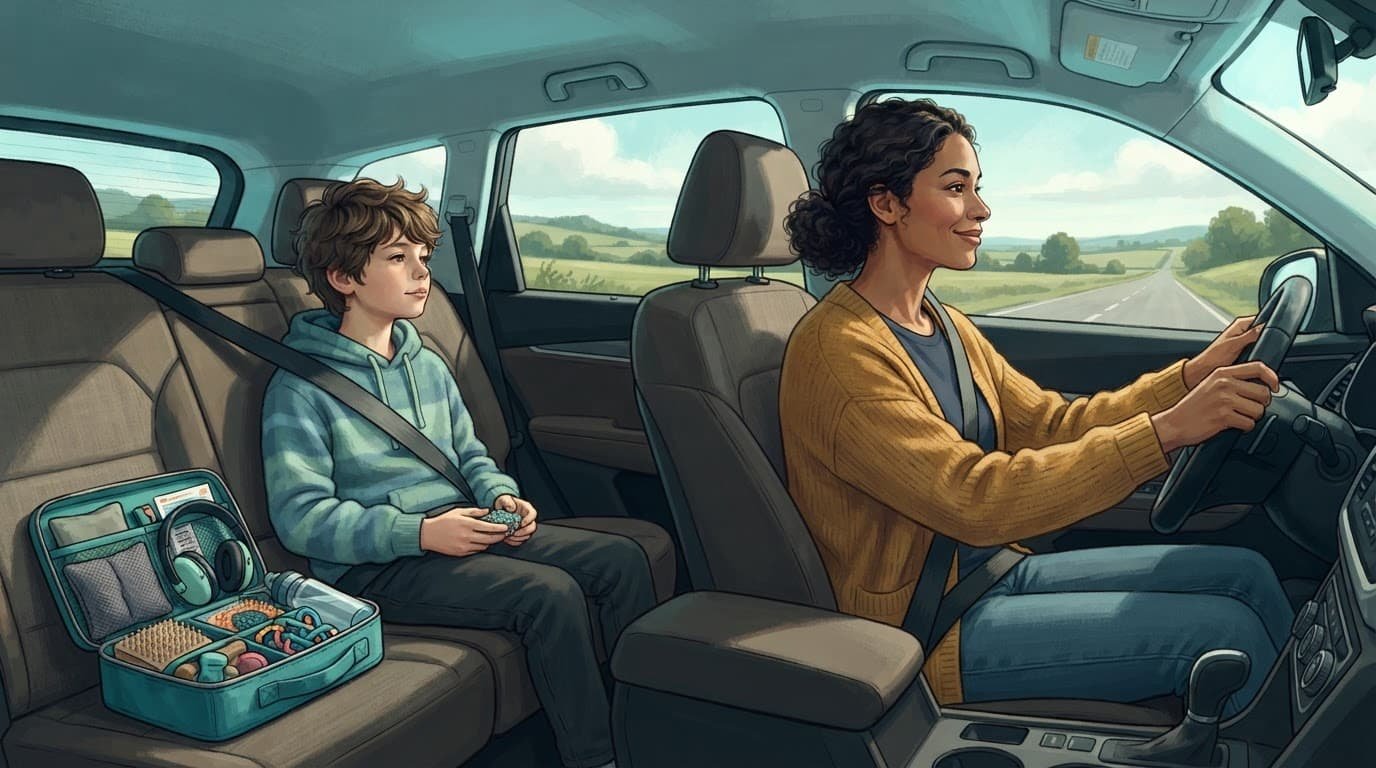
On autism friendly road trips, keep the items your child uses most within reach. A sensory friendly car setup keeps sensory backpacks and other familiar supports out of the trunk.
Pack a sensory bag your child already knows
A sensory bag does not need to be expensive. It needs to contain things that work for your child.
- Noise cancelling headphones or earplugs can help with highway noise, rest stops, and busy attractions.
- Pack favorite fidget toys, a comfort item, or a small blanket.
- Download shows, music, games, or audiobooks before leaving home, then bring charging cords and a portable battery.
- Include familiar snacks, water, wipes, a change of clothes, and any communication supports.
- Keep medications, medical supplies, and important documents in one adult’s easy-to-reach bag.
- Bring sunglasses or a hat if bright light is a challenge.
- A small visual timer can make breaks and driving periods easier to understand.
Keep loose items arranged so they do not interfere with a proper car seat, seat belt, or vehicle safety equipment. Weighted blankets may feel comforting during a hotel reset, but they must never replace a properly fitted car seat or seat belt while the car is moving.
Keep the car environment predictable
Set the temperature before you leave. Have a familiar playlist ready. Bring the same pillow or seat cover your child uses at home if that helps.
You do not need to fill every quiet moment with conversation or activities. Some children need music. Others need quiet. Let the car routine match what already works at home.
Plan driving days around your child’s pace
One of the most useful travel tips is to judge the day by your child’s energy and the route’s demands, not mileage alone. A route with fewer miles is not always easier, especially if it includes traffic, winding roads, crowded rest areas, or repeated hotel changes.
Build in extra time for bathroom breaks, food, movement, and unexpected traffic. If a stop takes 45 minutes instead of 15, that is not a failure. It may be what your family needed.
Choose rest stops before the day gets hard
Look for rest stops, parks, libraries, fast-casual restaurants, grocery stores, and hotel lobbies before leaving each morning. A stop with clean bathrooms and space to walk can be more helpful than a famous roadside attraction.
Try not to make every stop a reward for “good behavior.” Your child does not need to earn a bathroom break, a snack, or a chance to move.
If route research starts taking over your evening, the Awesome Road Trippers Club has trip-planning prompts that may help you sort through scattered travel ideas.
Make room for a reset day
A long drive followed by a full theme park day can be too much for many families. Plan a hotel morning, pool break, short beach visit, or quiet afternoon after a heavy travel day.
A rest day is still part of the vacation. It gives everyone time to recover before the next big experience.
Book overnight stops for recovery
Your hotel is more than a place to sleep. It is where your child can take off headphones, eat familiar food, change clothes, and reset after a busy day.

Call the hotel before booking if room details matter. Ask about quiet rooms away from elevators, ice machines, pools, and busy entrances. Ask whether the room has a refrigerator, microwave, blackout curtains, and enough space for your child’s sleeping arrangements. You can also ask whether early arrival is possible.
Ask for the details that matter at bedtime
A room request is not a guarantee, but it gives the hotel a chance to help. Tell them you are traveling with an autistic child who needs a quieter location or a room close to an exit.
If you are visiting Disney World, ask where the laundry room is located. Self-service laundry rooms are often near pools, which can mean music, wet walkways, and people coming and going. If laundry will take away a needed rest period, extra clothes or valet laundry may be the better choice.
A two-night hotel stay can be worth more than a cheaper one-night stop if changing rooms would leave your family too tired for the next day.
Keep the arrival routine simple
Bring one small bag inside first. Set up bedtime items before unpacking everything else. Offer a familiar snack, show the bathroom, and explain the next step.
If possible, don’t schedule a restaurant, attraction, or shopping trip right after checking in. Let the room do its job.
Pick destinations with room to breathe
Big destinations can work well, but wide-open places often give families more control. You can arrive early, take a quiet break in the car, skip a trail, or leave without losing a full day of tickets.

California is a good example. Yosemite, Sequoia, and Kings Canyon can offer beautiful outdoor time, but popular parking areas and viewpoints may still get busy. Plan one main outing, arrive early, and skip extra highlights if the day feels full.
Use national parks with a flexible plan
Check park road conditions, weather, restroom locations, and parking before you leave the hotel. The National Park Service accessibility information can help you find park-by-park planning details, and our autism-friendly national parks guide walks through choosing a park and pacing the day around your child’s needs.
Some park sites offer sensory friendly supports, such as noise-reducing headphones or sunglasses, but availability varies. Bring your own supports even when a destination has accessibility services.
A California road trip might include two quiet nights in Visalia with one early visit to Sequoia, or a few nights near Anaheim with a Disney day surrounded by slower days. Yosemite or Kings Canyon can also fit a plan built around one main outing. You don’t need to make the whole state into one giant loop.
Let the destination fit your family
A beach may sound calm but have loud crowds and bright sun. A museum may have air conditioning but also echoing rooms. Look beyond destination photos.
Read recent hotel reviews. Check satellite maps for parking and walking distances. Call attractions about quiet spaces, sensory guides, accessibility programming, companion restrooms, and re-entry policies. Ask whether they offer adaptive activities during your visit.
Know what a Certified Autism Center means
A Certified Autism Center designation can be a helpful starting point when choosing a hotel, attraction, museum, or family entertainment stop. It means staff have completed autism and sensory-difference training through IBCCES.
According to IBCCES requirements, at least 80% of guest-facing staff must complete the training, and certification requires renewal every two years.
That training supports autism awareness and can help staff understand sensory sensitivities, communication differences, and the need for flexible support.
Certification is a starting point, not a promise
A certification is not a guarantee of an empty lobby, private ride access, or a quiet room whenever you need one. Call ahead and ask practical questions.
Ask if staff can help you find a calmer seating area. Ask about noise, lighting, food options, bag policies, re-entry, and accessibility programming. You can also ask whether the venue lends sensory backpacks or recognizes a sunflower lanyard, if your child is comfortable wearing one.
Sesame Place Philadelphia is one theme park stop with a Certified Autism Center designation and a published sensory guide for rides. It can be a good option for families planning a Northeast drive with young Sesame Street fans.
Add a theme park without filling every hour
Theme parks can be part of a family road trip without becoming the entire trip. Stay nearby if a midday hotel reset may help. Plan only one park each day when possible.
Disney World is large, loud, and full of transitions. It can also be manageable when you choose a few priorities and leave room for meals, shade, quiet time, and an early exit.
Understand Disney’s Disability Access Service
Disney’s Disability Access Service page outlines registration through live video chat and return-time requests after you enter the park. Review the park’s current accessibility programming and procedures before arrival, since eligibility and steps can change.
DAS is a ride accessibility program that changes where an eligible guest waits. It doesn’t remove crowds, weather, walking, ride closures, or the need for breaks. Ask whether the park recognizes a sunflower lanyard and what support it does or doesn’t provide.
Keep your phone charged because it may hold tickets, maps, mobile food orders, and attraction return times.
Keep paid add-ons optional
Lightning Lane Multi Pass is separate from DAS. It can help when your family has a few true must-do rides, but several timed return windows can become another clock to watch.
A slower schedule often works better than chasing every reservation. Plan one or two important attractions, then decide what your child can handle next.
For more Disney-focused support, the Disney World With Autism Guide PDF on Etsy and the Amazon edition of the guide include family-centered ideas for using Disney’s disability access service, planning park breaks, and keeping Disney days flexible.
Keep food, safety, and changes manageable
Familiar food can make a travel day easier. Pack enough safe foods for the first day, even if you plan to eat at restaurants. A cooler with preferred drinks, protein snacks, fruit, crackers, and familiar breakfast items can reduce pressure after a late arrival.
Give everyone a clear job
Before each driving day, decide who handles directions, who carries the sensory bag, and who watches for early signs that your child needs a break. If your child may leave suddenly when stressed, keep a recent photo on each adult’s phone and agree on a simple plan before entering a busy stop.
Bring identification and communication information in a private, secure place. A small card can describe your child’s special needs, communication method, and need for extra processing time. If your child is comfortable wearing one, a sunflower lanyard may help at some venues. Confirm that the venue recognizes it, and remember that it doesn’t replace supervision or an identification plan.
Treat changes as part of the plan
Roads close. Restaurants run out of a preferred food. A hotel room may not be ready. A ride may break down. Use a simple “change” card or visual, then offer two clear choices: “We can sit in the car or walk outside.”
Leaving early is always allowed. Skipping an attraction is allowed. Returning to the hotel is allowed. A vacation doesn’t fail because your child needed less than the original plan.
Frequently Asked Questions
How far should we drive each day on an autism friendly road trip?
There is no single right mileage for every family. Plan around your child’s energy, sensory needs, bathroom and food breaks, traffic, and the number of transitions the route requires.
What should we pack in a sensory bag?
Pack familiar items that already help your child, such as noise cancelling headphones, fidgets, a comfort item, preferred snacks, water, communication supports, and downloaded entertainment. Include charging cords, a portable battery, wipes, a change of clothes, and any necessary medications or medical supplies.
How can we make hotel stays easier?
Ask for a quiet room away from elevators, pools, ice machines, and busy entrances, and check whether the room has a refrigerator, microwave, blackout curtains, or enough sleeping space. Keep arrival simple by bringing in bedtime items first and allowing time to settle before adding another activity.
Are Certified Autism Centers guaranteed to be quiet or sensory friendly?
No. The designation means guest-facing staff have completed autism and sensory-difference training, but it does not guarantee a quiet room, empty lobby, or private access. Call ahead to ask about noise, lighting, quiet spaces, sensory supports, food options, and re-entry policies.
How can we include a theme park without making the trip overwhelming?
Choose only a few priorities, plan breaks and meals, and leave room for an early exit or a hotel reset. Accessibility programs and paid add-ons may help, but they should support a flexible plan rather than fill every hour with timed reservations.
Final thoughts
The best autism friendly road trips are not measured by miles, photos, or how many stops you make. They are measured by whether your family had enough comfort, safety, and space to enjoy being together.
Start small, pack familiar supports, and build your route around real needs. K&S The Travel Crusaders can help you plan family vacations, including autism friendly vacations that feel personal, flexible, and easier to enjoy.