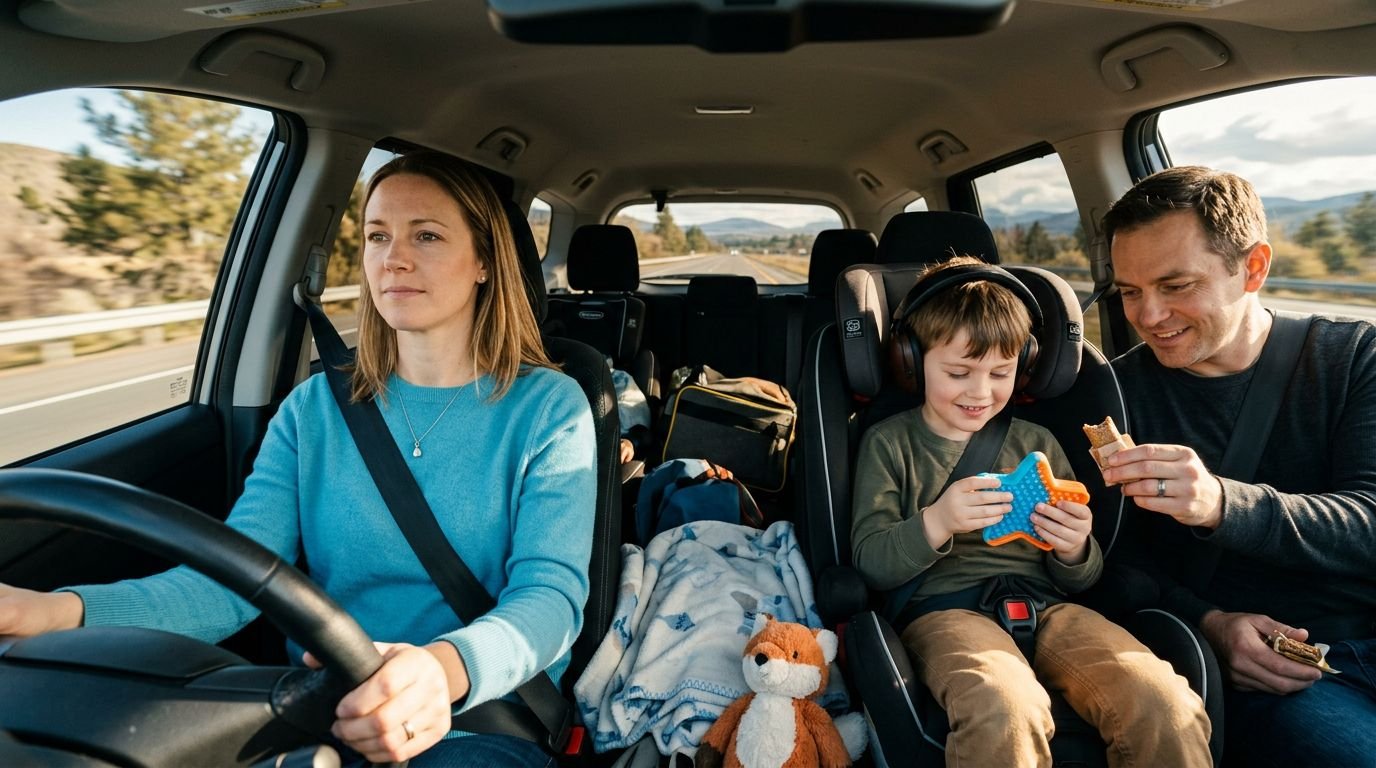
A road trip can feel like freedom, until your child is tired, traffic stops, and the next bathroom is 20 miles away.
An autism friendly road trip gives your family more control over those moments. You don’t need a perfect schedule. You need a flexible plan that protects familiar routines, leaves room for breaks, and gives everyone a simple next step.
Neurodivergence can shape how each child responds to noise, waiting, routines, and change. For autistic children, control and predictability can make travel feel more manageable. A successful family vacation isn’t about completing every planned activity. It’s about leaving enough flexibility for meaningful time together.
Key Takeaways
- Plan the route around your child’s tolerance, familiar routines, sensory needs, and access to low-demand stops rather than mileage alone.
- Use visual preparation, simple next steps, and flexible schedules to make changes and unfamiliar places easier to manage.
- Pack familiar comfort items, safe foods, communication supports, medication, and chargers where adults can reach them quickly.
- Schedule breaks before distress builds, and choose lodging and destinations with quiet spaces, easy access, and built-in recovery time.
- Treat traffic, canceled activities, and early departures as expected parts of flexible travel, not signs that the trip has failed.
Plan the drive around your child’s needs
The best route is not always the fastest route. It is the route with places to stop, familiar food options, predictable sleeping arrangements, and fewer hard transitions.
Before booking, think about your child’s regular day: when they eat, how long they sit comfortably, and what helps them reset. A diagnosis of autism spectrum disorder doesn’t determine one ideal route. Your family’s observations matter more than a generic itinerary. Consider sensory processing, including responses to sound, light, and movement, plus specific sensory sensitivities. For autistic children, route length and stop frequency should match individual tolerance.
Build the route around tolerance, not mileage
A map may say a drive takes three hours. Add fuel, restroom needs, traffic, food, and a sensory break before deciding whether three hours is realistic.
Mark a few possible stops before leaving home. Include a quiet park, a reliable gas station, a grocery store, and a restaurant with food your child may eat. You may not use every stop. It still helps to know they are there.
Try to book two or three nights in one place when you can. Changing hotels every day means new rooms, new sounds, new bathrooms, and another round of packing. A longer stay often gives your child time to settle.
Show the trip before it happens
Visual preparation can take away some of the unknowns. Use social stories and a visual schedule to show the order of the day: get in the car, drive, eat, check into the hotel, then have quiet time. Keep the travel itinerary flexible, so you can shorten or rearrange it when needed.
Use real photos when possible. Show your child the car, the hotel exterior, the room type, and a picture of the destination. Practice a few flexible phrases that may help, such as “traffic means we wait” or “we can take a break.”
Do not promise an exact arrival time. Promise the next step instead. “We will drive until lunch” is often easier to understand than “We will arrive at 2:15.”
Pack a car bag that supports regulation
Keep the sensory items your child uses at home together in one bag. Don’t save new headphones, a new fidget, or a new snack for travel day. Familiar items are usually more helpful when stress is building.
Include comfort items your child already trusts
Your car bag may include:
- Noise canceling headphones or soft ear defenders for road noise, rest stops, and busy attractions.
- A preferred set of fidget toys, a chewy, or a small comfort object.
- A weighted blanket, only if your child already knows it and it cannot interfere with a car seat, seat belt, or safe movement. It may be more appropriate at the hotel than in a moving vehicle.
- Familiar snacks, drinks, and safe foods that don’t need a long explanation at a drive-through.
- A change of clothes, wipes, and a small towel for spills, rain, or an unexpected accident.
- A hoodie, soft blanket, or sunglasses if temperature and bright light are hard to manage.
Keep medication, emergency contacts, insurance cards, and any required medical supplies where adults can reach them quickly. If your child has a safety plan for wandering, bring a current photo and make sure every adult knows it before departure.
Keep devices, communication, and chargers together
A tablet can offer a needed reset, and an accessibility app your child already uses may support communication or regulation. It still needs a charging cable. Put devices, headphones, charging cords, and a portable battery in one pouch.
Download familiar shows, music, games, and maps before you lose service. Low-tech supports matter too. A small choice board with “break,” “food,” “bathroom,” “all done,” and “help” can be easier than finding an app during a stressful moment.
Audiobooks can also give the car a shared, low-pressure activity. These family audiobook ideas for road trips may help you find something that fits your child’s interests.
Schedule stops that are more than bathroom breaks
Breaks work best when they happen before everyone is overwhelmed. A five-minute stretch in a quiet place can prevent a much longer, harder stop later.
Avoid treating every stop as another activity to complete. Some breaks should be boring on purpose.
Look for low-demand places to pause
A scenic pullout, a quiet park, a grocery store parking area, or a hotel lobby may be more helpful than a crowded roadside attraction. Check satellite maps before the trip, including nearby parking areas and entrances.
For unfamiliar locations, call ahead or check current details, including whether quiet zones are available. At rest stops, offer one or two simple choices, such as using the restroom, having a snack, or sitting in the car.
Too many options can become another demand. Food breaks may need the same planning, so review menus in advance and keep familiar snacks available.
Don’t wait until hunger becomes a problem.
Choose lodging that makes recovery easier
Your room is where your family rests, changes clothes, eats familiar food, and resets after a full day. Look beyond the nightly price.
Ask whether the property offers genuinely quiet rooms or a quiet wing. Also check the distance from parking to the room, elevator access, refrigerator or kitchenette availability, and room layout.
A cheaper hotel can cost more in stress if it has a long walk, loud pool area, or complicated parking setup. A suite with separate sleep space may help when one child needs an early bedtime.
A kitchenette can make breakfast and late-night snacks easier. If you need laundry, check whether there is an in-room washer and dryer, a guest laundry room, or a valet option before booking.
Handle traffic delays and meltdowns with a simple plan
Traffic, detours, storms, and missed exits happen. Your child doesn’t need you to make the delay disappear. They need you to make the next few minutes feel safe and clear.
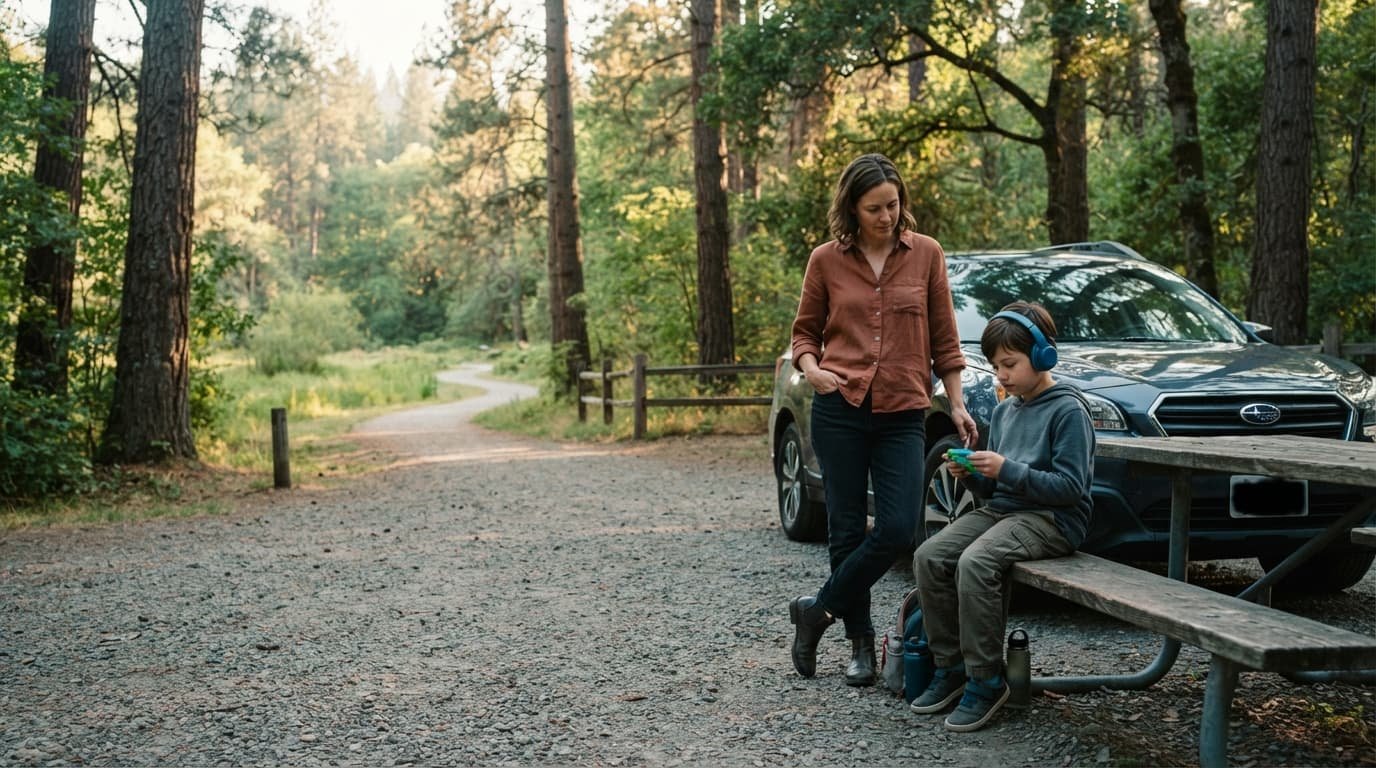
Watch for signs before the breaking point
For autistic children, changes in voice, movement, repetition, rigidity, or withdrawal may signal rising distress rather than intentional misbehavior. Sensory sensitivities can make road noise, music, bright light, heat, hunger, or crowded spaces harder to manage.
Lower the noise. Turn down the music. Reduce conversation and verbal demands. Offer headphones, a drink, a familiar snack, or a preferred video. Use fewer words than usual.
A traffic delay is often easier when the plan changes from “we are late” to “we are taking our car break now.”
Use the same response each time
When your child is upset, predictable steps can help more than a long explanation.
- Pull over in a safe, legal location when possible. Don’t try to manage a crisis from the driver’s seat while the car is moving. A parking lot is better when available.
- Say what is happening in plain language: “The road is slow. We are safe. We are stopping for ten minutes.”
- Offer one or two calming choices, such as sitting quietly, walking near the car, or having a snack.
- Restart only when everyone is regulated enough to continue. Skipping one stop is better than pushing through a crisis.
If a planned activity must be canceled, name the change and give a replacement. “The beach is too crowded. We are going back to the hotel pool.” A backup plan is not a failed trip. Replacing an activity is part of flexible, family-friendly travel, not a failure.
Pick destinations with built-in breathing room
An autism friendly road trip doesn’t need to revolve around large theme parks. Nature stops, small downtowns, beaches, hotel pools, and one meaningful attraction per day can make a wonderful vacation.
Families considering another travel format can compare cruise lines by routines, food, crowds, quiet space, and exit options.
Create a California route with one home base
California offers plenty of options, but distances can be bigger than they look. A Central Valley base in Visalia can reduce hotel changes. It also gives families access to Sequoia and Kings Canyon national parks for quiet outdoor time, which our autism-friendly national parks guide covers in depth. Visalia’s autism-friendly road trip ideas can help you compare local planning resources, including sensory friendly events and accessibility programming.
You can also use California’s autism-friendly destination list to look for communities and attractions with sensory-conscious programming. Match the route to your child’s actual tolerance, not someone else’s idea of a perfect California trip.
Plan one main outing each day. A morning in the park, lunch back at the hotel, and an easy evening walk may be enough.
Check theme park supports before you drive there
A certified autism center isn’t a promise that every moment will be quiet. It means the venue has completed autism training and accessibility planning through IBCCES.
Before relying on that designation, verify current certification and venue information through IBCCES. The Autism Travel directory is a useful third-party planning resource for comparing certified attractions, hotels, and destinations, but current official venue policies should guide your final plans.
Ask the specific attraction whether it offers quiet rooms or quiet zones, and whether staff recognize a sunflower lanyard. Availability and recognition vary by venue.
For a Pennsylvania road trip, Sesame Place’s accessibility guide explains its Ride Accessibility Program. In Southern California, LEGOLAND California’s accessibility information includes sensory and attraction guides.
If Walt Disney World is part of your drive, review the current Disney Disability Access Service details before travel. DAS is for guests with developmental disabilities, including autism, who can’t wait in a conventional queue for an extended period. It changes where an eligible guest waits. It doesn’t remove crowds, heat, walking, ride closures, or the need for breaks.
For extra Disney planning support, the Disney World With Autism Guide PDF on Etsy and the Amazon edition of the guide offer practical ideas for park days, breaks, and accessibility needs. Treat them as supplementary resources, not replacements for current official policies.
Give every travel day a simple shape
A flexible routine helps children know what comes next without making parents feel trapped by the clock. Keep the day easy to explain.
Make arrival day a recovery day
Do not plan your biggest activity for the day you leave home. Long car rides, unfamiliar roads, hotel check-in, and new sleep spaces are enough.
After checking in, offer one low-demand option. That might be swimming, ordering familiar food, taking a short walk, or watching a favorite movie in the room. Save the busy attraction for tomorrow.
Keep vacation days smaller than you think
Choose one or two must-do experiences. Group nearby activities together. Leave space for snacks, bathrooms, shade, quiet time, and the possibility that your child may want to leave early.
If your road trip begins with a flight and rental car, ask the airport ahead about current accessibility programming and procedures for hidden disabilities. Some airports participate in a sunflower lanyard program, but participation, eligibility, and procedures vary by location. If you choose a sunflower lanyard, confirm what local staff recognize and what assistance it provides. It isn’t a universal guarantee of expedited service or safety. Families comparing travel formats, from road trips to cruise lines, should check each location directly.
A portable charger, a familiar bag, a nearby hotel, and a flexible schedule may help more than another paid add-on or timed reservation. Your family does not need to do everything for the trip to feel special.
Frequently Asked Questions
How long should an autism friendly road trip drive be?
There is no ideal drive length for every autistic child. Match the route to your child’s sitting tolerance, eating and bathroom routines, sensory needs, and ability to recover between stops.
What should I pack for an autism friendly road trip?
Pack familiar sensory items, safe foods, drinks, extra clothes, medication, communication supports, and any devices your child already uses. Keep headphones, chargers, emergency contacts, and medical supplies easy for adults to reach.
How can I prepare my child for a road trip?
Use a visual schedule, social stories, and real photos of the car, hotel, room, and destination. Explain the next step instead of promising an exact arrival time, and practice simple phrases for waiting and taking breaks.
What should I do if my child has a meltdown in traffic?
Reduce noise and conversation, offer a familiar calming item, and pull over in a safe, legal place when possible. Explain the delay in plain language, offer one or two choices, and continue only when everyone is regulated enough to travel safely.
How do I choose an autism friendly hotel or destination?
Look for quiet rooms or wings, convenient parking, simple room layouts, refrigerators or kitchenettes, and nearby low-demand activities. Confirm current accessibility policies directly with hotels and attractions because programs, quiet spaces, and staff training can vary.
A Road Trip That Fits Your Family
The most useful travel tips are built around your child’s real needs, familiar supports, and enough time to reset.
Plan the route, pack the comforts, choose easy places to sleep, and expect changes. When you protect your family’s pace, there is more room for meaningful memories.