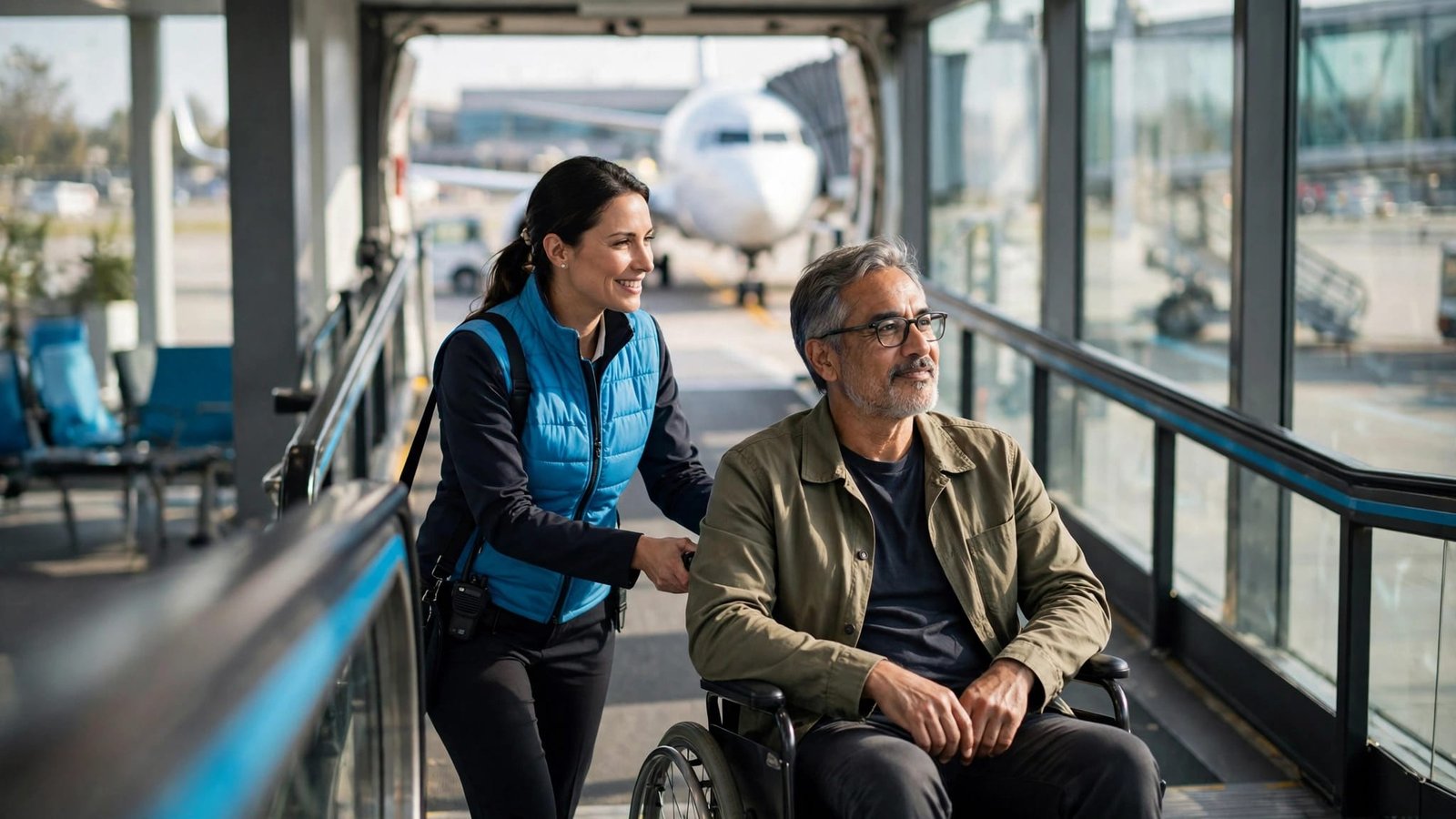
Airlines must provide free, prompt disability-related assistance with airport travel, boarding, connections, and deplaning under U.S. rules. Airline disability assistance can include wheelchairs, guided help, communication support, and certain seating accommodations.
You don’t have to manage these arrangements alone, but you do need to explain the help you need. Start by understanding which services are required and how to request them.
Key Takeaways
- Request assistance when booking, then identify yourself to airline staff at the airport.
- Explain your needs, including connections, boarding support, and mobility equipment.
- Ask for a Complaint Resolution Official if required assistance isn’t provided.
Who Qualifies for Airline Disability Assistance?
Which disabilities and flights are covered?
The Air Carrier Access Act prohibits discrimination against otherwise qualified passengers with physical or mental impairments. Its protections include disabilities that substantially limit major life activities, along with certain protections for people with a disability history or perceived disability.
Under the federal airline disability rules, coverage generally includes U.S. airlines’ flights and foreign airlines’ flights beginning or ending in the United States.
Mobility, vision, hearing, cognitive, and developmental disabilities can qualify. A disability doesn’t have to be visible.
How much must you explain?
Describe the task you need help completing. You can qualify for wheelchair assistance even if you can walk short distances but cannot manage prolonged walking or standing.
A carrier may request credible verbal assurance of need. Its questions should focus on how the service assists you, rather than the nature of your disability.
Airlines aren’t required to provide services unrelated to a disability. They may refuse wheelchair service requested only to obtain priority security or immigration access.
Request the Right Support Before You Fly
Wheelchair, cart, guide, or aisle chair?
Wheelchair assistance supports passengers with mobility impairments. Guided assistance helps passengers who are blind move through the airport. Explain whether you need directions, an escort, or physical mobility support.
An aisle chair is a narrow chair used to reach your aircraft seat. It isn’t the same as an airport wheelchair.
An electric cart helps with some terminal distances, but it doesn’t provide the same service. Delta offers carts only at select airports, and they cannot take passengers between different concourses or terminals. Prearranged wheelchair assistance can support those connections.
Put your needs in the reservation
Request assistance when booking. Include departure, connections, arrival, and any transfer help. If a wheelchair isn’t needed for your disability, the airline may offer an appropriate alternative, such as cart or guided assistance.
Delta accepts requests through My Trips, the Fly Delta app, or a representative. Its Accessible Service Request form is available for trips more than seven days away.
For a battery-powered wheelchair, plan to arrive one hour before the normal check-in time, not one hour before departure. Federal rules allow airlines to require that additional check-in time.
What Must Airlines Provide at the Airport?
Prompt help and safe handoffs
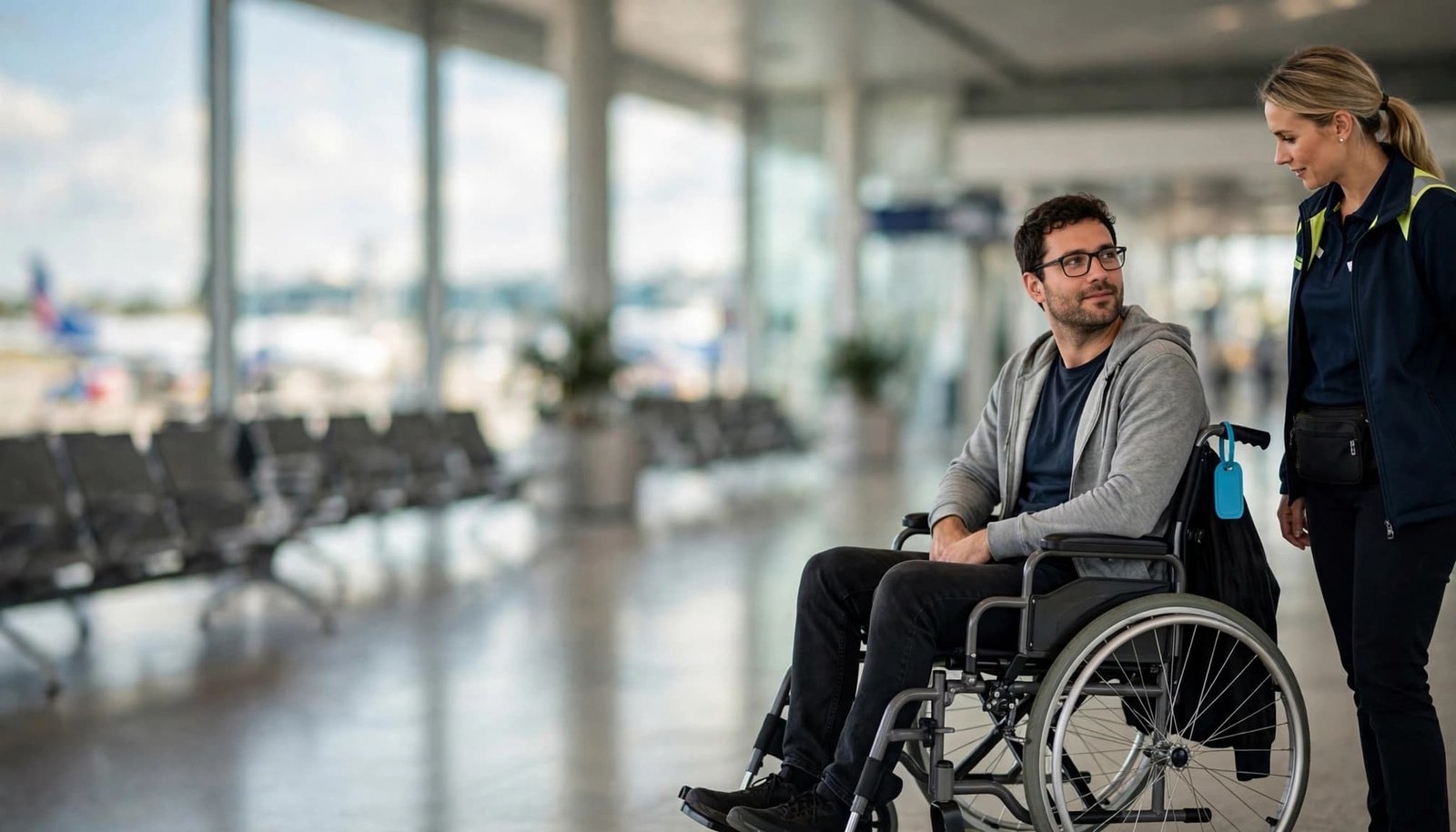
Airlines must promptly provide requested assistance. Identify yourself to airline staff after arriving, even if assistance is listed in your reservation. Staff may not know you’ve arrived.
Assistance includes moving through the airport, making connections, and reaching appropriate arrival areas. On the way to a departing flight, staff must stop at a bathroom on your route when that won’t cause unreasonable delay.
An airline can’t leave you unattended for more than 30 minutes in a wheelchair or device in which you aren’t independently mobile, unless you explicitly agree.
Having a companion with you doesn’t remove the airline’s responsibility under the 30-minute rule.
Airlines remain responsible for assistance required under Part 382, even when they use contractors. Airport operators are responsible for their facilities, and TSA handles security screening.
Preboarding before other passengers
If you self-identify as needing additional time or assistance to board because of a disability, the airline must allow you to board before other passengers.
Tell the gate agent before boarding begins. If your departure gate changes, repeat your request. Explain whether you need transfer support, help getting seated, or time to stow accessibility equipment.
This right isn’t limited to wheelchair users. A passenger with a cognitive, developmental, sensory, or other disability may also need additional boarding time.
The DOT’s Airline Passengers with Disabilities Bill of Rights describes these protections.
What Help Is Available Onboard?
Seating, communication, and personal care
Airlines must provide required disability-related seating accommodations under applicable rules. Explain your functional needs, such as a movable aisle armrest, a seat beside someone who provides disability-related assistance, or another qualifying seat accommodation. A preferred seat or premium upgrade isn’t automatically included.
Passengers with hearing or vision disabilities must receive accessible safety information and relevant flight communications.
A flight attendant may assist with an onboard wheelchair when one is provided. Ask the flight attendant what assistance is available. This doesn’t guarantee an accessible lavatory. Staff aren’t required to provide feeding, medication administration, or personal bathroom care.
American may require a safety assistant when a passenger cannot understand or respond appropriately to safety instructions. A diagnosis alone doesn’t establish that need.
Service animals require separate preparation
Air travel protections cover dogs trained to perform disability-related work or tasks. Emotional support alone doesn’t qualify a dog as a service animal under airline rules.
DOT forms may be required, and any advance-submission requirement depends on when you book and current rules. Check the airline’s current instructions before travel.
Our guide to flying with a service dog explains forms and airport routines.
Flying With Wheelchairs and Mobility Devices
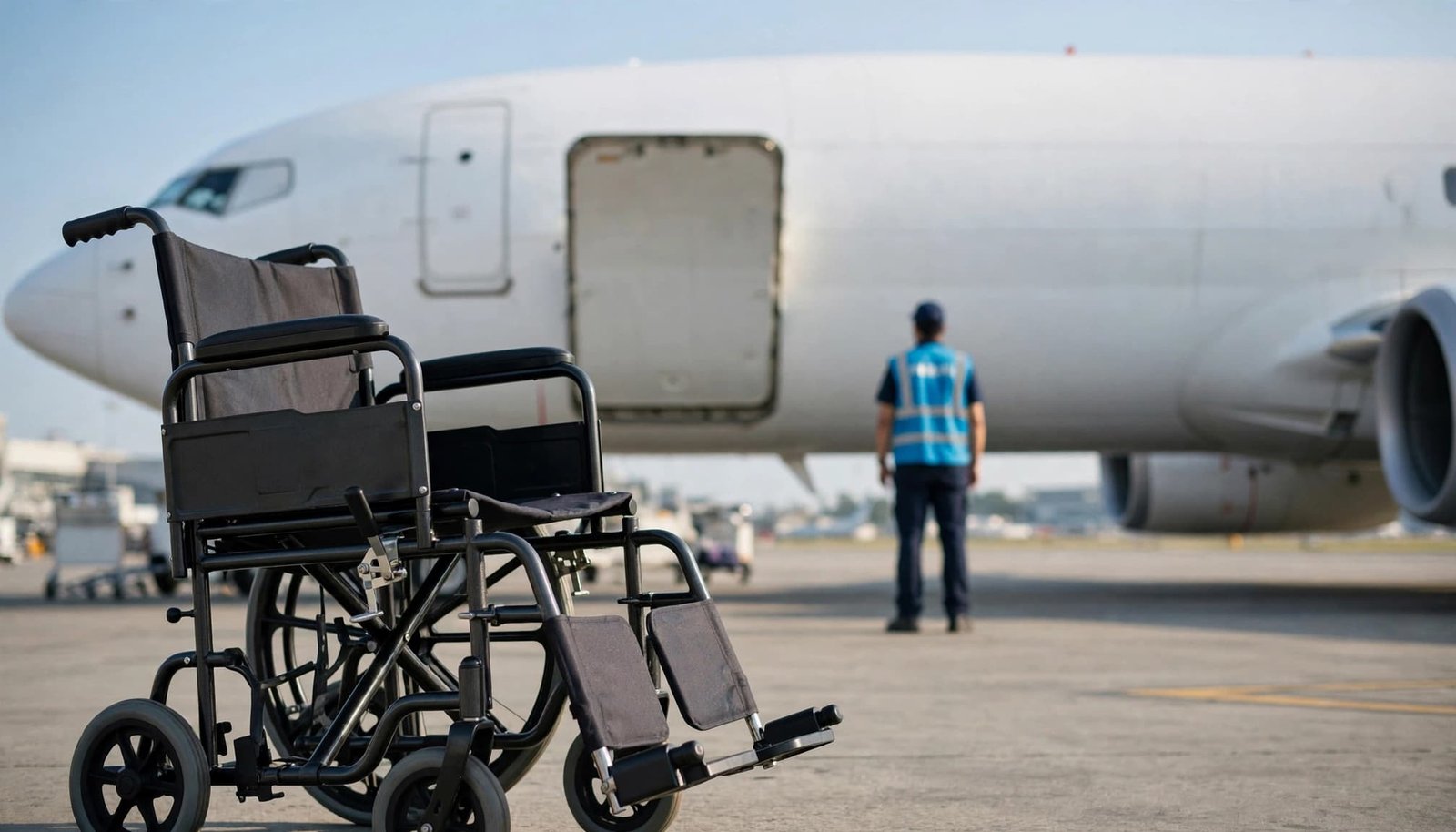
Your wheelchair is an essential assistive device. Give the airline its dimensions, weight, battery type, and handling instructions. Include transfer needs and your request to remain in your personal chair until the aircraft door.
Under United’s wheelchair assistance policy, passengers can check up to two wheelchairs, scooters, or mobility devices free, in addition to checked bags.
United says airport wheelchairs are typically 18 inches wide. Tell staff if that won’t meet your positioning or size needs.
United says chairs weighing under 250 pounds can usually travel in cargo on most aircraft. This isn’t a universal acceptance limit. Aircraft size, cargo-door dimensions, and operational restrictions still matter.
An electric chair may be stowed in the cabin if it fits in an approved onboard storage area. Otherwise, it may need to be checked at the ticket counter or gate and transported as cargo. Battery-specific handling requirements apply. Don’t assume every battery must be removed.
Before handing over your chair, photograph it and record its working controls. Attach concise handling instructions, including safe lifting points and fragile components.
Keep removable essentials in the cabin when safe and permitted. Leave necessary positioning supports in place, and inspect the chair when it’s returned.
When Assistance Fails, Ask for the CRO
A Complaint Resolution Official, or CRO, is the airline’s disability accommodation expert. Airlines must make one available at no cost, in person or by phone, during operating hours at airports they serve.
Ask for the CRO while the problem is happening. Explain what assistance is missing and what immediate solution you need. Record the time, location, employee names, and what staff offered.
If your wheelchair is damaged, report it before leaving the airport. Request a written report, claim number, and safe temporary mobility solution. Our guide to reporting airline wheelchair damage covers those steps.
Send a written disability complaint to the airline within 45 days of the incident. The airline must acknowledge it within 30 days and provide a substantive response within 60 days.
You can also file a separate disability complaint with DOT. Include the airline’s response, claim records, and requested remedy. DOT’s review doesn’t guarantee compensation or a completion date, and it doesn’t replace your damage claim or legal action.
Prepare Your Family for a More Comfortable Trip
For children with autism, explain specific needs rather than requesting general “special assistance.” Your child may need additional boarding time, accessible communication, or seating beside the person who supports them. Airline assistance doesn’t include continuous supervision.
Our planning draws on firsthand family experience, real-world travel planning, and Kellie’s B.A. in Child Development. We help families organize accessibility needs, sensory breaks, and realistic vacation schedules.
For Disney trips with autistic children, our Disney World with Autism: The Complete Family Guide is available as an Etsy PDF edition and through our Amazon book listing.
Our travel supplies shop includes strollers and cleaning supplies for illness during vacation. These supplies complement your plan; they don’t replace required airline assistance.
Frequently Asked Questions
What if I didn’t request wheelchair assistance beforehand?
Identify yourself to airline staff as soon as you arrive and explain your mobility needs. Ordinary wheelchair assistance generally doesn’t require advance notice or medical documentation.
The airline must still make reasonable efforts to provide required assistance. Specialized equipment and certain services can have separate notice requirements. Forgetting to add wheelchair assistance to your reservation doesn’t automatically remove your right to help.
How do I request TSA assistance?
TSA handles security screening separately from airline boarding and wheelchair services.
Request TSA Cares passenger support at least 72 hours before departure when possible. You can use its request form or call 855-787-2227.
TSA Cares helps with screening-related needs. It doesn’t replace airline assistance, provide personal care, or exempt you from security screening. Keep both arrangements in your travel plan.
Know Your Rights Before Travel Day
Airline disability assistance works best when your requests describe the support you need at each stage. Identify yourself at the airport, explain boarding needs, and keep mobility-device instructions available.
You deserve prompt, respectful assistance. If required help is missing, ask for the CRO while staff can still address the problem.
We’re here to help your family prepare for comfortable, accessible travel with less uncertainty.
Leave a Reply