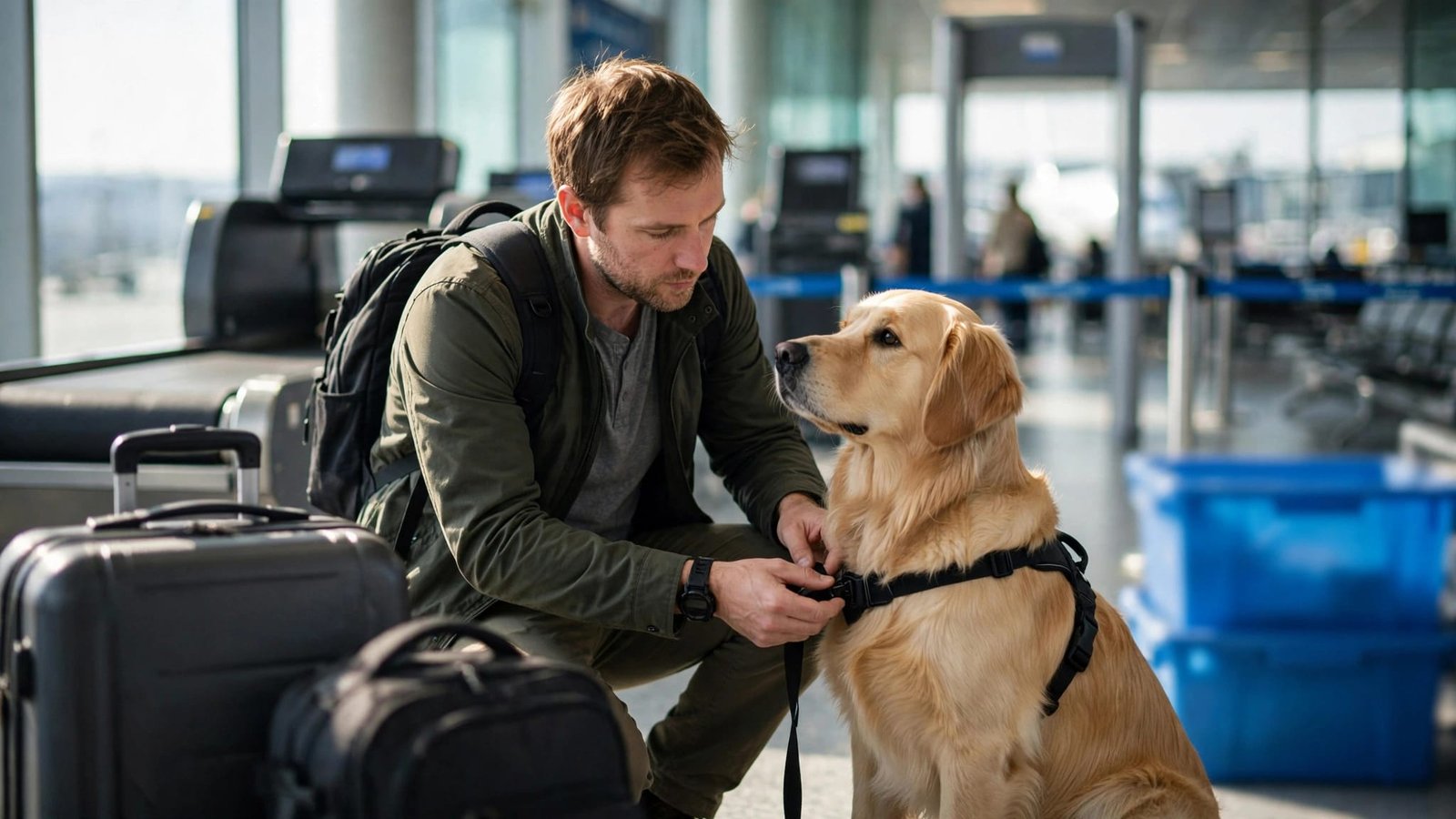
Flying with a service dog starts with confirming airline rules and booking details, then completing forms and preparing for the airport. Plan for security screening, boarding, and your dog’s comfort after you arrive.
Airline decisions about access to the passenger cabin and TSA security screening are separate. One approval doesn’t cover everything.
Once the details are set, build an airport routine that supports your needs and your dog’s working role.
Key Takeaways
- Federal DOT rules let airlines require forms 48 hours before departure when you booked more than 48 hours ahead. Check your airline’s submission process; last-minute bookings follow different timing rules.
- TSA handles checkpoint screening of your service dog and its equipment. Necessary control or on-duty gear doesn’t have to be removed.
- Check seating and passenger cabin arrangements separately from international entry requirements. A vest, ID card, or registration doesn’t establish eligibility.
Flying With a Service Dog: Which Rules Apply?
Airline access follows DOT rules
U.S. airline access is governed by the Air Carrier Access Act and Department of Transportation rules. The Americans with Disabilities Act applies to many other public settings, so rules and access disputes can differ by setting.
For air travel, a service animal is a dog individually trained to perform disability-related work or tasks. A psychiatric service dog or medical alert service dog may perform qualifying tasks; neither is a separate certification category.
Comfort alone doesn’t qualify. Emotional-support animals, therapy dogs, and service dogs still in training don’t receive the same federal airline access protections.
Your dog needs to remain under control and behave appropriately in a busy passenger cabin. Task-based training and public access training help prepare your dog, but neither is a federal certification requirement.
What can staff ask?
In settings covered by the ADA, staff may ask two questions when the dog’s role isn’t obvious: Is the dog required because of a disability? What work or task has it been trained to perform?
They can’t demand a diagnosis, task demonstration, or certification. The ADA service animal guidance confirms that a service dog vest, service dog ID card, special identification, or registration isn’t federally required. An ADA quick-reference card can help explain public-access rules.
Airlines have separate documentation rules. They may ask about disability-related tasks, review DOT forms, and assess behavior in the passenger cabin. An ADA quick-reference card doesn’t replace airline forms.
Complete the DOT Forms Before Departure
Fill out the transportation form
An airline may require the DOT Service Animal Air Transportation Form, often called the DOT service animal form. It asks about your dog’s health, rabies vaccination, training, and behavior.
Have veterinary records, your veterinarian’s contact information, and vaccination details ready. You’ll also need the name and contact information of the trainer or training organization. If you trained your dog yourself, identify yourself where appropriate.
Answer each section accurately and sign the attestations. A service dog ID card, paid registration, or purchased certificate isn’t a substitute for DOT paperwork.
For a flight segment scheduled for eight hours or more, the airline may also require the DOT Service Animal Relief Attestation Form. It asks whether your dog can avoid relieving itself or can do so without creating a health or sanitation problem in the passenger cabin.
Submit through your airline’s process
The DOT service animal requirements explain the federal timing rule. Airlines may require forms up to 48 hours ahead if you booked more than 48 hours before departure.
For reservations made within 48 hours of departure, passengers must be allowed to provide forms at the gate. If you miss an advance deadline, the airline must first make reasonable efforts to accommodate you.
Follow the carrier’s current instructions for submitting the DOT service animal form, including any additional procedures. These procedures don’t override the federal gate option for reservations made within 48 hours. Confirm that your dog is attached to the reservation and check whether the return trip needs another submission.
Save the completed forms, acceptance message, and any reference number offline. Carry printed copies too.
A submitted form and an accepted form are different. Check the submission status before travel day so you can address missing information at home.
Choose Seats Around Your Dog’s Space
There isn’t one airline or bulkhead layout that works best for every service dog. Aircraft type, seat arrangement, and your dog’s settled size matter more than a general “dog-friendly” label.
These carrier-specific procedures are starting points only. Verify current official guidance before booking and again before departure.
| Airline | What to check before departure |
|---|---|
| Delta Air Lines | Current official guidance on forms, deadlines, and seating for your flight. |
| American Airlines | Current official guidance on documentation and seating accommodations for your aircraft. |
| Southwest Airlines | Current official guidance on service-dog procedures and available space for your flight. |
| Alaska Airlines | Current official guidance on service-animal requirements and seating for your flight. |
| United Airlines | Current official guidance on forms, deadlines, and seating for your flight. |
The best choice is the flight that meets your access, space, and connection needs.
For Delta Air Lines, Delta’s service animal instructions explain its current process. American’s service animal requirements are another carrier-specific reference.
Ask about usable floor space, not only seat pitch. Your dog can’t block an aisle or emergency exit, and exit-row seating isn’t permitted.
Bulkhead seating isn’t automatically roomier for a dog. Some seats have fixed armrests or other limitations. Ask the accessibility team which seat works for your dog and any mobility equipment, then reconfirm after an aircraft change.
Plan for your dog to remain with you in the passenger cabin. The cargo hold isn’t an alternative accommodation for a service dog.
Build Your Airport Routine Before You Leave
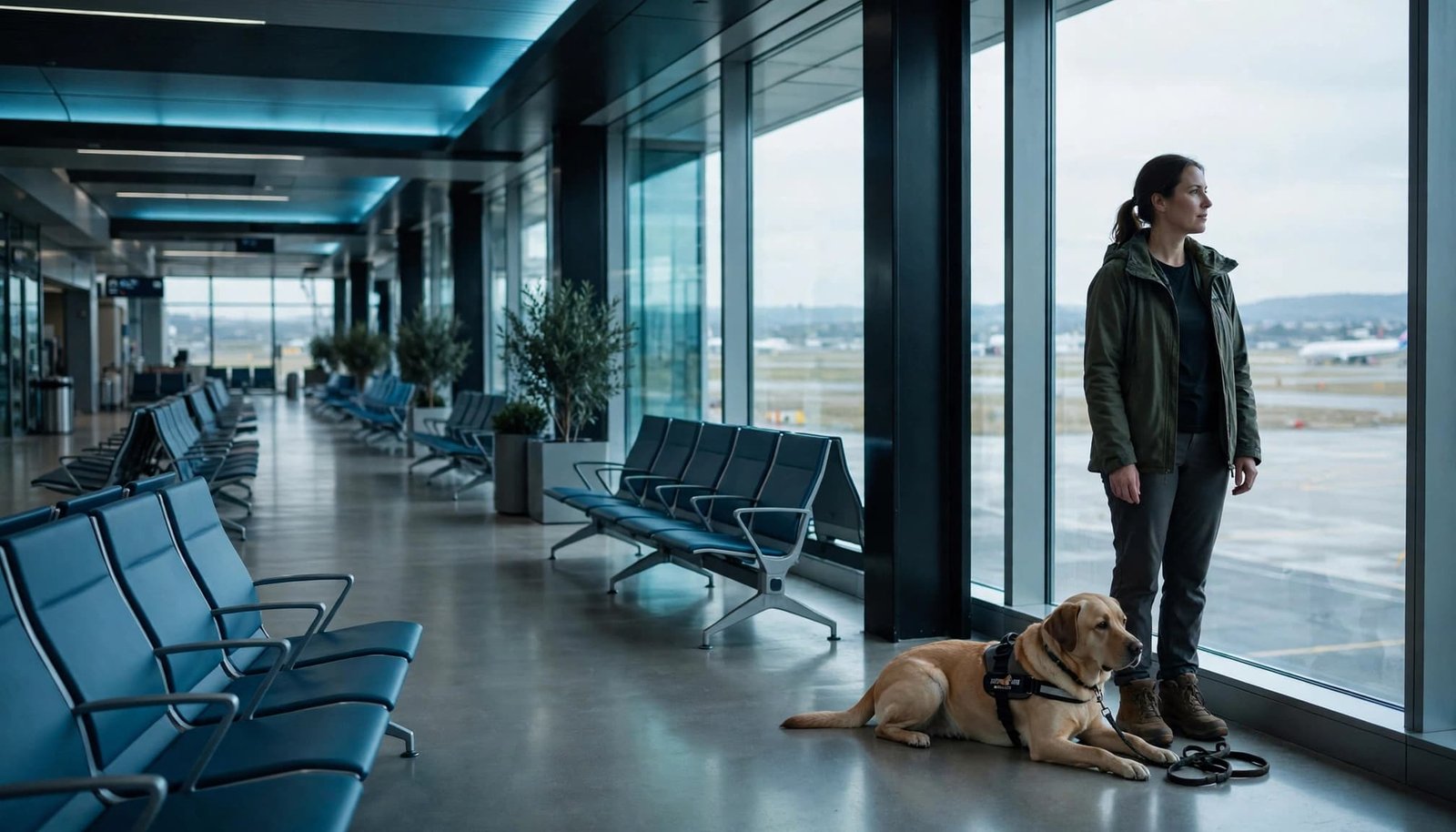
Pack a practical service dog travel kit
Keep your dog’s supplies in a carry-on you can reach in the passenger cabin, especially during delays. An organized kit makes it easier to find what you need in crowded spaces.
- Pack a collapsible bowl, familiar food, waste bags, absorbent pads, and cleanup supplies.
- Keep medications, veterinary records, DOT forms, and airline confirmation together.
- Bring a familiar settling mat, rewards your dog already knows, and a backup leash.
Follow your veterinarian’s advice about meals, hydration, and medications. Don’t introduce a sedative or new feeding routine without that guidance.
For family supplies, our Trip Rescue Shop includes strollers, travel essentials, and cleaning products for unexpected sick-on-vacation moments. Choose items around your actual needs.
Plan relief breaks and assistance
Locate service animal relief areas at your departure, connection, and arrival airports. Check whether they’re before or after security.
Allow time for a relief break before screening and another before boarding when practical. A short connection can become difficult when it includes a terminal change and a relief stop.
Request airline mobility assistance separately from TSA support. Our wheelchair airport transfer planning can help families coordinate those additional handoffs.
If you’re traveling with another adult, agree on roles. One person can manage bags while the handler stays focused on the dog.
What Happens at TSA Security?
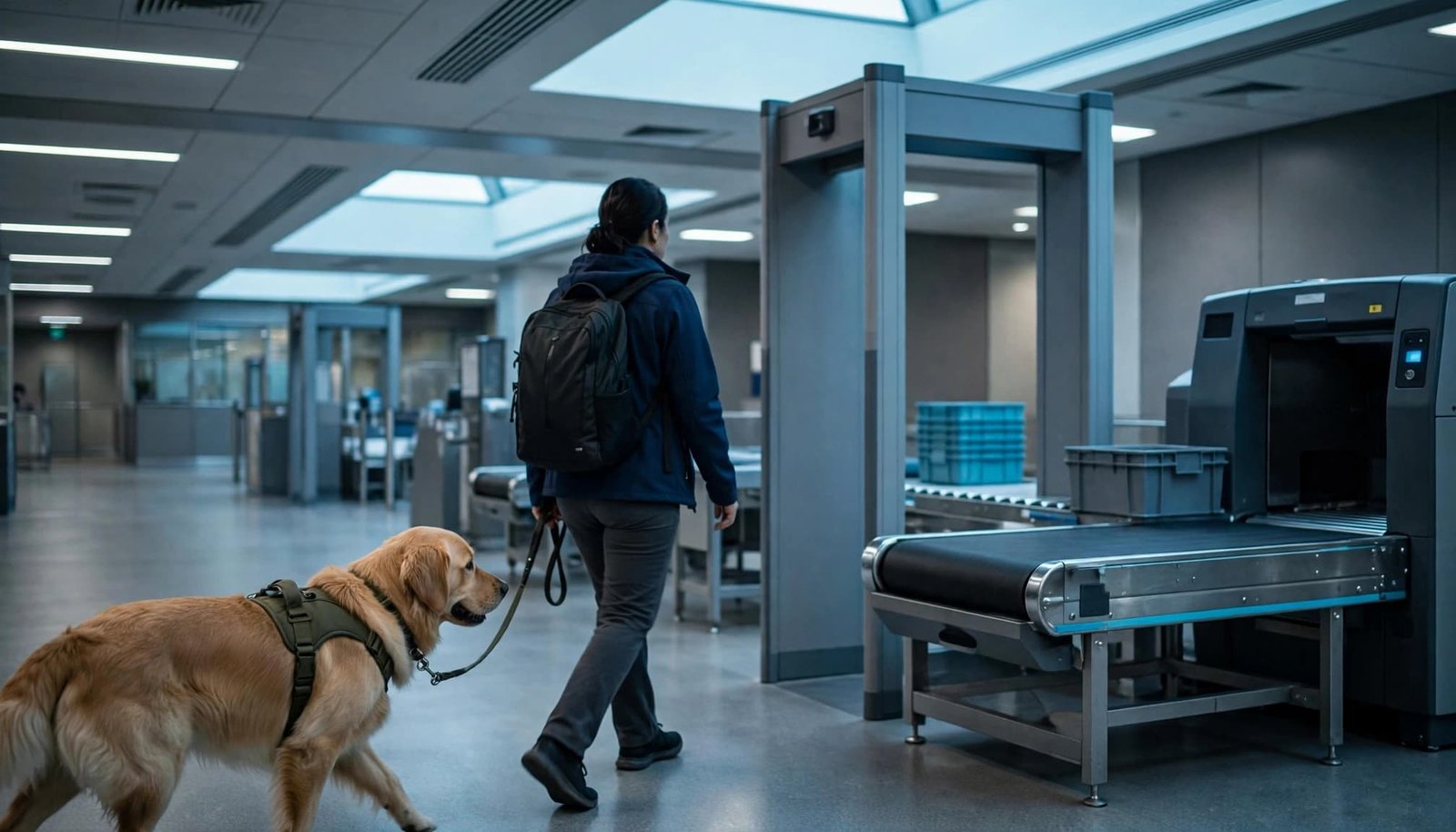
Your dog and gear are screened
TSA, not the airline, conducts security screening at the checkpoint. Tell the officer you’re traveling with a service dog before screening begins, and explain any mobility or communication needs that affect the process.
You and your dog may walk through the metal detector together, or the officer may direct you to pass through the metal detector separately with your dog on a leash.
Collars, harnesses, leashes, vests, and other equipment are subject to screening. Items needed to maintain control or show your dog is working don’t need to be removed.
An alarm or a declined screening method can lead to additional screening, including a pat down. TSA’s service animal screening procedures explain what to expect.
TSA won’t separate you from your service dog. During the dog’s additional security screening, don’t touch it except to hold the leash.
Ask for support before a difficult moment
Contact TSA Cares at least 72 hours before departure when possible. The phone number is 1-855-787-2227.
Share practical needs, such as one-step directions, extra processing time, sensitivity to touch, or use of an AAC communication device. You don’t need to explain your full medical history.
A Passenger Support Specialist may help explain procedures, including what to expect during a pat down, and support communication. Assistance doesn’t guarantee a particular lane, shorter wait, private screening, or screening result.
TSA Cares covers the checkpoint, not the passenger cabin. Arrange boarding, wheelchair assistance, and connection support through your airline. You can request a supervisor or Passenger Support Specialist if you need help during screening.
Boarding and In-Flight Comfort
At the gate, confirm your seat and ask the airline about preboarding if you need time to position your dog or arrange disability-related equipment. A gate agent can confirm accepted paperwork or boarding arrangements, while federal access rules remain separate from airline procedures. Keep your forms available, even if they were accepted earlier.
Keep your dog within its permitted space in the passenger cabin. Your dog can’t occupy a passenger seat or block an aisle or exit. Keep the leash organized to avoid creating a trip hazard.
Before travel, practice calm settling around luggage, unfamiliar sounds, and close seating. Use familiar cues and rewards rather than introducing new routines during boarding.
During turbulence, keep your dog settled and follow crew instructions. Don’t move through the cabin while movement is restricted.
Keep cleanup supplies accessible, and tell the crew early if your dog becomes distressed. After landing, plan a relief break before baggage claim or ground transportation when practical.
International Flights Need a Separate Plan
DOT paperwork doesn’t replace another country’s animal entry requirements. Before booking, check the destination, transit countries, operating airline, and return requirements.
International connections may involve customs, another security checkpoint, terminal transfers, and limited access to relief areas. Allow enough time for those steps.
For entry or return to the United States, CDC requirements include a Dog Import Form receipt. Dogs must be at least six months old, microchipped, and appear healthy, but verify current rules before travel.
Additional requirements depend on where your dog has been during the preceding six months. Review current CDC instructions and the destination country’s official animal-import guidance.
Start veterinary planning early. Vaccination records, health certificates, and government endorsements may require advance appointments. Airline approval doesn’t confirm that your dog meets border requirements.
Support for Families Heading to Disney
If your flight is part of a Disney vacation with an autistic child, prepare the airport routine alongside your park plans. A short visual schedule can show check-in, security, waiting, boarding, and arrival.
Use familiar headphones, snacks, and communication tools. Travel day isn’t the time to test new sensory supports.
Our Disney autism planning resources help families plan around individual support needs. Our Disney World autism ebook is available as a PDF guide on Etsy and as a Disney autism guide on Amazon.
K&S The Travel Crusaders brings firsthand family experience, real-world travel planning experience, and Kellie’s B.A. in Child Development to this work. Disney’s Disability Access Service addresses attraction waits; it doesn’t exempt guests from security screening.
Frequently Asked Questions
Can an airline require service dog forms before my flight?
Yes. If you booked more than 48 hours before departure, an airline may require DOT forms up to 48 hours ahead; for reservations made within 48 hours, you must be allowed to provide them at the gate. Check the carrier’s submission process and confirm your forms were accepted.
Do I need to remove my service dog’s harness or vest at TSA?
Not necessarily. TSA screens your dog and its equipment, but gear needed to maintain control or show your dog is working doesn’t have to be removed. Tell the officer about your service dog before screening begins and follow their instructions.
Can my service dog sit in a passenger seat?
No. Your dog must stay within its permitted space in the passenger cabin and can’t occupy a passenger seat or block an aisle or exit. Ask the airline about usable floor space and seating arrangements for your aircraft.
Do DOT forms cover international travel?
No. DOT forms address airline access, not another country’s animal entry rules. Check requirements for your destination, transit countries, and return to the United States before booking.
A Flight Plan That Supports You
Flying with a service dog is easier to prepare for when each part of the day has its own plan. Confirm your forms, choose suitable seating, and protect time for screening and relief breaks.
Your individual needs should guide the routine, including any family sensory or mobility support.
For help coordinating the wider vacation, our special needs travel planning offers personalized support for families nationwide.
Leave a Reply