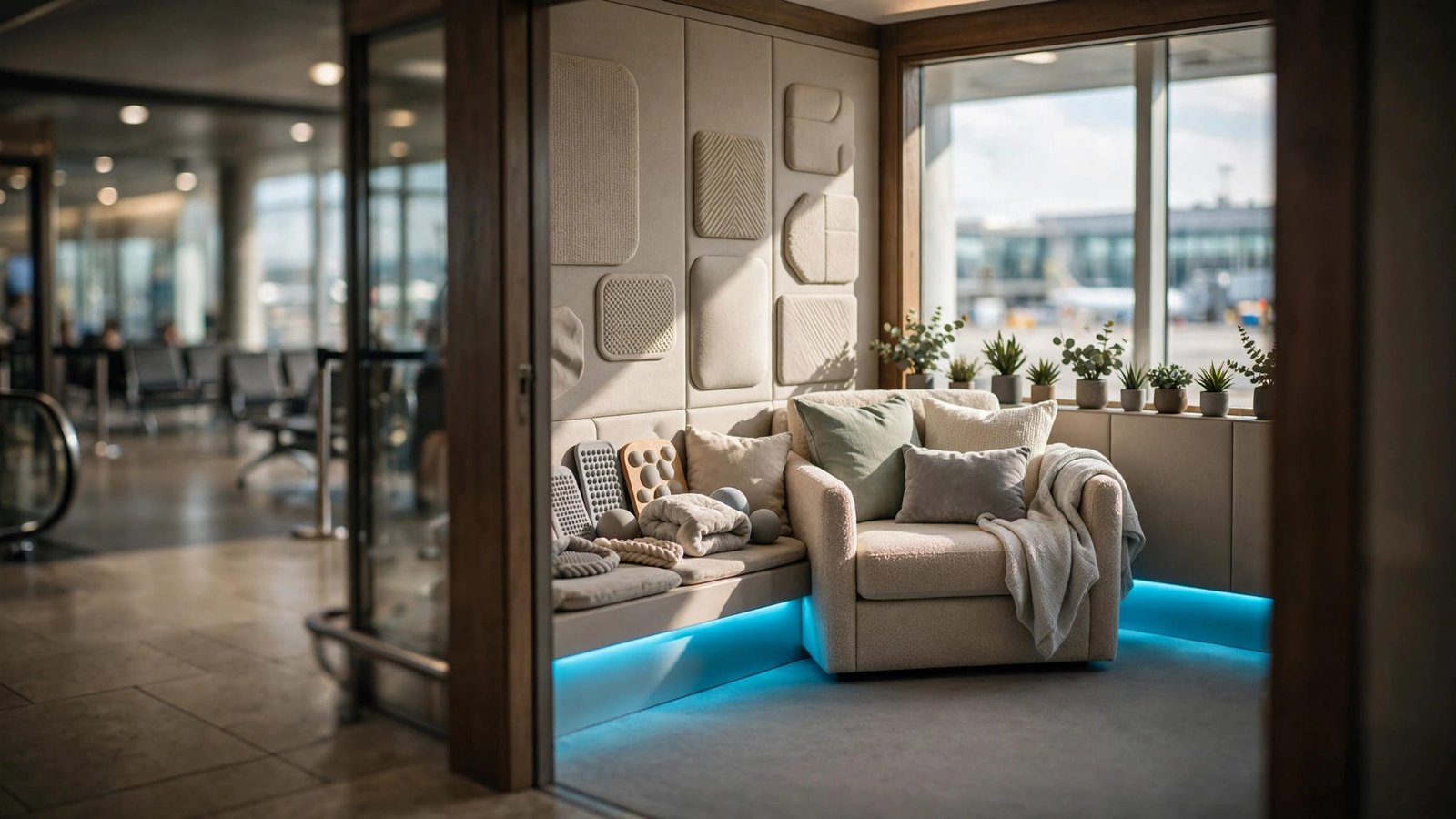
A quieter airport break can make the next part of your travel day feel more manageable. Airport sensory rooms give autistic travelers and families a place to pause. For neurodivergent passengers with sensory sensitivities, finding the room and getting inside can take planning and may help prevent sensory overload.
The most helpful detail is where the room sits in your actual travel route, especially before or after security. Availability, amenities, and access rules vary by airport, so check its official website or contact the airport before traveling. Start with your terminal, your traveler’s preferences, and the airport’s entry instructions.
Key Takeaways
- Check the airport accessibility page for the room’s location, hours, and access rules before departure.
- Confirm whether you can reach it without leaving your secure terminal area.
- Keep familiar comfort items available, even when a sensory room is nearby.
- Arrange travel accommodations separately with the airport, airline, and security teams.
- Choose a backup break location in case the room is unavailable.
What Can Airport Sensory Rooms Offer?
These spaces provide a break from crowded gates, announcements, bright lighting, and other airport demands. Needs vary for travelers with autism spectrum disorder, sensory processing disorder, or developmental disabilities.
Equipment and room layouts vary.
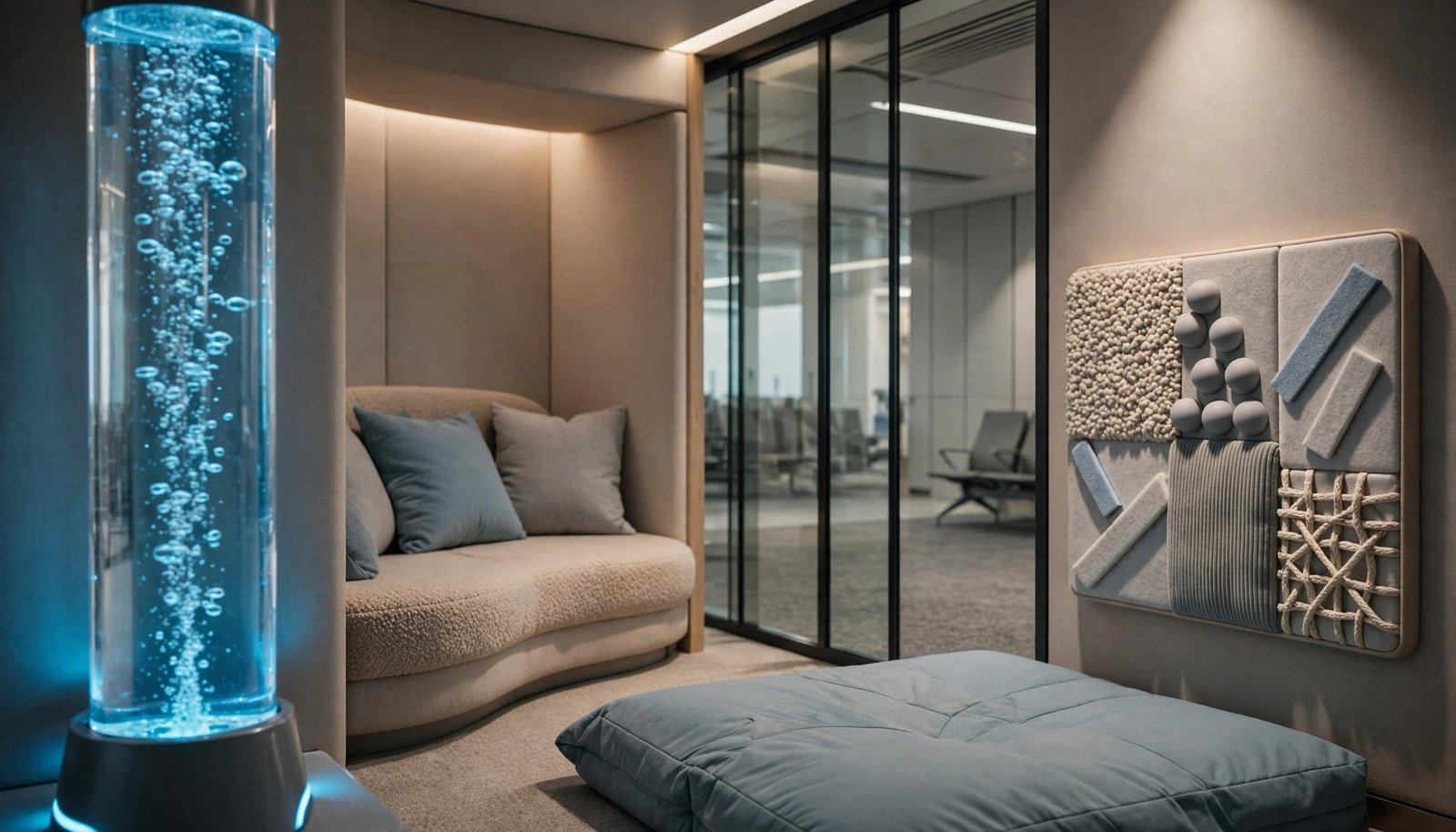
Sensory Equipment and Calmer Seating
Some rooms may offer bubble tubes or a tactile activity panel for tactile input, alongside bean bags, visual lights, or relaxation seating. Boston Logan also lists an airplane-simulation room, while Houston lists soothing lighting and Bluetooth-enabled audio interfaces.
A multi-sensory room may offer several activities rather than complete silence. Ask whether lights and audio can be adjusted to create a calming environment. This may help if movement, glowing displays, or music cause visual overstimulation or discomfort.
Comfort Depends on the Individual
Some autistic travelers enjoy sensory equipment. Others may prefer familiar personal supports, such as noise reduction headphones, snacks, a weighted lap pad, or their AAC device.
Offer choices without expecting anyone to use the equipment. Adults may need breaks too, and eligibility depends on each airport’s rules. Our family travel tips for autism and anxiety offer additional ways to plan around individual comfort and communication needs.
Sensory Rooms at Salt Lake City and Houston
These airports publish sensory-room information, but their locations and entry procedures differ. Confirm details for your departure or connection.
Salt Lake City International Airport (SLC)
SLC’s accessibility page and airport guide list three rooms: Concourse A-east beside White Horse; Concourse B-west opposite Gourmandise: Euro Diner and Bakery, behind the escalators; and Concourse B-east beside Gate B36.
There is a location discrepancy. The airport’s April 2025 sensory-needs information describes the A-concourse room as A-west, while its accessibility page and guide say A-east.
Call 801-575-2401 to confirm the correct location and access instructions. Listed equipment includes bean bags, visual light panels, activity panels, air walls, and ADA seating. Ask whether these options provide the tactile input your traveler prefers.
At SLC, plan by terminal concourse rather than looking for a separate terminal number. Ask which room is easiest to reach from your assigned gate.
George Bush Intercontinental Airport (IAH)
Houston lists sensory rooms in Terminals A and D. Call the Airport Operations Center at 281-230-1300 for access.
The Terminal A room is inside the Mother’s Room, between Gate A2 and The Breakfast Klub. Its door uses a push-button cipher lock.
The Terminal D room is on the West Pier, between Gates D3 and D5, across from Urban Crave. Houston’s IAH sensory-room information provides entry guidance.
Before crossing terminals, ask staff about the route, walking time, and return to your departure gate. A room farther away may add more transitions than your family needs.
Sensory Rooms at Detroit Metro and Boston Logan
Detroit and Boston both publish around-the-clock availability. Their entry methods differ, so save the instructions for your airport.
Detroit Metropolitan Wayne County Airport (DTW)
Detroit’s Multi-Sensory Room is in the McNamara Terminal, across from Gate A36. The airport’s opening announcement places it behind Pandora.
Call the number posted at the door using your cell phone to request an access code. The DTW Multi-Sensory Room page lists availability 24 hours a day, seven days a week, with a maximum capacity of six.
Because the phone number is posted at the room, keep your phone charged. If you can’t make the call, ask airport staff for help. Travelers departing from another terminal should confirm whether visiting the room is practical.
Boston Logan International Airport (BOS)
Boston Logan’s Sensory/Calming Room is in Terminal E, post security, near Gate E15. Massport lists it as open 24 hours a day, seven days a week.
The published entry sequence is 1, 4, 3, then ENTER. Verify it before travel in case instructions change.
The Boston Logan Sensory/Calming Room page lists tactile stations, light therapy, sounds and music, relaxation pods, and an airplane-simulation room. Confirm the route if your flight leaves from another terminal.
How to Find and Access Your Airport’s Room
Search your airport’s official website using “sensory room,” “multi-sensory room,” “quiet room,” and “accessibility.” Save the airport map and room instructions on your phone. Check the airport’s official site for current kulturecity participation or sensory-bag information, since offerings vary.
Then check the details that affect your whole journey:
- Confirm the terminal, concourse, and nearest gate or landmark. Check whether the room is pre security or post security, and note its distance from the security checkpoint.
- Request entry instructions. Find out whether you need a phone call, keypad code, reservation, or staff escort. If you need special assistance, request it separately from room access.
- Check hours, eligibility, companion rules, capacity, and any time limits. Ask whether temporary closures are expected.
- Map the room against check-in, security, and your departure gate. Include the return walk and boarding deadline.
- Identify a backup location with airport accessibility staff or at a customer service desk. Ask about a quiet space if the room is busy or closed.
You can keep your request simple: “We need a lower-stimulation break. Where is the nearest sensory room, and how do we enter?”
Do this for your departure, connection, and return airports. A sensory room after security won’t help immediately after parking. Likewise, leaving the secure area during a layover may require screening again.
For an international connection, include passport control and terminal-transfer requirements before deciding whether the room fits your available time.
How to Use the Room Without Adding Pressure
Give yourself a few moments to check the environment. Notice the lighting, sounds, equipment, available seating, and other occupants before choosing where to settle.
Let your traveler decide what feels comfortable. A familiar blanket can offer reassuring tactile input, while a tablet may be more useful than trying every activity. Keep medication, communication supports, and needed supplies within reach.
During a connection, choose a break location you can leave comfortably before boarding. A longer walk to a sensory room may use up the time you needed to rest.
Keep flight updates visible, since announcements may be harder to hear inside. Set a gentle reminder for leaving the room, with enough time for the walk back.
For children who benefit from predictable transitions, explain the next step before it happens. “We’ll have a snack here, then walk to our gate” is clear and manageable.
Respect posted capacity and room rules. If equipment feels uncomfortable, choose a quieter corner or ask staff about another space.
Security Support and Sunflower Identifiers
A sensory room, security assistance, and airline assistance are separate services. Contact the organization responsible for each part of your trip.
TSA Cares for U.S. Security Screening
Contact TSA Cares before travel to discuss screening questions and support needs. Explain practical details such as AAC communication, extra processing time, sensitivity to unexpected touch, or difficulty following several instructions together.
Every traveler still completes screening. Assistance requests don’t guarantee a shorter line, a particular accommodation, or a specific screening outcome.
If two adults are traveling, agree beforehand who handles bags and documents and who stays focused on the child. Request mobility and boarding assistance separately through your airline.
The Hidden Disabilities Sunflower Program
A voluntary sunflower lanyard or card can signal that a traveler may need patience, extra time, or support. The hidden disabilities sunflower program is voluntary, and airport participation and distribution arrangements vary.
KultureCity is separate from the Sunflower program, so verify whether your airport currently participates in KultureCity. A Sunflower identifier doesn’t provide automatic sensory-room access, expedited security, or priority boarding.
You can also make a direct request without sharing a full medical history: “Please give us one instruction at a time.”
Prepare Familiar Supports for the Whole Trip
Practice the airport routine in small steps when everyone is calm. Use airport photos, a short visual schedule, or a social story that allows for waiting and changes.
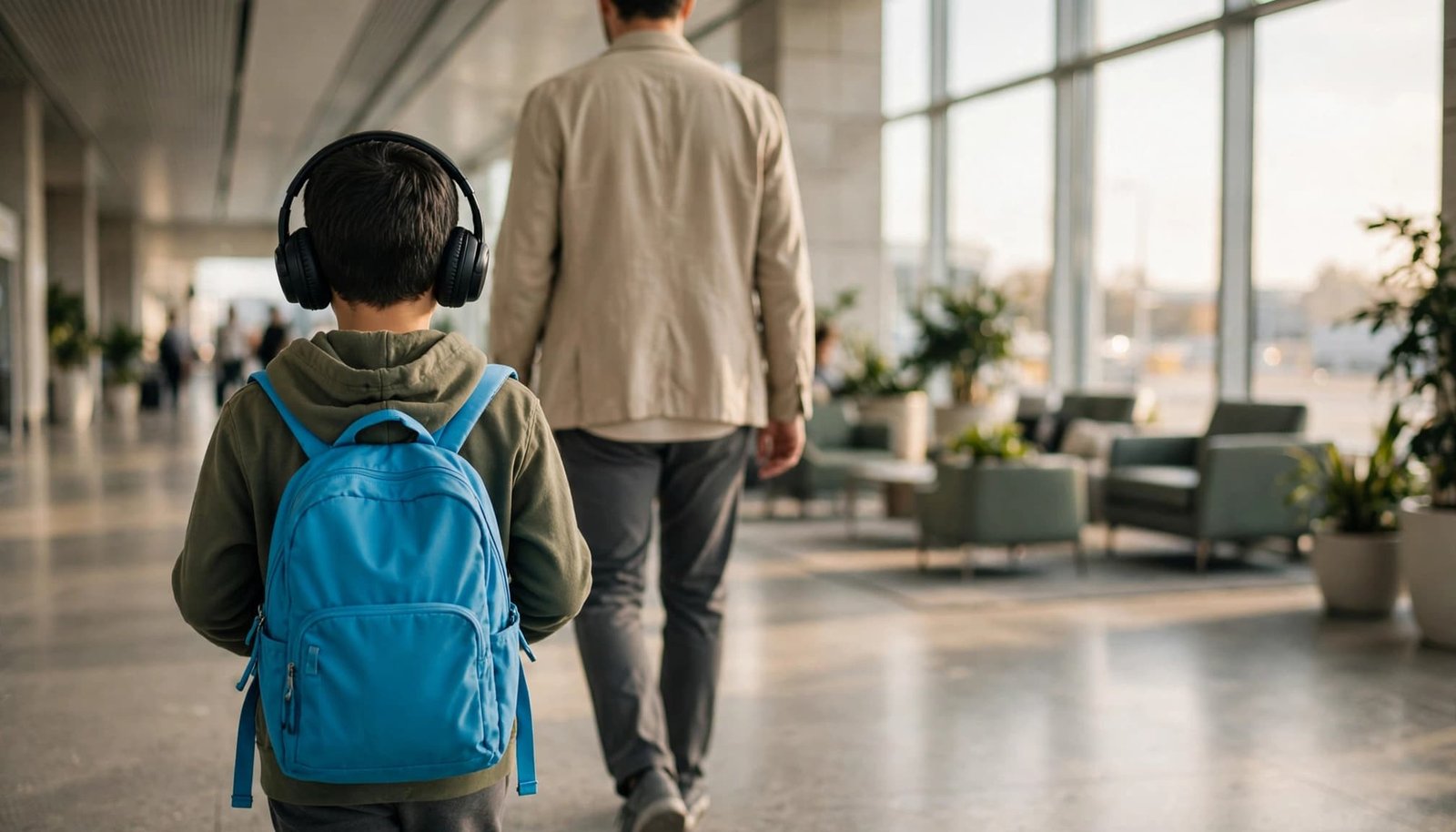
Keep familiar snacks, noise reduction headphones, a comfort item for tactile input, medication, spare clothes, wipes, and chargers in your carry-on. Pack the items your traveler already uses. The airport isn’t the best place to test an unfamiliar sensory product.
Our Trip Rescue Shop offers travel supplies, including strollers and cleaning supplies for unexpected illness on vacation. Check airline rules before packing larger items or liquids.
For families flying to Disney, carry the same comfort plan into transportation, resort arrival, and park days. Our Disney World autism planning guidance helps connect those parts of the vacation.
At K&S The Travel Crusaders, our approach draws on firsthand family experience, real-world travel planning, and Kellie’s B.A. in Child Development. We focus on support that fits your family’s needs.
Our optional planning resources include the Disney World With Autism PDF on Etsy and the Amazon edition of our autism guide. These are family vacation resources, not official airport or TSA instructions.
Frequently Asked Questions
Can Adults Use Airport Sensory Rooms?
Sensory needs aren’t limited to children. Adults, including people with developmental disabilities, may also benefit from a lower-stimulation break. Check the airport’s eligibility and companion rules before traveling. Don’t assume a room described in a family guide is restricted to children.
What If My Airport Has No Dedicated Sensory Room?
Ask passenger services or accessibility staff about a quieter seating area or another appropriate break location. Describe what would help, such as fewer announcements or less foot traffic. Keep familiar supports available and avoid relying on an empty gate staying quiet.
A Calmer Airport Plan Starts With Clear Details
Airport sensory rooms can be a helpful part of your travel day when their location and access fit your route. Confirm the details, bring familiar supports, and keep a backup break plan.
Your traveler doesn’t need to enjoy every part of flying. A thoughtful plan gives you more room to pause, ask for help, and move to the next step at a manageable pace.
Leave a Reply