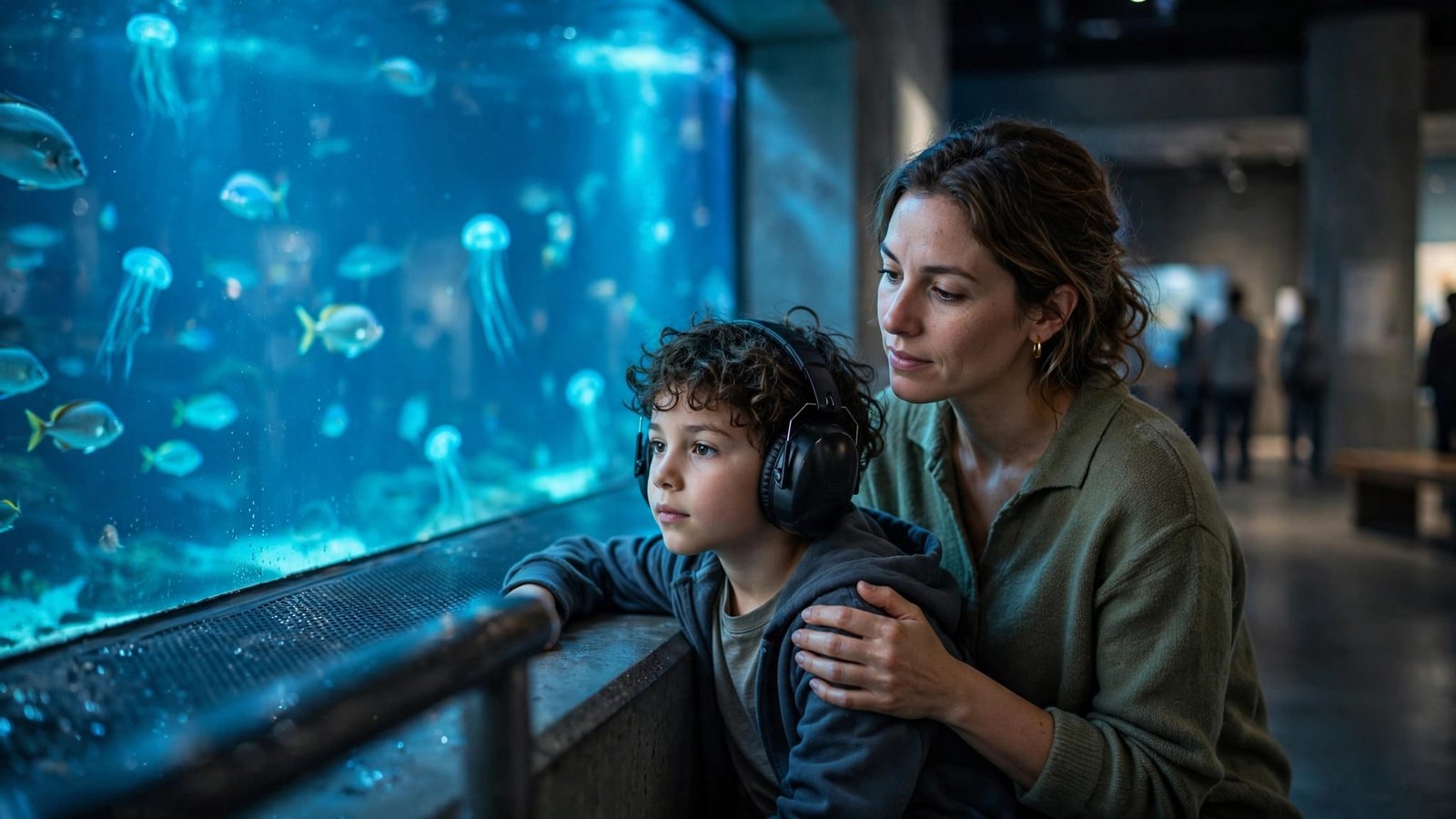
An autism-friendly aquarium can make a visit feel sensory friendly, but your child’s comfort should guide the day. Lighting, echoes, crowds, and transitions may affect a child on the autism spectrum.
Dim galleries and moving fish may feel soothing, though sensory sensitivities vary from child to child. Echoes, crowded viewing windows, and unexpected sounds can be difficult. Familiar supports and flexible expectations can help you plan a visit that works for your family.
Start with the accommodations your child needs, then choose the aquarium and timing around those needs.
Key Takeaways
- Check current sensory supports before buying tickets, including borrowing procedures and quiet-space access.
- Ask what changes during low-sensory hours instead of assuming the whole aquarium will be quiet.
- Bring familiar communication tools, noise-canceling headphones, comfort items, and supplies for unexpected messes.
- Choose a few meaningful exhibits and keep breaks, meals, and an early departure in your plan.
A comfortable visit may include one favorite tank and plenty of time watching it. Your family doesn’t need to see every exhibit.
What Makes an Autism-Friendly Aquarium?
An aquarium may offer practical support for visitors on the autism spectrum, people with sensory processing disorders, and guests with non-visible disabilities. Resources vary by venue, so confirm what your family can access before visiting.
Look for Accommodations Your Child Can Use
Depending on the venue, helpful resources may include sensory bags, visual guides, trained staff, quieter break spaces, and clear information about sound and lighting. Some aquariums also offer sensory rooms, sensory maps, or designated lower-stimulation hours to help visitors manage sensory stimulation.
Ask whether headphones, fidget tools, communication cards, and weighted lap pads are available. Confirm where to collect them and whether borrowing requires identification.
Quiet rooms need another question: can your family enter immediately, or must staff unlock the room? Knowing the procedure ahead of time can make an uncomfortable moment easier.
Understand What Certification Means
IBCCES Certified Autism Center status and KultureCity sensory-inclusive certification are separate programs.
OdySea Aquarium says its certification requirements include training for at least 80% of guest-facing staff. Its page also describes ongoing training, an onsite review, and renewal every two years.
The South Carolina Aquarium describes its KultureCity sensory-inclusive support, including staff preparation for guests with sensory needs.
These designations are useful starting points. Ordinary visiting hours can still include crowds, noise, waiting, and exhibits that don’t suit your child.
Three Aquarium Options to Compare
These aquariums offer different kinds of support. Compare their resources with your child’s needs, then confirm availability for your travel date.
OdySea Aquarium in Scottsdale, Arizona
OdySea Aquarium’s accessibility information identifies the aquarium as an IBCCES Certified Autism Center. It lists a dedicated quiet room, a downloadable visual/social guide, and onsite staff support.
The visual guide can help your child become familiar with OdySea Aquarium before arrival. Review it together without promising that every part of the visit will happen exactly as pictured.
Ask staff how to access the quiet room at OdySea Aquarium and whether any exhibits have unexpected sounds or movement. Bring your own familiar sensory tools rather than depending on unconfirmed loan items.
South Carolina Aquarium in Charleston
The South Carolina Aquarium lists sensory bags, modified maps, weighted lap pads, and Aquarium Stories.
Its accessibility information describes bag contents as noise-reducing headphones, fidget tools, and verbal cue cards. Bags are available at Admissions and the Information Desk inside the entrance, with photo identification used as a deposit.
Modified maps identify headphone zones and calmer areas. Ask staff to help you choose a manageable route.
Families can also ask about expedited entry by calling (843) 577-3474 before visiting. Confirm the arrangement rather than assuming it applies automatically.
Downtown Aquarium Denver, Colorado
Downtown Aquarium Denver has advertised low-sensory mornings for visitors who find standard exhibit conditions overwhelming.
Check its official low-sensory morning information and contact the aquarium before arranging your trip. Older event listings don’t confirm the current schedule.
Ask what changes during the session, whether separate admission is required, and when regular operating conditions resume. Also confirm break spaces and re-entry rules. A reduced-sound session may help your child, but it doesn’t guarantee a crowd-free visit.
Choose Your Time and Route Before Arrival
Ask About Crowds and Sensory Conditions
A weekday morning isn’t always quiet. School groups may arrive early, and rainy days can bring additional indoor visitors.
Call with clear questions about your planned date. Ask when field trips usually arrive and whether feeding talks, demonstrations, or special events affect noise levels.
If the aquarium offers a sensory scale, read its explanation before comparing exhibits. Ratings may cover different features, such as ambient sounds, lighting, or touch. Ask separately about walking distance and crowd levels.
Observation decks may offer space, but wind, traffic, and bright sunlight can create different challenges.
Make the First Few Steps Predictable
Prepare a short visual sequence: travel, entrance, one exhibit, break, and departure. Include a simple way to show that plans have changed.
Explain bag checks or ticket scanning if the aquarium requires them. Keep the arrival message manageable: “We’ll park, go inside, and ask for our map.”
Choose one favorite animal or tank as the main activity. Leave other exhibits optional.
For a first visit, think about the route back to the entrance as carefully as the route inside. Check whether observation decks are open and reachable along your planned route. Confirm elevator locations, accessible restrooms, stroller policies, and whether your family can leave and return. If you selected OdySea Aquarium, recheck its current accessibility information before traveling.
Pack Familiar Sensory and Communication Supports
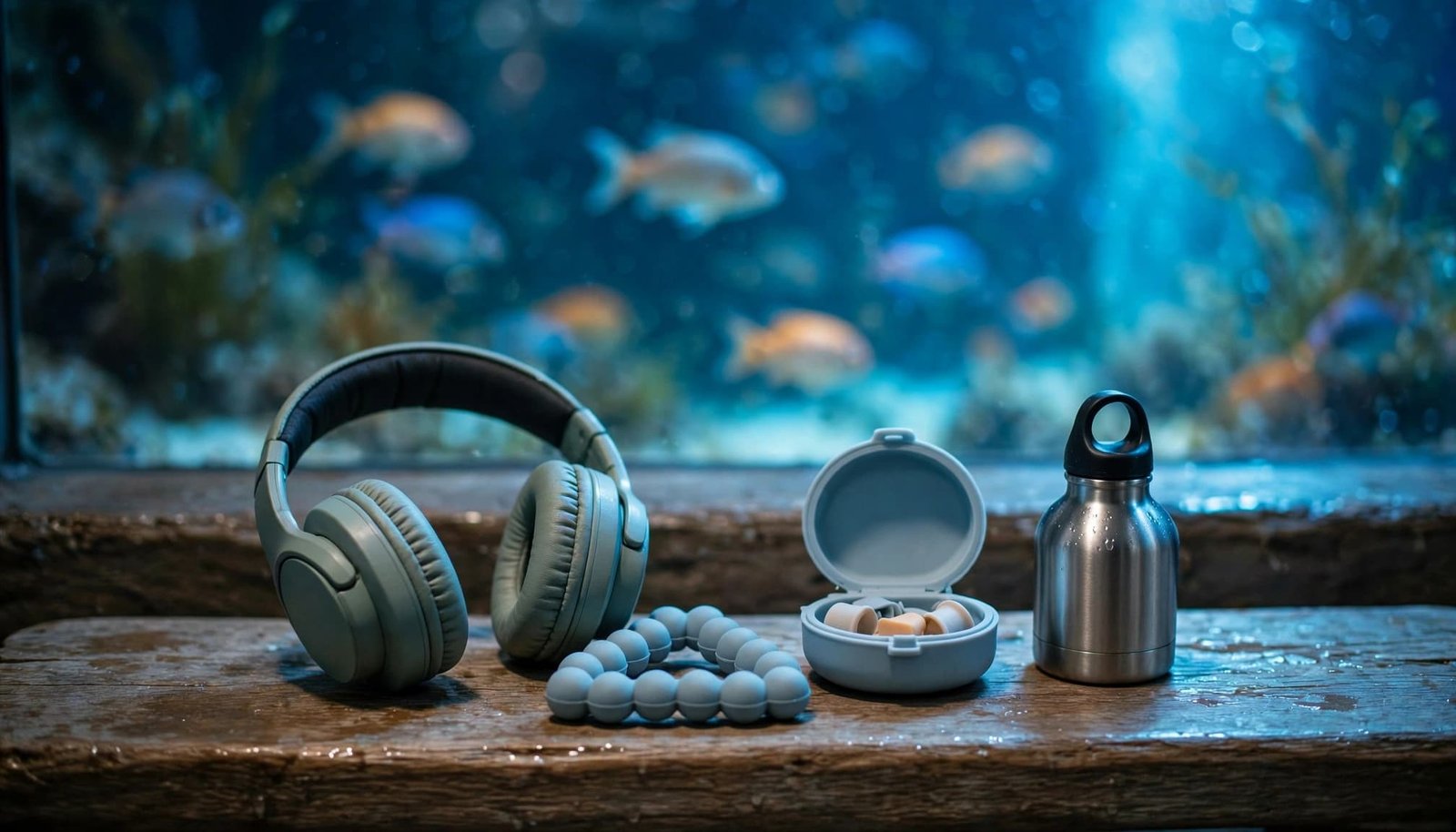
Borrowed sensory bags can be helpful, but familiar items may feel more comfortable. Test headphones before traveling, and keep essential supplies within easy reach.
Your aquarium bag might include:
- Pack tolerated noise-reducing headphones, a familiar fidget, and one comfort item.
- Keep your child’s AAC device or other communication supports available, with a charger and a printed backup.
- Bring medication, wipes, toileting supplies, and spare clothing your family may need.
- Include water and familiar snacks when permitted, with a plan for food restrictions.
Ask about outside-food policies before arrival, including arrangements for medical or dietary needs. A delayed lunch can make an otherwise enjoyable outing harder.
Our Trip Rescue Shop offers practical travel supplies, including strollers and cleaning supplies for unexpected sick-on-vacation moments. Choose items that support your family’s routine rather than adding unnecessary equipment.
If you’re staying overnight, keep the same comfort kit available in your room. Our guide to setting up an autism-friendly hotel room can help you prepare a familiar place to rest afterward.
Plan Breaks Before Your Child Needs One
Find a Primary and Backup Break Space
Ask about quieter areas when you arrive. Confirm whether a quiet room is available throughout the day and whether another family may already be using it.
For OdySea Aquarium or your chosen venue, confirm current procedures for accessing any listed break space rather than assuming it’s available.
A sensory room may include lights, movement, or interactive equipment. Ask whether those features can be adjusted if your child needs less stimulation.
Choose a backup location, too. That might be a quieter bench or another staff-recommended space.
Don’t assume a first-aid room is available for sensory breaks. Ask about access and keep another option ready.
A quiet room helps only when you know how to reach it and whether your family can use it.
Follow Your Child’s Early Signals
Your child’s early signs may include covering their ears, moving away, becoming less responsive, or repeatedly asking to leave. Use the signs you already recognize from everyday outings.
Offer a break before trying another exhibit. Keep communication simple and give your child time to respond.
For children who enjoy it, watching fish may offer a calming environment. It isn’t a treatment or a guaranteed way of reducing anxiety. Allow your child to choose whether to stay.
If leaving is the comfortable choice, leave. You can remember the enjoyable part of the visit without extending it past your child’s limit.
Fit the Aquarium Into Your Family Vacation
An autism-friendly aquarium visit works better when the surrounding day is manageable. Protect breakfast, medication routines, familiar meals, and enough time to rest.
Avoid scheduling another demanding attraction immediately afterward. Watch for fatigue and leave time to recover after a busy outing. Give your family space to decide how the afternoon feels.
For overnight trips, consider travel time between OdySea Aquarium and your hotel when deciding whether a planned break is practical. Families visiting New England can also review our sensory-aware Boston family guide for broader trip preparation.
At K&S The Travel Crusaders, our approach draws on firsthand family experience, real-world travel planning, and Kellie’s B.A. in Child Development. We help families consider accommodations, transportation, pacing, and individual needs through personalized special needs travel planning.
Planning a Disney trip, too? Our Disney World With Autism Guide on Etsy and Disney autism guide on Amazon offer parent-focused preparation ideas.
These are optional planning resources. Current aquarium and Disney accessibility policies should guide your final arrangements.
Frequently Asked Questions
Does My Child Need to Use a Sensory Bag?
No. A sensory bag is an optional support. Your child may prefer familiar items, only use one tool, or need a quieter route instead. Ask about bag contents and borrowing procedures so you can decide what will help.
Should We Include a Touch Tank?
Only if your child wants to participate. Wet hands, unfamiliar textures, splashing, and nearby visitors can feel uncomfortable. Ask whether watching without touching is possible, and explain any handwashing requirements before approaching the area. Keep participation optional.
What if My Child Doesn’t Tolerate Headphones?
Plan around other supports your child already accepts. Shorter visits, quieter viewing areas, distance from speakers, and avoiding presentations may help. Don’t introduce unfamiliar ear protection during a difficult moment. Discuss tolerated options with your child’s existing support providers when helpful.
A Comfortable Visit Is a Successful Visit
The right aquarium plan gives your family flexibility, whether you choose OdySea Aquarium or another venue. Confirm useful accommodations, prepare familiar supports, and leave room for your child’s pace.
One favorite tank and an easy departure can make a meaningful family outing. Seeing every exhibit isn’t necessary.
If you’d like help fitting an aquarium visit into a family vacation, K&S The Travel Crusaders can help you plan around the details that matter to you.
Leave a Reply