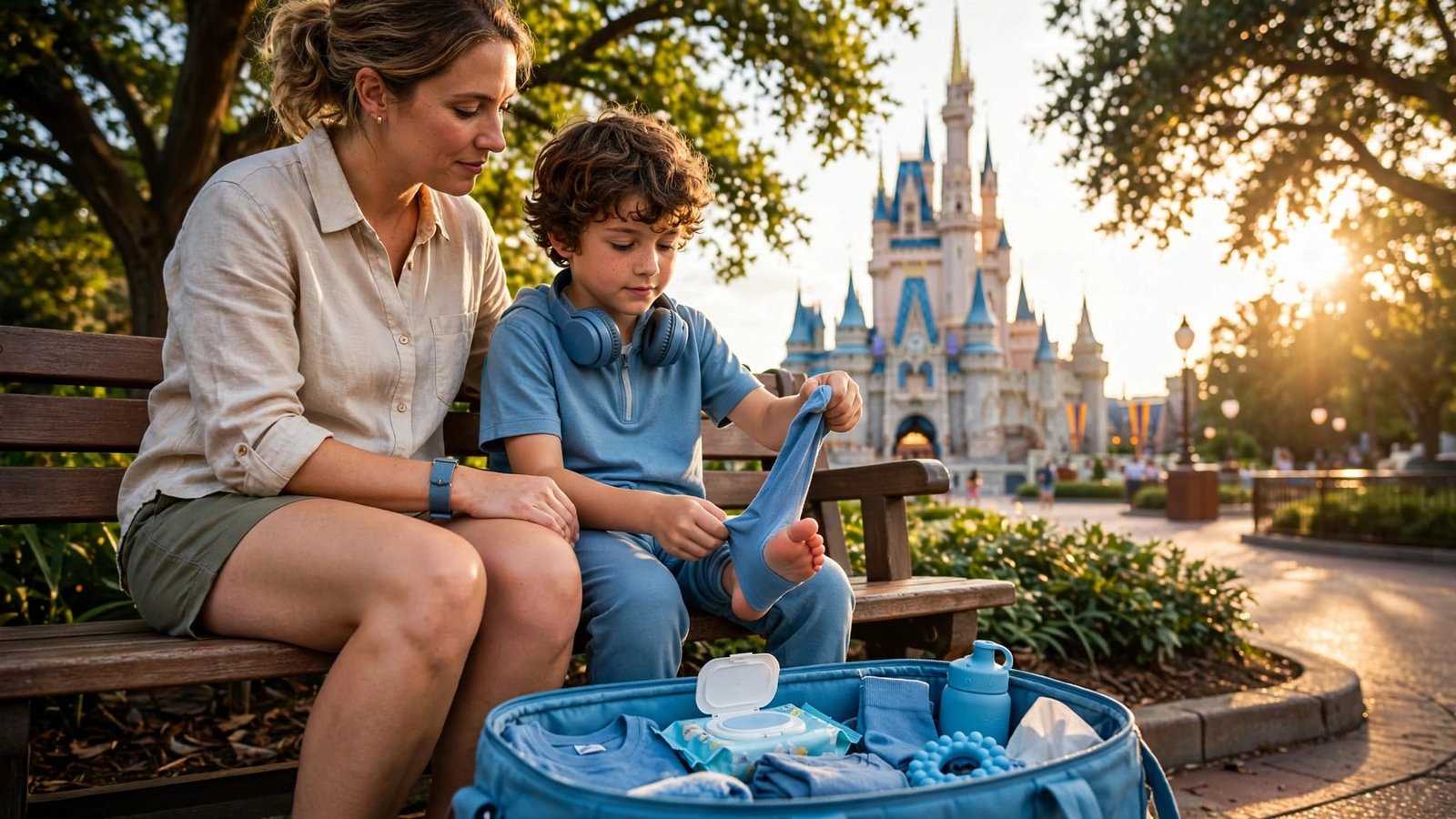
A wet sock can change a Disney day faster than a long attraction line. For a family trip to the theme parks at Walt Disney World Resort, start with clothes autistic children already feel good wearing. Choose sensory friendly clothing and keep an easy change plan ready for rain, heat, or spills.
You don’t need to predict every problem. You need a few comfortable options within reach. Here’s how to build that plan before your family enters the parks.
Key Takeaways
- Choose sensory friendly clothing your child has worn comfortably at home. Check tags, seams, fit, and whether details like flat seams feel comfortable.
- Pack one familiar change of clothes in a separate bag. Keep dry socks and wipes easy to reach.
- Use a visual schedule, if helpful, to show when and where a clothing change might happen, without making it fixed.
- Plan breaks around your child’s needs. Disney’s accessibility services can help with some park challenges, but they don’t replace a comfort plan.
Choose Disney Autism Clothing Around Your Child
The best Disney autism clothing is clothing your child will actually wear. A soft everyday shirt may be a better choice than a new character outfit, even if that outfit looks perfect for photos.
Check the Details That Cause Discomfort
Tags, raised seams, tight waistbands, scratchy prints, and stiff fabrics can all be difficult for a child with clothing sensitivities. Other children prefer a snug fit. Your child’s preferences come first.
Check the inside of each outfit before you pack it. Notice where seams touch the skin and whether a graphic feels stiff against the chest. If your child dislikes tags, try a familiar shirt with a tagless design or one you’ve already made comfortable at home.
Sensory friendly clothing may include flat seams and soft fabrics, but these are options, not requirements. If your child already finds them comfortable, you could test a compression shirt or sensory hoodie at home. The goal is to avoid surprises during a busy park day.
Test the Whole Outfit Before Vacation
Have your child wear the planned outfit for a normal outing. Include the socks, shoes, hat, and any layers they may need. A shirt can feel fine for ten minutes and uncomfortable after a warm walk.
Wash new clothes before the trip if that matches your home routine. Break in shoes before travel. If your child wants a Disney-themed look, try it at home first. A familiar shirt with a favorite character may feel better than a full new outfit.
Pack a Clothing-Change Kit You Can Reach Quickly
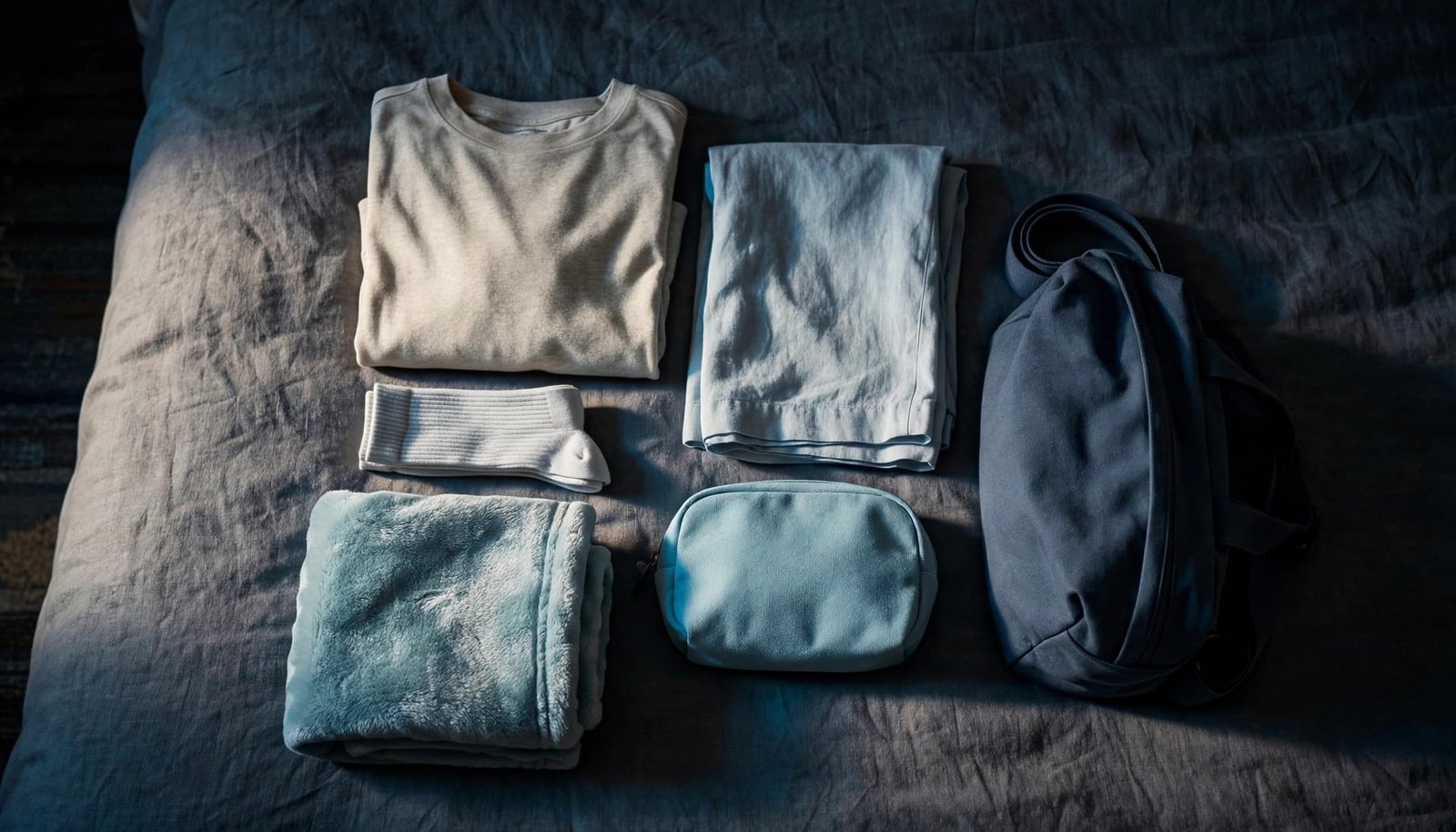
A spare outfit won’t help much if it’s buried under souvenirs. Keep your clothing kit together in one pouch or resealable bag, where it’s easy to reach during a day at the theme parks. An adult should know exactly where it is before you leave the hotel.
Bring One Complete Backup Outfit
Pack a shirt, bottoms, underwear if needed, and dry socks. Choose pieces your child already accepts. A lightweight layer may help in cool indoor spaces, while a poncho can protect the outfit underneath during rain.
Keep an empty bag for damp or soiled clothing. Add wipes and any toileting supplies your child uses. If your child is sensitive to the feel of sunscreen or sweat on clothing, think through what has worked at home.
For a longer day, a second pair of socks may be more useful than a second full outfit. You can adjust the kit after your first park visit.
Keep Other Comfort Supports Nearby
If your child likes them, keep sensory toys or a familiar fidget, headphones, sunglasses, and communication supports where you can grab them. Bring water, accepted snacks, medication, and a charged phone or portable charger as your family needs them. Don’t let the clothing kit make the whole bag too heavy to manage.
For children who may separate from their group, take a current photo that morning. A contact card can help if your child can carry one safely and comfortably. These small preparations support the larger Disney World autism planning process.
Make a Clothing Change Part of a Flexible Park Plan
Some children want to know exactly what will happen. Others find too many possible changes stressful. Keep the plan as simple as your child needs.
Show the Day in Small Steps
A visual schedule might show breakfast, transportation, one attraction, a snack, a break, and the hotel. Add a picture or card for “change clothes” as an option rather than a promise.
Disney’s guidance for neurodivergent guests at Walt Disney World Resort recommends sharing a possible timeline. It can help guests prepare for crowds, sights, sounds, smells, and sensory overload. Photos of your hotel, transportation, and park entrance may also help your child understand the day.
Show where the spare clothes are kept. Try a short phrase your family already uses, such as “dry socks, then snack.” Practice it at home so it feels familiar in the park.
Leave Room for a Different Plan
Don’t schedule a clothing change for an exact time unless your child needs that routine. They may feel fine after a small spill and need dry clothes urgently after a brief rain shower.
Keep one or two park priorities. Leave space to stop, change, or return to the hotel. Flexible Disney park-day planning is often more helpful than an hour-by-hour schedule when sensory needs can change.
What Should You Do When Clothes Become Uncomfortable?
A change works best when the adults respond early and calmly. If your child starts pulling at a shirt or refusing to walk in wet socks, look for a place to pause before deciding what comes next.
Find a Place That Fits Your Child’s Needs
At Walt Disney World Resort, a nearby restroom in the theme parks may be enough for a quick sock change. For a full outfit change, look for a restroom with suitable space and privacy. Ask a Cast Member what’s available nearby, including companion restrooms if your family needs one.
If your child needs time before changing, step away from the busiest walkway first. Offer water or a familiar comfort item if those usually help. Some children want verbal reassurance. Others need fewer words.
Keep the clothing change low-pressure. You can say what needs to happen, show the clean outfit, and allow processing time.
Decide Whether to Continue or Take a Longer Break
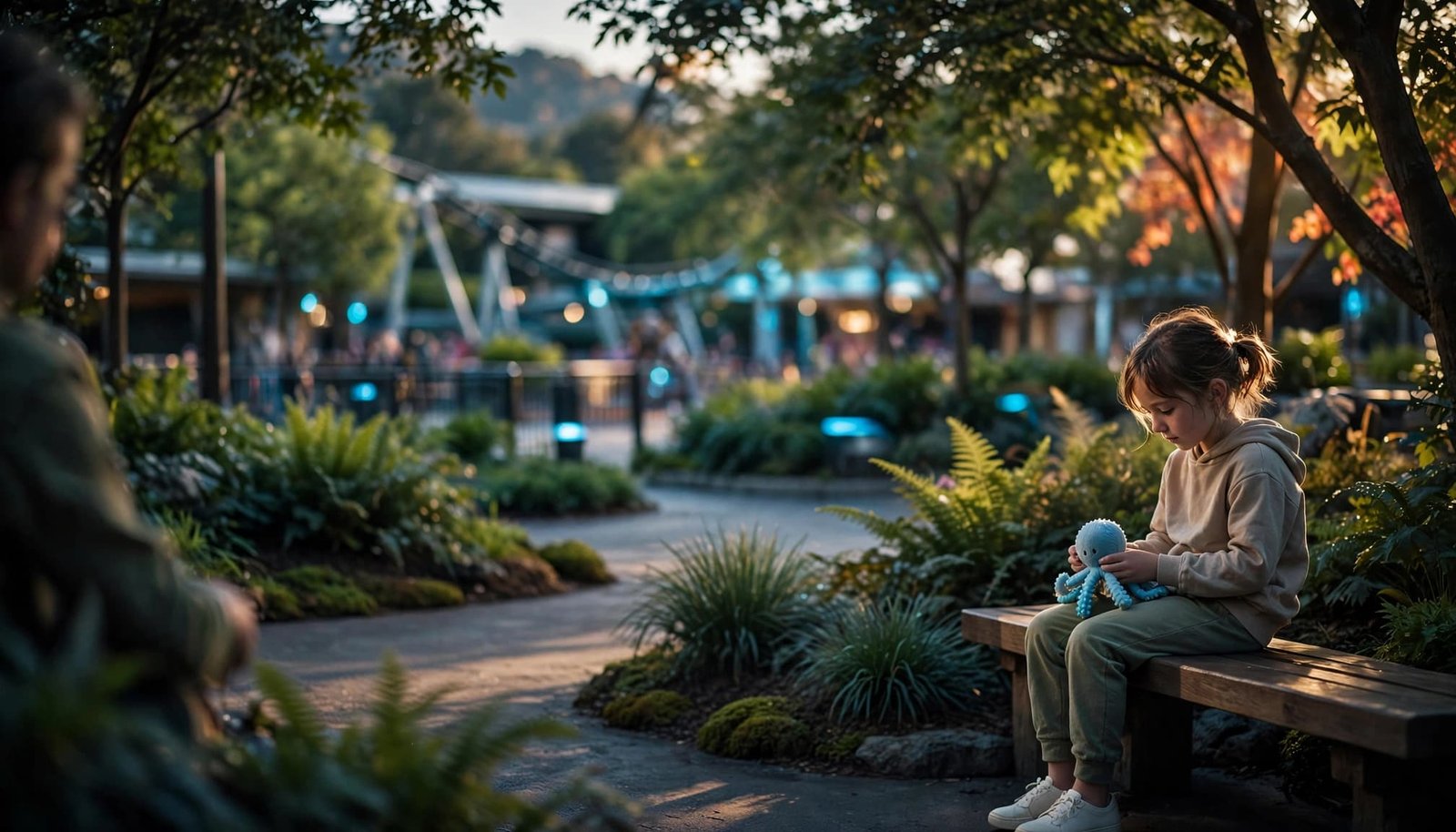
Fresh clothes may solve the immediate problem. They won’t always fix heat, hunger, noise, or fatigue. After changing, check how your child is doing before heading straight into another queue.
A hotel break is a good option when your child needs familiar surroundings. You can return later if it works for your family. Your Disney autism clothing plan should support your child, not keep everyone in the park longer than they want to stay.
Find Calm Break Options Before You Need Them
Walt Disney World Resort doesn’t promise a designated sensory room in every park. Disney identifies First Aid as one possible break-area option at all four theme parks. A Cast Member can help you find a nearby place to pause based on where you are that day.
Before entering a busy area, look for possible quiet break areas, such as shaded seating or less crowded paths, and note restroom locations and the route back to your hotel transportation. These spots may not stay calm or available, especially near a parade.
If your child uses a stroller for disability-related support, ask about current stroller access options. For families balancing clothing, mobility, and other needs, Disney planning for multiple disabilities can help you plan the whole day, not just one item at a time.
Understand What Disney’s Accessibility Services Cover
Clothing changes and queue access are separate parts of your plan. It’s helpful to know what Disney offers, but don’t count on an attraction accommodation to solve a sensory clothing problem.
Check Queue Options Before Travel
Disney’s accessibility services overview is the place to check current information before visiting the Walt Disney World Resort theme parks. Ask about attraction queue options that fit your child’s actual needs, including help if they must leave a queue.
Bring the comfort supports your child already uses while waiting. A familiar fidget or communication tool may help more than a new item bought for vacation.
Know What DAS Does and Doesn’t Do
Disability Access Service (DAS) is for eligible guests who cannot wait in a conventional attraction queue for an extended period because of a developmental disability such as autism. Disney determines eligibility based on the guest’s needs. An autism diagnosis alone doesn’t guarantee approval.
DAS isn’t immediate entry. Eligible guests receive a return time based on the attraction’s standby wait and can spend that waiting period outside the conventional queue. Check Disney’s current registration process before your trip. Don’t rely on references to a “priority card” as a description of current Walt Disney World service.
Keep Character Meets Comfortable, Too
A child can enjoy seeing a favorite character without joining a meet-and-greet line. Watching from a comfortable distance or offering a wave may be enough. Let your child’s interest guide the interaction.
Character dining can bring characters closer than your child may want during a meal. Preview the experience if you’re considering it, and leave room to change plans. A clothing change, snack, or quiet break may matter more than staying for a photo.
For questions about queue access or a particular experience, ask Disney about its current options. Don’t assume a character meet has the same arrangements as an attraction.
Bring the Planning Tools That Fit Your Family
K&S The Travel Crusaders plans Disney trips with a focus on comfort, flexibility, and individual family needs. Our approach draws on firsthand family travel experience, real-world trip planning, and Kellie Neff’s B.A. in Child Development.
For vacation planning at home, our Disney World With Autism Guide on Etsy and Disney autism travel guide on Amazon offer practical ideas. Use them as an accessibility planning guide for sensory preparation, DAS questions, breaks, and flexible park days. Always check Disney’s current policies directly before you travel.
You can also find stroller items, travel basics, and cleaning supplies for unexpected sick-on-vacation moments at Trip Rescue Shop. Buy what solves a real problem for your family. Familiar supplies are often the most useful ones.
Frequently Asked Questions
How many changes of clothes should we bring?
Start with one complete backup outfit in the park bag, plus dry socks. Add more if your child frequently needs changes for spills, toileting, or weather. Keep additional clothes at the hotel rather than carrying everything through the park.
Is there one best Disney park for an autistic child?
At Walt Disney World Resort, there’s no single best choice among the theme parks for every child. Start with their interests, sensory preferences, and stamina. A favorite attraction may be worth a short park visit, while a full day in that same park may feel like too much.
Can we change clothes during a DAS return-time wait?
An eligible guest can spend a DAS waiting period outside the conventional attraction queue. A clothing change may fit into that time if your child is comfortable and you’re able to follow Disney’s current return-time rules. Treat the change as a family decision, not a DAS service.
A Comfortable Plan Leaves Room to Change
You can’t control every spill, storm, or scratchy seam at Disney. You can pack clothes your child trusts and know where to pause when something feels wrong.
Comfort is part of the park plan. A dry pair of socks, a familiar shirt, and permission to slow down can make the rest of the day feel easier for your whole family.
Leave a Reply