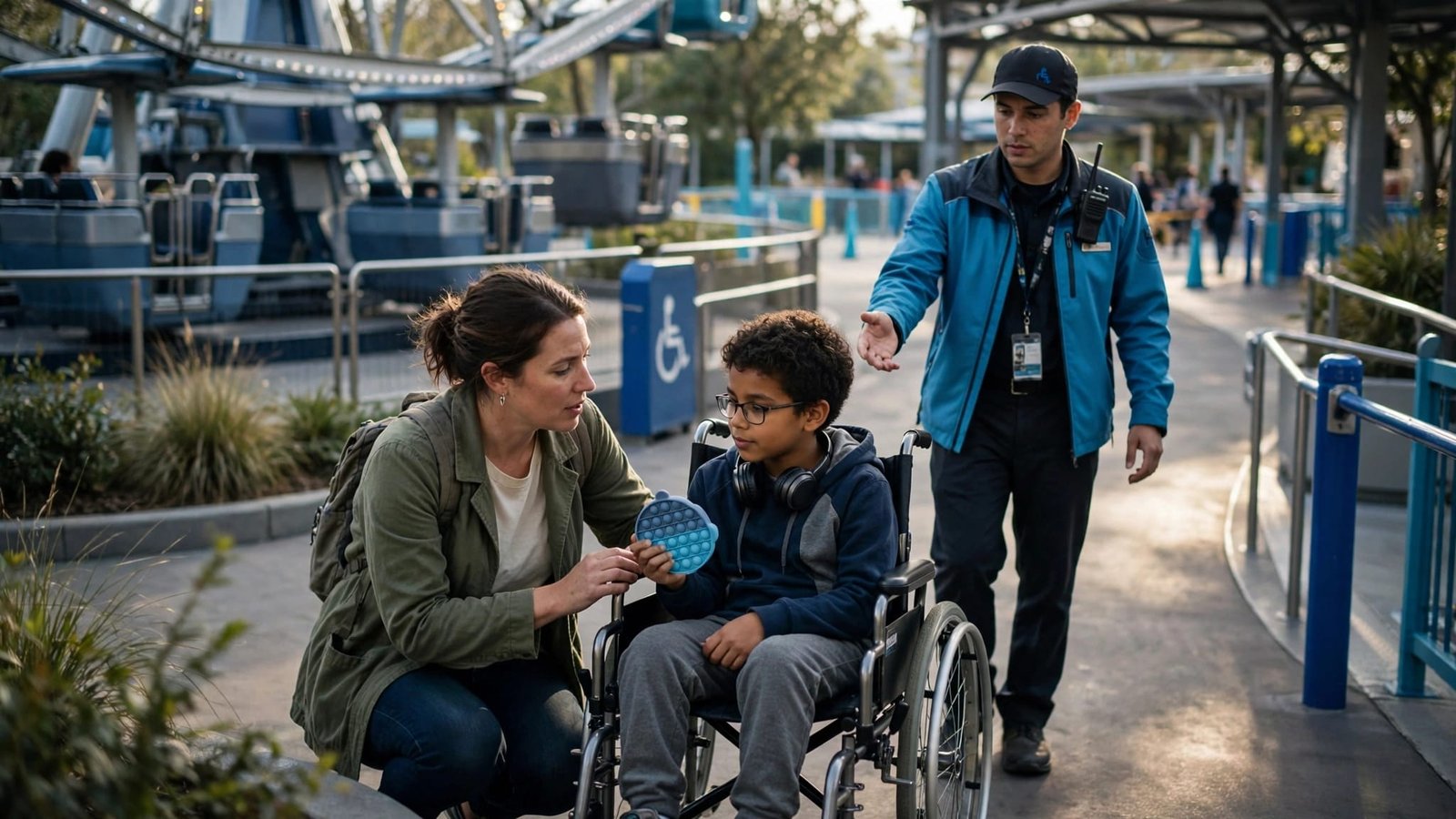
During a theme park evacuation, follow staff directions, explain your child’s immediate support needs, and stay together unless responders direct otherwise. Before your visit, ask about evacuation routes, mobility assistance, and what happens if your child can’t leave a stopped ride independently.
For families managing sensory, communication, mobility, or medical needs, a simple backup plan for an emergency evacuation can make an unexpected change easier to handle at a theme park. Start with the support your child uses every day, then plan for situations where the usual route or routine isn’t available.
Key Takeaways for Your Family
- Ask about stairs, narrow walkways, transfers, and assistance before boarding an attraction.
- Keep medication, communication supports, and familiar sensory items within reach whenever ride rules allow.
- Follow the latest staff instructions, including directions to stay in place, and keep emergency routes clear.
What the Magic Mountain Brush Fire Shows
On June 9, 2019, the Sky Fire brush fire prompted guests to leave Six Flags Magic Mountain and Hurricane Harbor in Valencia, California. ABC7’s brush-fire coverage described how conditions affected guests trying to leave.
Contemporary reports estimated about 40 acres burned, with no structures threatened. Smoke exposure also required hospital care.
After a precautionary evacuation began, guests were told to stay on park grounds when fire affected the exit roads. Leaving immediately was no longer the instruction.
The park was expected to reopen at 10:30 a.m. on Monday, June 10. That was the announced reopening time for this event, not evidence of today’s operating status.
For your family, the practical lesson is straightforward: an evacuation plan can change to protect guest safety. Follow the current direction rather than continuing toward an exit staff have closed.
Questions to Ask About a Theme Park Evacuation
An accessible entrance doesn’t tell you everything about an attraction’s emergency exit route. Discuss evacuation needs separately from ordinary boarding arrangements.
Ask each theme park how it sends alerts and what guests are told during a fire alarm or smoke detection event. Confirm whether routes use stairs, lifts, or narrow paths, and whether lifts can be used in an emergency.
Ask how staff assist your child and accommodate their wheelchair, mobility device, or service animal during an exit. Find out what communication or sensory support is available, how separated family members reunite, and how to alert staff to urgent medical needs.
Ask whether the local fire department may be involved and what guests should expect. Procedures vary by park and attraction, so confirm current arrangements directly with each park.
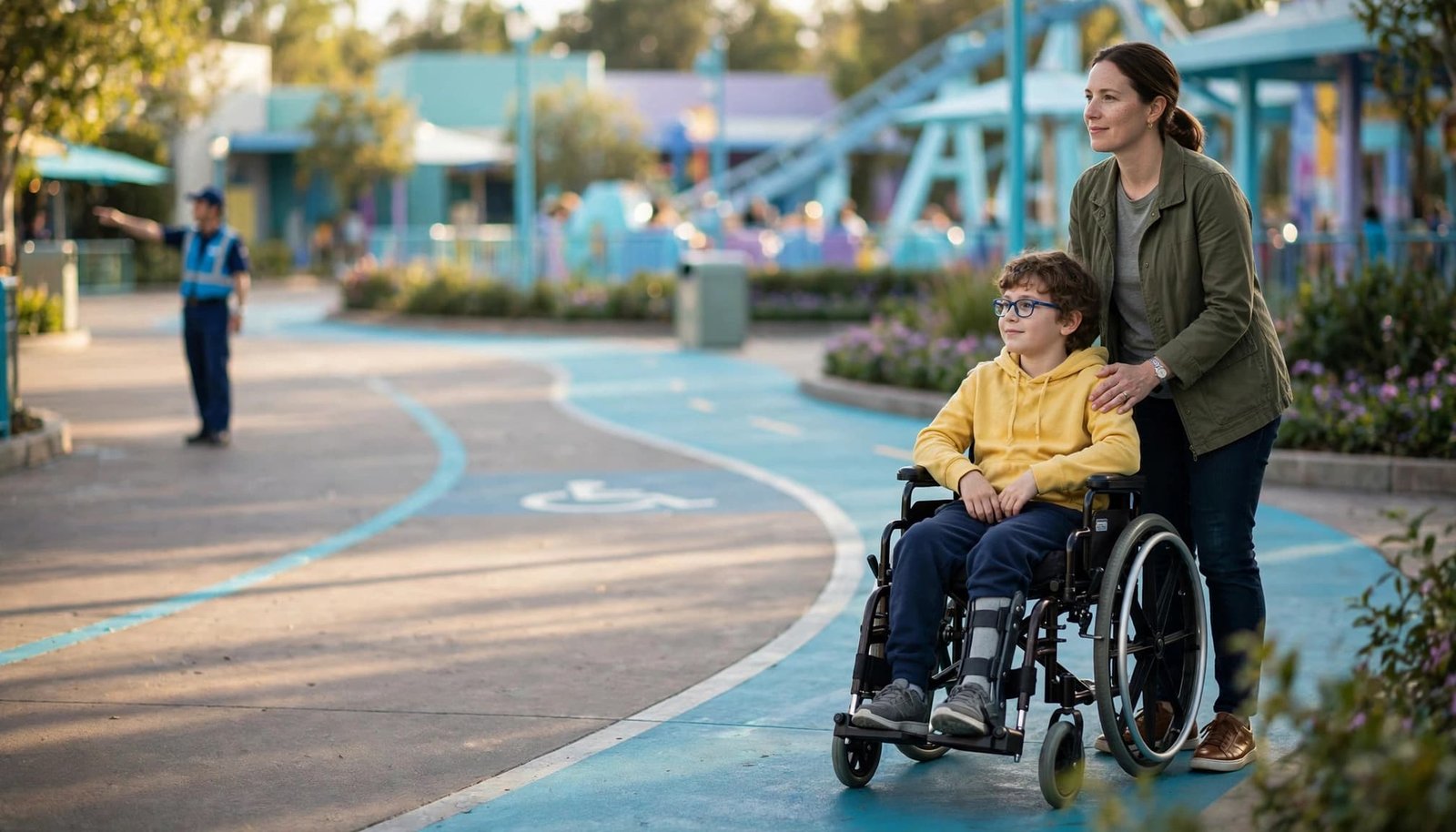
Could the Route Include Stairs or Narrow Walkways?
Ask: “If this ride stops away from the loading station, could leaving involve stairs, uneven surfaces, or a narrow walkway?”
Then explain what your child can manage. Walking a short distance on level ground is different from climbing stairs or walking without their usual mobility support.
Six Flags Magic Mountain’s accessibility information is a useful starting point for attraction planning. Your planning should also address fatigue, balance, vision, and the ability to follow directions under stress.
What Happens if My Child Cannot Transfer?
Ask: “What assistance is available if my child cannot stand, transfer, or walk out?”
Also ask what happens if their wheelchair or special-needs stroller is waiting at the loading area. Don’t build your plan around carrying your child or assume a particular staff member can lift them.
Explain any transfer limitations before boarding. Include positioning needs, pain, or equipment that must remain attached.
Our Disney Disability Access Service guide can help with broader queue planning. Queue accommodations don’t replace an evacuation discussion.
How Will Your Child Communicate and Stay With You?
Loud announcements, alarms, unfamiliar lighting, and sudden changes can make communication harder. Plan around how your child responds when they feel overwhelmed.
Prepare One Short Support Statement
Give staff the information they need for the next safe step. A diagnosis alone may not explain what help your child needs.
Include their communication method, mobility limitations, and any urgent medical concern. At Disney, tell cast members how your child communicates and responds to sensory stress. Say whether they need extra processing time or may move away from loud sounds.
Keep a brief written version with emergency contacts and relevant medical information. A low-tech communication card can help if an AAC device is unavailable or loses power.
When possible, involve your child in choosing what information to share. Protect their privacy while making immediate support needs clear.
Agree on Each Adult’s Role
Before entering the park, decide who stays beside your child, who speaks with staff, and who carries essential supplies. Avoid having several adults give different instructions.
If your child may wander or run when distressed, tell staff promptly. If separation occurs, alert the nearest employee immediately rather than searching alone.
Keep a recent photo available. Include clothing, communication needs, and mobility information when reporting a missing child.
Our Disney planning for multiple disabilities considers these needs together. A useful family plan accounts for communication, supervision, medical equipment, and siblings.
What Should Stay in Your Evacuation Bag?
Pack familiar supports rather than a collection of new products. Your child should recognize the items meant to help them feel comfortable.
Keep Essential Supports Together
Medication, medical supplies, communication tools, chargers, and emergency contacts belong in an easy-to-reach bag. Bring headphones, a familiar comfort item, safe snacks, water, and spare clothing as appropriate.
Follow attraction storage instructions. Before boarding, ask where essential medication or communication equipment can remain when bags cannot ride with you.
For children with respiratory conditions or other medical concerns, follow their clinician’s emergency plan. United Spinal’s wildfire preparedness resources also address disability-related evacuation planning.
Plan for Waiting and Recovery
An evacuation may involve waiting before your family can reach transportation or return to the hotel. Include supplies for heat, wet clothing, feeding, toileting, and a longer-than-expected transition.
Our Trip Rescue Shop offers family travel supplies, including strollers and cleaning products for unexpected sick days away from home. Choose items around your child’s existing routine and leave room for the essentials.
What Should You Do When an Evacuation Starts?
During an emergency evacuation, your first job is to understand the instruction and make your child’s immediate needs known. You don’t need to explain their full history.
- Listen for the next direction. Determine whether staff are asking you to leave a queue, remain seated, move to another area, or wait in place.
- Tell the nearest employee about any immediate mobility, communication, or medical need. Use your short support statement.
- Keep your child and essential supports together when permitted. If staff say your child will be evacuated separately, follow their directions and explain what support your child needs.
- Keep exits and pathways clear for guest safety and emergency responders. Don’t stop in doorways, gather around an incident, or move against the directed flow.
- Reassure your child with familiar, concrete language. Explain the next step without promising an exact wait or return to the ride.
Follow Cast Members’ directions and ask for clarification if an instruction isn’t accessible for your child. Leaving the directed area alone can make it harder for staff to account for your family.
A familiar quiet spot may be unavailable during an evacuation. Use the location staff direct you toward, even when it differs from your everyday break plan.
If your child needs medical attention, tell staff immediately. Breathing difficulty, collapse, or another serious symptom may be a medical emergency, so don’t dismiss it as sensory overload.
What if Your Child Is Waiting on a Stopped Ride?
A ride stop doesn’t automatically mean an immediate ride evacuation. Staff may need time to assess the problem and decide how guests can leave safely.
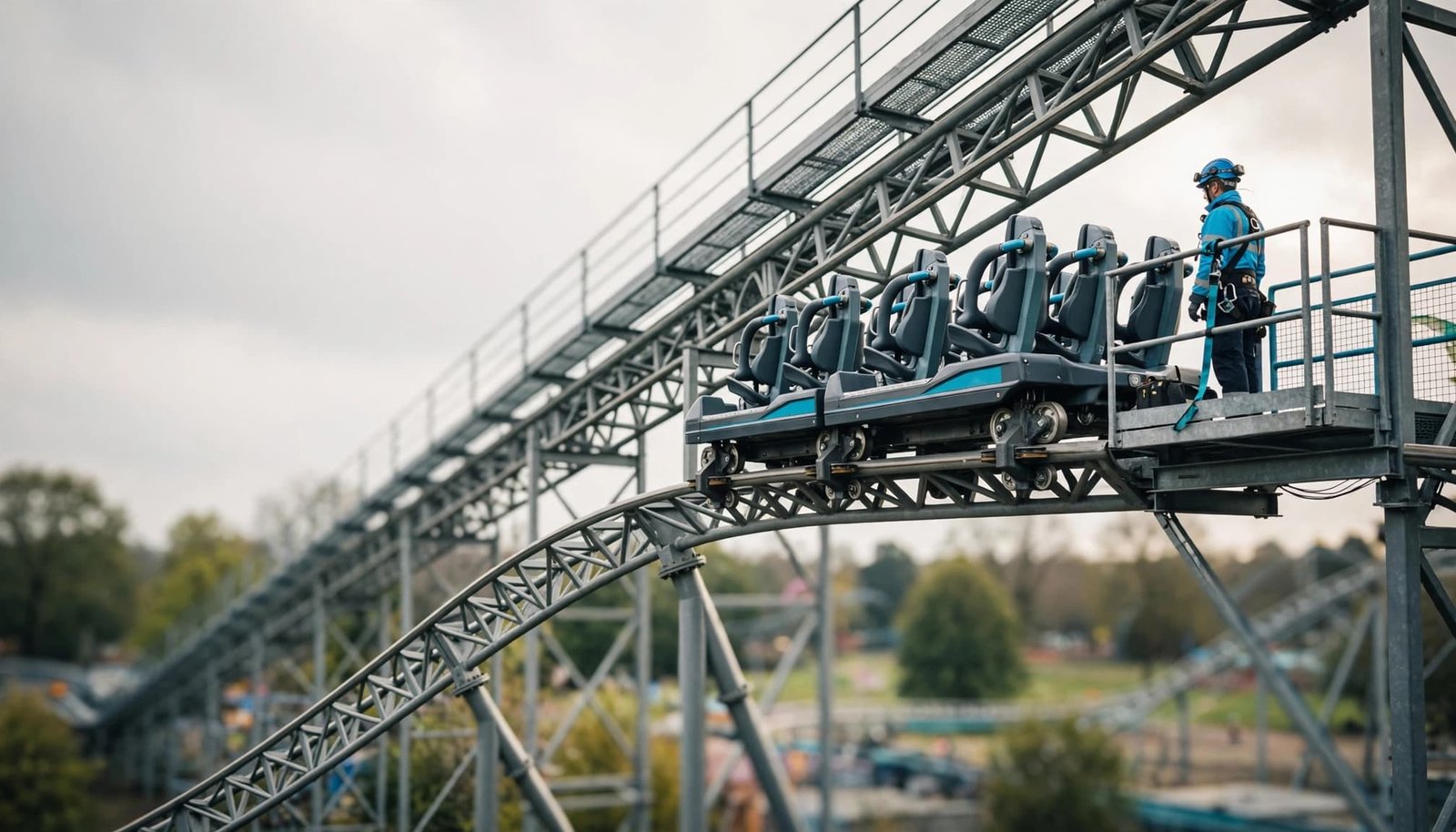
Keep restraints fastened and remain seated unless instructed otherwise. Don’t climb out, step onto the track, or attempt an improvised transfer.
The park may involve emergency responders based on the situation and its procedures. The International Academies of Emergency Dispatch’s roller coaster rescue overview describes the challenges these rescues can involve.
Tell staff if your child can’t tolerate their position, has a time-sensitive medical need, or can’t use the proposed exit method. Give clear information and follow the response team’s instructions.
Leave Room for Recovery Afterward
Once staff direct your family to a safe location, give your child time before deciding what comes next. They may need water, a restroom, familiar food, dry clothing, or a lower-stimulation space.
First Aid and Baby Care Centers can be useful during ordinary park days, but an emergency may affect access. Use the location staff make available.
An early hotel return can be the right choice. Your child doesn’t need to return to the attraction to finish the day successfully.
Our Disney World autism planning guide includes sensory preparation and flexible park-day ideas. For additional support, our Disney World With Autism Guide is available as an Etsy planning PDF and through our Amazon guide listing. It covers planning topics such as breaks, communication, DAS preparation, and realistic pacing.
Frequently Asked Questions
Why Would a Ride Evacuate Without Visible Fire?
A ride may close because of a technical malfunction, fire alarm, smoke detection, medical emergency, power outage, or security concern. Depending on the incident, the park may contact its local fire department.
An alarm doesn’t confirm the cause. Staff may evacuate guests as a precaution while they investigate, even when guests can’t see a hazard. Don’t treat social media guesses as a confirmed explanation.
How Do We Know When It Is Safe to Return?
During an active incident, follow staff announcements and instructions about permitted areas. Check the park’s official app, website, and announcements for current reopening updates. A park may reopen while an individual attraction remains closed.
Don’t rely on an old video’s reopening time. Return only when staff permit it, and don’t build your family plan around receiving compensation.
A Calmer Plan Starts With Your Child’s Needs
A useful theme park evacuation plan makes your child’s support needs clear and keeps essential items close. It also leaves room for staff to change the route or ask everyone to wait.
We help families plan around individual needs, familiar routines, and realistic expectations. Your child’s comfort and safety matter more than completing the day’s itinerary.
Choose the questions that fit your family, assign adult responsibilities, and make room to leave early when needed.
Leave a Reply