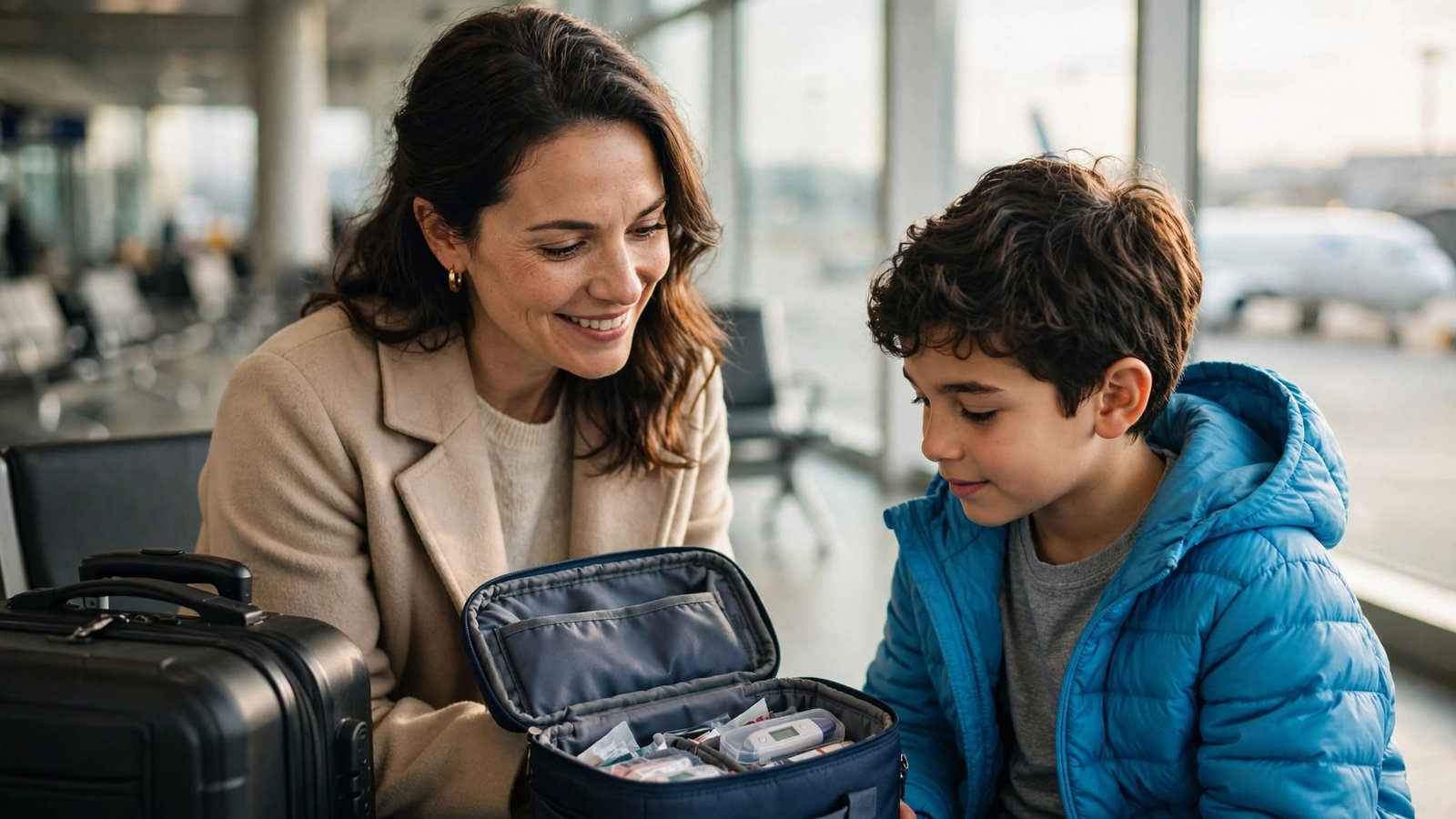
Traveling with hemophilia is possible for many children and adults when treatment, medication storage, and access to urgent care are planned ahead. Your hemophilia team should guide medical decisions, while your vacation arrangements support that care.
A written safety plan gives your family clear instructions when flights change, supplies run low, or symptoms appear. Start with the routine that works at home, then build a trip that leaves room for care and enjoyment.
Key Takeaways for Your Family
- Keep all bleeding disorder medication and treatment supplies in your carry-on, with extra doses for delays.
- Carry a provider letter, medical alert ID, and written instructions for urgent situations.
- Arrange medication storage and identify local care before departure.
- Give every caregiver access to the same plan, including who carries supplies and responds during an emergency.
1. Traveling with hemophilia starts with your care team
Contact your Hemophilia Treatment Center (HTC) as soon as travel dates take shape. Share your itinerary, planned activities, and transportation and lodging details with your care team.
Put treatment and timing in writing
Ask your team to create a travel treatment plan covering the full stay, travel days, delays, and at least one possible bleed. Treatment needs depend on your condition, treatment, and access to care.
If you use on-demand treatment, ask whether temporary prophylaxis, or preventive treatment, is appropriate for the trip. Don’t change doses yourself.
For time-zone changes, request a schedule showing treatment times at home and at your destination. Include instructions for missed doses and disrupted travel.
Request a complete travel letter
The CDC’s bleeding disorder travel guidance recommends carrying a clinician’s letter explaining your condition and medication.
Request it during a routine visit or when planning begins. Include the diagnosis, treatment product, dosage, necessary supplies, and home HTC contact details for weekdays, weekends, and emergencies.
Ask for a statement that sterile treatment supplies must not be opened. Carry prescription copies and a medical summary, including allergies, inhibitor status, and emergency treatment instructions.
2. Pack Medication for the Entire Trip and Delays
Keep treatment with you
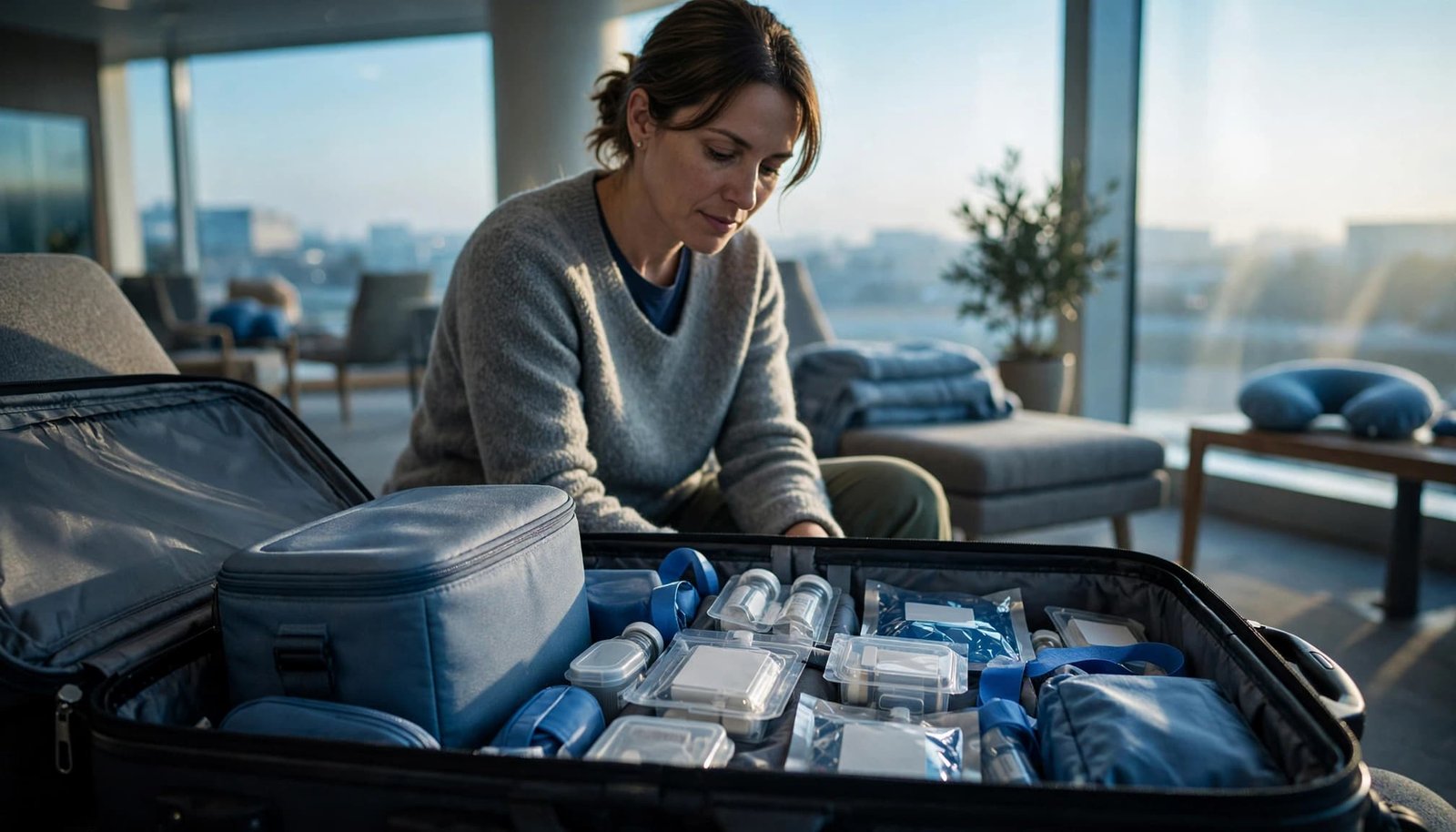
All clotting factor and other bleeding disorder medication belongs in your carry-on bag, never checked luggage. Checked bags can disappear or experience temperature changes that affect medication.
Pack your prescribed treatment and medical supplies, including diluent, reconstitution devices, syringes, needles, alcohol pads, and an appropriate sharps container. Keep products clearly labeled in their original packaging.
Bring enough for the full trip plus the extra supply your team recommends. If your carry-on is gate-checked, remove medication, supplies, and medical records first.
Decide which adult carries the medical bag during each transfer. Keep treatment accessible during outings, too.
Plan storage for every part of the journey
Follow your product’s storage instructions. Some treatments need refrigeration, while others allow limited room-temperature storage under specific conditions.
Arrange suitable refrigeration at your accommodation when needed. A minibar isn’t automatically appropriate medication storage. Plan cooling for airport waits, flights, transfers, and excursions, without relying on an aircraft refrigerator.
Keep medication away from direct contact with frozen packs unless the product’s instructions allow it. Ask your specialty pharmacy to confirm temperature limits and what to do after a storage problem.
Our guide to travel planning for medical equipment covers practical transportation and lodging arrangements around medical needs.
3. Arrange Destination Care Before You Leave
A nearby hospital is helpful, but it may not stock your treatment or have bleeding disorder expertise.
Identify the right local support
Use the U.S. HTC directory for domestic travel. For international travel, the World Federation of Hemophilia directory lists treatment centers and hemophilia organizations.
Identify an HTC, emergency department, or hematologist near your accommodation. Save addresses, phone numbers, the local number for urgent medical help, and transportation options offline.
Contact the local HTC before departure to explain your needs and confirm whether your treatment is available. Ask your home HTC whether it provides a 24/7 on-call service or can connect your family with a nurse in the travel region.
Make records easy to access
Wear medical alert jewelry or carry a medical alert ID. Bring printed records and a protected digital backup. A USB drive can provide another copy, but hospitals may not accept external devices, so paper remains important.
For international travel, include a translated medical summary where helpful. Record the diagnosis, product names, emergency instructions, and contacts.
Review whether travel insurance covers hemophilia-related care and medical evacuation where needed. Pre-existing-condition exclusions and reimbursement requirements can affect coverage.
4. Prepare for Airport Security Without Rushing
Keep your medical letter and supplies together in an accessible pouch. Tell security officers about medication, needles, medically necessary liquids, and cooling packs before screening.
In the United States, medically necessary liquids can exceed the usual 3.4-ounce limit in reasonable quantities. Additional screening may still be required.
You can request a physical inspection if an item shouldn’t pass through an X-ray machine. Explain this before screening begins. A travel letter supports that conversation, but doesn’t remove screening requirements.
Allow extra time, especially when traveling with children. Familiar headphones, snacks, and communication supports can make waiting easier.
For international travel, airport screening permission and medication import permission are separate matters. Include required arrival-country and transit-country documentation in your travel folder.
5. Choose Activities That Fit Your Treatment Plan

The National Bleeding Disorders Foundation’s Playing It Safe guide uses five color-coded risk categories, from low-risk green to high-risk red.
Archery has a low-risk rating. Hiking ranges from low to low-moderate risk, depending on conditions. Snorkeling appears in low-risk recommendations, but water conditions and supervision matter.
Discuss the specific activities you plan with your team. A short, level walk differs from a steep, remote hike. Joint health, recent bleeds, treatment coverage, and distance from care all affect the plan.
If relevant to your treatment, ask your clinician whether a factor level measurement can inform the activity plan. Don’t use a result alone to judge safety.
Build in rest breaks and an easy way to leave early.
Review immunizations as well. Steps for Living’s travel guidance emphasizes hepatitis A and B vaccination. Your clinician should advise on vaccines recommended for the planned location and safe administration.
6. Know What to Do if a Bleed Happens
Ask your HTC for written instructions for a bleed or other urgent situation before departure. Every caregiver should know where they are and how to follow them.
- Stop the activity and follow your prescribed bleed-treatment instructions. Use rescue treatment only as directed by your hemophilia team.
- Seek immediate emergency care for a head injury, severe headache, neck or throat symptoms, breathing difficulty, severe abdominal pain, or other symptoms identified in your plan. Don’t wait for visible bruising.
- Show emergency staff the medical summary and treatment instructions. Explain hemophilia and any inhibitor history or nonfactor treatment, including emicizumab, which can affect treatment decisions and laboratory interpretation.
- Contact your HTC when practical. Insurance calls come after urgent care is underway, never before necessary treatment.
Don’t assume that regularly scheduled preventive medication replaces emergency treatment.
Assign another adult to support siblings, gather records, or arrange transportation. Clear roles help your family respond without leaving one caregiver responsible for everything.
7. Understand Financial Help and Community Resources
Medical transportation assistance is different from vacation funding. Angel Flight Central’s free medical flights, Air Charity Network, and Mercy Medical Angels help eligible patients reach distant care. These programs aren’t general family vacation airfare programs.
For financial assistance, NBDF’s patient assistance program listing reports PAN assistance of up to $2,900 per 12-month enrollment period for eligible deductibles, copayments, and coinsurance. Listed eligibility includes household income at or below 400% of the federal poverty level, qualifying insurance, and covered medication. Awards depend on eligibility and available funding.
For family education, NBDF’s Steps for Living offers age-based tools. Hemophilia Federation of America’s Blood Brotherhood and Blood Sisterhood are separate adult peer-support programs. These resources can help families feel more connected between medical visits.
8. Make the Vacation Work for Your Whole Family
A manageable itinerary leaves room for treatment, meals, rest, and changes. Choose accommodations with practical access to care and transportation that doesn’t require rushed connections.
At K&S The Travel Crusaders, we help coordinate lodging, transfers, and a comfortable pace through our personalized special-needs travel planning. Your clinicians remain responsible for treatment and travel fitness.
If your child also has autism or sensory needs, include familiar routines, communication supports, and quiet breaks. Our Disney World autism guide is available as an Etsy downloadable planning guide and an Amazon ebook edition. These resources support autism-focused preparation, not hemophilia treatment.
Our Trip Rescue Shop travel supplies include strollers and cleaning supplies for unexpected illness on vacation. Keep everyday comfort items separate from your prescribed medical kit.
Frequently Asked Questions
Is hemophilia contagious?
No. Hemophilia is a bleeding disorder, usually inherited, and doesn’t spread through everyday contact. Sharing transportation, meals, swimming pools, or a hotel room doesn’t transmit hemophilia.
Can a child with hemophilia fly?
Many children with hemophilia can fly with an individualized care plan. Recent bleeding, joint problems, treatment needs, and destination care affect readiness. Your child’s hematology team should decide whether the planned trip is appropriate.
Can preparation prevent every travel-related bleed?
Preparation reduces avoidable problems, but it can’t guarantee a bleed-free vacation. Keep emergency instructions and treatment accessible even when everyone feels well.
A Family Trip With Care Built In
Traveling with hemophilia feels more manageable when medication, storage, and emergency support are arranged before departure. A shared written plan helps every caregiver understand their role.
Start with your hemophilia team, then let us help organize the vacation around those instructions. Your family’s comfort and care deserve space in every travel day.
Leave a Reply