
Traveling with arthritis is more manageable when treatments, mobility assistance, and rest are part of your plan before departure. A flexible schedule helps you protect your energy and respond to changing symptoms.
You don’t need to fill every day to enjoy your vacation. Start with your usual care routine, then build trip arrangements around your comfort and mobility needs.
Key Takeaways
- Keep prescriptions, pain relievers, and medical supplies in your carry-on, with an approved extra two-week supply.
- Arrange product-specific cooling and written instructions for dosing schedules across time zones.
- Request airport assistance and preboarding before departure.
- Build gentle movement, rest stops, and recovery time into your itinerary.
Before Traveling With Rheumatoid Arthritis
Make a Care Plan With Your Rheumatology Team
Arrange a pretravel appointment several weeks before departure. Consult your rheumatologist during planning and share your destination, transit time, planned activities, and any recent changes in pain, swelling, or fatigue.
Ask for written instructions covering flares, missed doses, and symptoms that need urgent care. Review vaccines if you take immune-suppressing therapies. Some treatments affect which vaccines are appropriate.
Save your care team’s number and a prescriptions list offline. Include generic drug names, allergies, and an emergency contact.
Choose Lodging That Makes Rest Easier
Look beyond the hotel’s accessible-room label. A dependable elevator, manageable bathroom, nearby meals, and a short route back to your room can make daily routines easier. Choosing the right accommodation makes daily routines easier.
Choose flights and transfers that leave time for slower walking and assistance handoffs. Review travel insurance for pre-existing-condition exclusions and medical coverage abroad.
Our accessible family vacation planning can help coordinate lodging, transportation, and a comfortable pace around your medical plan.
Protect Medication During Every Transfer
Keep Prescriptions and Paperwork Together
Ask your prescriber to authorize an extra two weeks of supplies for delays, where destination restrictions allow. Keep prescriptions in their original labeled containers.
The CDC’s traveling abroad with medicine guidance recommends carrying prescriptions in your carry-on rather than checked luggage. Include pain relievers, injection supplies, and other medical essentials.
Carry a signed doctor’s letter describing your diagnosis, treatment, and needs for syringes, cooling supplies, or special carrying cases. A letter doesn’t override another country’s drug import restrictions.
If your carry-on is gate-checked, remove the health kit first.
Plan Biologic Cooling and Time-Zone Changes
Use an insulated cooler pouch with appropriate ice packs. The Arthritis Foundation’s medication and travel tips also recommend keeping refrigerated medicines with you.
Storage limits differ by product. Have your pharmacist explain your exact biologic’s temperature range and permitted time outside refrigeration. Avoid freezing it or placing it directly against ice packs unless its instructions allow that.
Ask about airline refrigeration or refreezing ice packs in advance. These services may be unavailable, so bring dependable cooling for the full journey. Arrange suitable hotel refrigeration rather than relying on a minibar.
Have your prescriber map doses across time zones, including the return trip. Don’t double doses or change weekly injection days yourself.
Pack a Practical Flare-Up Kit
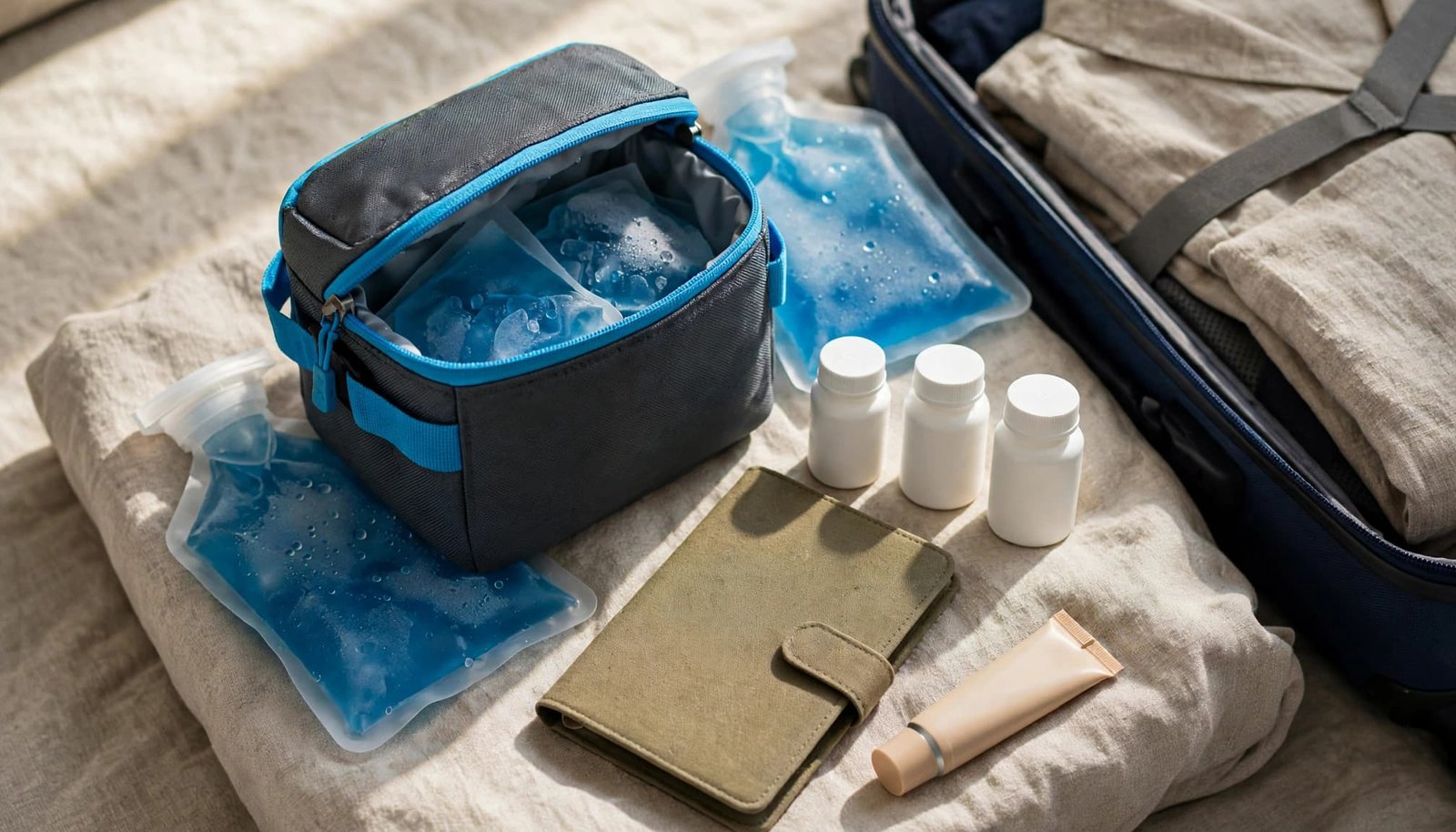
Keep familiar supplies together where you can reach them without unpacking everything.
- Bring your written action plan and approved pain relief, including dosing and timing instructions.
- Pack usual splints, braces, a neck pillow, and a familiar heat pack or cold pack to protect sore joints.
- Include supportive shoes, easy-to-open snacks, water, and compression socks if your clinician recommends them.
- Choose portable topical creams for convenience at airport screening.
Ordinary creams fall under TSA’s liquid limits. Medically necessary products have separate screening allowances, so identify them to the officer.
Don’t start leftover steroids or add anti-inflammatory doses without your clinician’s instructions.
For everyday extras, our Trip Rescue Shop travel supplies include strollers and cleaning supplies for unexpected sick-on-vacation moments. Keep those items separate from your medical essentials.
Arrange Airport Assistance Before You Fly
Request Help for the Whole Airport Route
When flying, request wheelchair assistance when booking, even if you can walk short distances. Include departure, connections, arrival, and the route to baggage claim.
Under the Airline Passengers with Disabilities Bill of Rights, covered airlines must provide disability-related assistance. This may include a wheelchair or, where available, a motorized cart. A particular cart service isn’t guaranteed.
Identify yourself at check-in and the gate. Request preboarding if you need additional time to board, stow equipment, or settle into your seat.
Handle Security Support Separately
Call TSA Cares at 855-787-2227, preferably at least 72 hours before departure, or request TSA passenger screening support online.
Explain your mobility limits and how you carry prescriptions, injections, and cooling supplies. Medically necessary liquids can exceed the ordinary 3.4-ounce limit in reasonable quantities, but require separate screening.
A Hidden Disabilities Sunflower lanyard or bracelet can signal that you may need extra time or assistance where the program is recognized. Wearing one is optional. It doesn’t replace a direct assistance request or guarantee priority access.
Airline assistance doesn’t include administering treatment or personal bathroom care. Arrange a companion if you need that support.
Make Movement Breaks Part of Transit
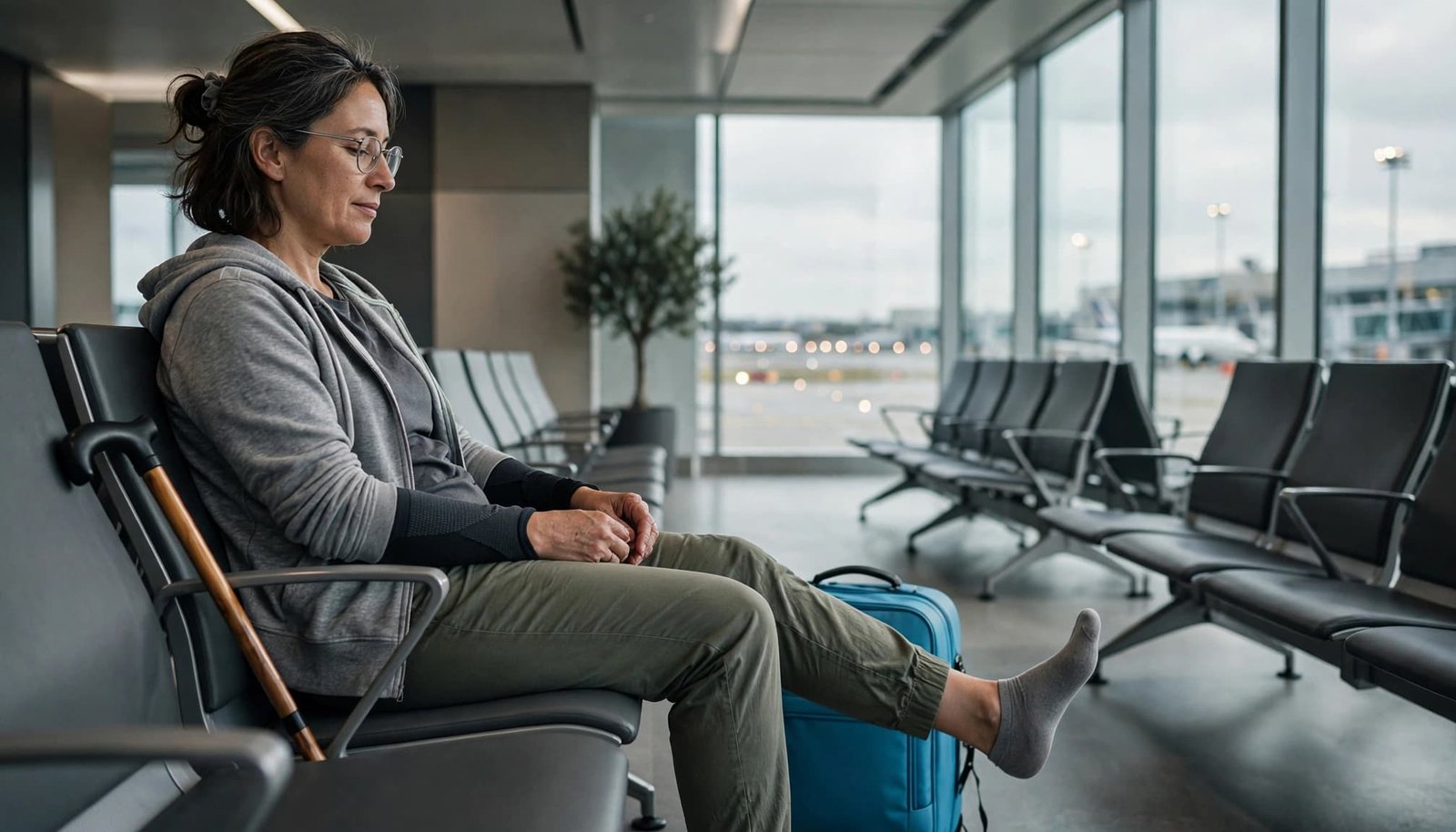
During long flights, staying mobile is essential. Book an aisle seat when possible. It makes standing and walking easier without repeatedly asking someone to move.
Arthritis mobility guidelines range from movement every 30 minutes to breaks every two hours. A practical approach is gentle seated movement about every 30 minutes, with a short standing or walking break roughly hourly when safe.
Try seated stretching exercises such as ankle rolls, heel raises, gentle knee lifts, and shoulder rolls within your comfortable range. When you stand, take a brief opportunity to stretch your calves. Gentle movement can ease tension across stiff joints.
Stay seated during turbulence and whenever the seat belt sign is illuminated.
Keep seated movement available as your backup. You may not be able to walk when your reminder sounds.
Compression socks need the right fit and medical guidance, especially if you have circulation problems. They don’t replace movement.
Seek urgent help for new one-sided leg swelling, chest pain, or sudden breathlessness. Don’t assume these symptoms are a routine arthritis setback.
Keep Road Trips Comfortable and Safe
Ask your doctor or occupational therapist how long you can safely drive with your current symptoms. There’s no single maximum number of driving hours for everyone with RA.
The Arthritis Foundation’s road trip advice for arthritis covers positioning and comfort supplies.
Adjust the seat so you can reach the pedals and steering wheel without straining. Position the shoulder belt across your mid-shoulder and chest, with the lap belt low across your hips.
Plan stops every one to two hours, sooner if stiffness builds. Change drivers or end the day’s drive if pain, reduced grip, fatigue, or treatment-related drowsiness affects safety.
Keep temperature-sensitive prescriptions out of a hot parked car, even during short stops.
Give Yourself Time to Settle In
Protect Rest and Daily Routines
Scheduling rest days when possible helps protect energy. Keep meals, doses, and sleep close to your usual routine.
For later days, choose one main activity with room for seated breaks. Let your companion know what help is useful, such as carrying bags or handling transportation.
Drink water regularly, avoid alcohol during transit, and limit caffeine if it disrupts sleep or makes you feel unwell. Choose familiar balanced meals. Broccoli and leafy greens fit an anti-inflammatory eating pattern, but no food guarantees symptom prevention.
Plan for Heat, Cold, and Changing Energy
Pack light layers for cold cabins and air-conditioned spaces. In hot destinations, choose shaded routes and cooler hours for outings.
Protect prescriptions from temperature extremes. Bring familiar comfort supports rather than trying unfamiliar treatments during the trip.
If symptoms worsen, shorten the outing or return to your room. A flexible itinerary gives you space to recover without feeling that you’ve disappointed everyone.
Frequently Asked Questions
Does Cabin Pressure Make Rheumatoid Arthritis Worse?
There’s no clear evidence that normal cabin pressure triggers RA flares. Prolonged sitting can increase stiffness, while poor sleep and demanding transit days can worsen fatigue.
An aisle seat, gentle movement, and recovery time can help you manage those travel demands. New or severe symptoms still need medical attention.
What If I Have a Flare Away From Home?
Follow your clinician’s written plan and reduce activity. Contact your care team if symptoms aren’t settling or you’re unsure about proper dosing.
Fever or a suddenly hot, very swollen joint needs prompt medical evaluation, especially if you take immune-suppressing treatment. Don’t assume every painful joint is a routine flare.
What If Our Family Also Needs Autism Family Support?
If your vacation includes a child with autism, our Disney World autism guide supports sensory preparation, transitions, and flexible family planning. It’s available as an Etsy Disney autism PDF guide and through our Amazon Disney autism guide listing.
These resources support family planning alongside your separate RA medication and mobility arrangements.
A Comfortable Trip Leaves Room to Adjust
Traveling with rheumatoid arthritis works better when your care routine shapes the itinerary. Keep essential prescriptions close, arrange assistance early, and give rest a place in the schedule.
We can help coordinate vacation details around your mobility needs and preferred pace. Your healthcare team guides treatment, while we help make trip logistics more manageable.
Leave a Reply