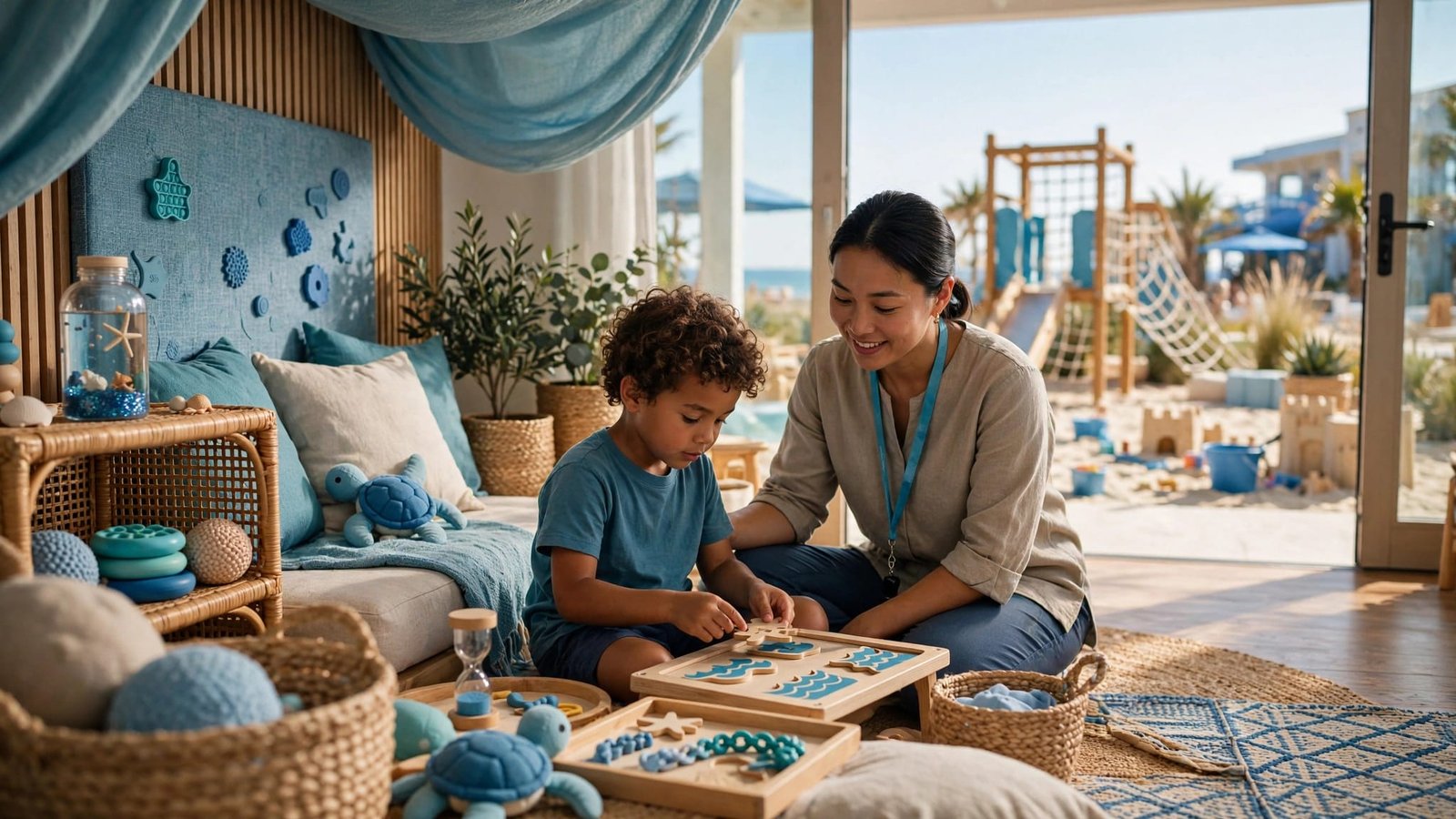
Disability support at resort programs depends on the care your child needs and the help staff can provide. An autism-friendly label can help narrow your choices, but it doesn’t promise one-on-one supervision, toileting assistance, or a quiet place whenever your child needs one.
We help families plan around those details so vacation feels more manageable. Start with clear support expectations before choosing a resort or paying a deposit.
Key Takeaways Before You Book
- Describe your child’s communication, personal-care, sensory, mobility, and safety needs before discussing activities.
- Separate staff training from hands-on care, and get important arrangements in writing.
- Compare the exact kids club, including age limits, staffing, parent participation, and what happens when your child needs a break.
A welcoming answer matters. A clear explanation of how staff will support your child matters more.
Start With the Support Your Child Needs
Describe a Comfortable Day
A diagnosis alone doesn’t tell a program what support your child needs. Share practical details about communication, bathroom routines, eating, movement, and transitions. Include any special needs that affect those routines.
Explain how your child shows discomfort and what helps them settle. Include whether they use an augmentative and alternative communication (AAC) device, need extra processing time, or may leave an activity unexpectedly.
Your child’s interests matter, too. Familiar games, building toys, or outdoor movement can help staff offer enjoyable choices. Keep the description short enough for the staff member working that day to use.
Understand What Certification Covers
IBCCES says its Certified Autism Center program requires at least 80% of guest-facing staff to complete autism and sensory-awareness training. Certification renews every two years.
That training can support staff understanding, but it doesn’t establish a child-care ratio or promise individualized care. Ask which club staff members working on your dates have completed IBCCES training and what autism support that training covers.
Our guidance on autism-friendly all-inclusive resort planning also covers room placement, meals, and family routines that can make club visits easier.
Questions to Ask the Kids Club Before Booking
Who Provides Supervision and Personal Care?
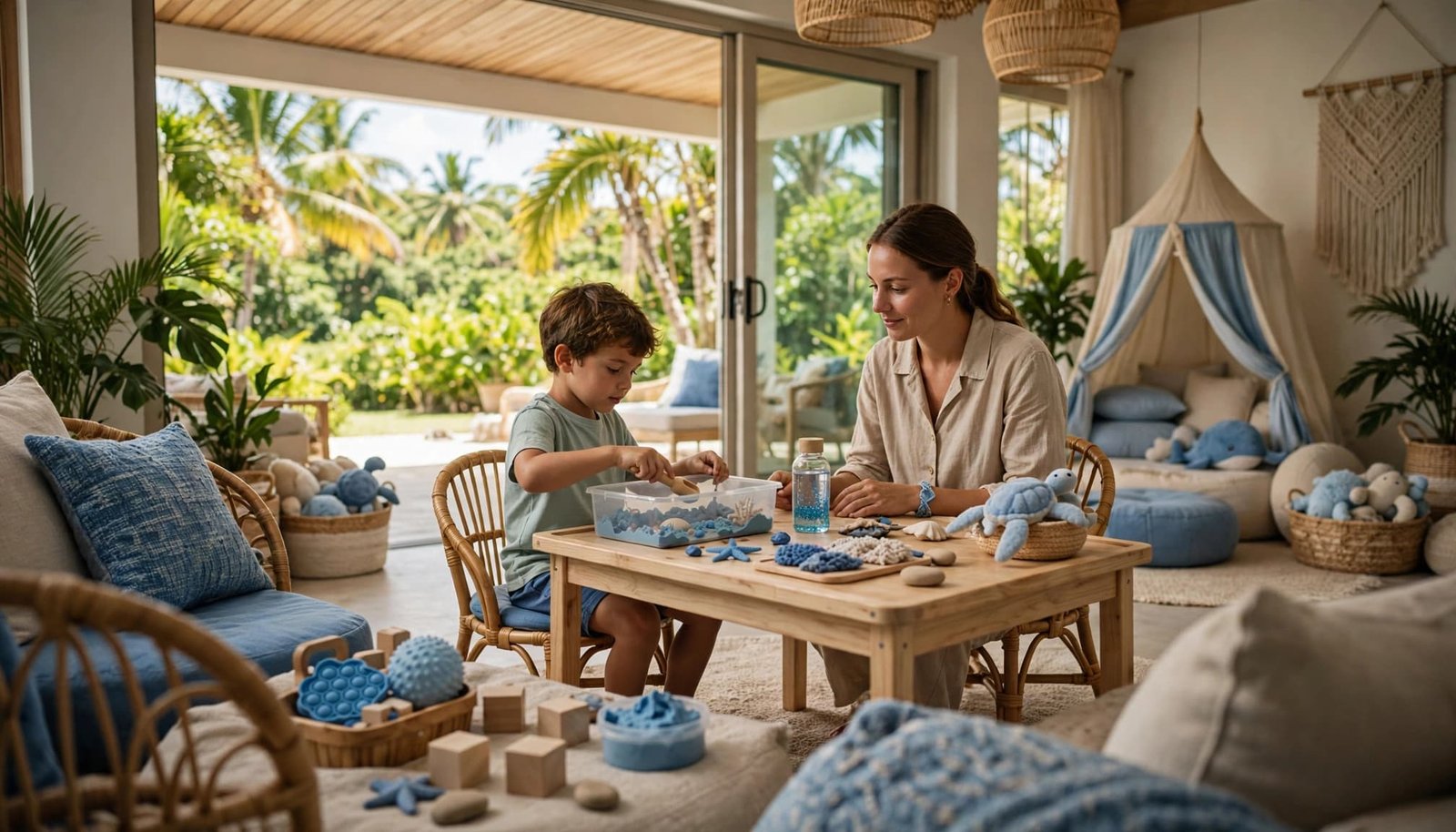
Ask the club manager or entertainment manager: “What’s the staff-to-child ratio, and can your team provide the supervision my child needs?”
Ask direct questions about toileting, diaper changes, feeding, transfers, and medication. Find out whether a parent or outside caregiver can help when staff can’t provide that care.
For safety, discuss sign-in procedures, authorized pickup, secured exits, pool supervision, and transitions between locations. If your child may wander, ask for a clear plan for every activity.
Ask what staff do when your child becomes overwhelmed. Will someone offer a break, contact you, or end the session?
Can Your Child Access Everyday Activities?
Ask whether routes, bathrooms, activity tables, and outdoor spaces are accessible for your child’s wheelchair or mobility equipment. Room accessibility doesn’t establish the program’s accessibility.
For sensory and communication support, ask: “Can my child use headphones, keep their communication device, skip group activities, and take a supervised break?”
Discuss food allergies, cross-contact procedures, familiar foods, and help opening or eating snacks. Ask where medical personnel are located and how staff handle emergencies.
Request written answers that separate agreed arrangements from requests subject to availability. Confirm any fees, session limits, and refund terms if the club can’t provide the agreed support.
Compare Resort Programs and Age Groups
At an all-inclusive resort, age eligibility and disability support are separate questions. A child may meet the age requirement but still need care outside the club’s services.
These two programs illustrate options for younger children.
| Resort program | Published age group | Planning focus |
|---|---|---|
| Beaches Kids Camp infants program | Ages 0 to 2 | Share feeding, diapering, settling, and individual support needs. |
| Sensira Baby Explorer Club | 18 months to 3 years | Discuss separation, communication, bathroom routines, and supervision. |
An infant or toddler program can offer a useful starting point. Its age range doesn’t establish disability-specific staffing.
Beaches describes its autism-friendly Kids Camps as Advanced Certified Autism Centers with IBCCES-trained staff. Ask whether the staff scheduled for your visit have completed IBCCES training, and discuss your child’s personal-care and supervision needs separately.
Karisma Hotels & Resorts has an Autism Concierge approach with Autism Double-Checked. Its Autism Passport helps families share sensory needs, communication preferences, triggers, and helpful supports before arrival. A concierge contact can improve coordination, but doesn’t replace a detailed club conversation.
For mobility needs, the Club Med accessibility guide describes accessible accommodations and ramps or lifts at select resorts. Those property features are separate from child-care support.
For preschoolers, school-age children, and teens, consider the activity demands as well as the age band. A quieter activity with clear instructions may suit your child better than a busy group session.
What Can Cruise Children’s Programs Provide?
Cruise line policies differ on age grouping, toileting, and participation. An accommodation offered by one line isn’t a promise across the industry.
Royal Caribbean may group children by ability on request. Its accessibility guidance also describes an exception to its toilet-trained policy and the use of parent pagers.
Disney says counselors can’t provide one-to-one care. Its secured children’s program requires toilet independence and participation within the counselor-to-child ratio.
Ask the cruise line how staff would handle an accident, a missed bathroom cue, a difficult transition, or a need for feeding assistance. Also ask about parent-attended activities if independent drop-off isn’t suitable.
An age-group adjustment changes the activity setting. It doesn’t add a dedicated caregiver.
Plan adult time around the support available. A specialty supported sailing may offer different arrangements, but evaluate it separately from the standard kids club offered on a cruise.
Disney and Universal Access Programs Are Separate

How Does Disney DAS Work?
Disney World’s Disability Access Service offers eligible guests a return time comparable to the current standby wait. It doesn’t provide front-of-line access or child care.
Live video registration can begin up to 60 days before a visit. Guests request a return time for an attraction after entering the park. They may hold one active return time at a time. Eligibility depends on Disney’s assessment of the guest’s needs, not a diagnosis alone.
Other services address different needs. Disney Handheld Devices provide assistive listening, handheld captioning, and audio descriptions. Designated parking requires a valid disability parking permit.
Our Disney World with Autism guide supports practical preparation, quiet breaks, and flexible pacing. It’s available through our Etsy Disney planning guide and Amazon Disney autism guide.
What Is Different at Universal Orlando?
Universal Orlando’s accessibility process uses its own Attraction Assistance Pass system. It isn’t Disney DAS.
Universal recommends registering for the free IBCCES Individual Accessibility Card within 30 days of the visit and at least 48 hours before arrival. Registration supports the accommodation review; the card itself isn’t an attraction pass.
The Attraction Assistance Pass has return time functionality, with an alternate method available through guest services.
Neither park’s attraction accommodation establishes supervision for a children’s activity or eligibility for a resort kids club. Keep park access, transportation, hotel accessibility, and child care as separate parts of your family plan.
Prepare for Arrival and the First Club Visit
If your child has special needs, give the club a short support profile with communication methods, early signs of overload, bathroom needs, calming tools, and emergency contacts. Share only information staff can use.
Request photos of the entrance, play areas, bathroom, and staff meeting point. Use them to explain the visit in a way your child understands. Keep the first session short and allow time to leave comfortably.
Ask whether a sensory guide is available for family activities outside the club. LEGOLAND New York and Great Wolf Lodge have worked with IBCCES to create sensory guides. A sensory guide describes noise, lighting, touch, smells, and other experiences your child may find difficult.
For airport accessibility support, request TSA CARES screening assistance at least 72 hours before departure. If travel is within 72 hours, call 855-787-2227. This support covers security screening, not gate or in-flight care.
Keep familiar comfort items and essential supplies accessible. Our family travel shop includes strollers and cleaning supplies for unexpected illness during vacation.
Frequently Asked Questions
Does an Autism-Friendly Resort Guarantee Drop-Off Care?
No. Autism awareness, accessible facilities, and child-care eligibility are separate. The club’s staffing and personal-care rules determine whether independent participation is suitable.
A parent-attended activity may be a comfortable option when drop-off care doesn’t meet your child’s needs.
Can a Disabled Child Join a Younger Cruise Group?
Some lines consider adjustments. Royal Caribbean may group children by ability rather than age on request. That doesn’t establish the same option on every cruise line.
Any adjustment should also address activity expectations, bathroom needs, and supervision.
Does Beaches Accept Babies in Its Kids Camp?
Yes. Beaches lists an infants program for ages 0 to 2, and Beaches Negril explicitly includes newborns through 24 months.
Admission by age doesn’t automatically establish the level of individualized disability support available.
Choose Support That Fits Your Family
A suitable kids club offers clear answers about supervision, communication, personal care, and breaks. Your child should have room to participate comfortably without being pushed through an activity.
Our special needs travel planning helps families compare those details before booking. The goal is a vacation with realistic support and more space for everyone to enjoy their time together.
Leave a Reply