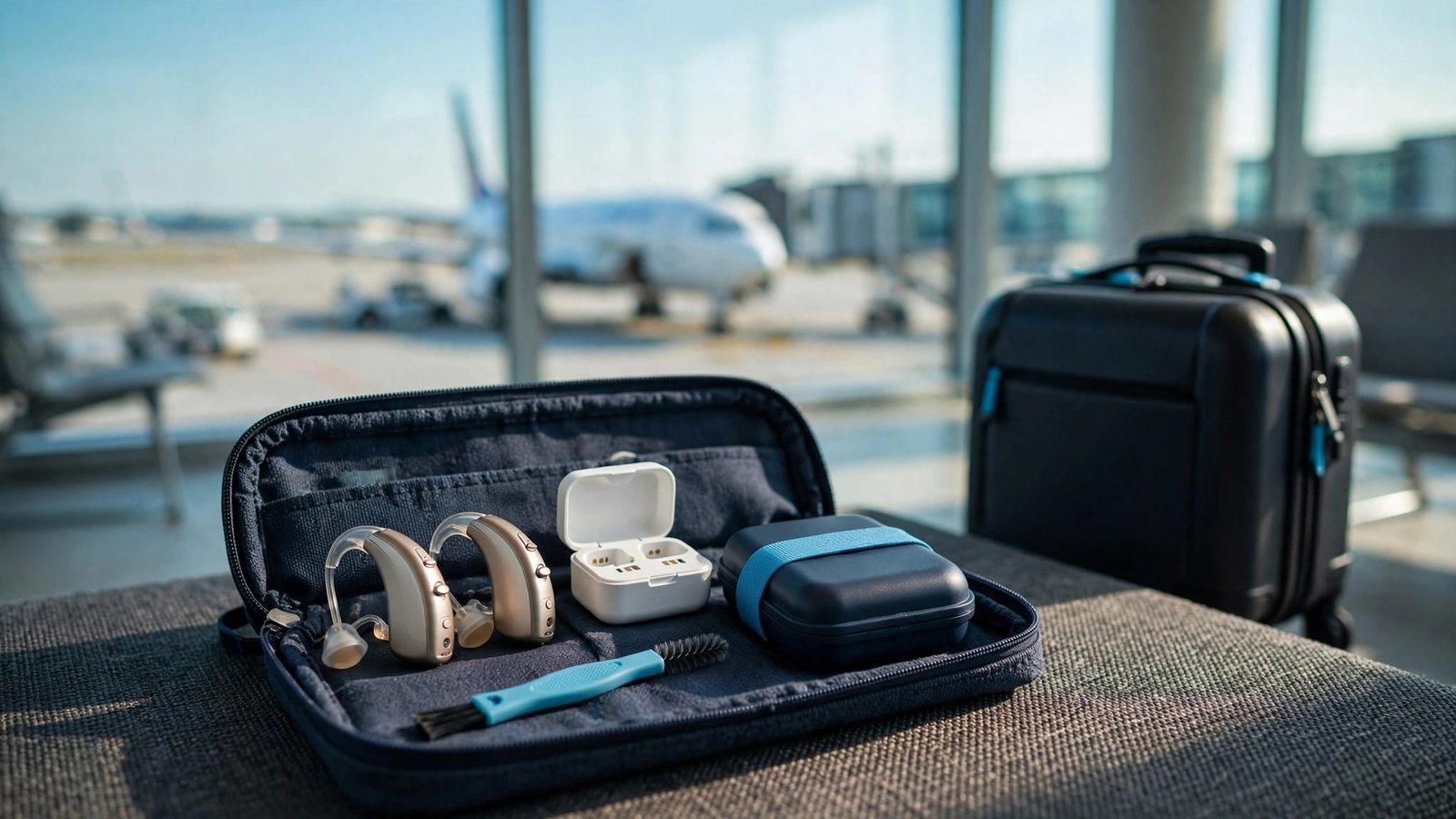
You can keep your hearing aids on through airport security screening and during your flight, including takeoff and landing. A comfortable trip starts with keeping essential supplies close and having a reliable charging and care routine.
When hearing aids travel with you, a familiar care routine can help reduce stress on vacation. Start with the equipment you use every day, then make room for delays, moisture, and your communication needs.
Key Takeaways for a Smoother Trip
- Keep hearing aids, compatible batteries, chargers, and cleaning supplies in the bag that stays with you onboard.
- Spare lithium batteries and power banks must travel in carry-on baggage. Remove them before a bag is gate-checked.
- Tell the screening officer about your hearing aids and any communication support you need.
- Plan for overnight drying, dependable charging, and hotel alerts you can notice when your hearing aids are off.
Pack Hearing Aid Supplies Where You Can Reach Them
A small, organized pouch makes travel days easier. Keep it in the carry-on bag that stays with you, ideally in your personal item, so you can reach it during boarding, delays, and the flight.
Keep Your Everyday Kit Together
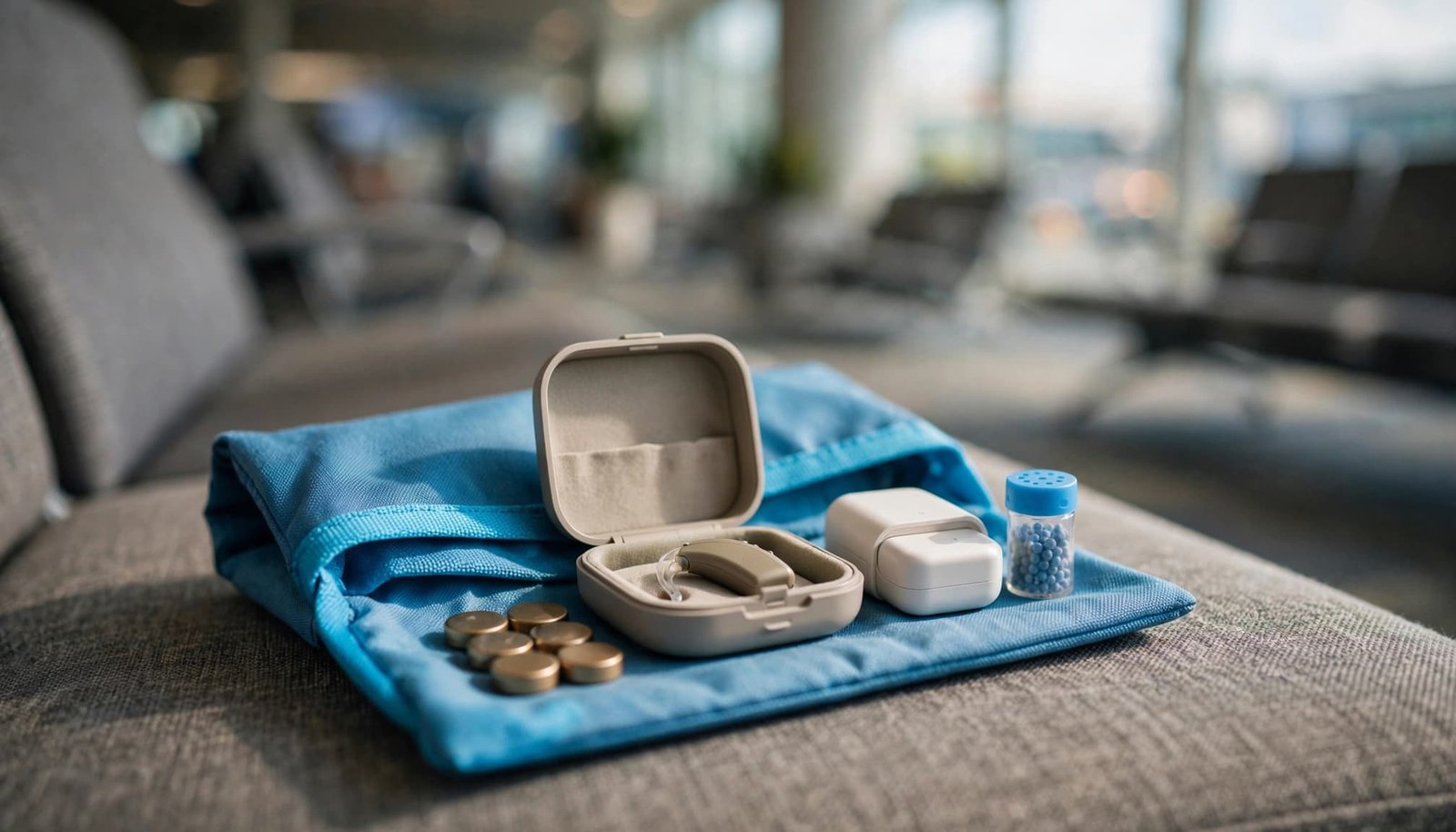
Pack your approved charger, power cord, protective case, and hearing aid batteries. Add a compact cleaning kit with a soft dry cloth, cleaning brush, wax guards, and replacement domes or earpieces that fit your devices.
Bring a drying kit or dehumidifier suited to your hearing aids, especially for humid destinations. Keep your audiologist’s contact information and device model details available offline.
Our Trip Rescue Shop also offers practical vacation supplies, including strollers and cleaning supplies for unexpected sick-on-vacation moments. Keep those extras separate from your hearing aid care tools.
Make Your Backups Useful
Extra supplies only help when they fit your equipment. Pack the same battery size, domes, wax guards, and charging connections you use at home.
Base your battery reserve on your usual replacement pattern, with extra capacity for delays and longer days. Don’t depend on finding your exact supplies at the destination.
When two adults travel together, divide backup supplies between their carry-on bags. Keep the working hearing aids and flight-day supplies with the wearer. Everyone should know where the backups are packed.
Understand Battery and Charging Rules
The FAA’s passenger battery rules require spare lithium batteries, power banks, and portable chargers containing lithium batteries to stay in carry-on baggage.
Protect spare batteries against short circuits. Original packaging, individual protective cases, or protected terminals keep them away from loose metal objects.
A wall-powered charger without a battery is different from a power bank. The lithium-battery restriction doesn’t automatically apply to a plain charging cable or wall adapter. Still, keep your complete charging setup with you so delayed luggage doesn’t interrupt your routine.
Ordinary spare lithium-ion batteries up to 100 Wh fall within the FAA’s standard passenger allowance. Larger batteries have additional restrictions under its lithium-battery guidance.
If your carry-on is gate-checked, remove spare lithium batteries and power banks before handing it over, and don’t pack them in checked luggage. Keep your hearing aid kit in your personal item too.
For international trips, match your charging setup to the destination’s outlets and your charger’s electrical rating. A plug adapter changes the plug shape; it doesn’t convert voltage. Use only charging equipment compatible with your devices.
Move Through Airport Security With Support
TSA procedures apply at U.S. checkpoints. Give yourself enough time to communicate clearly and collect every part of your kit afterward.
Tell the Officer What Helps
Before screening, say, “I’m wearing hearing aids. Please face me when giving instructions.”
You can also request written directions or one instruction at a time. The agency’s disability screening guidance tells travelers with hearing loss to inform an officer when they need assistance.
A notification card can communicate your needs when speaking in a busy checkpoint is difficult. It doesn’t replace screening or guarantee a particular screening method.
Keep Your Hearing Aids On
You aren’t required to remove hearing aids for checkpoint screening. Keep them on rather than placing them in a screening tray on your own.
If a device triggers an alarm, additional screening may include an inspection or pat-down. Tell the TSA officer if you missed an instruction instead of guessing what to do next.
TSA Cares can provide preparation and screening support when contacted at least 72 hours before travel. Assistance doesn’t guarantee a shorter line or eliminate screening. Afterward, take a moment to collect your pouch, phone, and charging equipment.
Stay Connected at the Gate and Onboard
Clear communication matters throughout the journey, especially when the environment is busy or unfamiliar.
Wear Hearing Aids During the Flight
Hearing aids are exempt from the usual portable-electronic-device restriction. You can wear them during takeoff, the flight, and landing. Hearing Tracker’s flying guidance also explains their use onboard.
Keeping them on helps you hear crew instructions and conversations. Tell a flight attendant if you need safety information explained face-to-face.
Your paired phone and accessories are separate devices. Their wireless settings don’t automatically follow the hearing aid exemption. A remote mic or other hearing aid accessories may have separate Bluetooth pairing steps or hearing aid app settings, so check each device’s instructions.
Use Familiar Communication Supports
At the gate, ask staff to tell you directly about boarding changes if spoken announcements are difficult to hear. Face the speaker and move away from competing noise when possible.
Where a venue provides a hearing loop, a telecoil-equipped hearing aid can receive its audio through the appropriate program.
Auracast is a separate broadcast-audio option. Starkey’s Auracast assistant helps users select and connect to broadcasts. That doesn’t mean every hearing aid or travel venue offers it. Keep a written or face-to-face communication option available.
Set Up a Reliable Hotel Care Routine
Your hotel room should support both device care and comfortable rest. Establish your setup when you arrive, before everyone is tired.
Choose a Safe Charging Spot
Keep the charger on a stable, dry surface away from sinks, drinks, and the edge of the bedside table. Store small parts in a dedicated case instead of loose tissues that housekeeping could mistake for rubbish.
Keep hearing aids out of the bathroom. Steam and splashes add moisture even when the devices aren’t directly under water.
Request a room with suitable visual or vibrating alerts when needed. At check-in, agree on how staff will communicate an emergency when your hearing aids are off. A morning wake-up call isn’t a substitute for an accessible emergency alert.
Clean and Dry Them Before Bed
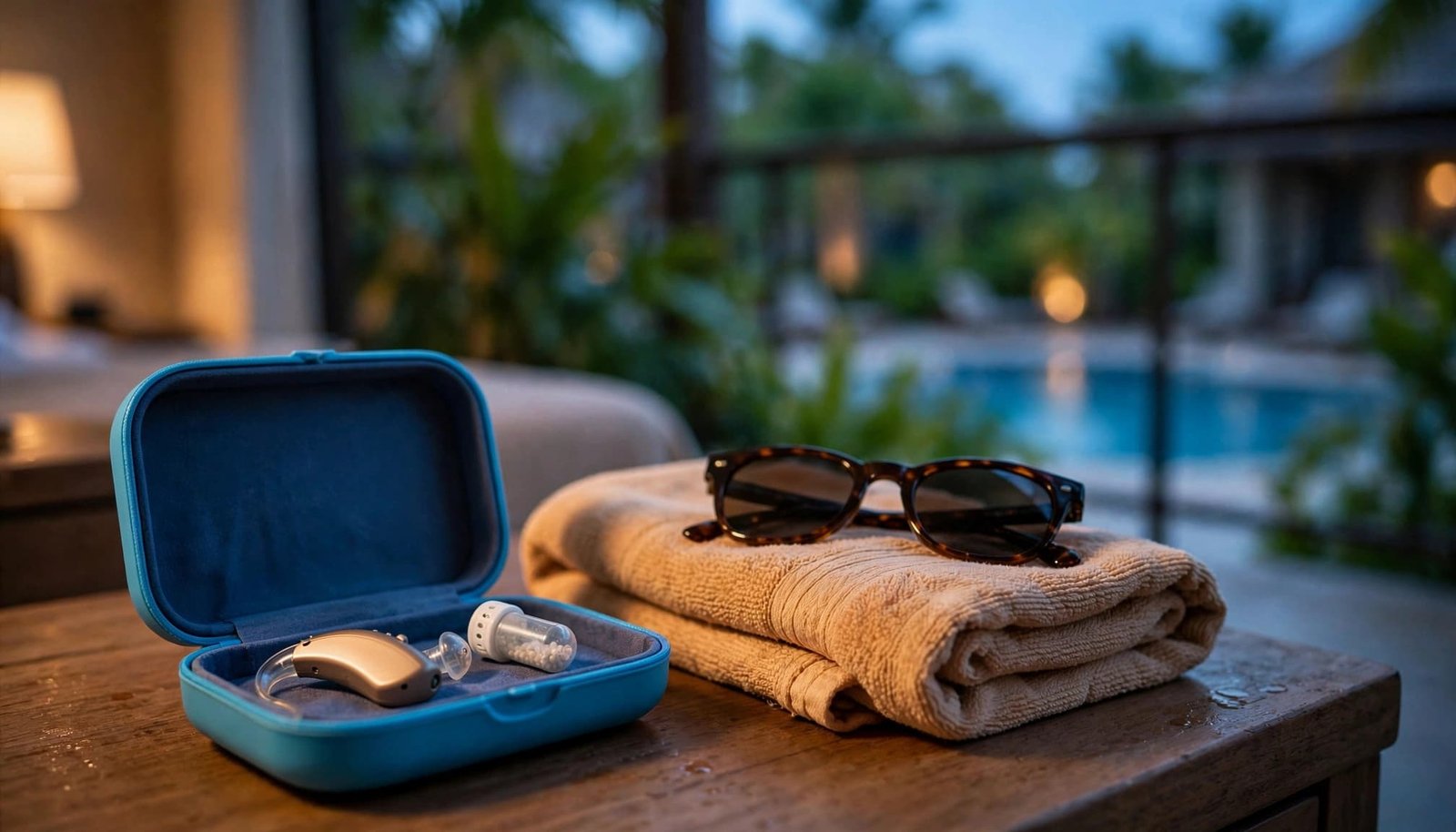
Keep your usual cleaning routine. Wipe the devices with a soft dry cloth and use the appropriate brush for surface debris. Avoid water, alcohol, and household cleaning products.
Use a compatible drying kit or dehumidifier after humid or sweaty days. Follow the device’s prescribed drying method rather than applying heat.
For disposable-battery hearing aids, opening the battery door overnight supports drying and reduces battery drain. Rechargeable hearing aids may have no battery door and need their own approved overnight care routine.
Protect Hearing Aids Around Water and Handle Problems Calmly
Beach days, cruises, and tropical vacations bring extra exposure to sweat, salt, and moisture. Give your hearing aids a protected place whenever you take them off.
Keep Water and Sand Away
Water-resistant hearing aids aren’t automatically waterproof. Remove them before swimming unless your exact device is designed for that use.
Store them in their storage case inside a secure, splash-resistant pouch away from the pool edge. A plastic bag alone doesn’t make hearing aids safe underwater.
Apply sunscreen before putting the devices on, then let your hands dry. Avoid leaving the case in direct sun or a hot vehicle. After a sweaty outing, wipe the devices and use your compatible drying setup.
Respond to Weak Sound or Device Failure
Start with familiar, approved troubleshooting: battery charge, battery placement, visible wax blockage, and the usual wax guard or dome replacement.
If an aid gets wet, remove a disposable battery and open its compartment. Use the approved drying method. Don’t force open a rechargeable device or use a hair dryer, oven, or radiator.
If the problem continues, contact your audiologist, hearing care professional, or manufacturer support. Keep model numbers, serial numbers, and receipts available. Warranty service and insurance replacement aren’t automatically available in every country.
For loss or damage during travel, photograph what happened and obtain a written incident report when another business is involved.
Make Room for Your Family’s Other Travel Needs
Hearing support may be one part of your family’s travel plan. Keep communication tools, familiar comfort items, and medication accessible too.
Our special needs travel planning helps families coordinate accommodations, transportation, and a comfortable vacation pace. Families using additional communication technology can also use our AAC device travel plan.
Planning Disney with an autistic child? Our family-focused ebook is available as a Disney World autism guide on Etsy and a Disney World autism guide on Amazon. These resources support a separate part of your family’s preparation.
Frequently Asked Questions
Can You Wear Hearing Aids in the Shower?
Keep hearing aids out of the shower unless the exact device is expressly designed for it. Water resistance doesn’t promise protection against shower water, soap, or steam.
Place the devices in a dry, protected location before bathing. Keeping the case outside the bathroom also reduces exposure to humidity.
How Do You Put Hearing Aids in Airplane Mode?
There isn’t one button sequence for all hearing aids. Wireless controls depend on the model, and a paired phone has separate airplane-mode settings.
Use the instructions for your own equipment rather than another model’s sequence. The hearing aid exemption means there isn’t a universal requirement to turn all hearing aids off during flight.
A Comfortable Trip Starts With a Familiar Routine
Your everyday care routine is the foundation of a dependable hearing aid travel plan. Keep compatible supplies close, explain your communication needs, and give your devices a safe place to charge and dry.
We can help coordinate vacation arrangements around your family’s needs. With the essentials organized, you can spend less time managing equipment and more time enjoying your trip.
Leave a Reply