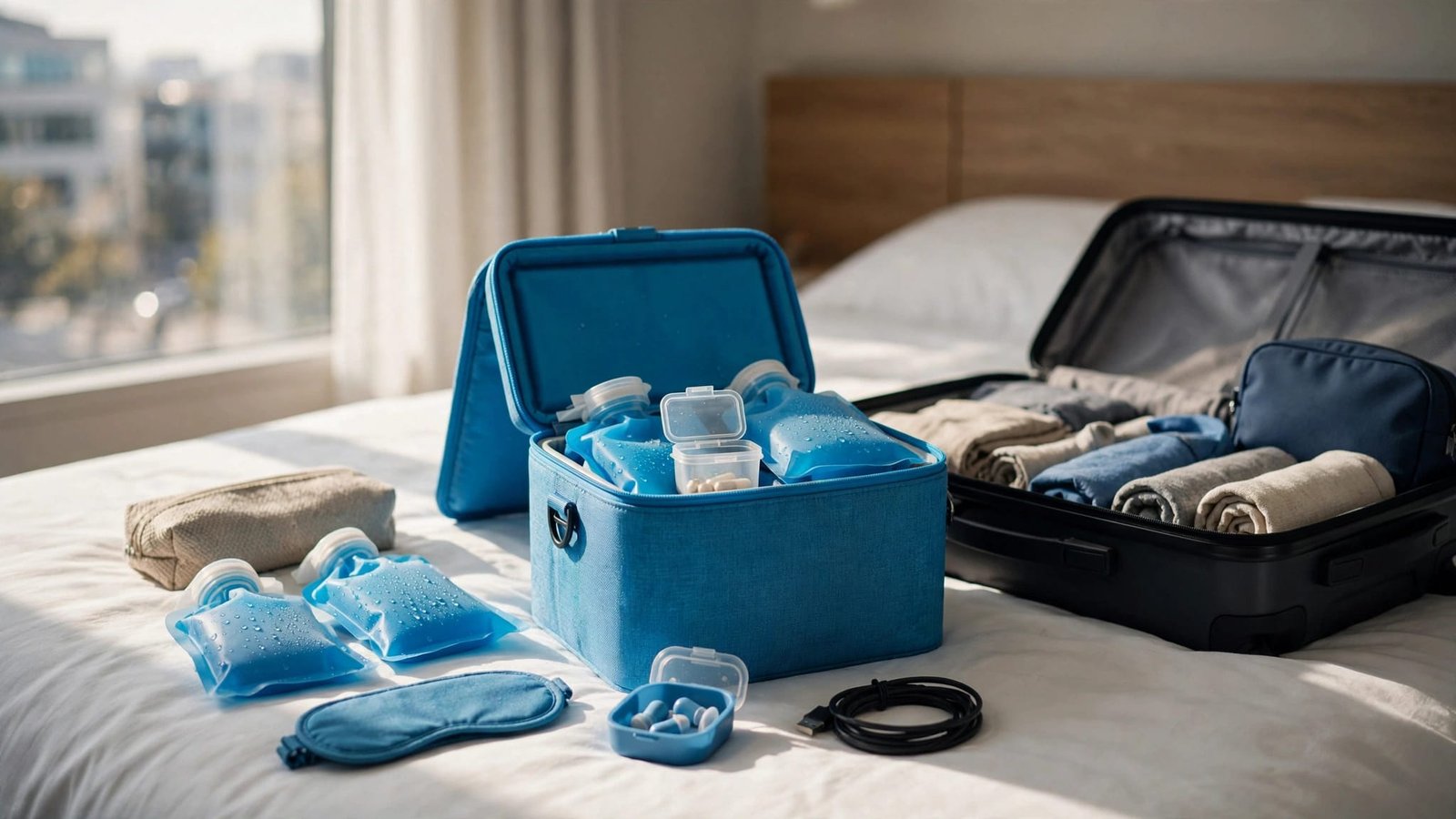
Your family’s medication shouldn’t become a last-minute worry at the airport or hotel. A clear plan for refrigerated medication travel keeps storage, timing, and backup supplies organized.
The safest approach starts with your medication’s exact instructions, a suitable cooling method, and confirmed refrigeration at your destination. A travel checklist can make medication storage travel part of your itinerary planning.
Start with the prescription, then plan for the car, flight, hotel, and days away from your room. This is especially helpful for Midwest travel, when a trip may combine driving, flights, or weather-related delays.
Key Takeaways for a Smoother Trip
- For safe medication storage, keep essential medication and supplies with you, not in checked luggage or a hot car.
- Protect medication from freezing as carefully as you protect it from heat.
- Confirm hotel refrigeration before arrival, and carry a backup cooling option for delays.
Your pharmacist or prescribing team should guide storage limits, dosing schedules, and decisions after a temperature problem. Travel planning supports that care plan.
Know Your Medication’s Storage Rules
Two prescriptions that both need refrigeration may have different travel rules, even within the same class of prescription medication. A weight loss medication may have different limits from another GLP-1 medication. Insulin, GLP-1 medications, and biologic injections don’t share one safe temperature range or room-temperature allowance.
Confirm the exact temperature range
Many refrigerated prescriptions require storage between 36°F and 46°F (2°C and 8°C). Follow your product’s instructions rather than treating that range as a rule for every medicine.
Ask your pharmacist whether the rules change after opening or first use. Also ask how long the medication can remain outside refrigeration, whether that time is cumulative, and what to do after accidental freezing.
Write the answers beside the medication name. Every adult helping with medication should have the same information.
Check product-specific room-temperature allowances
Some medicines allow more flexibility than families expect. For example, Ozempic’s FDA prescribing information allows storage for 56 days after first use, either refrigerated or at 59°F to 86°F. This allowance is specific to Ozempic, not every semaglutide product.
That allowance doesn’t apply automatically to another semaglutide product, compounded preparation, or unopened medication. Returning medicine to the refrigerator doesn’t automatically restart its permitted storage time.
Discuss time-zone changes and dose timing with your care team before departure. Don’t change a schedule yourself to fit a flight or park reservation.
Build a Refrigerated Medication Travel Kit
Pack your medication travel kit before the rest of your luggage. Keep prescriptions in their original packaging and labeled containers when possible, with copies of prescriptions and care-team contact information. Place the kit in your carry on luggage.
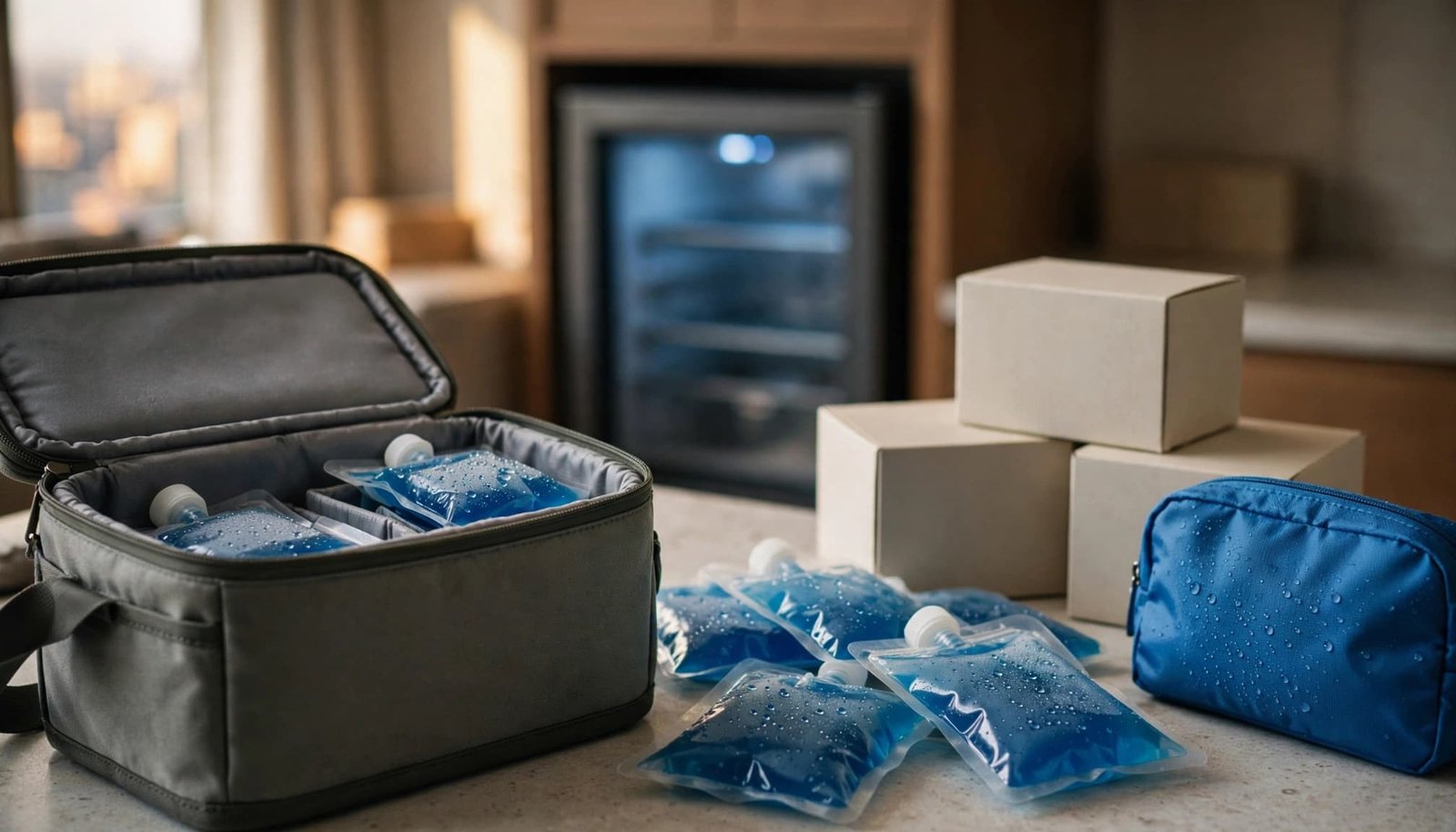
Choose cooling that matches the prescription
Choose an insulated insulin cooler travel case or refrigerated medicine cooling bag with room for medication, medical supplies, cooling packs, and a protective divider. A thermometer with minimum and maximum readings can help you track temperature changes.
Keep medicine away from direct contact with frozen reusable ice packs or other cooling packs. Follow the case manufacturer’s instructions for preparing and positioning its cooling materials.
FRIO wallets use evaporative cooling and may suit certain insulin storage needs, but they’re not refrigerators. Check product-specific instructions for a weight loss medication such as semaglutide, and ask your pharmacist whether that cooling method meets your medication’s requirements.
Pack for delays, not only scheduled travel
Count the entire journey, including airport arrival, connections, transfers, and waiting for your room. Test your refrigerated medicine cooling bag beforehand with a thermometer and without medication inside.
There isn’t one dependable cooling duration for every gel pack. Performance depends on thermal insulation, pack size, surrounding heat, and how often the case opens.
The CDC’s diabetes travel guidance recommends packing twice the medicine you expect to need. Ask your own care team what backup quantity fits your prescription and trip.
Our family flight packing checklist can help organize the remaining essentials with a travel checklist.
Keep Medication in the Passenger Cabin on Road Trips
For road trip medication storage, use the climate-controlled passenger area, not the trunk. An insulin cooler travel case or refrigerated medicine cooling bag offers practical travel storage. Keep it shaded, secure, and within an adult’s reach in the passenger area.
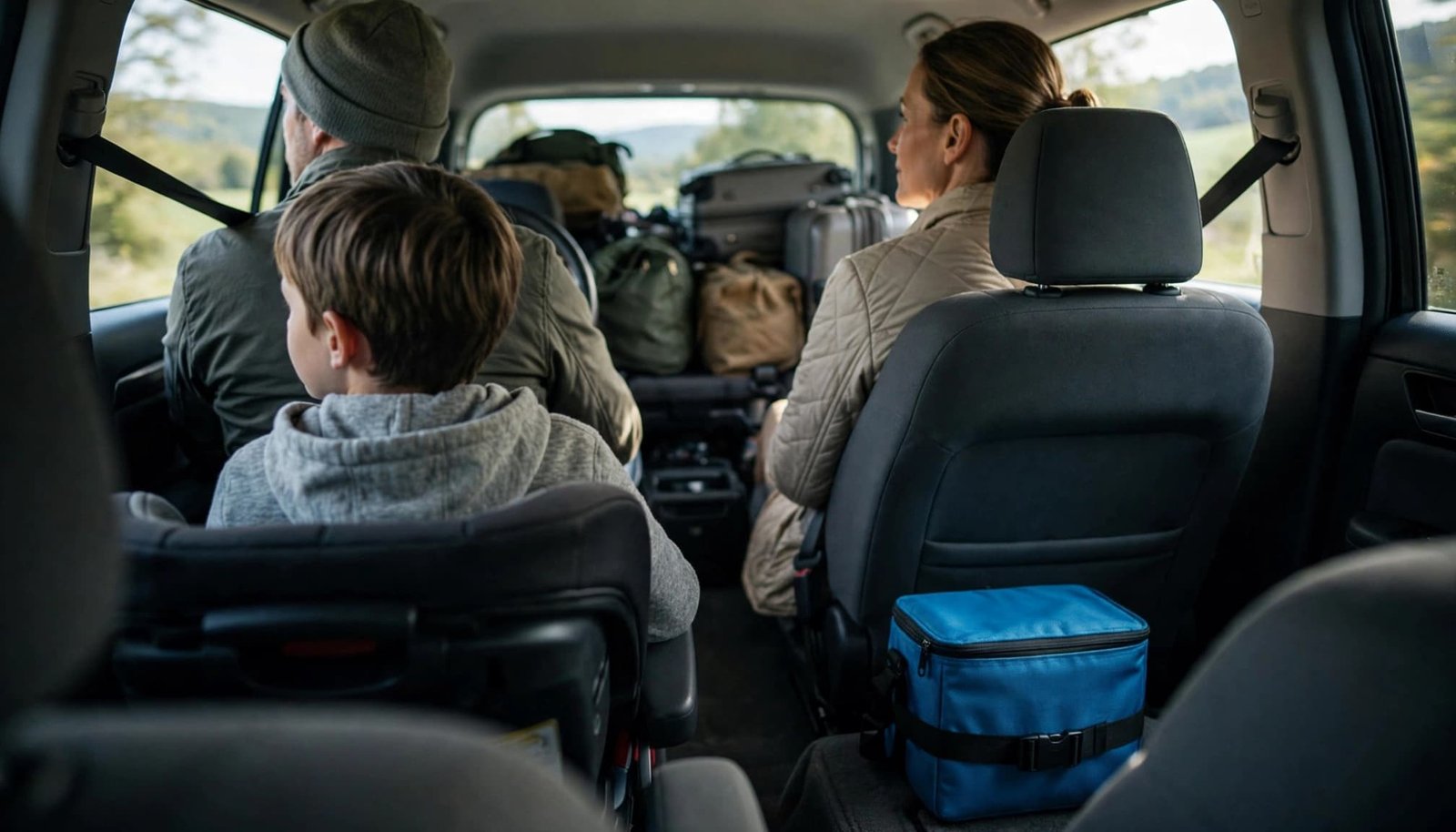
Take medication inside whenever you leave the vehicle. Air conditioning stops protecting your supplies once the car is parked.
Avoid dashboards, sunny seats, and direct contact with an air-conditioning vent. Check the thermometer during breaks, especially when traffic adds unexpected hours or Midwest travel brings sharp seasonal temperature swings.
For an overnight drive, confirm refrigeration at the stopping point before leaving home. Bring reusable ice packs as backup cooling, and ask whether the property can refreeze your cooling packs if needed. A room refrigerator may not have a usable freezer compartment.
Assign one adult responsibility for carrying the medication inside. A clear handoff helps prevent the cooler from being left behind during a busy stop.
Flying With Medication and Cooling Packs
For flight travel, keep prescription medication, injection supplies, and cooling packs in your carry on luggage. Store them together in a medication travel kit. If the airline gate-checks your bag, remove the kit before handing it over.
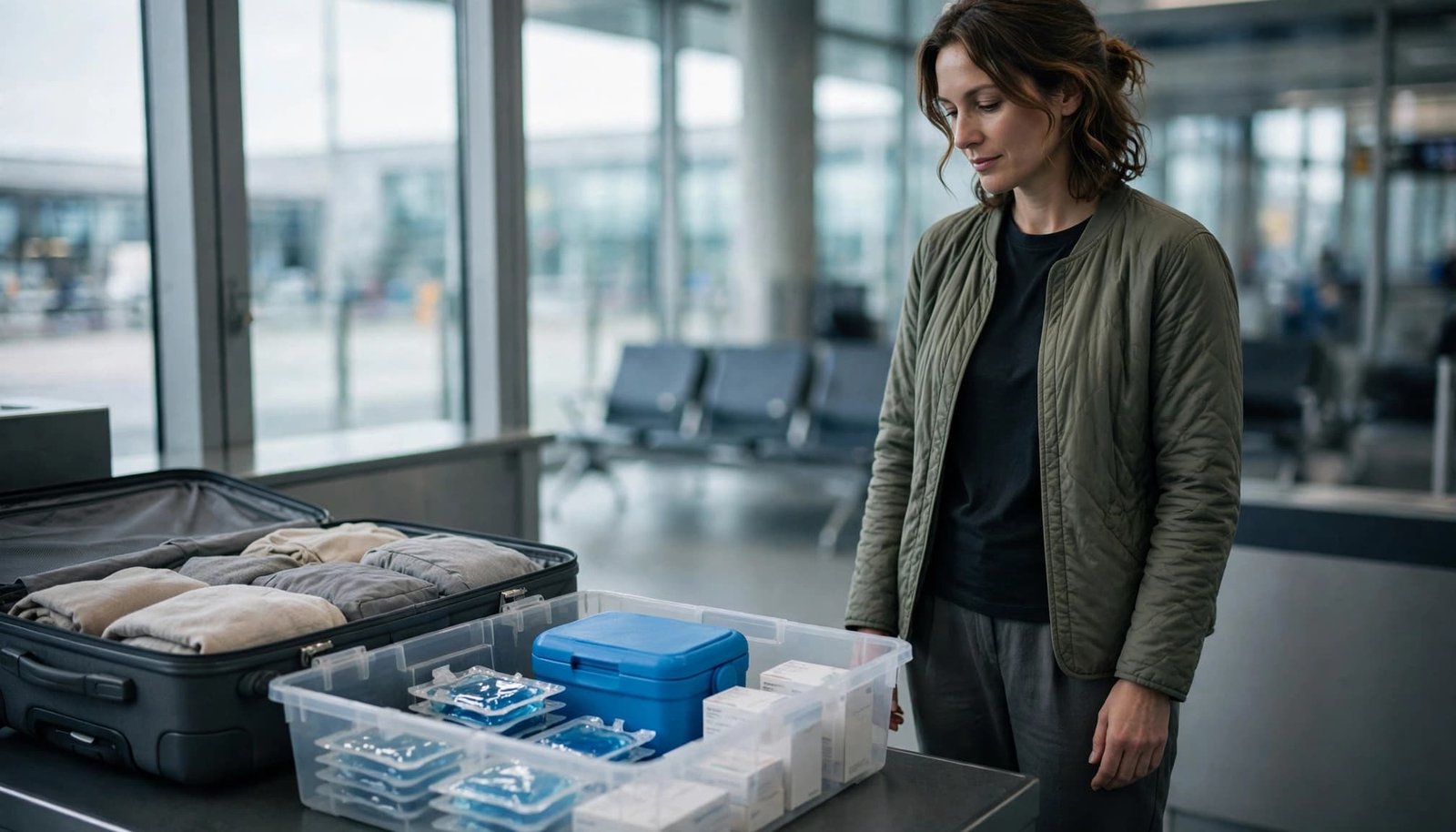
Tell TSA before screening begins
Medically necessary liquids may exceed the usual 3.4-ounce carry-on limit in reasonable quantities. Keep medication in its original packaging. Declare medication and related cooling supplies before airport security screening, and allow time for inspection.
TSA’s gel ice pack rules permit medically necessary packs in reasonable quantities, even when melted or slushy. Additional screening may still be required. A product marketed as a TSA-approved ice pack isn’t guaranteed approval at screening, so declare medically necessary packs.
Ordinary ice packs follow different rules, so explain the medical purpose clearly. Keep the kit accessible rather than buried beneath clothing.
If your traveler uses a pump or another medical device, follow that device manufacturer’s screening instructions.
Plan without an aircraft refrigerator
Don’t make onboard refrigeration your only cooling plan. United’s medication travel policy states that it cannot store medicine in its refrigerators or coolers.
Contact the operating airline before a long flight. Ask whether your refrigerated medicine cooling bag is permitted, along with any battery requirements and medical-baggage arrangements. On Midwest travel routes, build in extra time for connections and weather delays.
International checkpoints and medication import rules may differ from TSA rules. Check each destination and transit country’s requirements, including documentation and quantity limits. A doctor’s letter may help explain medical needs, but it doesn’t replace local requirements.
Arrange Hotel and Theme-Park Refrigeration
When planning medication storage travel, call your hotel before arrival. Explain the medication’s temperature range, container size, and when you’ll need access.
Confirm a refrigerator, not only a beverage cooler
Some hotel room coolers are designed for drinks rather than stable medication storage. Ask what equipment is available and whether the lodging provider can arrange temperature-controlled storage.
A Disney room’s beverage cooler may look like a mini refrigerator without providing suitable medication storage.
Our Disney resort medication storage guide covers arrival arrangements and refrigeration questions.
Check the temperature before placing medicine inside for safe medication storage. Keep it away from cooling elements, freezer compartments, and places children can reach.
If your room isn’t ready, ask about travel storage and how retrieval works. Keep the medication separate from ordinary luggage, and confirm access before leaving it with staff.
Prepare for the whole park day
Pack around long transportation waits, afternoon storms, and time away from your room. Carry the day’s medication and any backup your medical team recommends.
Disney First Aid centers at all four main theme parks can assist with refrigerated medication storage. Confirm arrangements, labeling, and access times before relying on that option.
For long park days, use a refrigerated medicine cooling bag with suitable cooling packs. Keep a suitable cooling case with you for transportation and other transitions. Never leave medication on a sunny stroller or in an exposed bag pocket.
Store only what you can retrieve when needed. A planned afternoon dose shouldn’t depend on an uncertain bus ride back to the resort.
What If Medication Gets Too Warm or Freezes?
Move the medication away from the temperature problem and record what happened, keeping the details with your medication travel kit. Note the highest or lowest reading, estimated exposure time, product name as listed on its original packaging, and whether it was already opened.
Contact your pharmacist or the manufacturer’s medical information service for product-specific advice, since safe medication storage requirements vary. There isn’t a universal number of minutes, temperature, or percentage of lost effectiveness that applies to every prescription.
Normal appearance doesn’t prove medication is usable. Don’t assume thawing a frozen injection or cooling an overheated one restores it.
If a dose is due before you receive an answer, contact your prescribing team to review your dosing schedules and arrange a replacement or treatment plan. Don’t skip, double, or substitute doses yourself.
If refrigeration fails at the hotel, contact the front desk promptly and use your backup cooling method as directed.
Make the Plan Fit Your Family
A medication plan works best when it fits your family’s routines. Choose realistic travel times, allow breaks, and tell each caregiver where supplies are stored.
For a child with sensory or communication needs, explain the medication bag and screening routine before departure. Familiar snacks, headphones, and comfort items can help during unexpected waits.
Our Disney World autism guide is available as an Etsy PDF planning guide and an Amazon Disney autism guide. These resources support family preparation, sensory needs, and flexible vacation planning.
K&S The Travel Crusaders brings firsthand family experience and real-world planning experience to our special needs travel planning. Kellie Neff also holds a B.A. in Child Development. Medication decisions stay with your healthcare team.
For strollers, wipes, cleaning supplies, and practical items for sick-on-vacation moments, visit our Trip Rescue Shop. Choose supplies that match your family’s needs rather than adding equipment you won’t use.
Frequently Asked Questions
How long will gel packs keep medication cold?
There isn’t a standard safe duration. The same pack can perform differently in an airport and a hot outdoor setting, and a weight loss medication may have different storage instructions from another product. Use the cooler’s instructions, test its performance, and monitor the medication’s required temperature range.
Does TSA require original prescription packaging?
TSA doesn’t universally require prescription medication to stay in labeled bottles. Original packaging still helps identify prescriptions, preserve product information, and protect medicines when required. State laws and international requirements may differ, so check the rules for your route.
A Clear Medication Plan Supports a Calmer Vacation
A dependable trip starts with product-specific storage instructions and a cooling plan for every transition. Use your travel checklist to plan transitions and confirm destination refrigeration. Keep medication close, and know whom to call if temperatures change.
You don’t have to handle every detail alone. Your pharmacist guides medication safety, and thoughtful travel planning helps your family enjoy the journey with fewer last-minute worries.
Leave a Reply