
Your family’s vacation should leave room for fun, rest, and the care your child needs. Travel preparation that accounts for medicines, triggers, and medical access can make the trip more manageable.
A little preparation can reduce avoidable stress without turning every vacation day into a medical checklist. You don’t need a packed itinerary to make wonderful memories.
Start with your family member’s usual asthma routine, then choose travel details that support it.
Key Takeaways for a More Comfortable Trip
- Review your asthma action plan with your healthcare provider before departure.
- Keep prescribed medicines, supplies, and medical information within reach, including enough for delays.
- Choose activities, accommodations, and medical backup options that match your family’s needs.
- Know when to follow the action plan and when to call emergency services immediately.
Start Planning Before You Book
Review Asthma Control With Your Care Team
Schedule a pre-trip discussion if symptoms or treatment have changed, or recent asthma flare-ups have required urgent care. Mention flights, mountain destinations, strenuous activities, and any remote excursions.
The CDC recommends an individual asthma action plan developed with your healthcare provider. Review daily treatment, worsening symptoms, emergency instructions, and who to contact.
Ask your clinician or pharmacist to check inhaler technique and spacer use. Confirm prescriptions are current and discuss extra supplies for delays. For international trips, ask how to maintain the prescribed medication schedule across time zones.
Match the Destination to Your Family’s Needs
Think about your child’s known allergen triggers before choosing the resort or itinerary. Smoke, pollen, cold air, strong fragrances, and respiratory infections can affect plans differently.
Check local air quality forecasts and pollen counts near departure and during the trip. Seasonal averages don’t tell you what conditions will be like on your actual vacation days.
Research the nearest suitable urgent care facility and emergency department. An isolated rental or remote excursion needs more thought than a hotel near medical services. Consider how quickly you could leave an activity if symptoms begin.
Pack Asthma Medicines Where You Can Reach Them
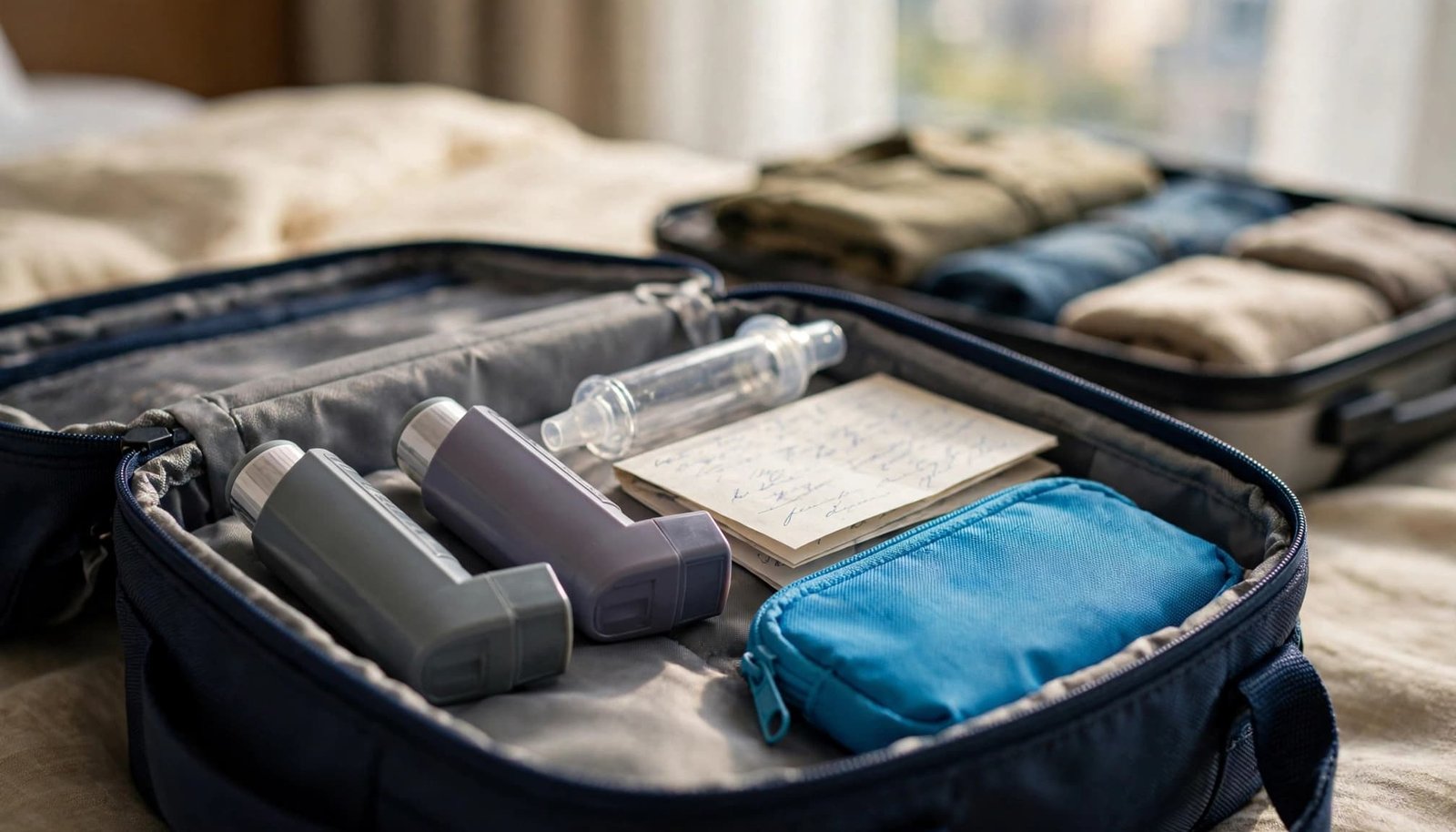
Keep essential asthma medications in your personal item or carry-on, never only in checked luggage. If your carry-on must be gate-checked, take your emergency kit out first.
For road trips, keep medicines inside the passenger compartment and follow their storage instructions. Don’t leave inhalers in a parked car or exposed to direct sun.
Your family’s travel kit should include:
- Pack the prescribed daily asthma controller and the rescue inhaler named in the action plan.
- Bring a spacer or mask if prescribed, plus enough maintenance medication for the trip and possible delays.
- Include a printed action plan, prescription details, and your clinician’s contact information.
- Add prescribed equipment, its charger or batteries, and any supplies needed to use it.
Check expiration dates and inhaler dose counters before leaving. Keep pharmacy labels and original packaging when possible, especially abroad.
Make sure another adult knows where the kit is and how to help. Older children can practice explaining their needs, but medication responsibility should match their age and abilities.
If your child also has a food allergy, carry their prescribed allergy medicines and separate allergy action plan.
Flying With Asthma: Security and Airline Questions
TSA’s medication screening guidance allows liquid medicine above 3.4 ounces (100 mL) in reasonable quantities. Tell the officer about medically necessary liquids before screening and allow time for inspection.
Keep nebulizer solution and other medical supplies in an accessible emergency kit, packed for easy screening. Screening permission doesn’t automatically mean an airline permits a device to be used onboard.
Ask the airline about power, batteries, medical documentation, and any advance notice needed for your circumstances. Save its answers with your reservation.
For severe asthma, a recent significant flare-up, or prescribed oxygen, discuss air travel precautions with your clinician before booking. Ask whether medical clearance is needed and how to arrange any prescribed oxygen support.
A nonstop flight may simplify medication routines and reduce rushed connections. Choose a schedule that leaves room for meals, rest, and airport delays.
Keep the quick-relief medicine accessible at your seat, including your prescribed rescue inhaler if that’s what you use. Tell cabin crew promptly if breathing symptoms develop, and don’t wait until landing to ask for help.
Choose Rooms and Outdoor Activities With Care
Ask the Hotel About Actual Conditions
Request a smoke-free room and ask about smoking near balconies, entrances, or neighboring rooms. If fragrances trigger symptoms, request fragrance-free cleaning where available.
Be direct: “My child has asthma triggered by smoke and strong scents. Can you confirm the room conditions and cleaning arrangements?”
Ask about pets, dampness, and recent renovations if those are concerns for your family. A room description alone doesn’t confirm that an accommodation meets your needs.
The Asthma and Allergy Foundation of America’s asthma and allergy travel advice can help you prepare questions for travel providers.
Make Mountain and Camping Plans Flexible

Discuss travel to high altitude with your clinician, especially for moderate or severe asthma. Ask how it may affect breathing, lung capacity, and exercise tolerance. Cold, dry air and exertion may make breathing harder.
Plan gradual ascent where possible and easier activities at arrival. Hydration and fitness don’t replace prescribed treatment or prevent every breathing problem.
For camping with asthma, consider wildfire smoke, campfires, pollen, temperature changes, and distance from emergency care. Choose routes with a clear way back.
Follow your clinician’s instructions for exercise-related symptoms. A shorter walk or indoor activity is a sensible vacation choice when conditions change.
Prepare for Refills and Healthcare Abroad
Keep Prescription Information Ready
Bring a medication list with generic names, strengths, doses, and device details. The medicine in an albuterol inhaler may be called salbutamol in many countries, but products and prescribing arrangements vary.
A photograph of your inhaler may help explain what you use. It doesn’t replace a prescription or guarantee a refill.
Check destination medication rules before departure through official government or embassy information. Ask your insurer how to find an appropriate local clinician or pharmacy.
If medicine is lost, contact your pharmacy, prescriber, and assistance service promptly. A local medical visit may be required. Don’t assume a U.S. prescription can be filled abroad.
Ask Clear Questions About Insurance
Before buying coverage, ask how the policy handles asthma as a pre-existing condition. Describe recent symptoms, medication changes, and medical visits accurately.
Ask about asthma-related emergency care, trip interruption, evacuation, exclusions, and any purchase deadlines. Request written answers rather than relying on a general promise of coverage.
Save the assistance number, policy details, and claims instructions offline. Find out whether you may need to pay upfront for care.
For cruises, ask about onboard medical services and options ashore. Don’t assume every ship or port can provide the same treatment.
What to Do if Asthma Symptoms Worsen
Pause the activity and follow the traveler’s written action plan. Use prescribed quick-relief medicine exactly as directed. Move away from a known trigger when you can do so safely.
Contact a healthcare professional when symptoms persist, return quickly, or require more medicine than the plan allows. Don’t continue a demanding outing while hoping symptoms settle.
Call local emergency services immediately for severe breathing difficulty, trouble talking or walking because of breathlessness, blue or pale lips, or worsening symptoms despite rescue treatment.
Follow emergency instructions while help is coming. Don’t delay the call to locate insurance paperwork or contact your travel planner. If a clinician has taught breathing exercises, they may offer support, but must never delay or replace the action plan, prescribed rescue treatment, or emergency care.
Before traveling with asthma abroad, save the local emergency number and a short translated phrase explaining that the traveler has asthma and needs medical help.
Before remote outings, check that the emergency kit is with the responsible adult. Know your location and how to communicate it. Decide which adult will call for help and who will stay with the child.
A normal-looking oxygen monitor reading should never override severe breathing symptoms or delay emergency care.
Build the Vacation Around the Whole Family
Asthma planning should fit alongside your child’s sensory, communication, mobility, and rest needs. Choose a manageable main activity and leave room for a hotel break.
If your child also has autism, our Disney planning for multiple disabilities offers ideas for coordinating medical, sensory, and daily support needs.
Our Disney World With Autism Guide is available as an Etsy PDF guide and an Amazon ebook. These resources support sensory preparation and flexible park plans. Medical decisions belong with your healthcare team.
K&S The Travel Crusaders brings firsthand family experience, practical travel planning, and Kellie’s B.A. in Child Development to personalized vacation planning.
Our Trip Rescue Shop carries practical travel supplies, including strollers and cleaning supplies for unexpected sick-on-vacation moments. Choose products your family tolerates, particularly when strong scents trigger asthma.
Common Questions About Traveling With Asthma
Should We Ask for Backup Prednisone?
Ask your clinician whether backup oral corticosteroids, such as a prednisone prescription, are appropriate for this traveler and destination. They aren’t necessary for every family.
If prescribed, request written instructions on when to start, the dose, duration, and when medical assessment is needed. Don’t use leftover prednisone or another person’s prescription. Starting a backup course doesn’t remove the need for emergency care when severe symptoms occur.
Does Every Traveler Need a Portable Nebulizer?
No. Bring a nebulizer, peak flow meter, or oxygen monitor only when your care team recommends it or it’s part of the established plan.
If a nebulizer is needed, confirm power, battery, cleaning, and supply arrangements before departure. Ask the clinician how treatment should continue if equipment fails. Don’t substitute devices or change treatment on your own.
A Comfortable Vacation Starts With a Practical Plan
Traveling with asthma is easier when your family has accessible medicine, clear instructions, and realistic backup options. Choose bookings that support your child’s needs rather than a schedule that leaves everyone rushed.
Review the medical plan with your clinician before departure. Let K&S The Travel Crusaders help coordinate the vacation details around it.
Your family’s comfort and care deserve space in every vacation day.
Leave a Reply