
If an airline damages your wheelchair, report it before leaving the airport, request a written claim number, and ask for safe temporary mobility. Your safety and positioning needs come first, even when staff are busy or your family is exhausted.
Airline wheelchair damage can interrupt your independence and your entire trip. DOT’s wheelchair protection announcement reports at least one wheelchair or scooter damaged, delayed, or lost for every 100 transported on domestic flights. Start with the steps that protect your safety and create a clear record.
Key Takeaways
- Report damage immediately, photograph it, and keep the airline’s written report and claim number.
- Request a suitable loaner and prompt repair or replacement, including the option to use your preferred vendor.
- Some newer DOT requirements have paused enforcement, but separate repair, loaner, and post-mishandling notice requirements remain.
1. Inspect and Report Damage Before Leaving
Check Whether Your Chair Is Safe
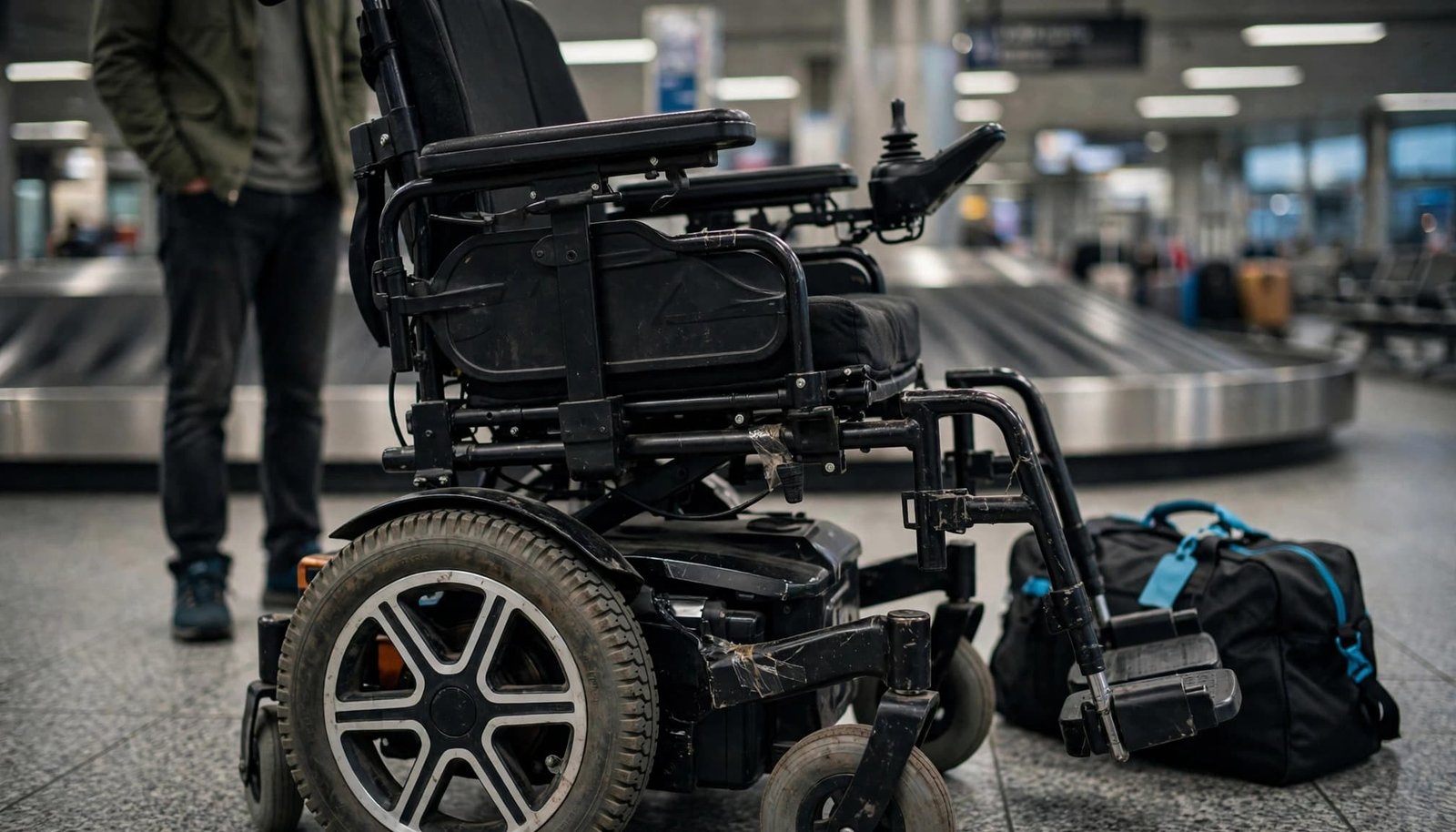
Inspect your wheelchair at the aircraft door or baggage claim, wherever the airline returns it. Look at the brakes, wheels, controls, seating system, headrest, footplates, wiring, and charging port.
Test movement only if it appears safe. Don’t drive a chair with a bent frame, unstable seating, or unreliable brakes.
Photograph missing parts, new marks, error messages, and damaged components. Record lost functions and unexpected battery depletion. Explain how each problem affects safe movement, positioning, or transfers.
Open a Written Damage Claim
Ask airline personnel to witness your inspection as you document the damage. Request a written damage report, then ask how to file a claim and open it before leaving the airport.
Save your boarding pass, equipment tag, claim number, and employees’ names. Ask who will contact you and when.
If staff dismiss the issue, request the airline’s Complaint Resolution Official (CRO), its disability-rights specialist. A CRO must be available during airline operating hours, in person or by telephone.
You can say:
“My wheelchair was returned damaged. I need a written damage report, a safe mobility solution, and the Complaint Resolution Official.”
2. Understand Your Airline Wheelchair Damage Rights
For flights to, from, or within the United States, the Air Carrier Access Act (ACAA) protects disabled passengers. The Department of Transportation enforces its wheelchair rule, which requires airlines to return wheelchairs in the condition received. If a mishandled wheelchair is returned in worse condition, the rule creates a rebuttable presumption of airline mishandling. Rules may differ outside the United States.
As of October 2026, the agency has paused enforcement of four provisions through April 30, 2027, while it considers further rulemaking. Those provisions cover the new liability framework, annual refresher-training frequency for hands-on training, predeparture rights notices, and certain fare-difference payments.
The paused fare provision concerns travelers who need a more expensive flight because their wheelchair cannot fit on their preferred flight. The fare difference is limited to flights on the same day, with the same airline, between the same origin and destination.
The pause doesn’t remove every wheelchair protection or erase existing airline liability for damage.
Separate requirements still cover repair or replacement, loaner equipment, and written notice after mishandling. Once an airline becomes aware of mishandling, it must immediately provide written information about filing a claim, contacting a CRO, obtaining a loaner, and choosing a preferred repair vendor.
That post-mishandling notice is different from the paused predeparture notice.
3. Request Repair and a Suitable Loaner
Choose Your Repair or Replacement Provider
Under DOT’s wheelchair repair and replacement requirements, you can have the airline arrange prompt repair or replacement. You can also choose your preferred vendor.
If you choose a vendor, the airline must arrange prompt transportation to that provider unless you prefer to arrange it. The airline pays the vendor directly for covered transportation and repair or replacement.
An airline’s vendor may be slow. Contact your original supplier or Assistive Technology Professional (ATP) for an assessment and written repair quote. Ask the provider to explain whether repairs can restore safe function.
Explain What Your Loaner Must Provide
The airline must use its best efforts to provide and pay for a loaner wheelchair that meets your needs while your mishandled chair is returned, repaired, or replaced.
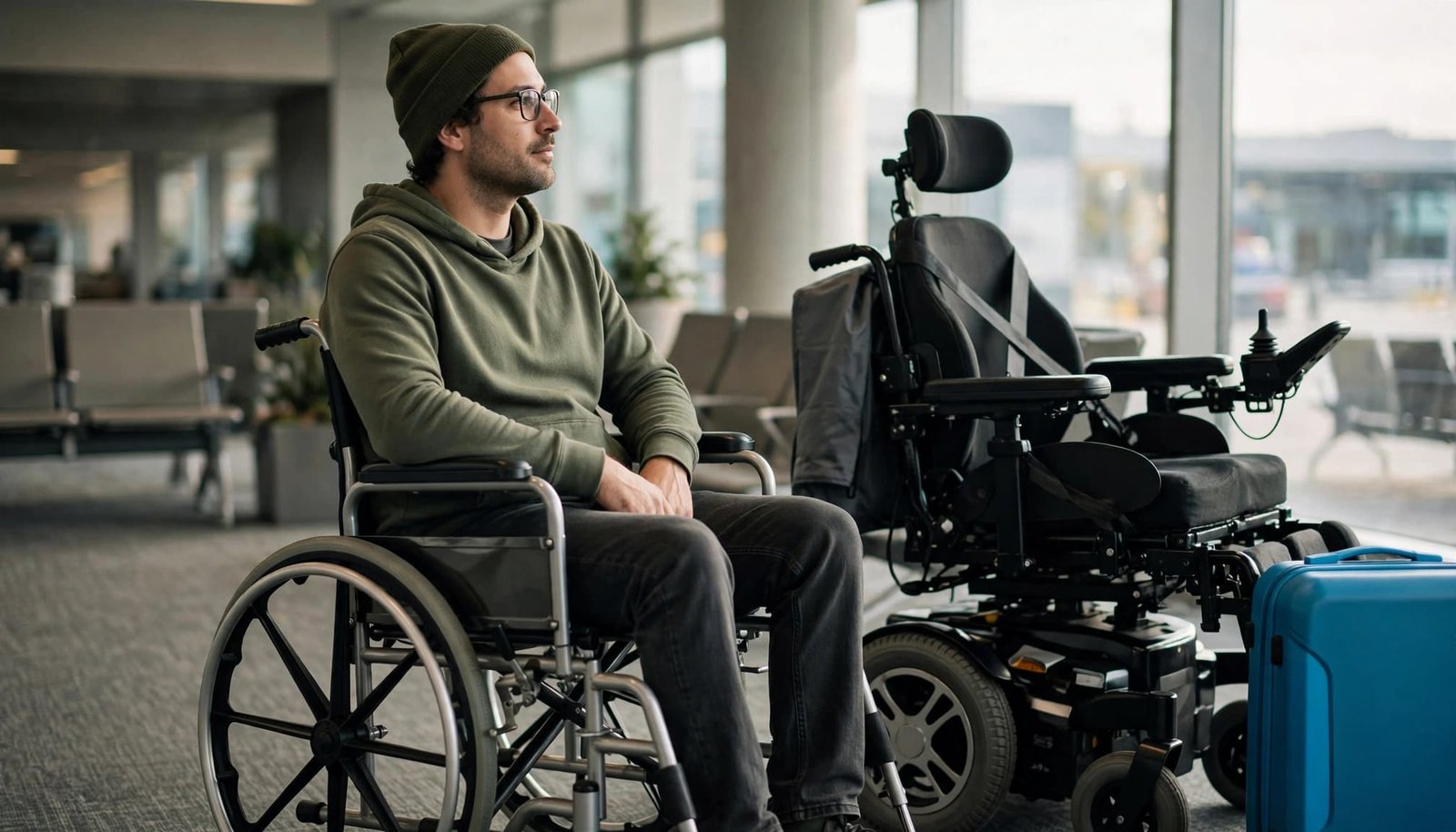
Explain your seating, positioning, pressure-relief, control, transfer, and mobility needs. A basic manual wheelchair may not meet the positioning or mobility needs of someone who uses a power chair.
The loaner must meet your functional and safety needs to the maximum extent possible, but a specific model isn’t guaranteed. If the offered equipment is inadequate, you may arrange a better alternative and request reimbursement. Keep invoices and receipts; qualifying reimbursement is due within 30 days of your request.
4. If Your Wheelchair Is Delayed, Request Delivery
Under U.S. rules, a delayed wheelchair has specific delivery deadlines. The airline must transport it to your final destination within 24 hours after your arrival for domestic flights and international flights lasting 12 hours or less.
For international flights longer than 12 hours, the deadline is 30 hours after arrival.
The airline must offer airport pickup or delivery to a reasonable requested location, such as your hotel. It must also reimburse reasonable airport transportation expenses directly caused by the delay. Keep receipts and ask how to submit them.
Request a loaner immediately. If the airline still can’t locate your chair, ask how it is handling the lost wheelchair, document the search and claim, and keep requesting suitable temporary mobility equipment. If your equipment changes, your vehicle needs may change too. Our guidance on wheelchair-accessible airport transfers explains the dimensions and securement details that matter.
5. Keep Your Claim Moving After the Airport
Send One Organized Written Follow-Up
Email the airline your claim number, flight details, photographs, preflight evidence, repair assessment, and requested solution. Explain how the damage limits your daily activities.
Keep receipts for rentals, repairs, transportation, and other related expenses. Document how each expense connects to the damage, without assuming every cost is automatically reimbursable.
Ask for a named contact and a written repair or replacement plan. Save every response. Don’t sign a final settlement or release until you understand what it covers and whether your mobility needs are resolved.
Escalate Unresolved Disability Complaints
If the airline refuses required assistance or fails to address your complaint, file a disability complaint with DOT within six months of the incident. Use the form to file a complaint about disability-related assistance.
Include the airline’s response, claim documents, and the accommodation or remedy you requested. Airlines generally must provide a substantive written response to written disability complaints within 30 days.
DOT reviews disability complaints and airline responses for possible violations. Its review has no guaranteed completion date or compensation award. A DOT complaint is separate from a lawsuit. An attorney can advise on legal options when damage, injury, or unresolved losses warrant further action.
Some passengers report progress after public social media posts or contact with news outlets. These are optional pressure tactics, not guaranteed remedies. Keep posts factual and remove booking codes, addresses, and medical details.
Protect Your Chair Before Your Next Flight
Photograph every side of your wheelchair before handing it over. Record a short video showing its working controls, brakes, seating functions, and any existing damage. Keep the original files.
Prepare a one-page wheelchair profile with its make, model, serial number, dimensions, weight, battery details, and supplier contact information. Include manufacturer-approved cargo hold handling instructions and photographs of lifting points.
Remove detachable cushions, joysticks, headrests, and other fragile parts for cabin storage when removal is safe and permitted. Keep necessary positioning supports in place. Carry essential assistive devices, your charger, medication, communication device, and transfer supplies where airline rules allow.
Our wheelchair air travel planning guide covers preparation before booking and equipment handoff. Preparation can strengthen your evidence, but airline handling remains the airline’s responsibility.
For everyday packing needs, our travel supplies shop includes strollers and cleaning supplies for illness during vacation. Travel supplies don’t replace a properly fitted mobility device or the airline’s obligations.
Support for Your Family’s Travel Plans
When wheelchair damage disrupts a family trip, give yourself permission to adjust the schedule. Safe transportation, medication access, meals, and rest take priority over reservations.
Our special needs travel planning helps families coordinate accessible accommodations, transportation, and a realistic vacation pace. Kellie Neff has a B.A. in Child Development. Our planning draws on firsthand family experience and real-world travel-planning experience.
For families also planning around autism, our Disney World autism guide offers help with sensory preparation, transitions, and flexible park days. It’s available as an Etsy PDF download and through our Amazon listing.
Frequently Asked Questions
Do Ordinary Baggage Limits Apply to Wheelchairs?
Domestic assistive-device claims aren’t subject to ordinary baggage dollar caps. DOT’s passenger disability rights guide describes compensation up to the device’s original purchase price. International liability rules can differ, so a claim shouldn’t be described as unlimited compensation.
What If the Airline Calls the Damage Cosmetic?
Document every new mark, even if staff call it cosmetic. Ask your supplier to assess cracks, bent components, exposed material, or damage near attachment points. Explain any effect on function or safety. A scratch alone doesn’t automatically justify replacement, but the airline should explain a denial in writing.
Can I Report Damage Discovered at Home?
Yes. Contact the airline immediately, photograph the problem, and add it to your existing claim or open one. A supplier’s assessment can help explain damage that wasn’t visible at the airport. Submit your written claim promptly because route-specific deadlines may apply.
Your Safety Comes First
A damaged wheelchair needs a clear report, suitable temporary mobility, and a documented repair or replacement plan. You shouldn’t have to accept unsafe equipment because the flight has ended.
Keep your records together and ask for the CRO when support falls short. Your functional and safety needs should guide the next step, whether you’re heading home or continuing your vacation.
Leave a Reply